
The H.J. Andrews Experimental Forest (HJA) is located in Oregon, in the Cascade Mountains. The entire 15,800-acre (6400-ha) site is the watershed, or drainage basin, of Lookout Creek. The landscape is steep, with hills and deep valleys. Elevation ranges from 1,350 to 5,340 feet (410 to 1,630 meters). Cold and fast running streams flow through the many valleys of the forest. Most of the landscape is covered in dense forest. Huge, iconic Pacific Northwest old-growth conifer forests grow here with cedar, hemlock, and moss-draped ancient Douglas fir trees. Some of these trees grow as high as 250 feet (75 meters), and many of them are 300, 500, a few even 700 years old.
The H.J. Andrews Experimental Forest was established in 1948 by the US Forest Service. At that time, the forest was a mix of old-growth and mature forest. Beginning in the 1950s, several small watersheds were manipulated (for example, logged or not logged) to lay a foundation for research on how the ecosystem works, how plants regrow in the forest, how nutrients move through the system, and how the forest and streams interact.
In 1980 the site became a charter member of the National Science Foundation's Long Term Ecological Research (LTER) program. Long-term measurement programs continued on experimental sites and watersheds with a focus on questions about climate, streamflow, water quality, vegetation succession, biogeochemical cycling, and effects of forest management. The research is ongoing, and continues to reveal surprising and important information.
The mission of the broader Andrews Forest Program is to support research on forests, streams, and watersheds, and to foster strong collaboration among ecosystem science, education, natural resource management, and the humanities.

History
The H.J. Andrews Experimental Forest (HJA) was established in 1948 by the U.S. Forest Service. In 1980, the HJA was designated as one of the first NSF-sponsored Long-term Ecological Research (LTER) sites. Long before that, Indigenous peoples were in relationship with the lands of the area.
Research Highlights
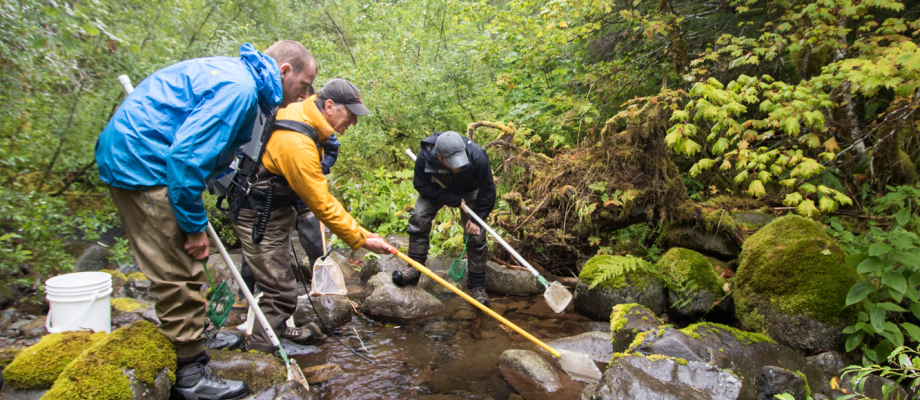
Our research addresses questions about forest health, climate, streamflow, water quality, vegetation succession, biogeochemical cycling, and effects of forest management. The research is ongoing, and continues to reveal surprising and important information.
Fast Facts
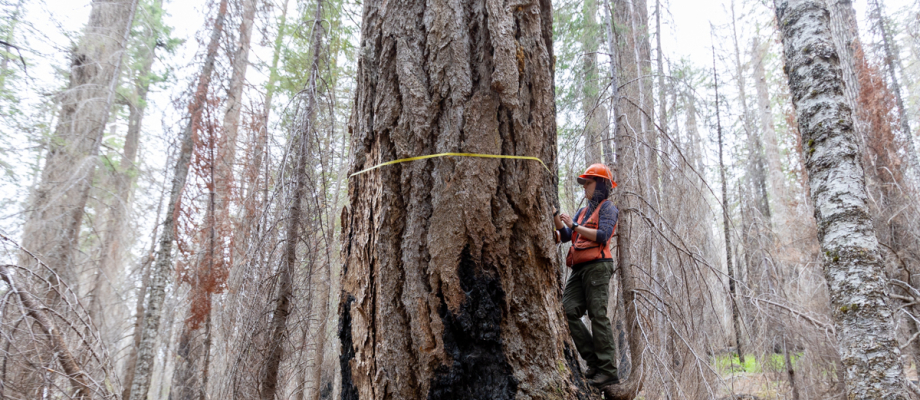
For a quick look at fun and informational information about our site, check out our Fast Facts page.

Arts and Humanities
Our engagement with the arts and humanities deepens our understanding of the forest ecosystem and broadens our perspectives.

Images
Our image gallery highlights the place, the people engaged in work on site, and the changes over time.

Publications
Our extensive publications list reveals the work and findings of decades of research and discovery.

The People
We are ecosystem scientists, educators, natural resource managers, writers, artists, musicians, and photographers. The Andrews Forest Program at the H.J. Andrews Experimental Forest is administered cooperatively by the USDA Forest Service's Pacific Northwest Research Station (USFS Research), Oregon State University (OSU), and the Willamette National Forest. Funding and support come from the National Science Foundation (NSF), Pacific Northwest Research Station, Oregon State University and the College of Forestry, charitable support, and other sources. The Andrews Forest LTER program is one of 27 major ecosystem research sites funded through NSF's Long-Term Ecological Research (LTER) Program and the H.J. Andrews Experimental Forest is one of 84 USDA Experimental Forests.
"The Andrews…is the most studied primal forest ecosystem on this continent, and perhaps the planet. That does not mean that scientists here have found every cog and wheel, much less every relationship between them. But here they have discovered a host of species previously unknown to science, and interactions in the forest ecosystem that no one previously imagined. Here, in the shadows of this woods, in its rivulets and streams, under its soil, and high overhead, they have discovered a hidden forest."
(John Luoma, from the book, "The Hidden Forest" 2006)