
Ecology is the study of the relationships between living organisms and their environment, or the study of how ecosystems function. Because most ecosystem processes occur at a slow pace, ecosystems only reveal themselves though patient observation. A 500-year-old tree can fall in a moment, but it takes decades or even centuries for that fallen tree to decay. Some events can happen quickly: a flood, a fire, or a landslide. But unless you observe a place prior to a disturbance, you do not really understand the impacts of that event. In sum, because ecosystems change at varying rates and over long periods of time, short-term studies of ecosystems can give misleading results, or can simply not answer certain important questions.
Long-term ecological research is exceptionally rare. Less than two-percent of ecological studies last for more than five years; nearly all last for only two or three years. At the Andrews Forest, we have studied tree growth and death in the same stands for 50 years, we have studied fish populations in the same section of stream for 30 years, and we have measured temperatures and other weather information for 60 years. The goal of the program is continued attention and study of the ecosystem, over the long term, and to allow those long-term observations to inspire research questions.
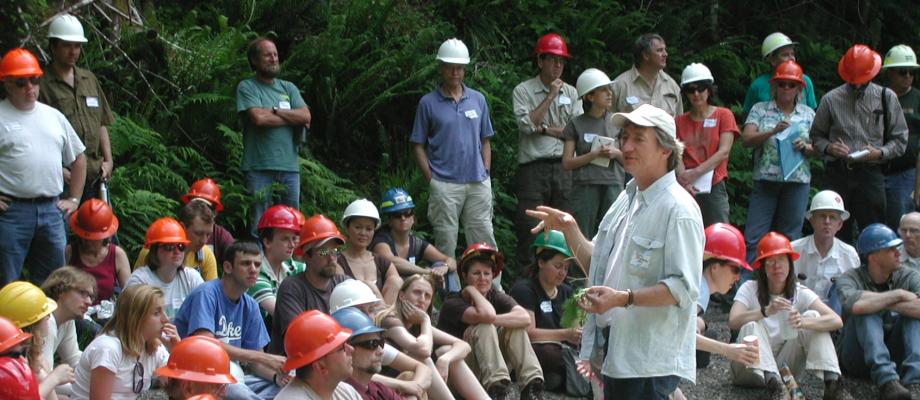
Partnership and Support
The H.J. Andrews Experimental Forest and Long-Term Ecological Research site is administered cooperatively by the USDA Forest Service's Pacific Northwest Research Station, Oregon State University, and the Willamette National Forest. Funding comes from the National Science Foundation, Pacific Northwest Research Station, Oregon State University and the College of Forestry, charitable support, and other sources. The H.J. Andrews Experimental Forest Long-Term Ecological Research (LTER) program is one of 27 major ecosystem research sites funded through the National Science Foundation. The site is one of 84 USDA Forest Service Experimental Forests and Ranges. Our decades-long research program is made possible only through our ongoing partnerships and broad support.
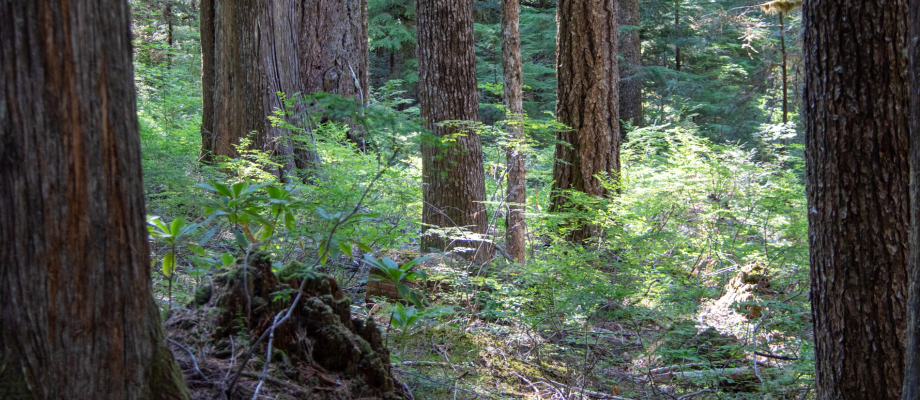
Our Long-Term Ecological Research Program
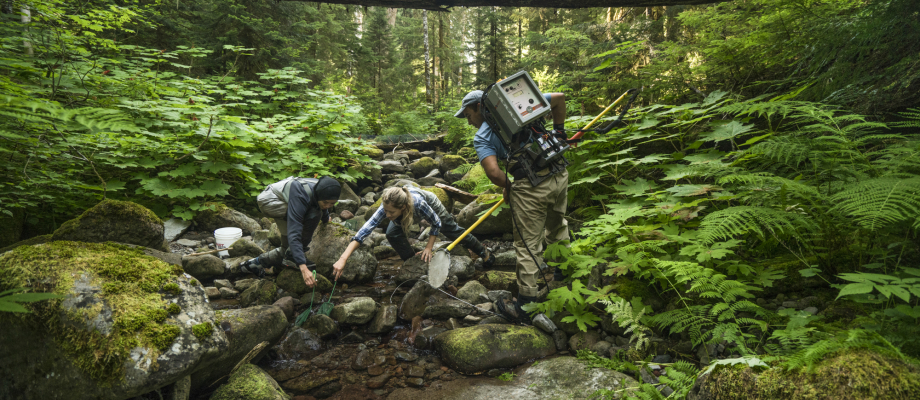
Research Projects
Long-term studies function as the foundation upon which we build a succession of ideas and shorter-term studies. In each successive decade, science questions emerge from long-term experiments and measurements as we examine them in a changing context, leading us to ask new questions, resulting in new science discoveries. Our research topics, each an integration of long-term and short-term approaches and questions, include biological diversity, carbon and nutrient dynamics, climate, conservation ethics, disturbance, hydrology, information management, social science, soils, stream ecology, vegetation dynamics, arts and humanities, LTER cross-site, regional, and international research.