
Researchers are pairing data from long-term measurements on tree growth and mortality with data from tree cores the learn about the the influence of disturbance and elevation on tree growth and survival. These projects aim at contributing to our understanding of how competing drivers (i.e. micro-topography, climate variability, and competition) impact two key ecological processes: postfire-delayed mortality and tree growth. For the first study, we are using treerings collected in an old-growth forest to look at the effects of pre- and post-fire radial growth patterns and climate-growth relationships, and fine-scale tree-to-tree competition, on tree mortality in fire-injury trees that originally had survived the 2020 Holiday Farm Fire, but then were found dead by 2022. For the non-fire-related studies, we are using treerings to look at the two aspects: the influence of micro-topography, as a surrogate of soil water availability and micro-climate, as well as climate variability, on trends and variation in growth and its responses to climate in a young post-clearcut stand, and at the effect of climate trends and variability and tree-to-tree competition on growth trends and climate-growth relationships in old growth stands across an elevational (temperature) gradient. These efforts are complementing the ongoing monitoring and expansion of long-term measurements on tree growth and mortality at the HJA, and hope to contribute to better predicting tree and forest vulnerability in a warming world.
Dendroecology 2022
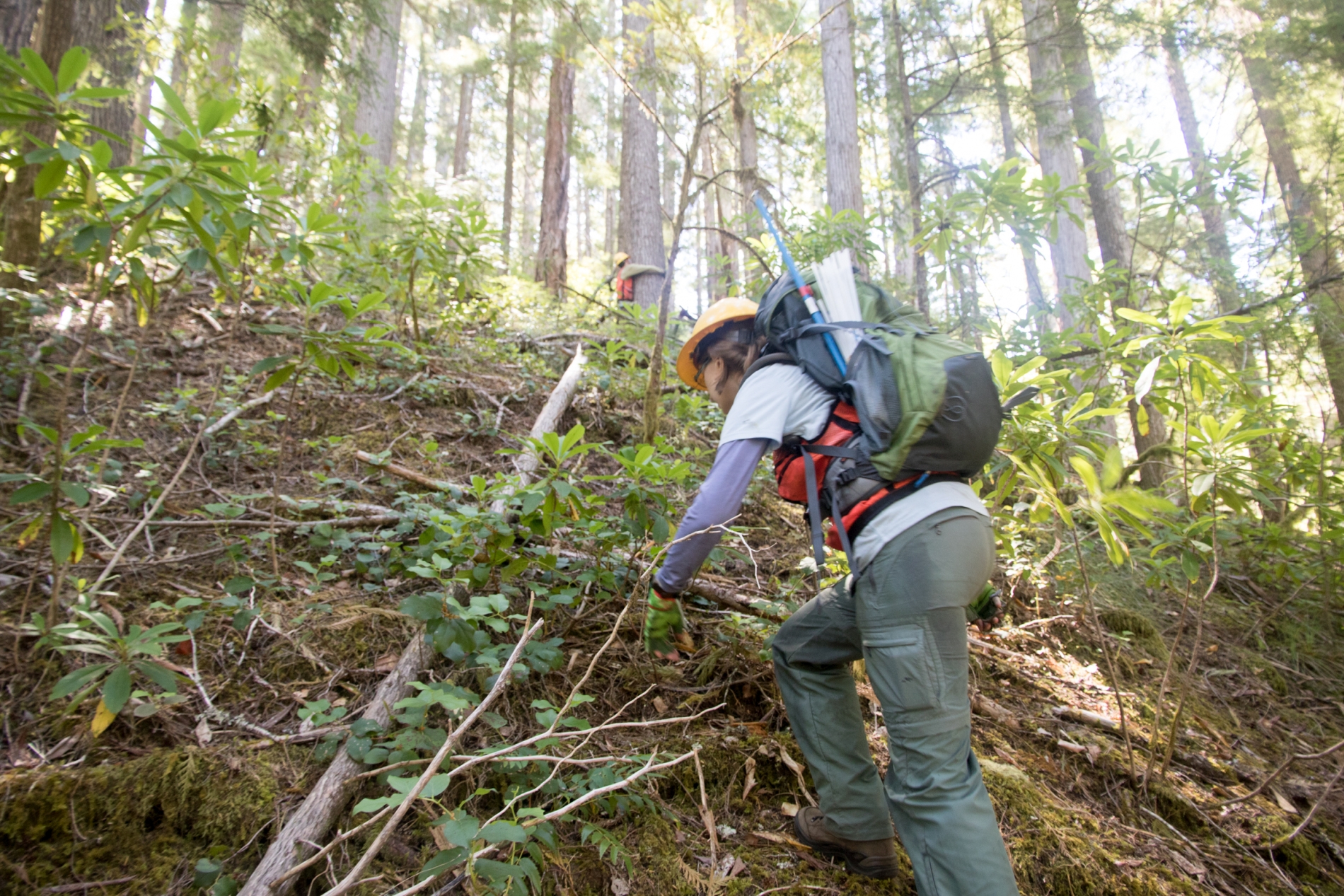
In the foreground, student researcher April Hersey climbs a steep slope to reach trees in the study plot. In the background, student researcher Aaron Evans assesses the diameter at breast height (DBH) of a tree.
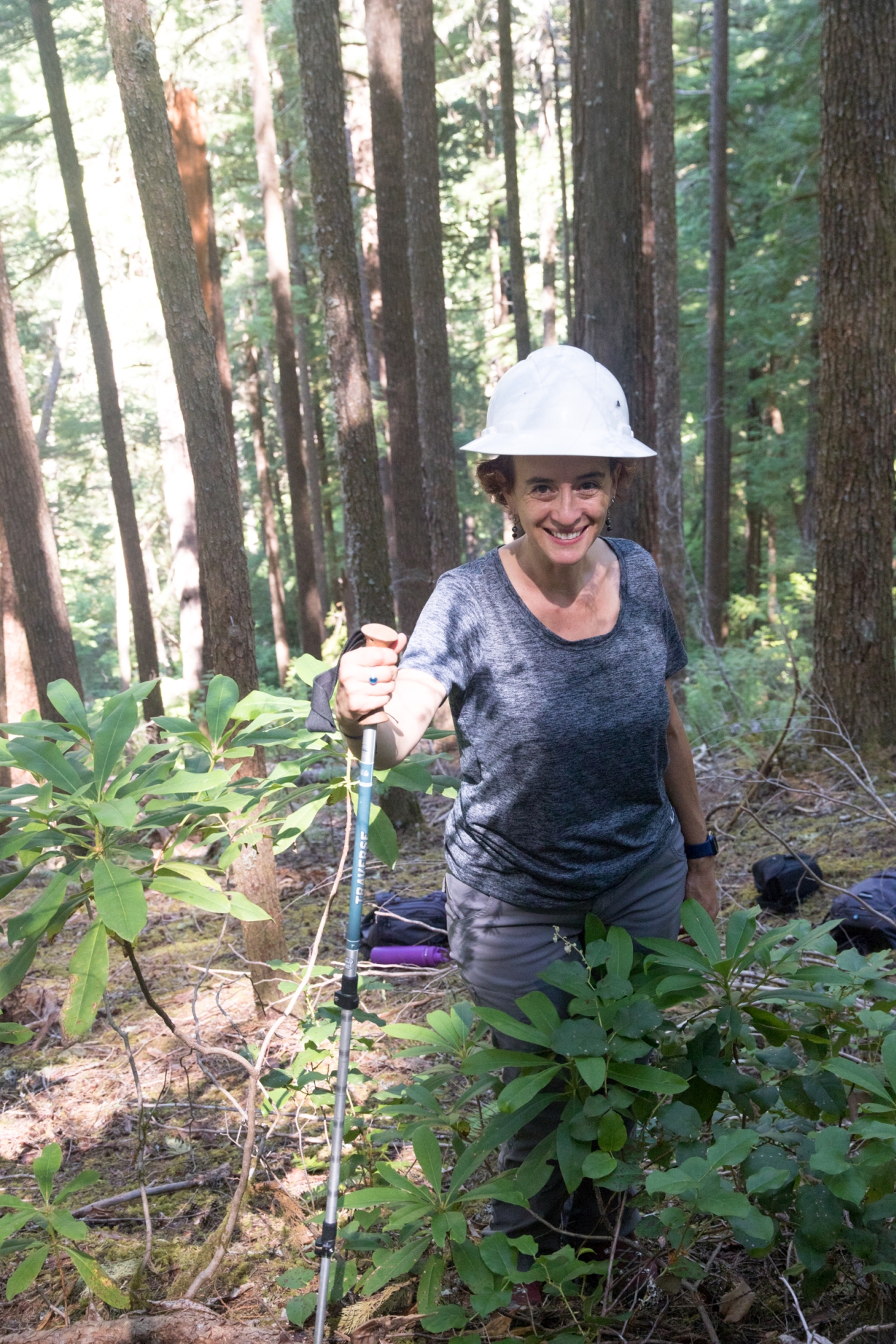
Dr. Catalina Segura at the HJ Andrews Experimental Forest.
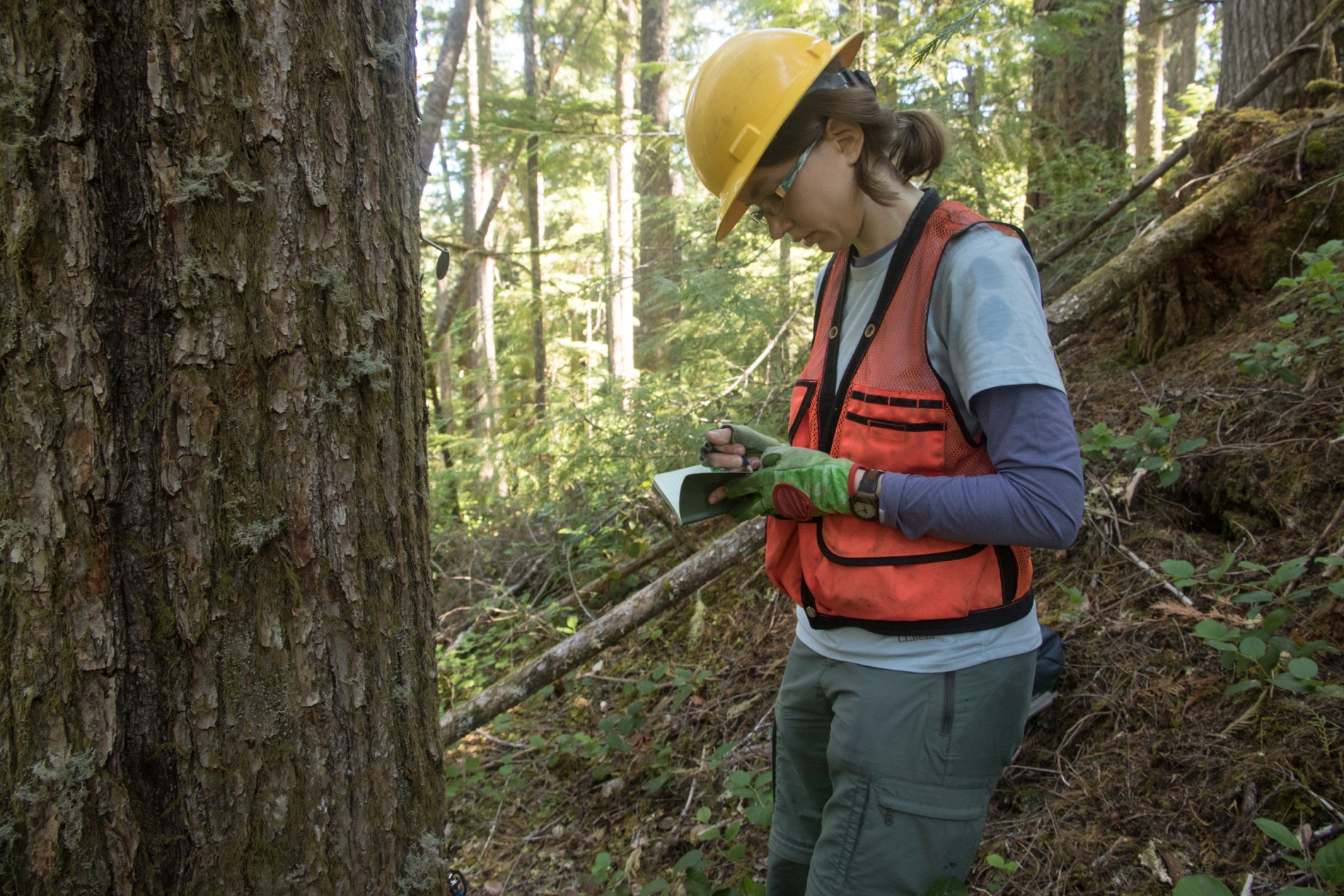
Undergraduate researcher April Hersey records the species and tag number of the tree that she is about to core. The tag number will allow the researchers to look up additional data about these trees from long-term dataset on tree growth and mortality.
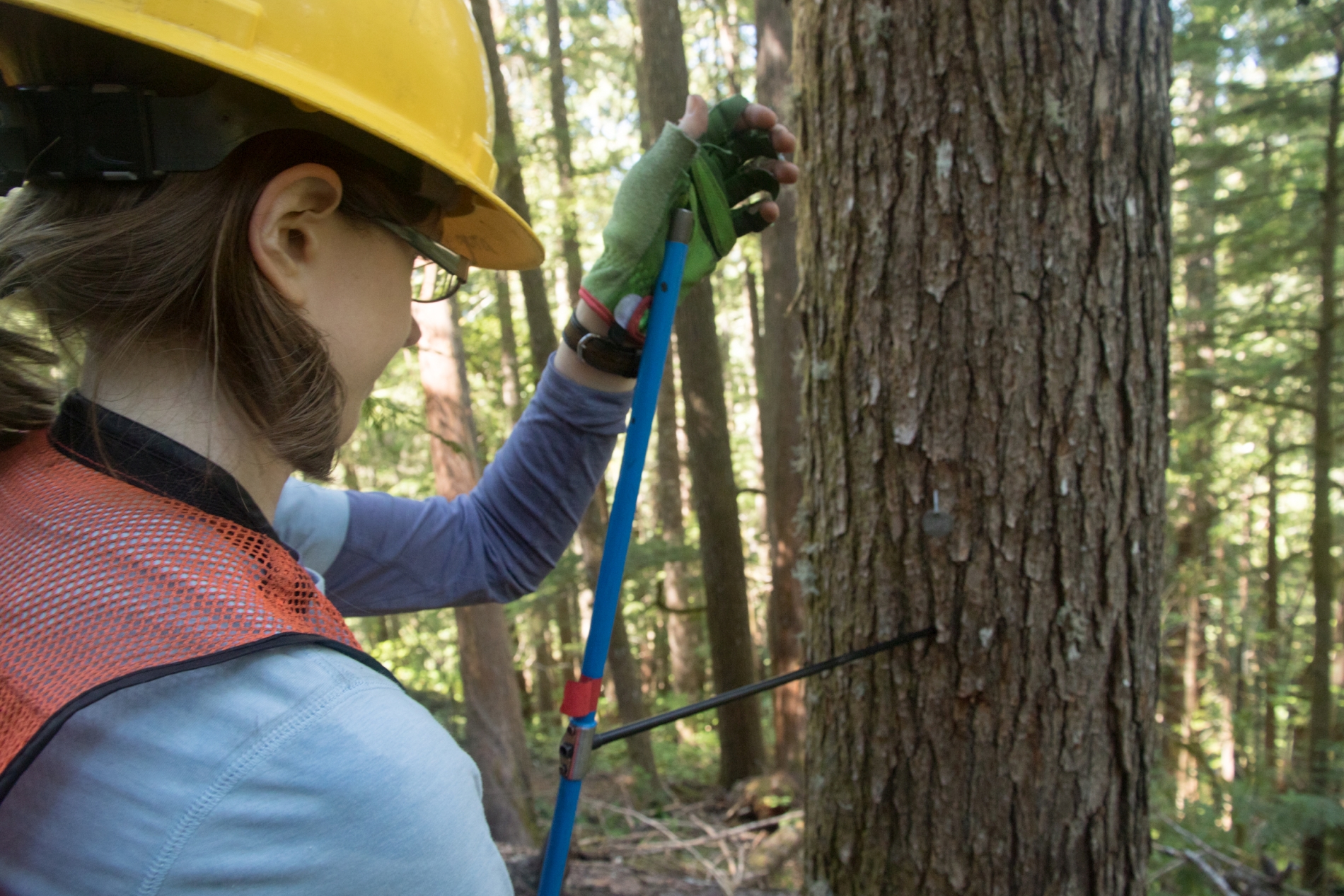
Research Experience for Undergraduates (REU) student April Hersey cores a tree in the HJ Andrews Experimental Forest.
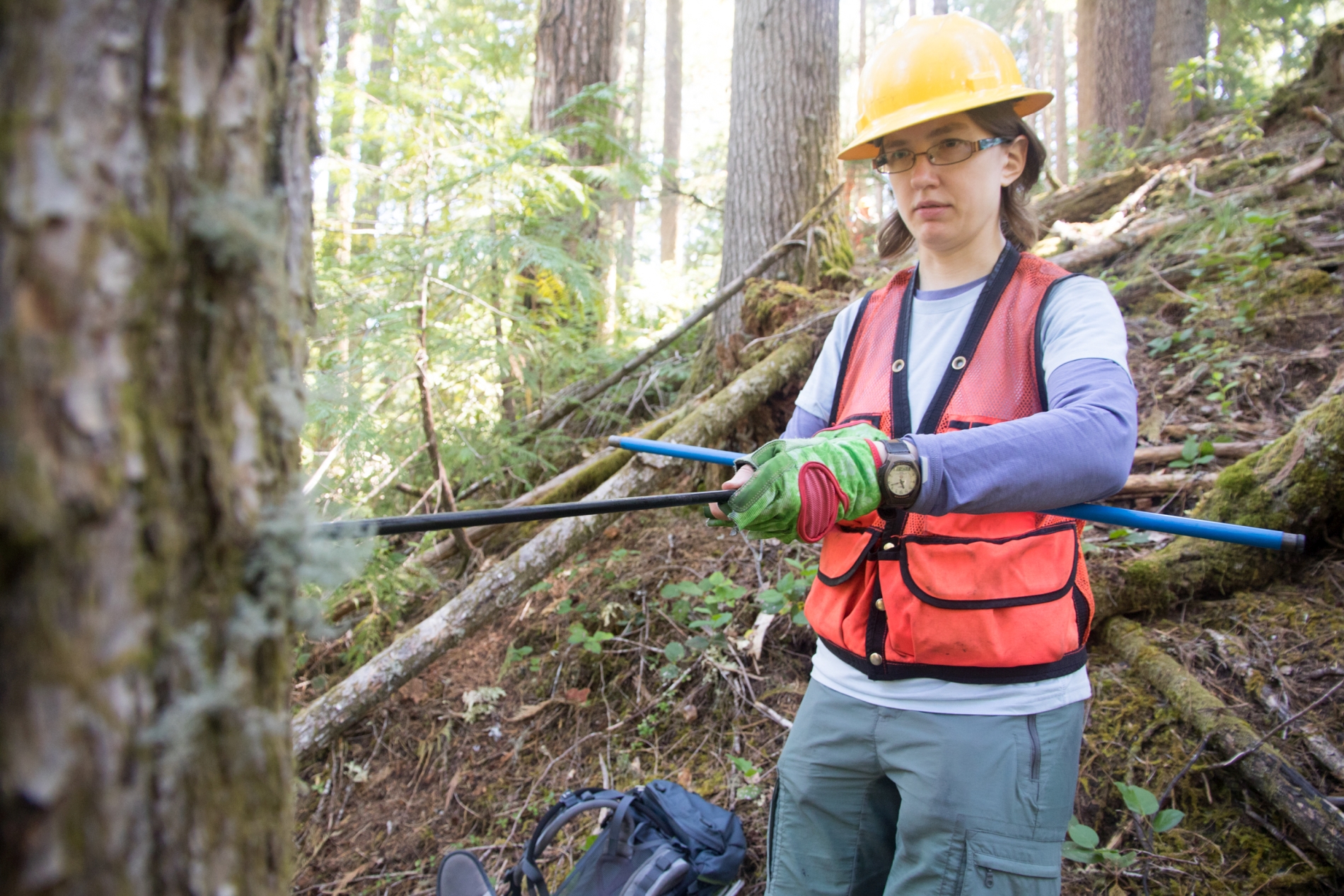
Research Experience for Undergraduates (REU) student April Hersey cores a tree in the HJ Andrews Experimental Forest.
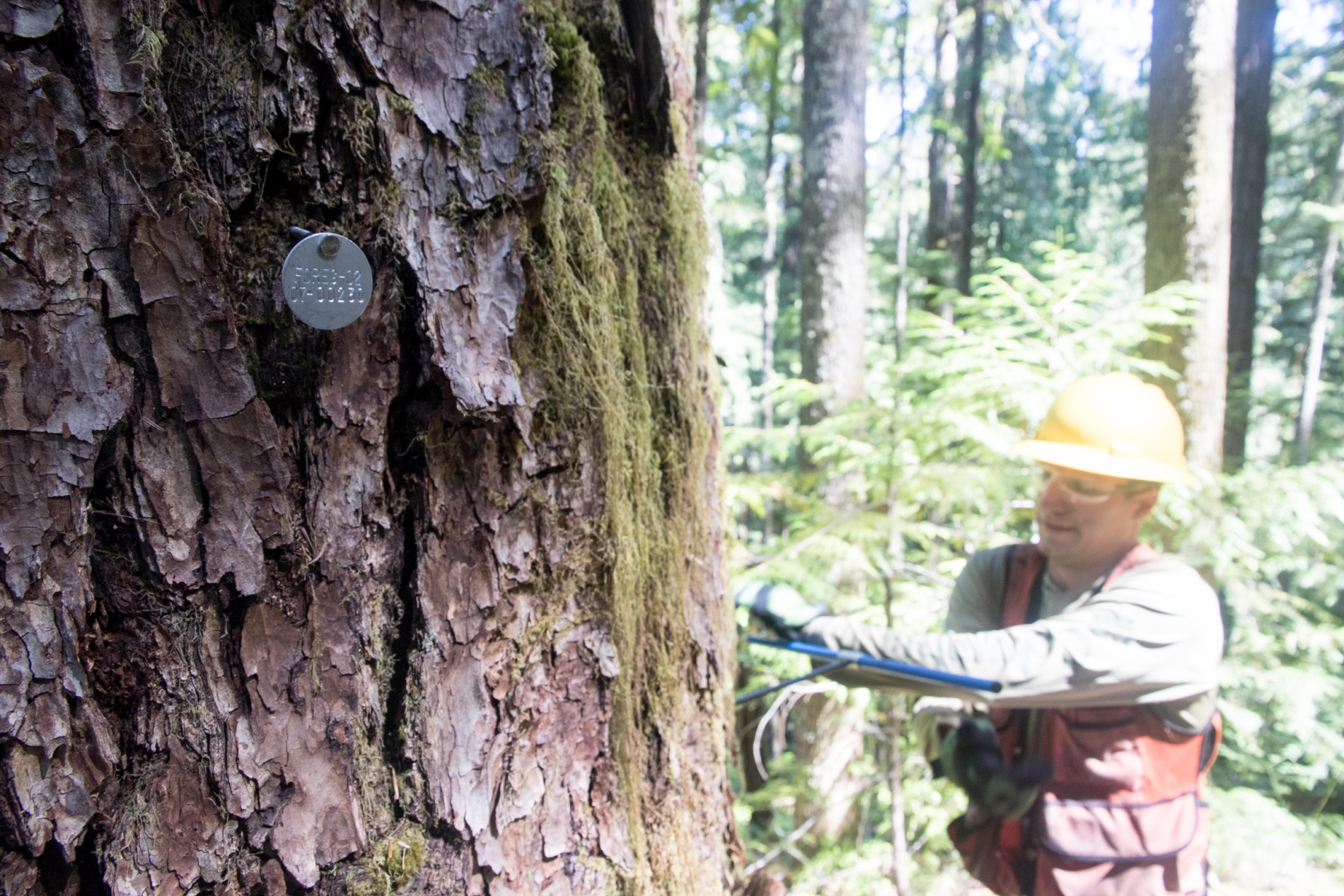
Research Experience for Undergraduates (REU) student Aaron Evans cores a tagged tree within an extended reference stand plot in the HJ Andrews Experimental Forest.
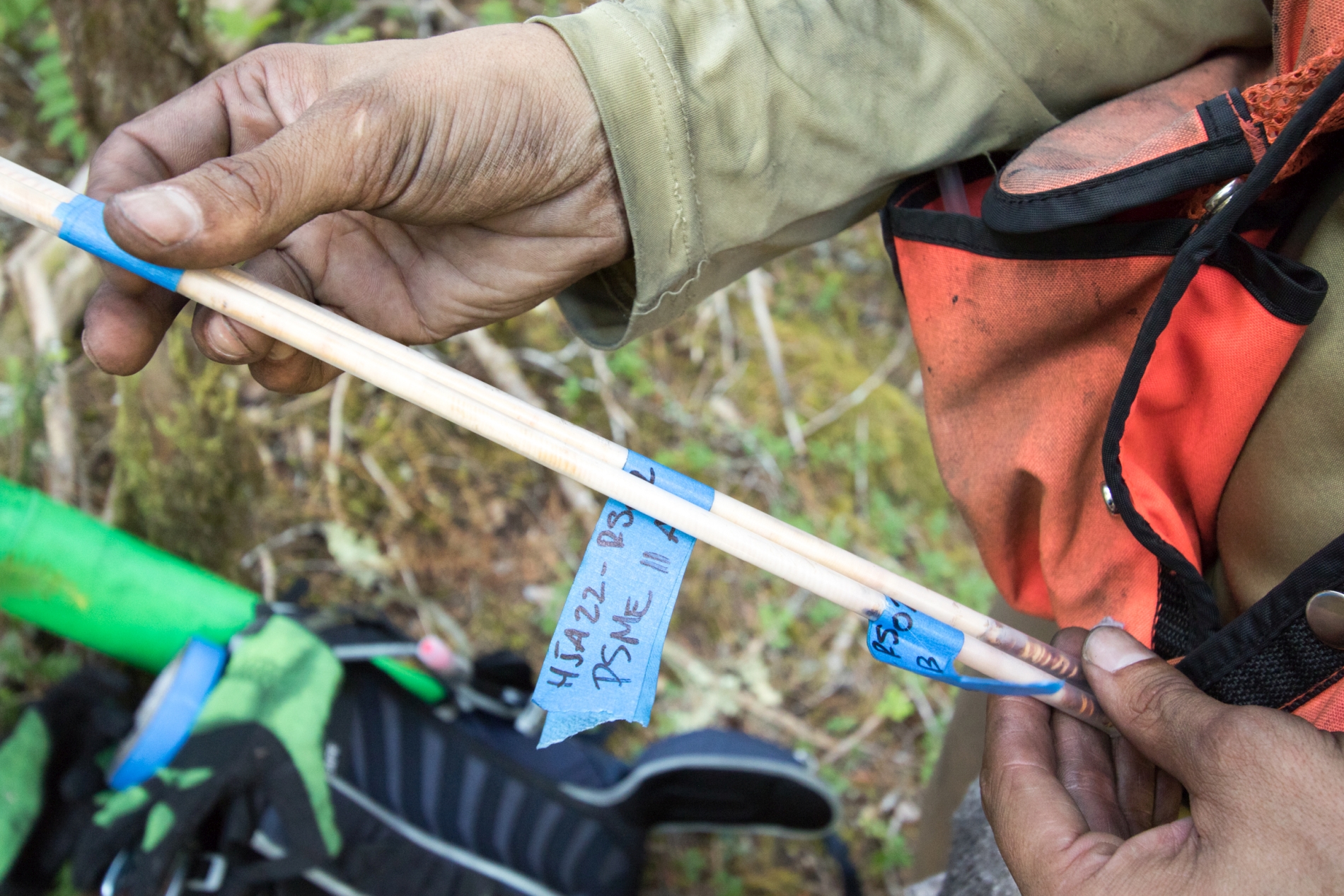
In the field, tree cores are temporarily stored in plastic straws and labeled with location, year, stand number, tree species, and a unique ID for the tree.
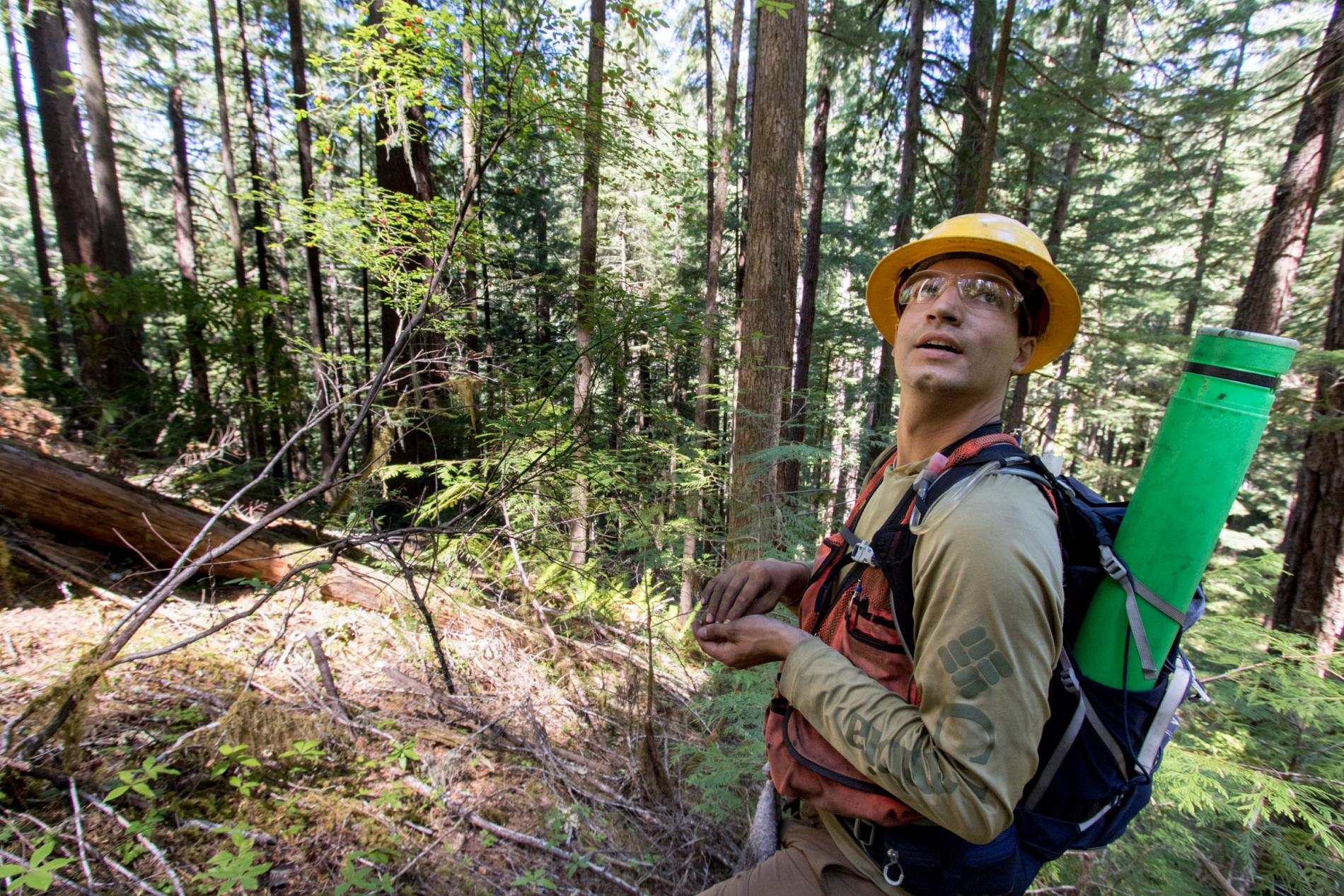
Research Experience for Undergraduates (REU) student Aaron Evans looks at potential trees to core at the HJ Andrews Experimental Forest.
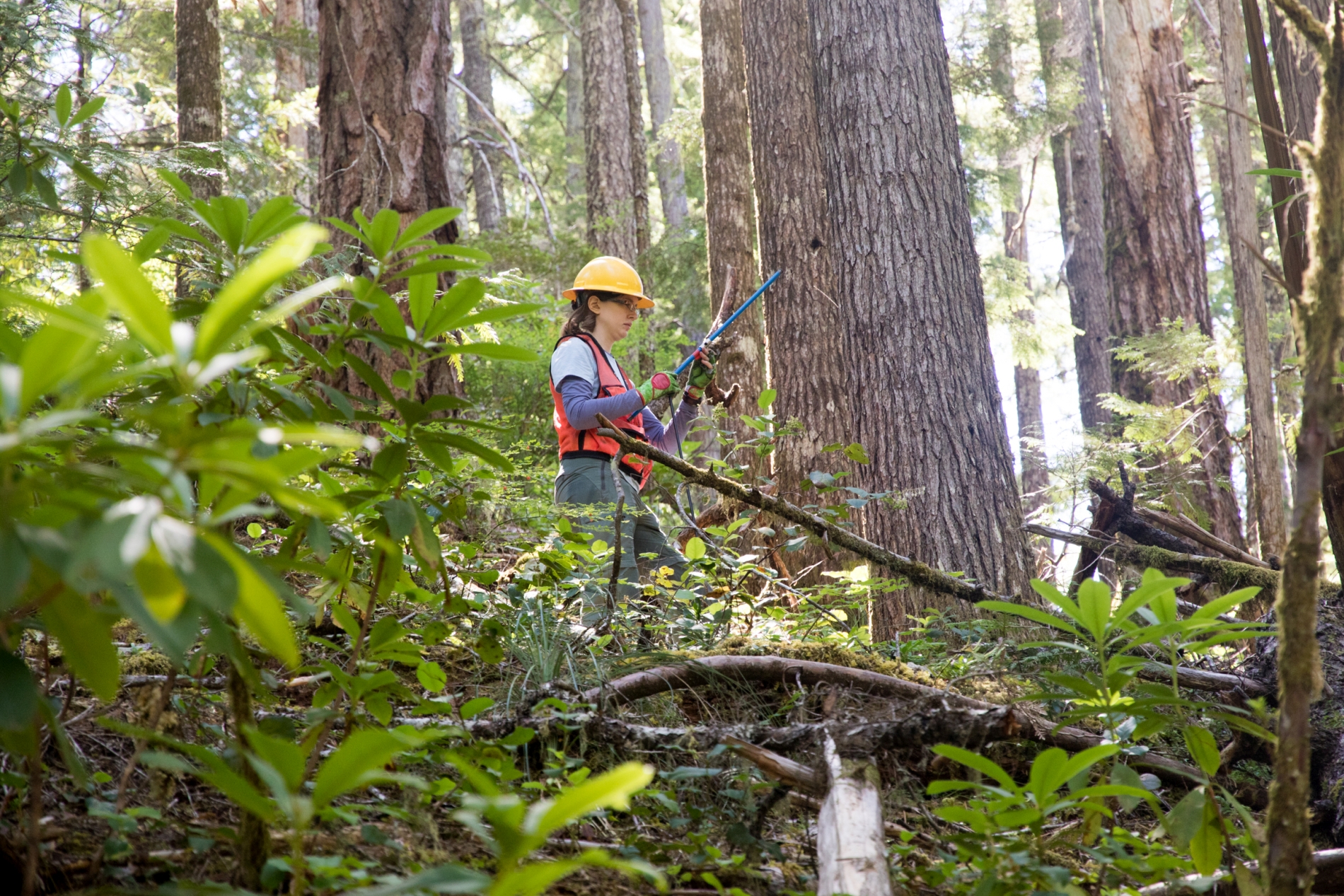
Research Experience for Undergraduates (REU) student April Hersey prepares herself to core a tree in the HJ Andrews Experimental Forest.
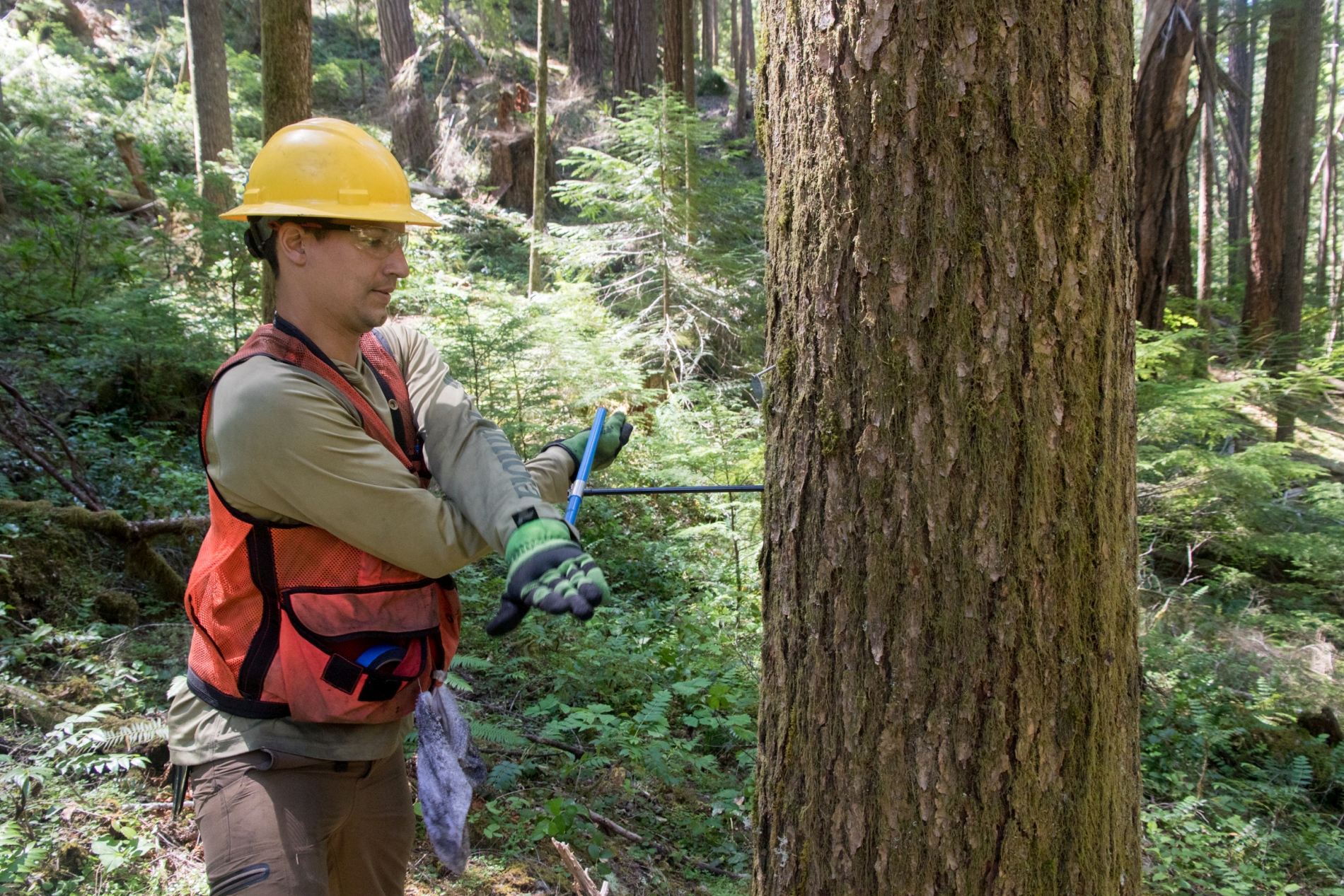
Research Experience for Undergraduates (REU) student Aaron Evans cores a tree in the HJ Andrews Experimental Forest. The borer (0.5cm in diameter) extract a small section of wood from tree trunk: the core.
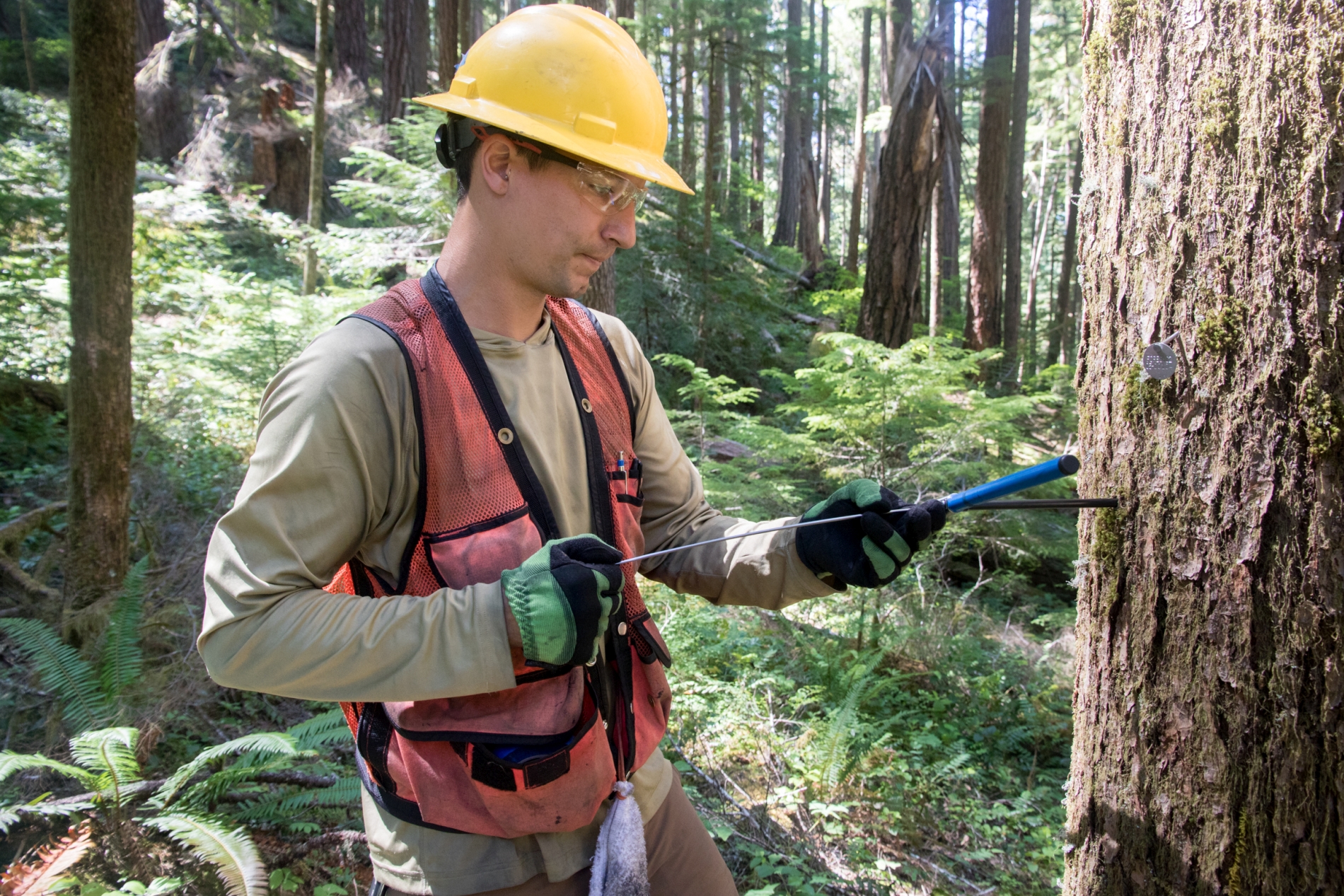
Research Experience for Undergraduates (REU) student Aaron Evans cores a tree in the HJ Andrews Experimental Forest. The borer (0.5cm in diameter) extract a small section of wood from tree trunk: the core.
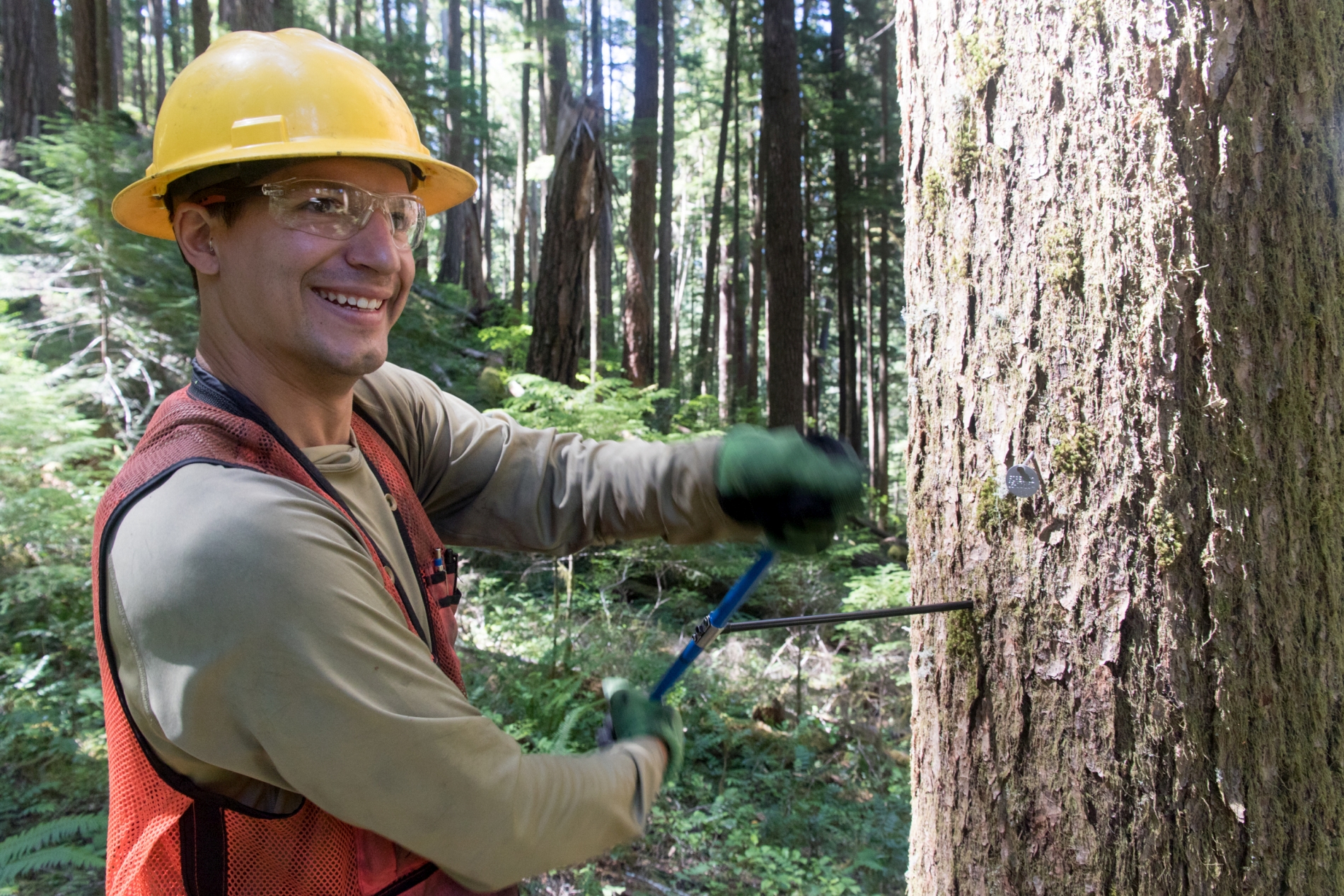
Research Experience for Undergraduates (REU) student Aaron Evans cores a tree in the HJ Andrews Experimental Forest. The borer (0.5cm in diameter) extract a small section of wood from tree trunk: the core.
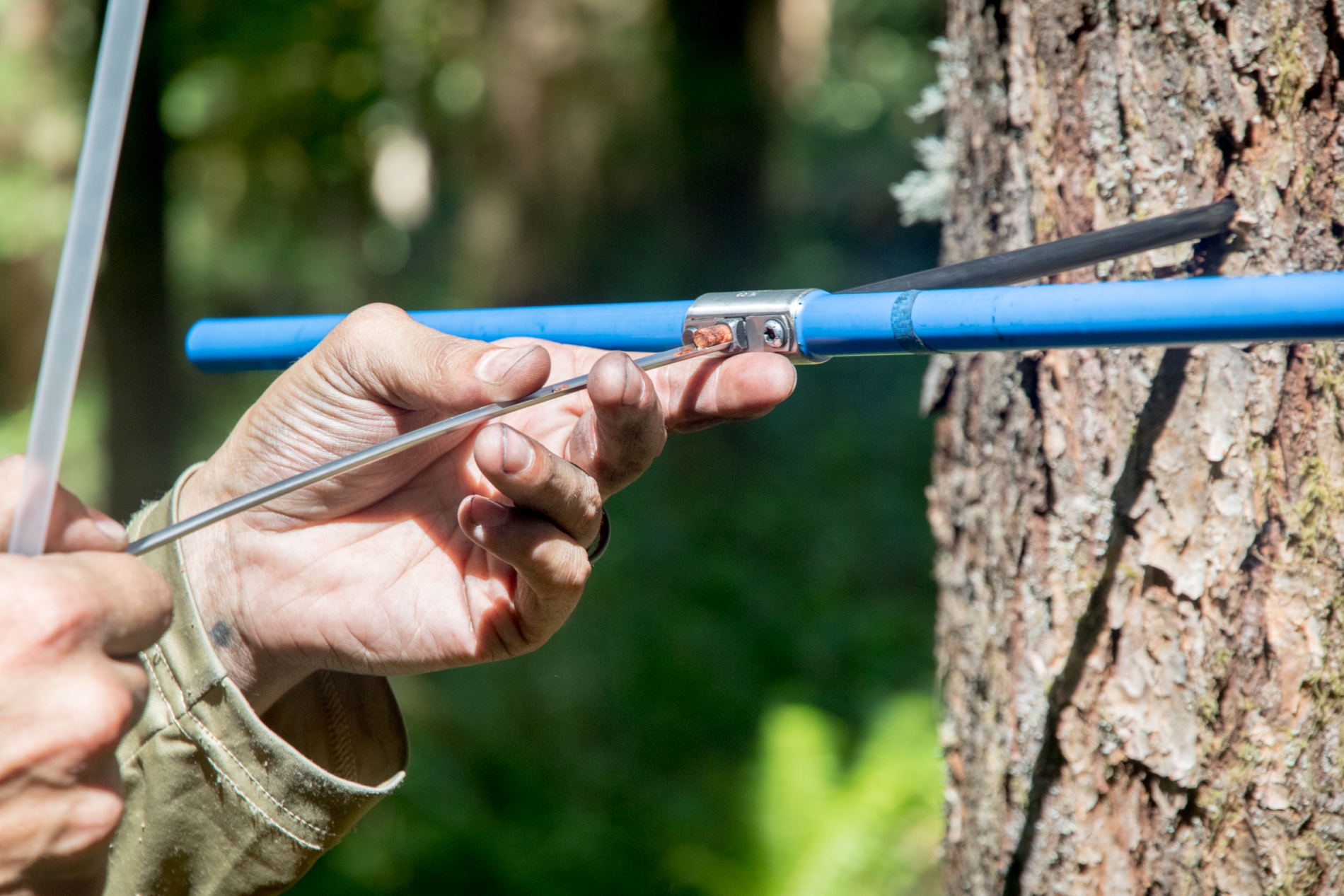
An REU student extracts a core from a tree using a tree ring borer. In the picture the outermost part of the core (the bark) is being extracted.
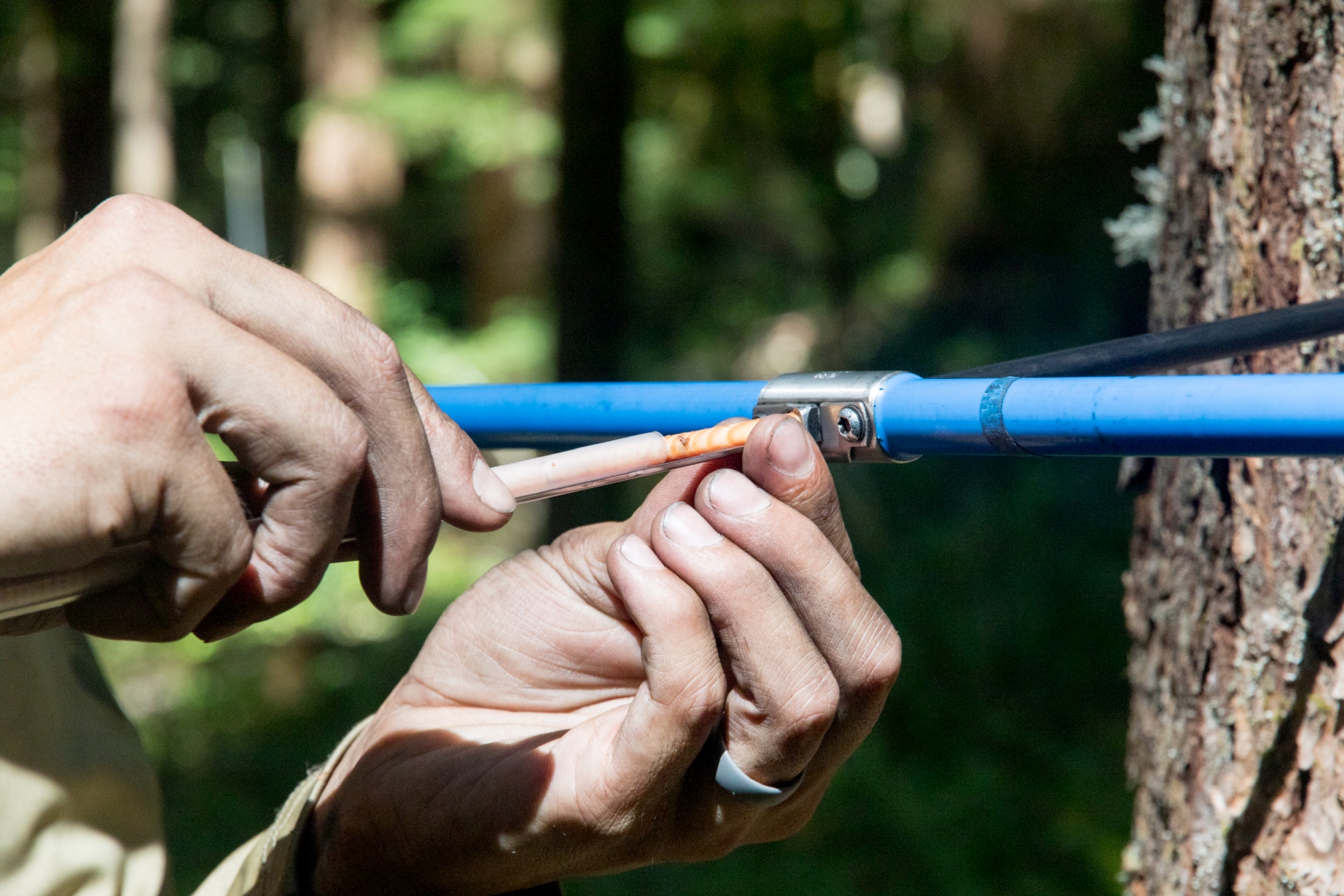
The tree core is slipped into a plastic straw for safe storage. It will be labeled and taken to a laboratory for further study.
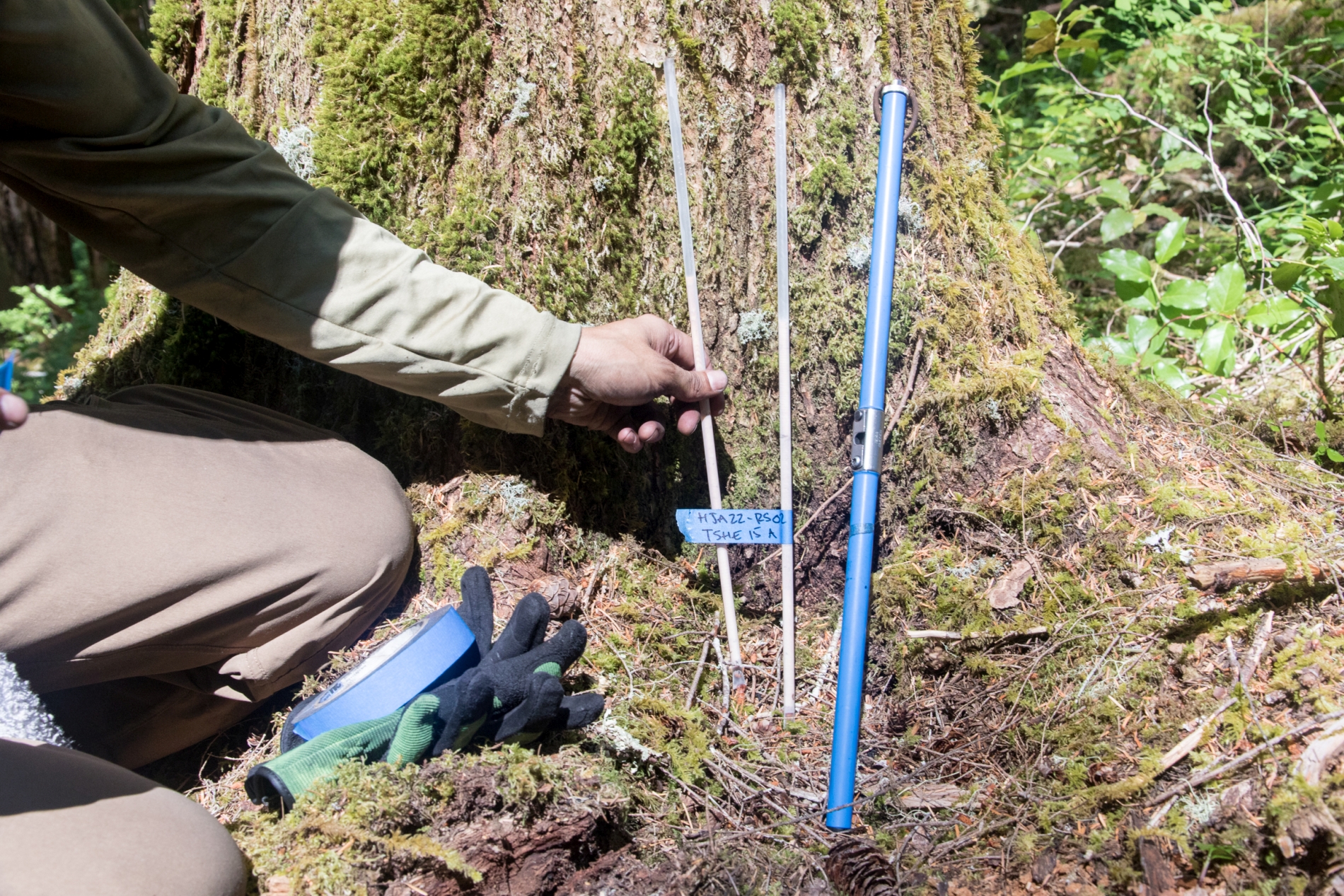
Two labeled tree core samples (left) were extracted per tree, and the coring tool (blue borer).
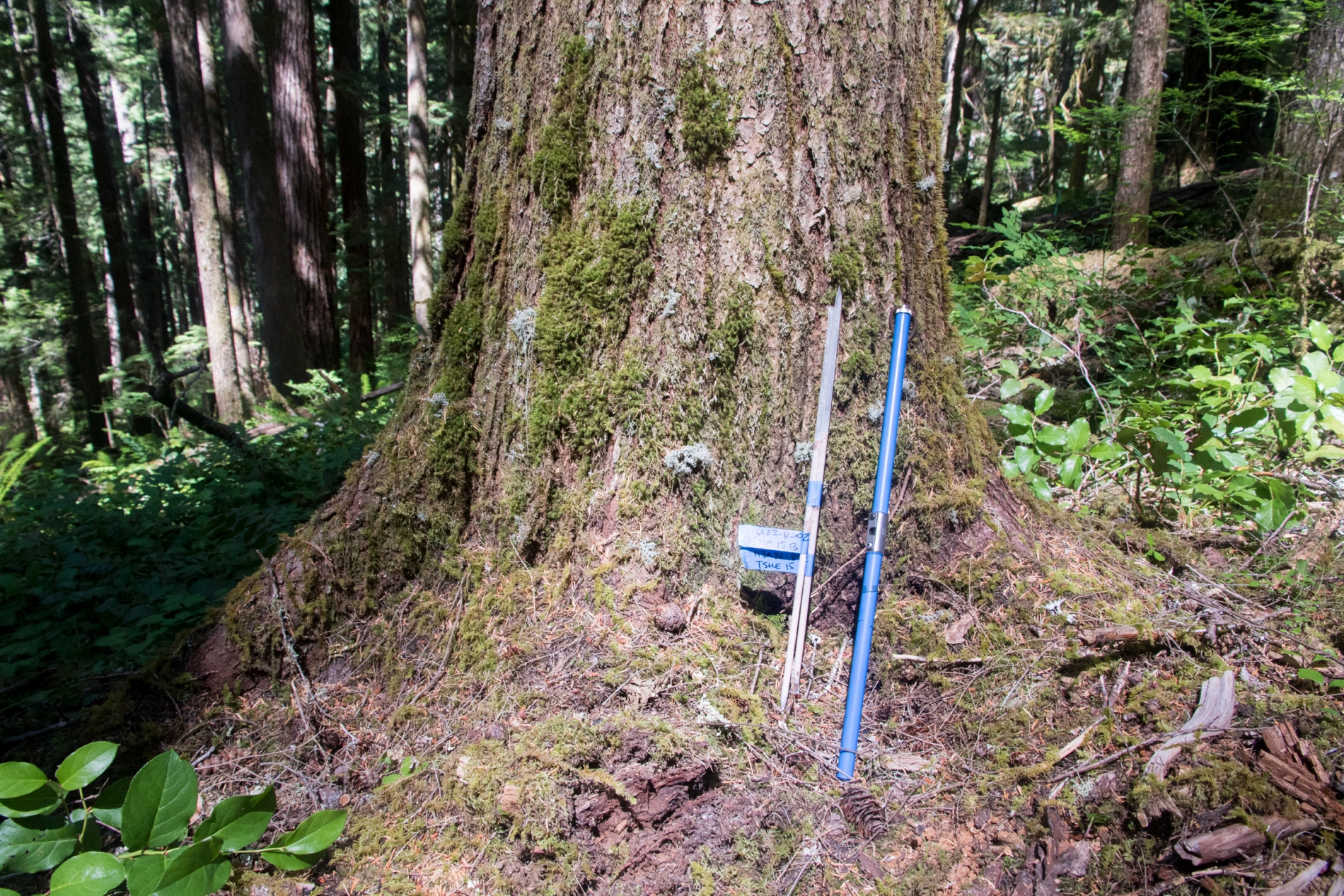
Two labeled tree core samples (left) and the coring tool (blue borer).
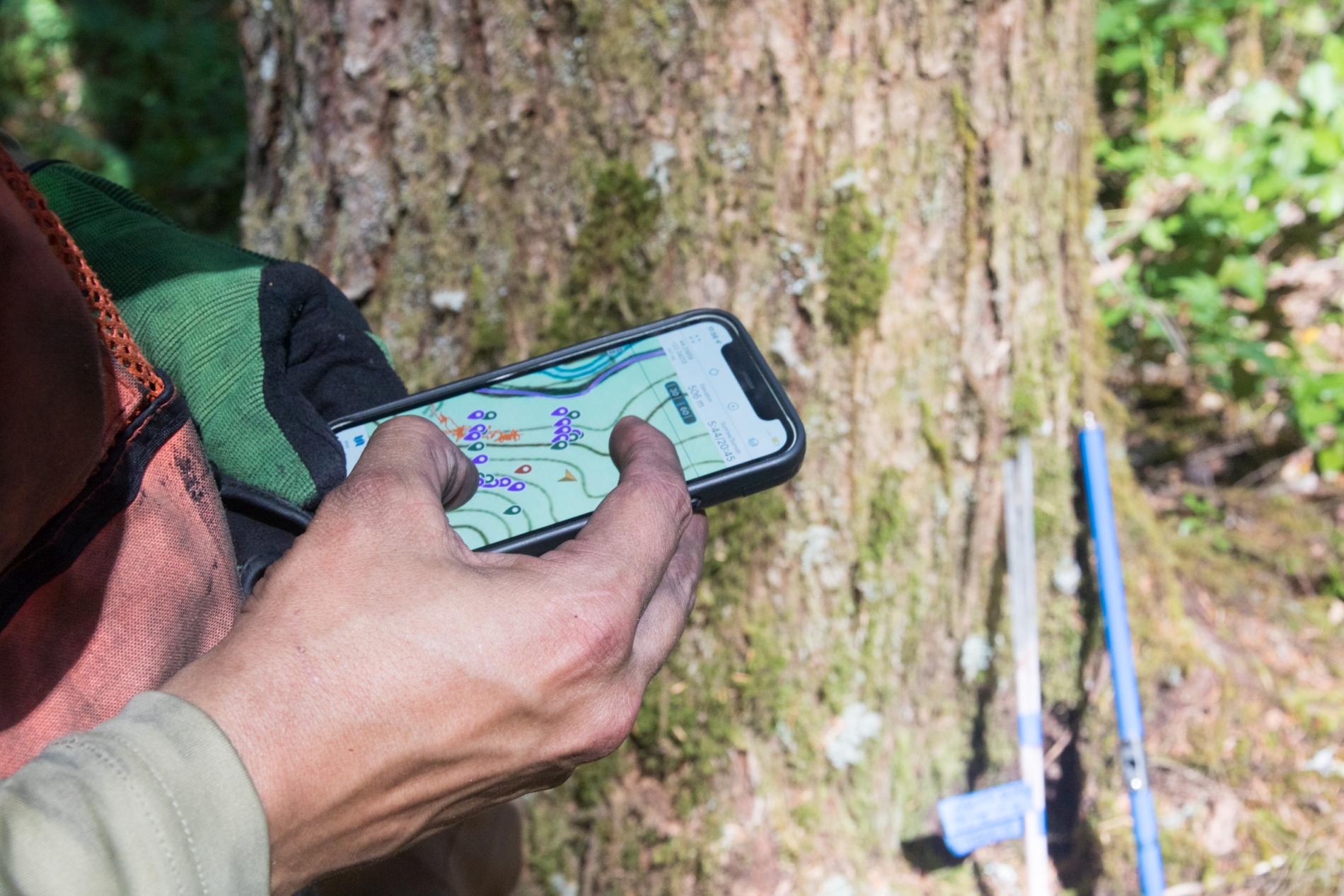
Research Experience for Undergraduates (REU) student Aaron Evans reviews the study plot map on his smartphone using a GPS app. Sampled trees show up as points on the map.
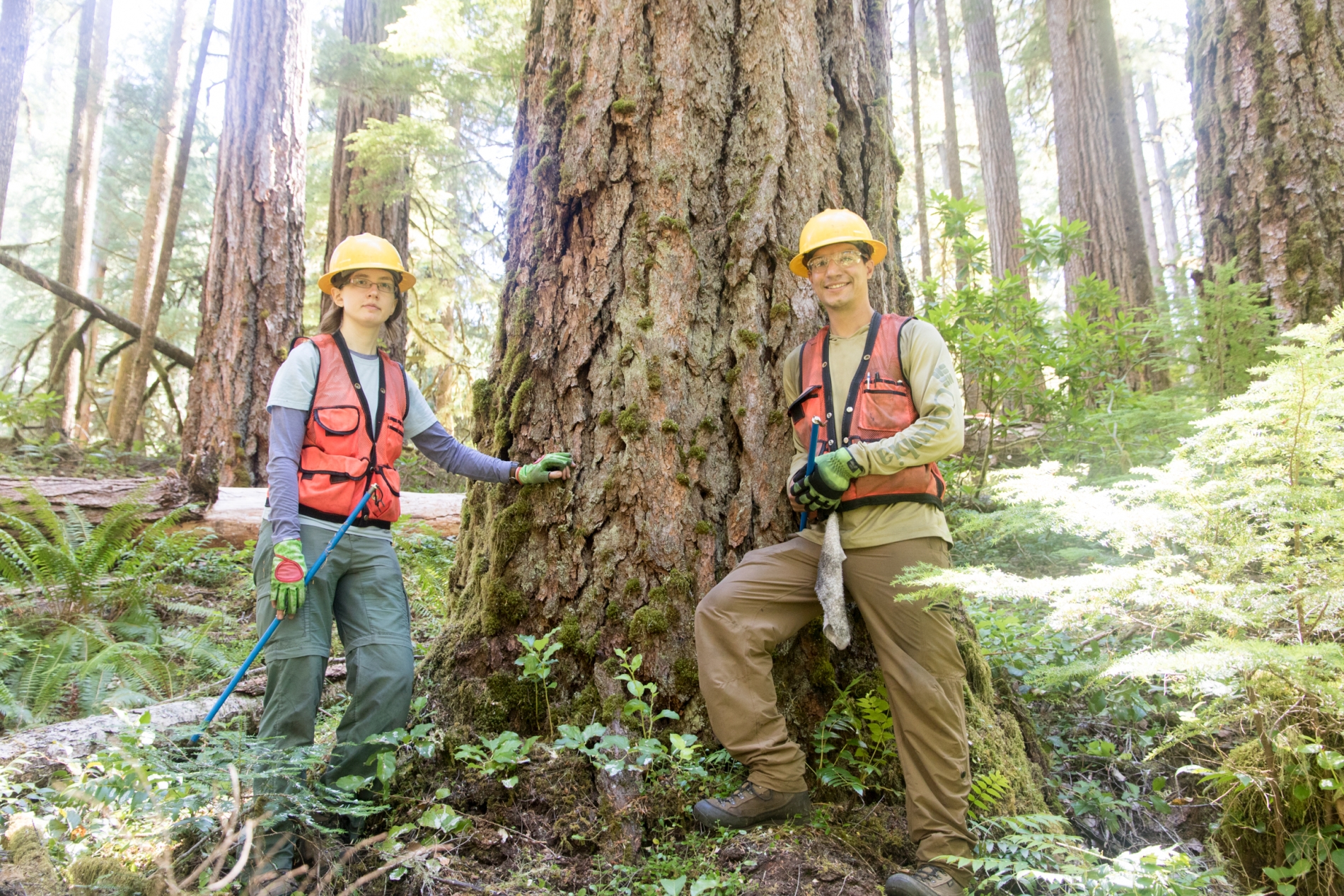
Research Experience for Undergraduate (REU) students April Hersey (left) and Aaron Evans (right) at the HJ Andrews Experimental Forest.
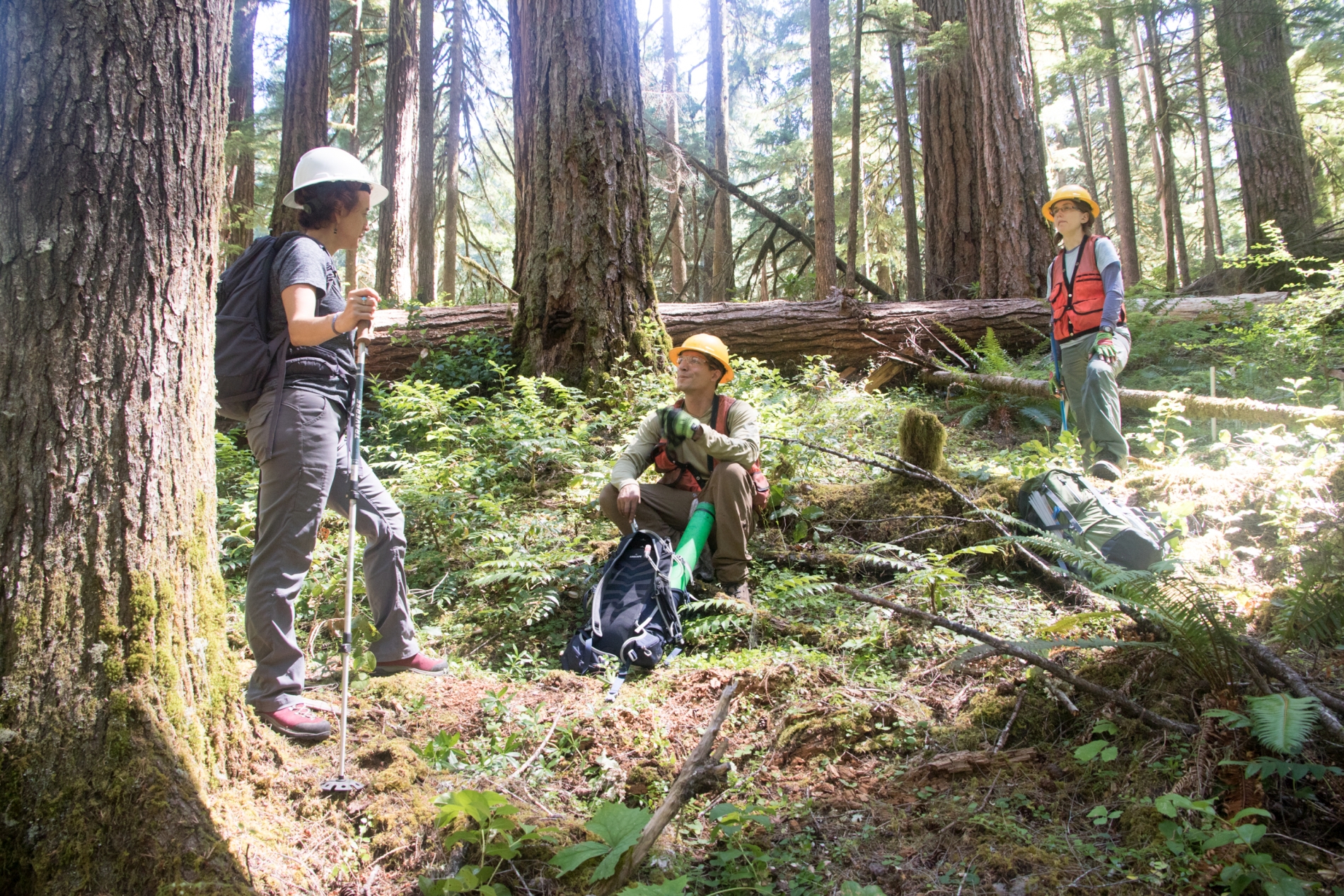
Dr. Catalina Segura (left), Aaron Evans (middle), and April Hersey (right).
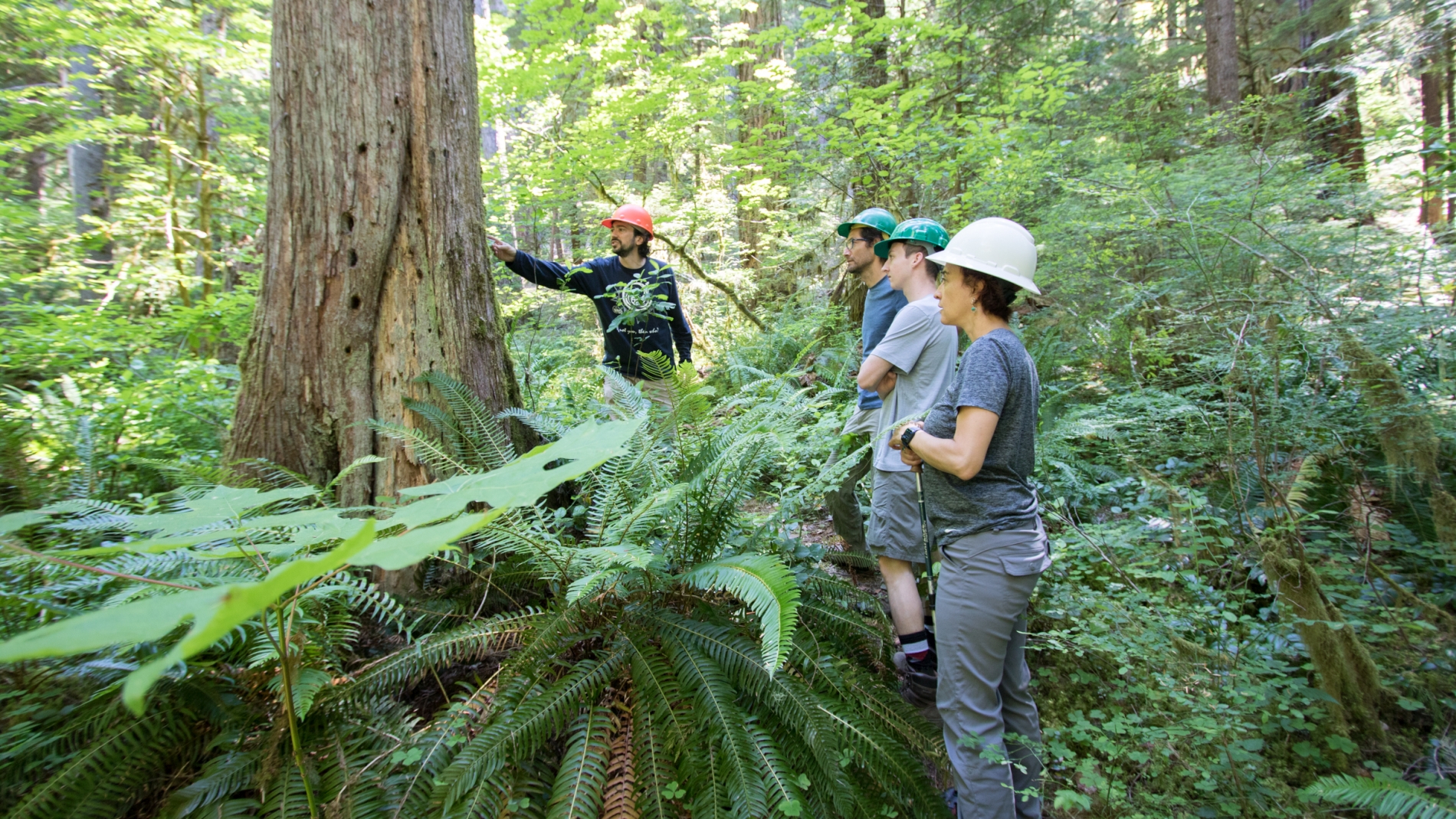
Researchers survey trees in Reference Stand 2 as they plan for a dendroecology study
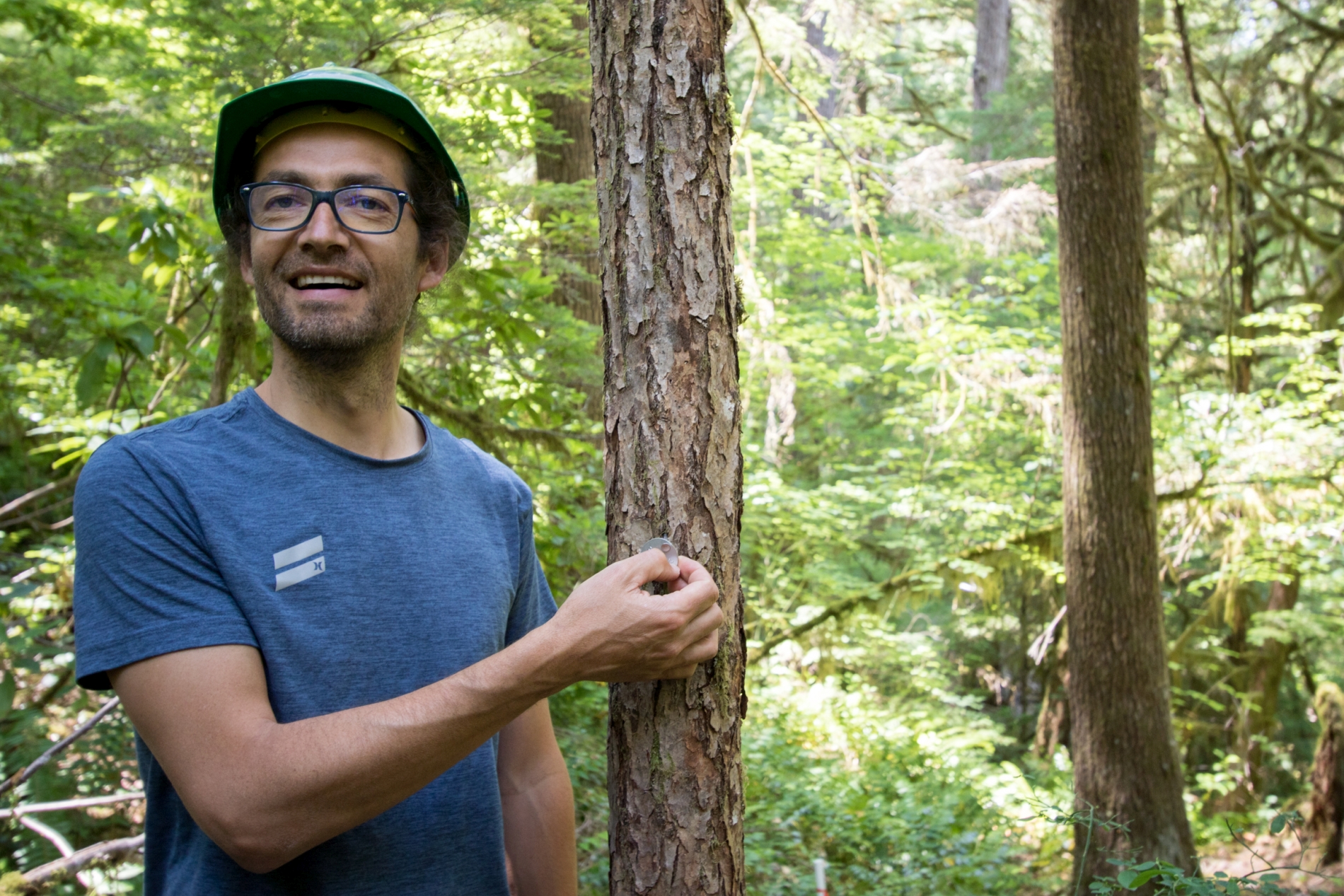
Researcher Dr. Andres Holz with a tagged tree in Reference Stand 2
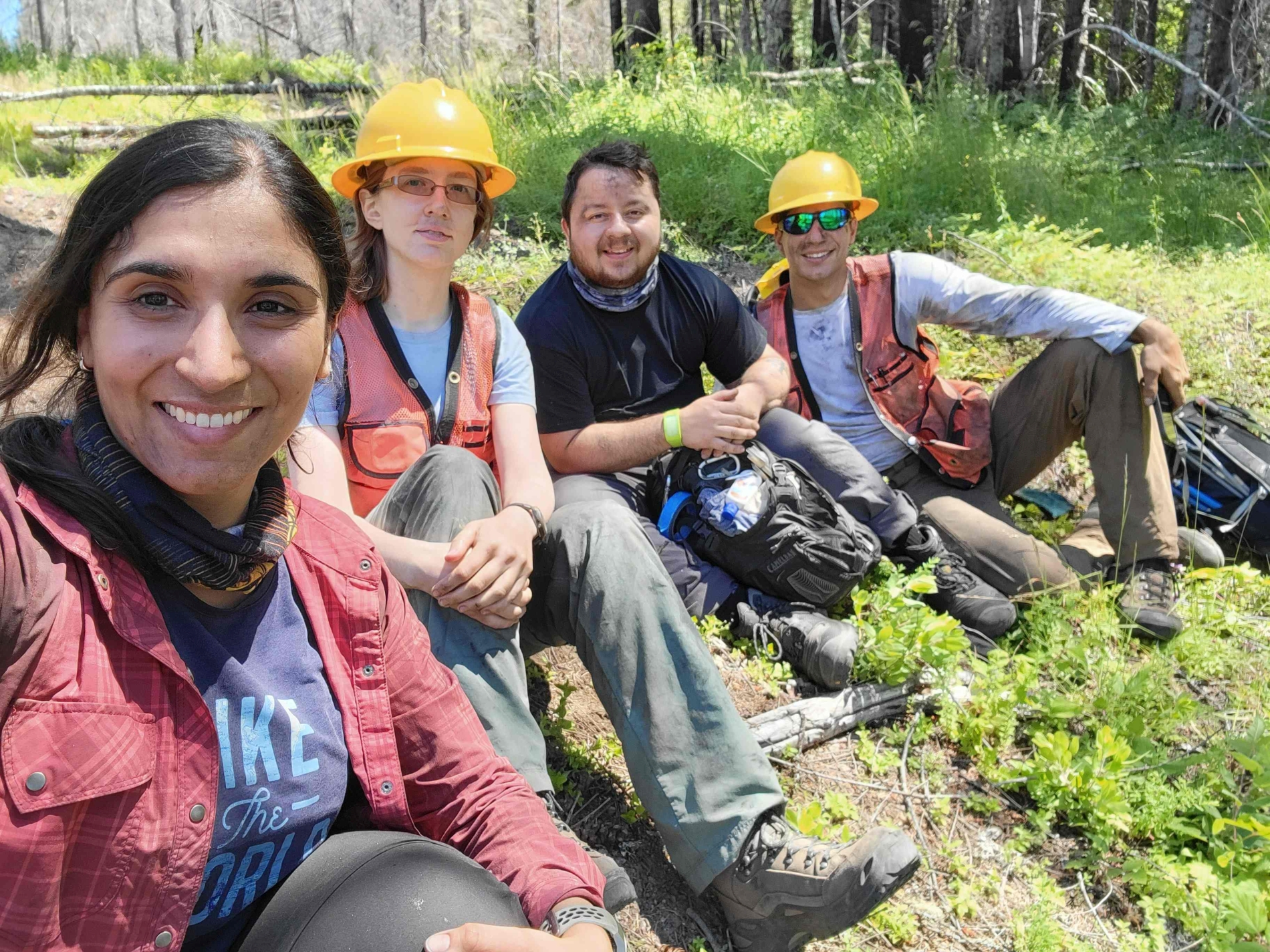
Left to right: PhD student Paola Arroyo Vargas and undergraduate researchers April Hersey, Desmond Willson, and Aaron Evans after a day of field work in the burned area at the HJ Andrews Experimental Forest.
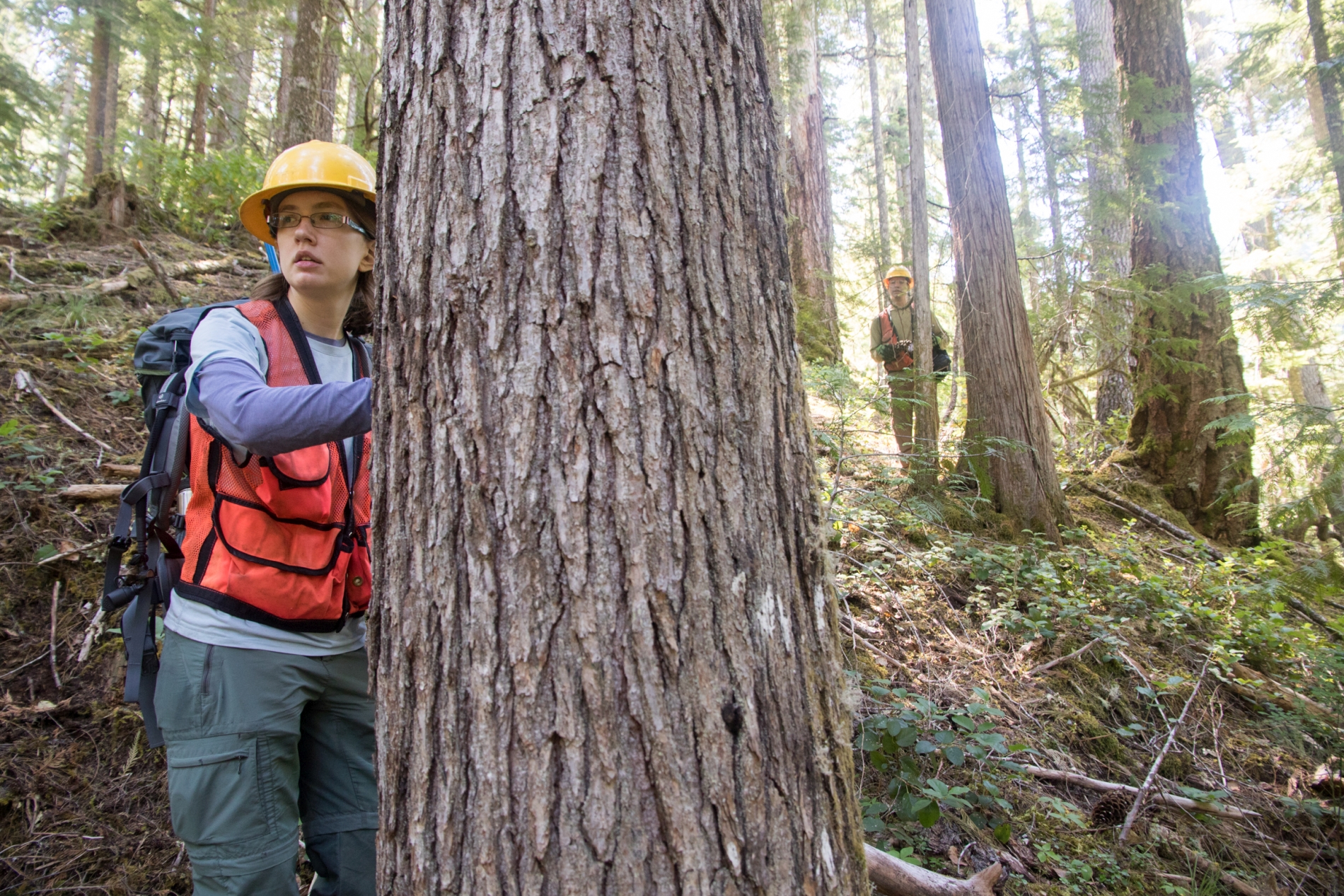
REU students April Hersey (L) and Aaron Evans (R) identify trees to be cored for a study on vegetation dynamics. The cores will allow researchers to learn more about trends in radial growth and climate-growth relationships over time.