
Dr. Dana Warren, Dr. Catalina Segura, and graduate student Maddie Maffia are exploring how decoupled drought conditions affect streams and the species that live in streams. Under low-flow conditions, trout and salamanders aggregate in pools or cooler water, increasing competition for macroinvertebrate prey, and causing reduced growth and survival. Under increased temperature conditions the metabolic activity of trout and salamanders are elevated, increasing their respiration rate, and causing population declines from reduced dissolved oxygen (DO) availability. To examine how the trout and salamanders respond and interact to the reduced flow and increased temperature stream conditions, researchers conducted a drying and warming experiment in a tributary of McRae Creek at the HJ Andrews Experimental Forest. In the 2021-2023 summer field seasons, they created separate sections of stream with (a) low flow and (b) elevated temperatures (using passive heating of water traveling through black coils of tubing before returning the water to the stream). In the experimental and control stream sections, they measured trout and salamander abundance, individual growth, and survival using 3-pass depletion methods, while also measuring water level, temperature, and DO using longitudinally distributed sensors. Also see photos from the 2021 and 2022 field seasons. Also see photos from the 2021 and 2022 field season.
Drought Experiment 2023
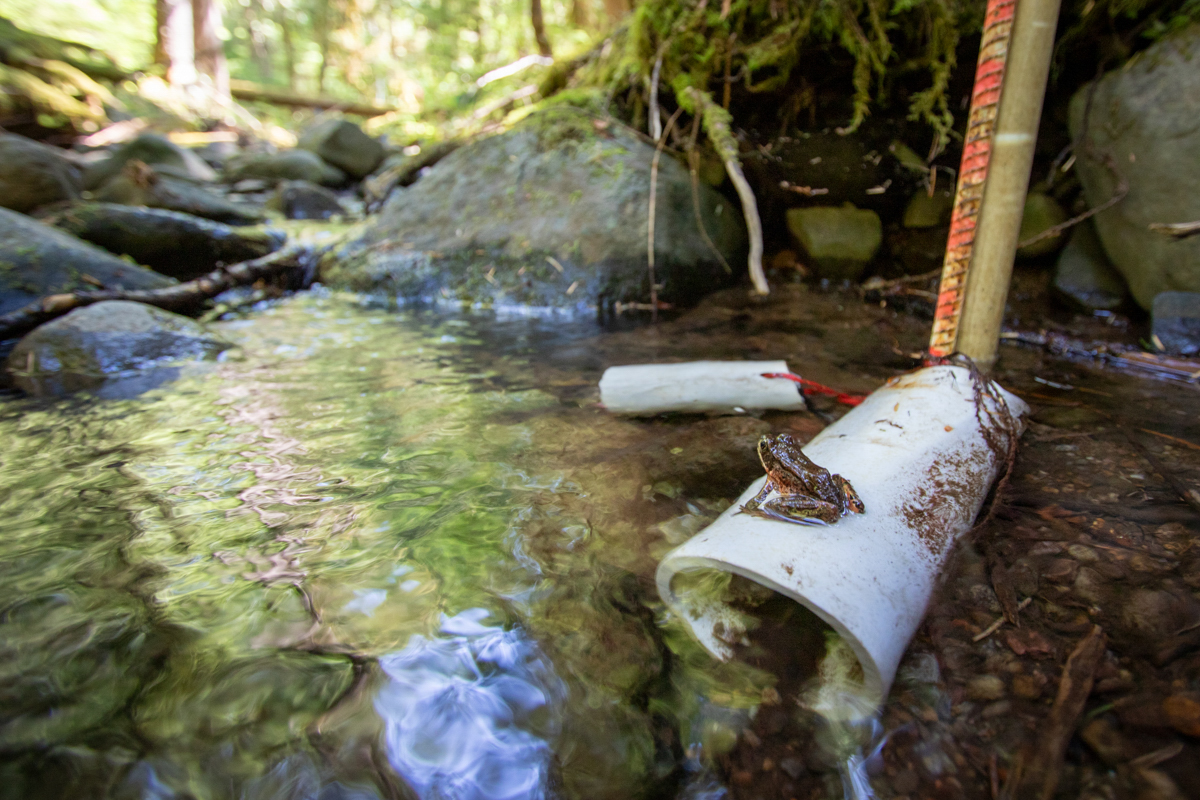
A frog hangs out on a DO sensors in the reference reach.
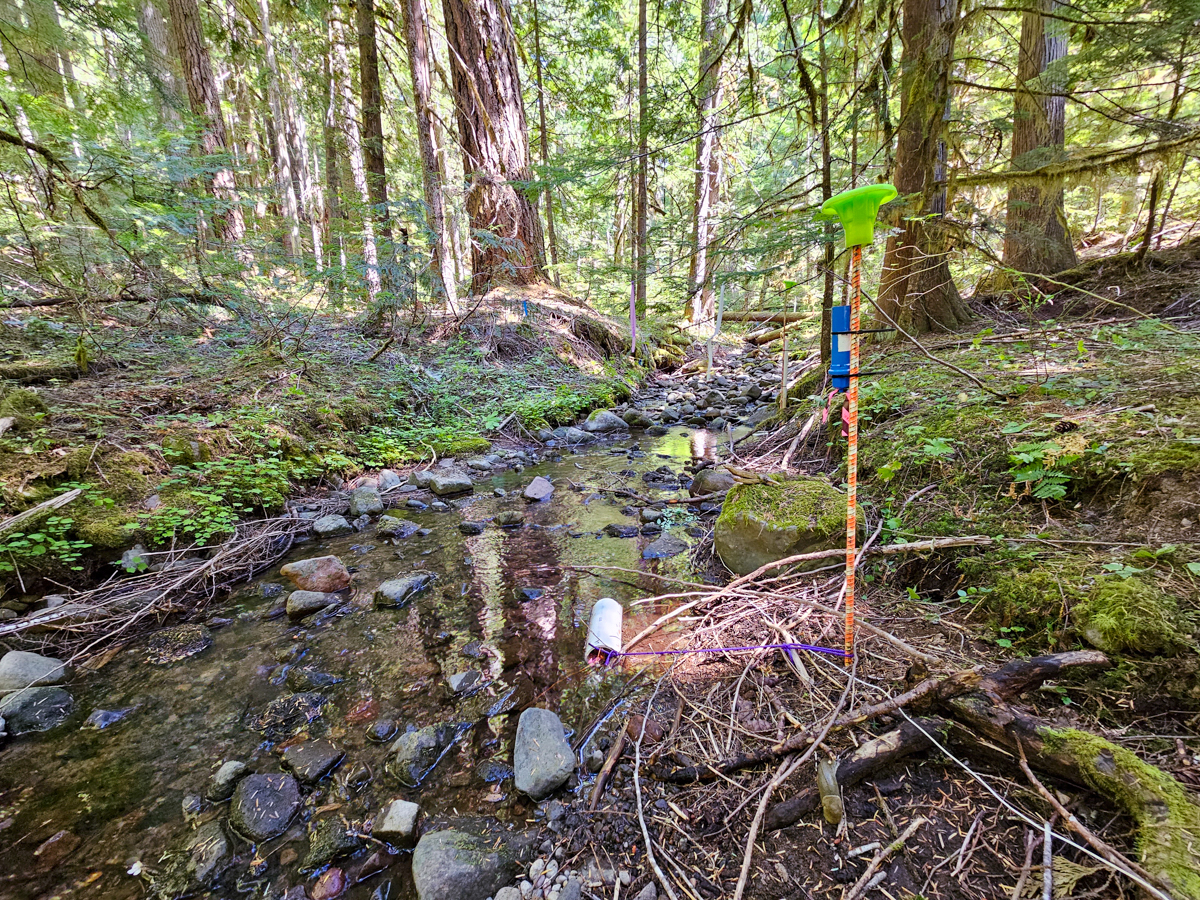
Sensors (DO and PAR) installed in the reference reach, where no treatments are used.
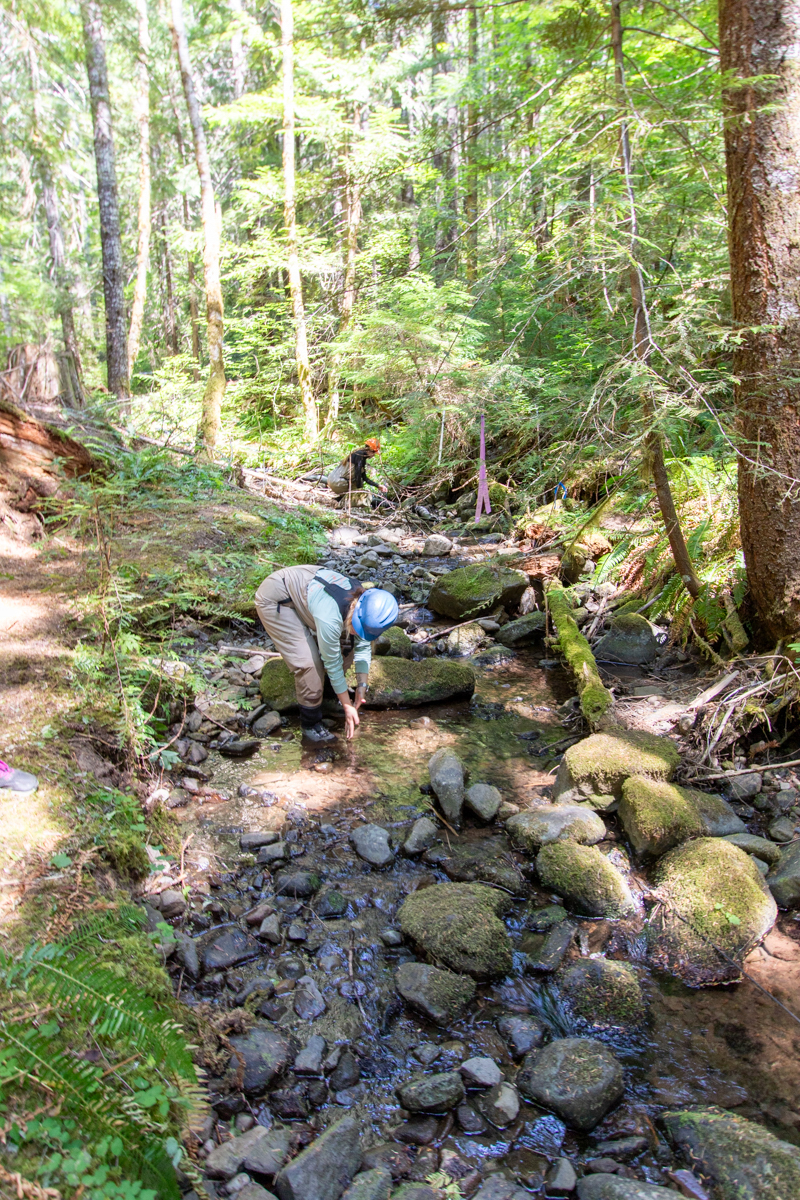
Maddie Maffia and Hailey Bond checking the lines in the low-flow reach
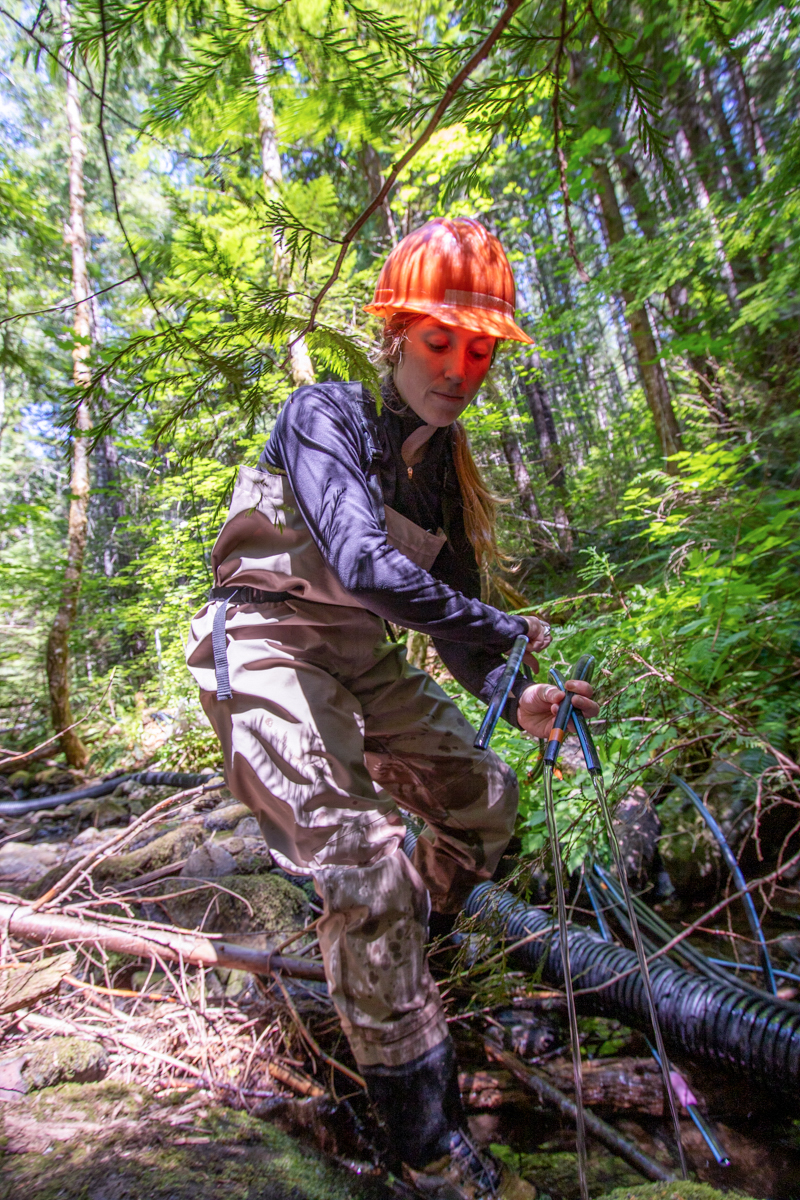
Maddie Maffia checks the warmed water as it re-enters the warmed reach.
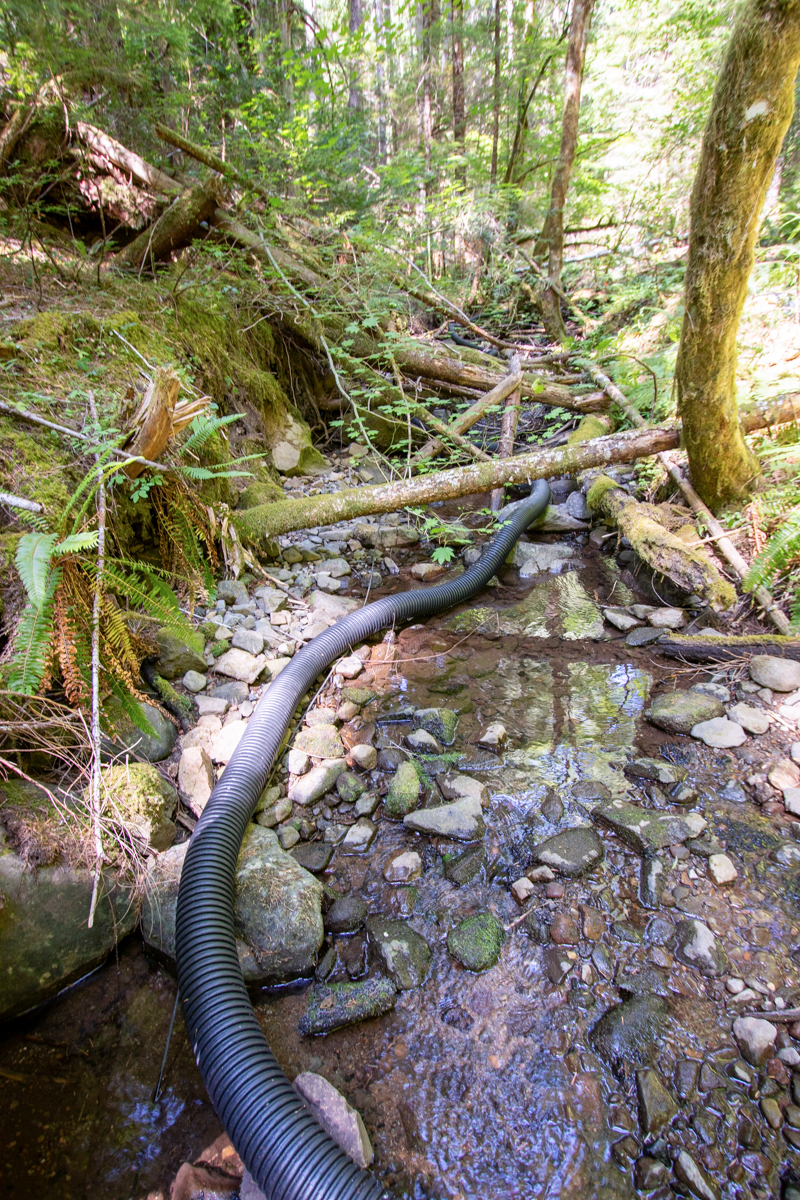
Diverted water being carried through a large plastic line in the low-flow reach.
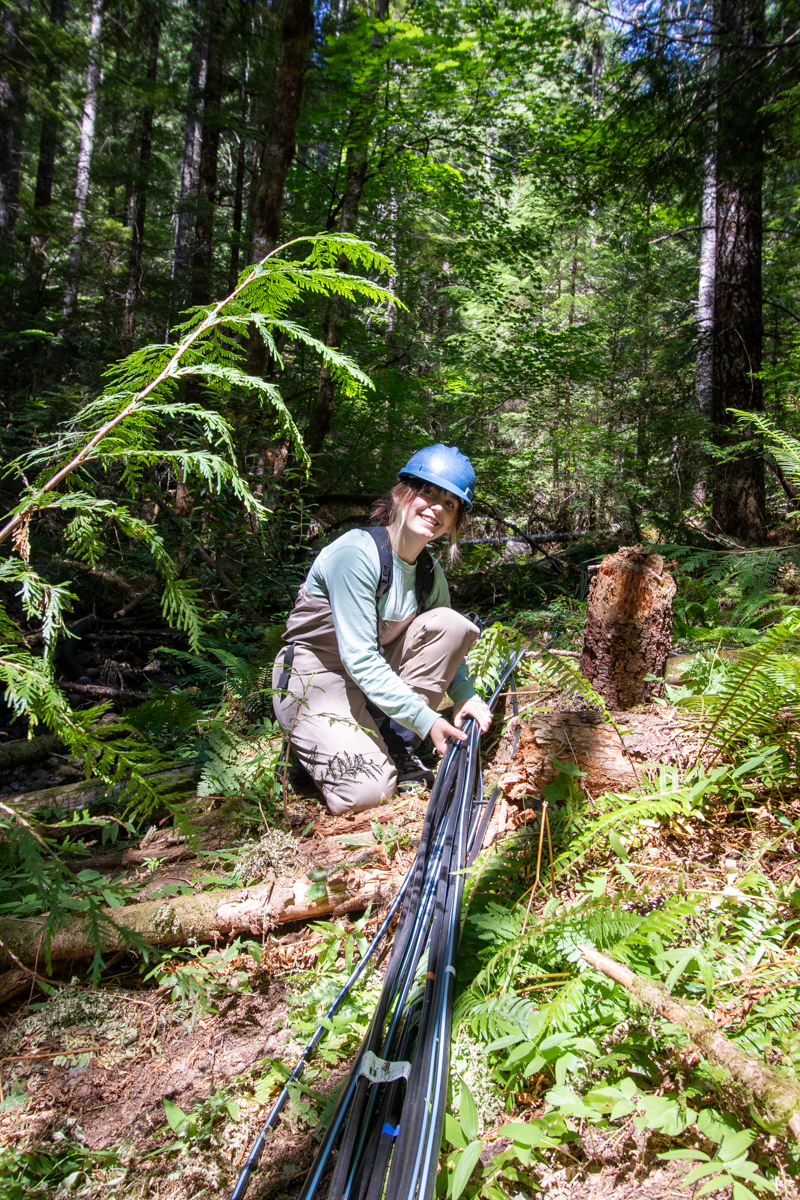
Undergraduate student Hailey Bond checks tubing as it runs along the low-flow reach.
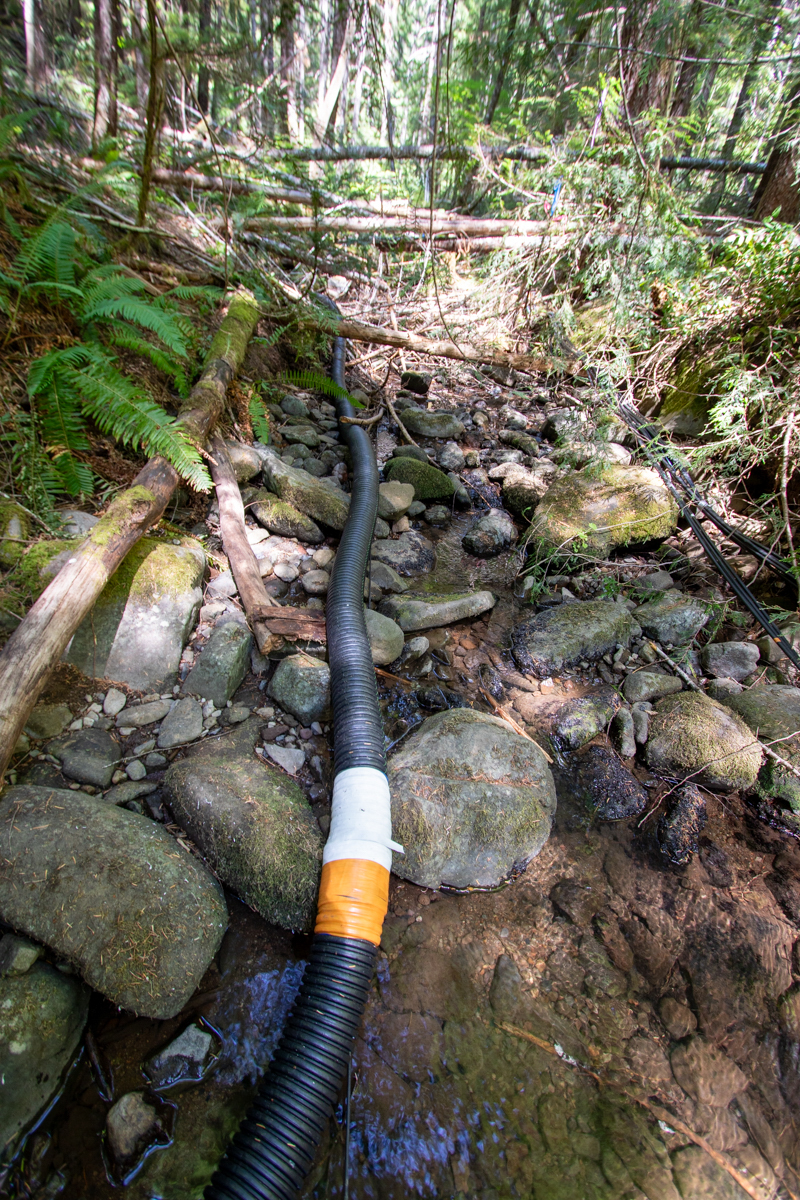
Diverted water being carried through a large plastic line in the low-flow reach.
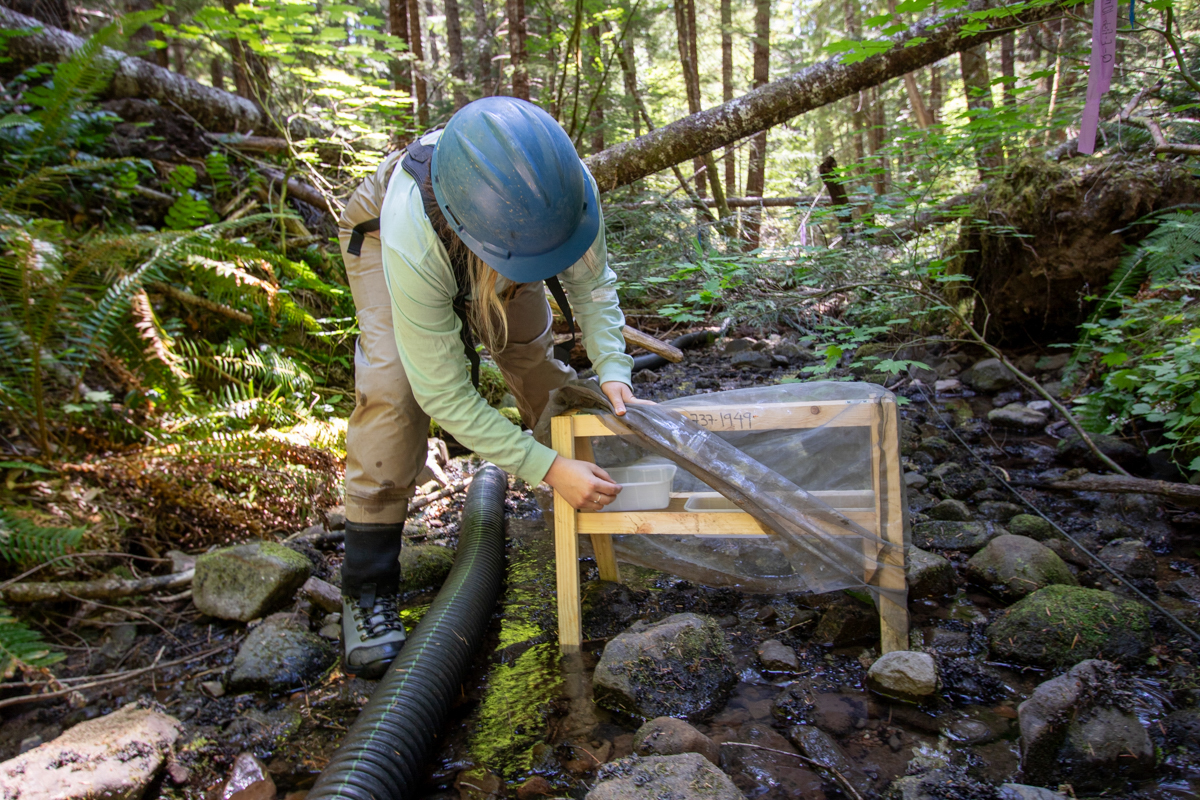
Undergraduate student Hailey Bond empties emergence traps in the low-flow reach.
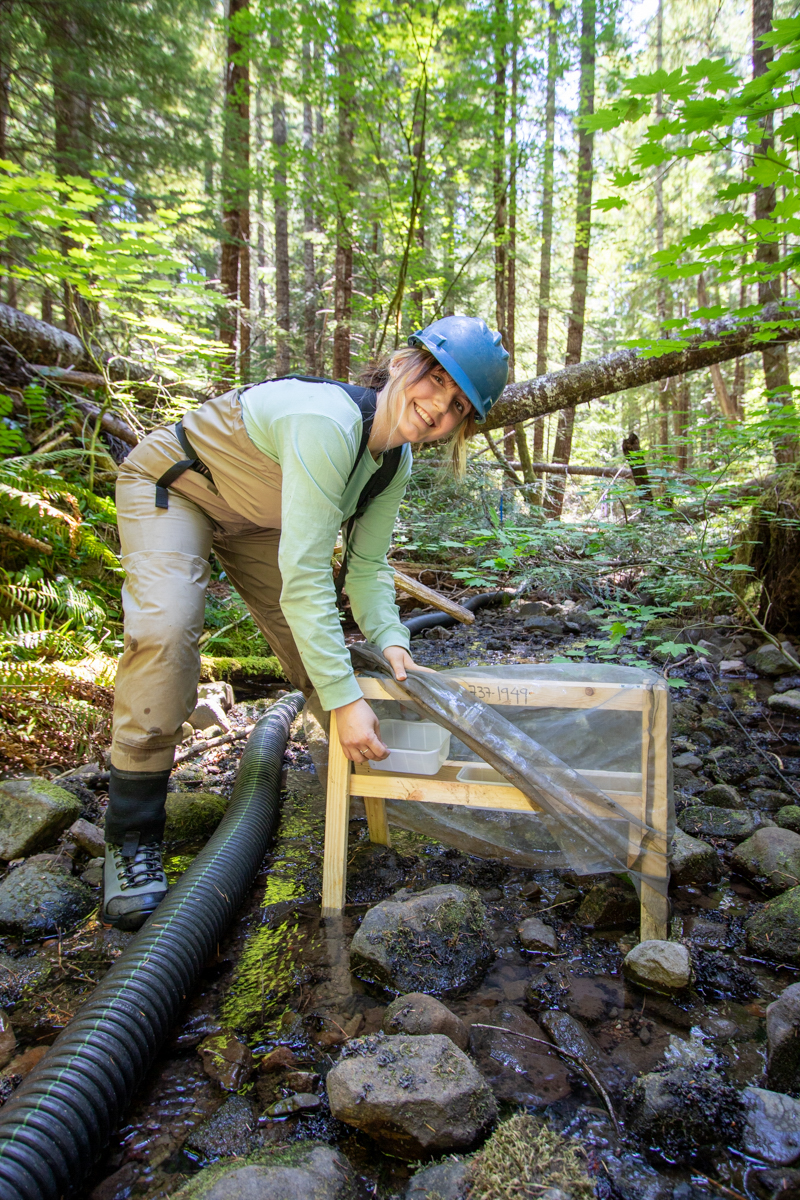
Undergraduate student Hailey Bond empties emergence traps in the low-flow reach.
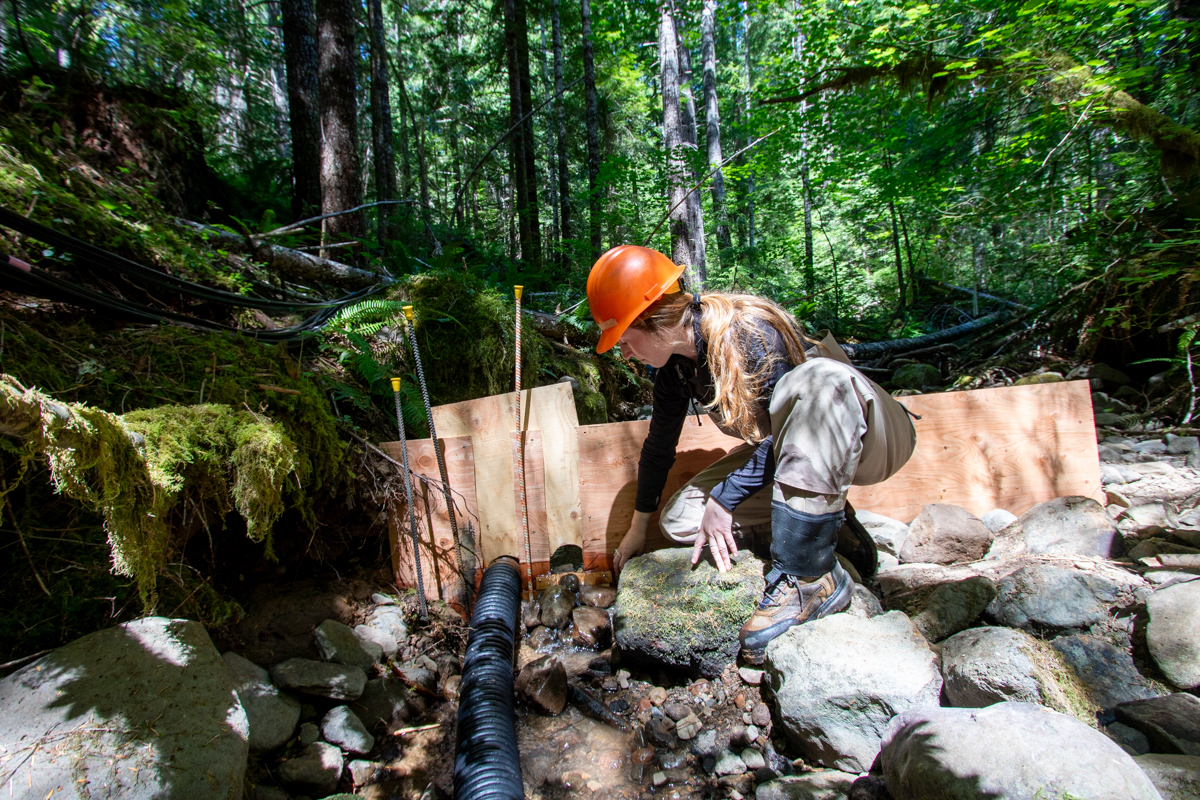
Graduate student Maddie Maffia ensures the flow diversion still has enough flow for fish passage.
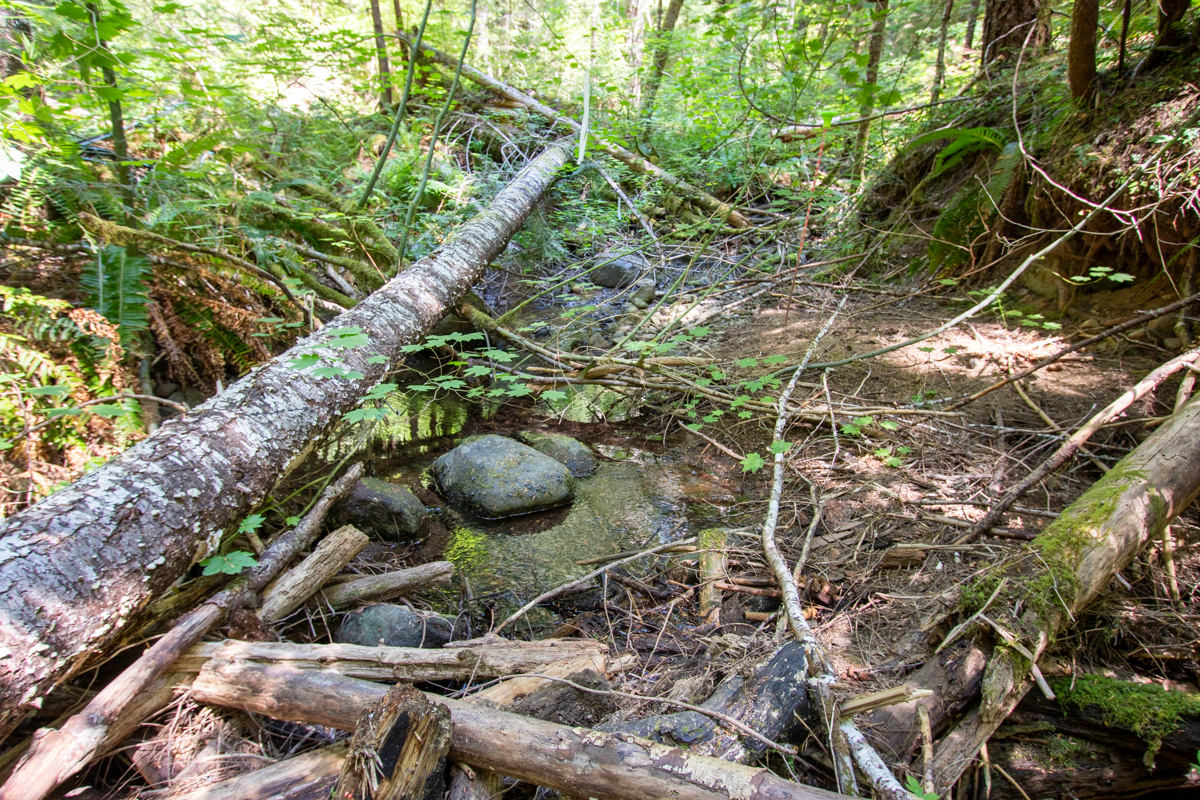
A wood jam creating great habitat cover in the low-flow reach.
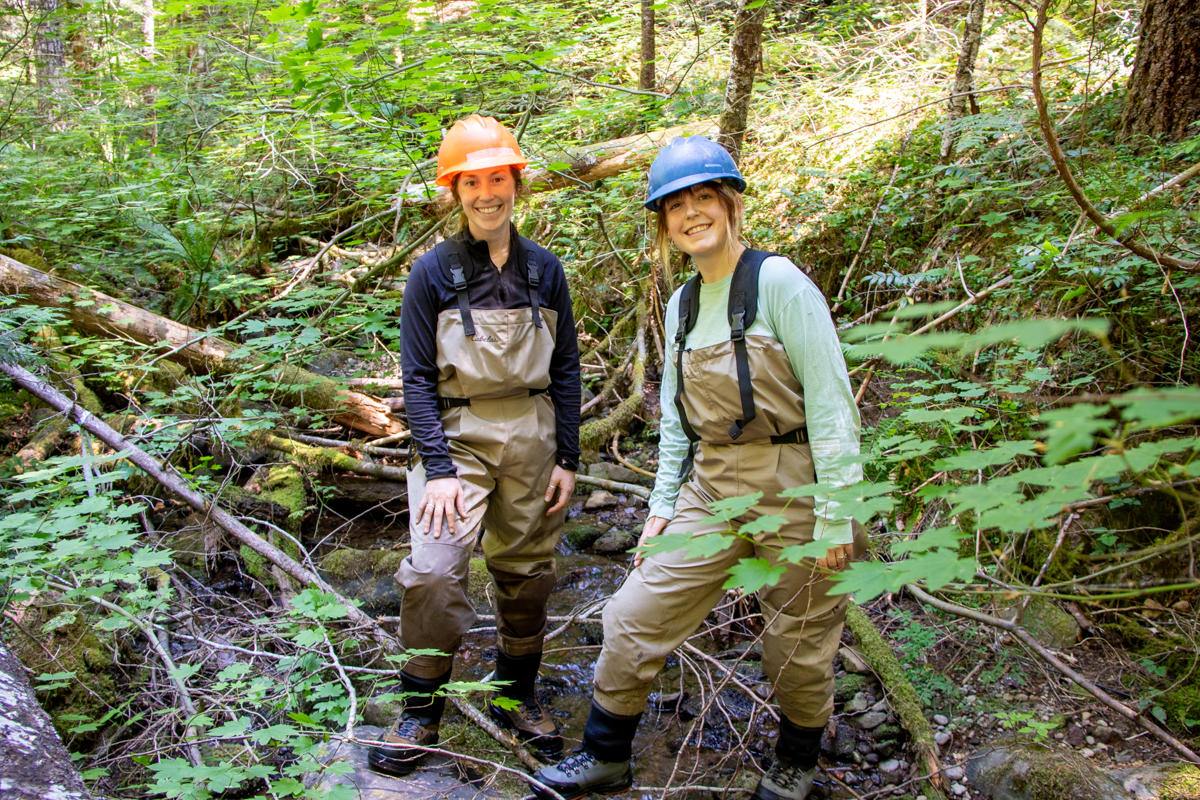
Maddie Maffie and Hailey Bond in the low-flow reach.
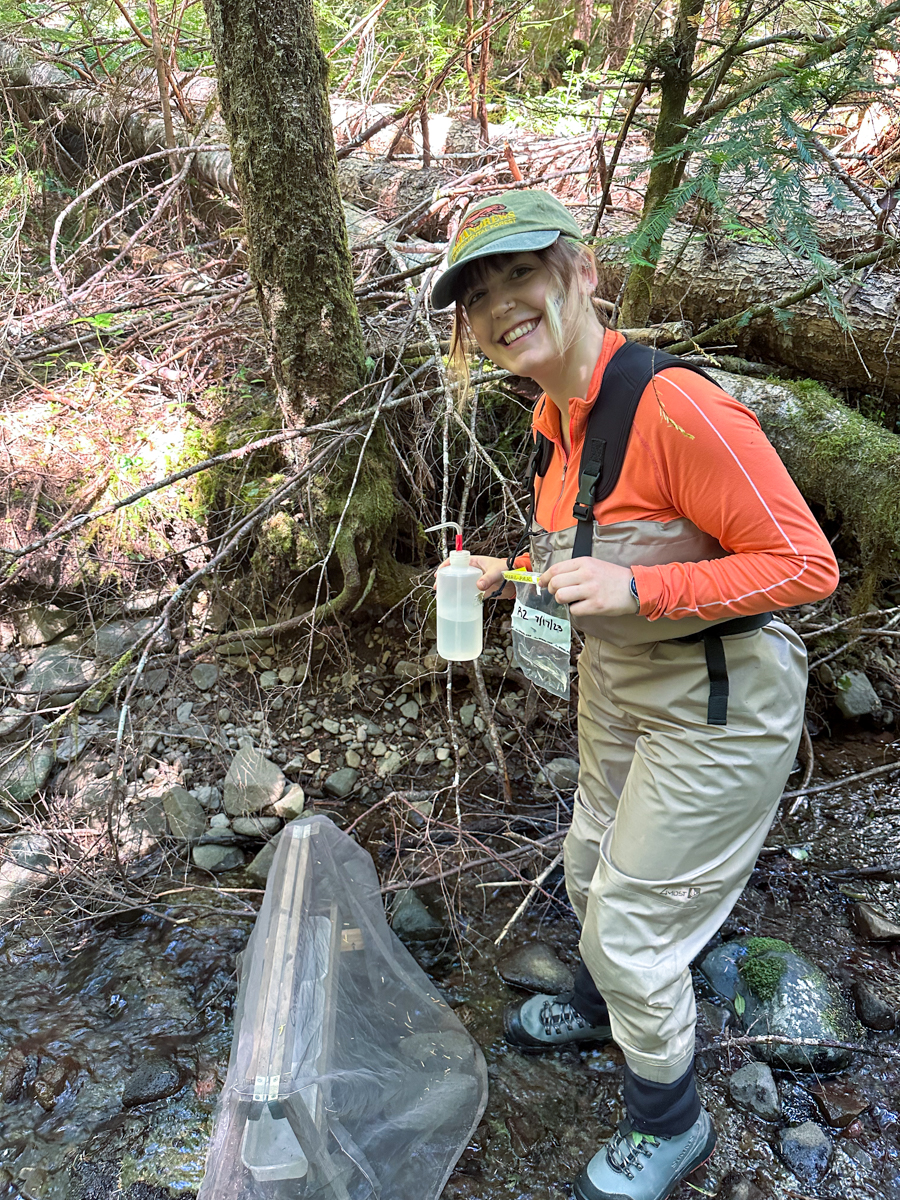
Undergraduate student Hailey Bond collects samples from the insect emergence traps.
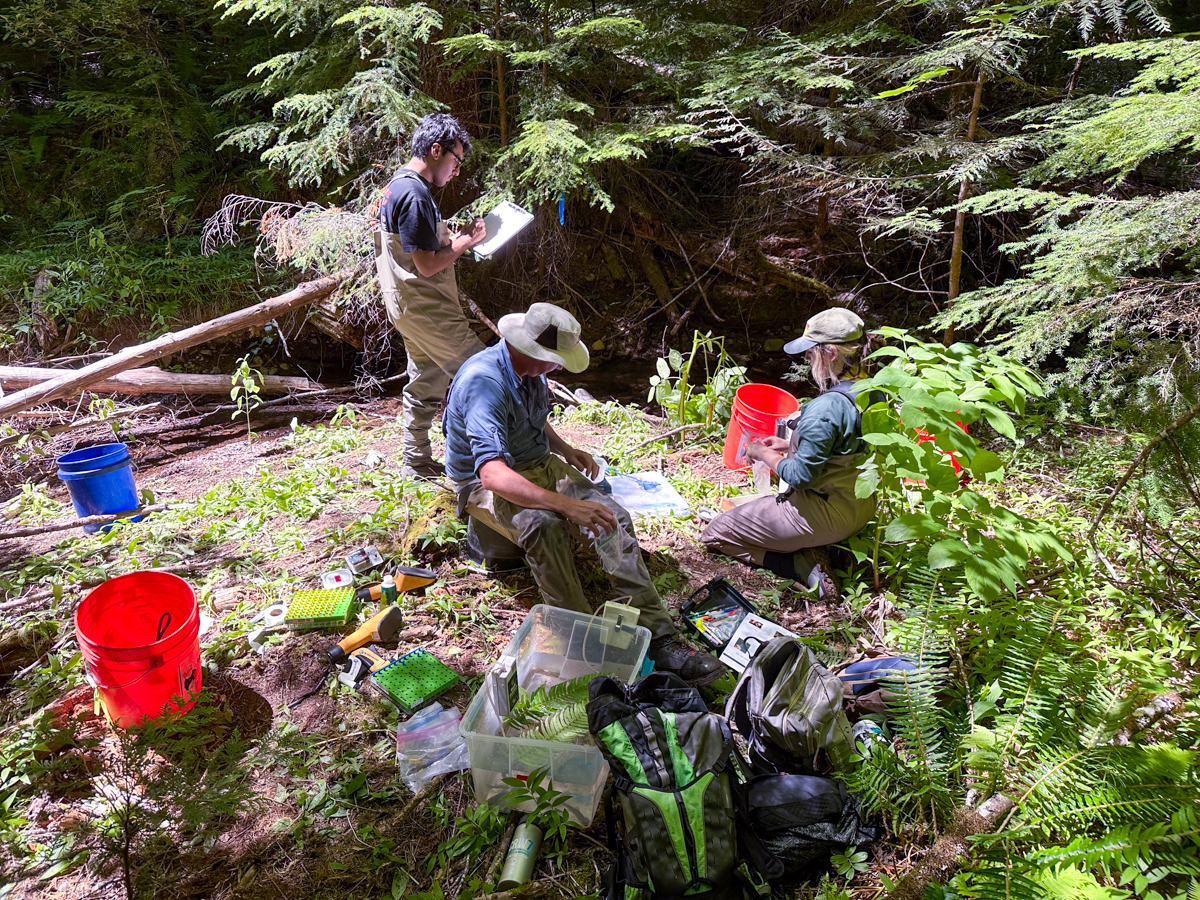
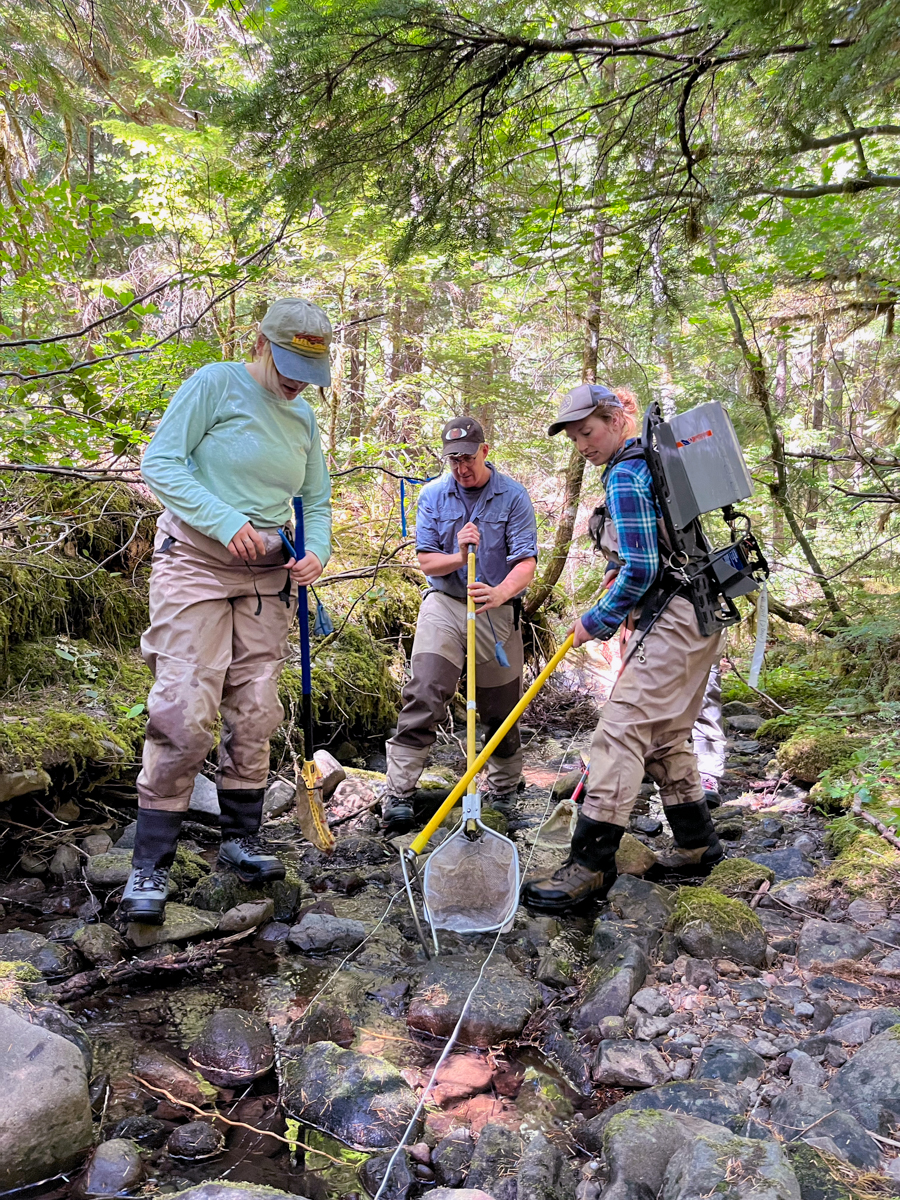
Researchers process fish and salamanders captured during a 3-pass depeletion electrofishing survey in a tributary of McRae Creek.
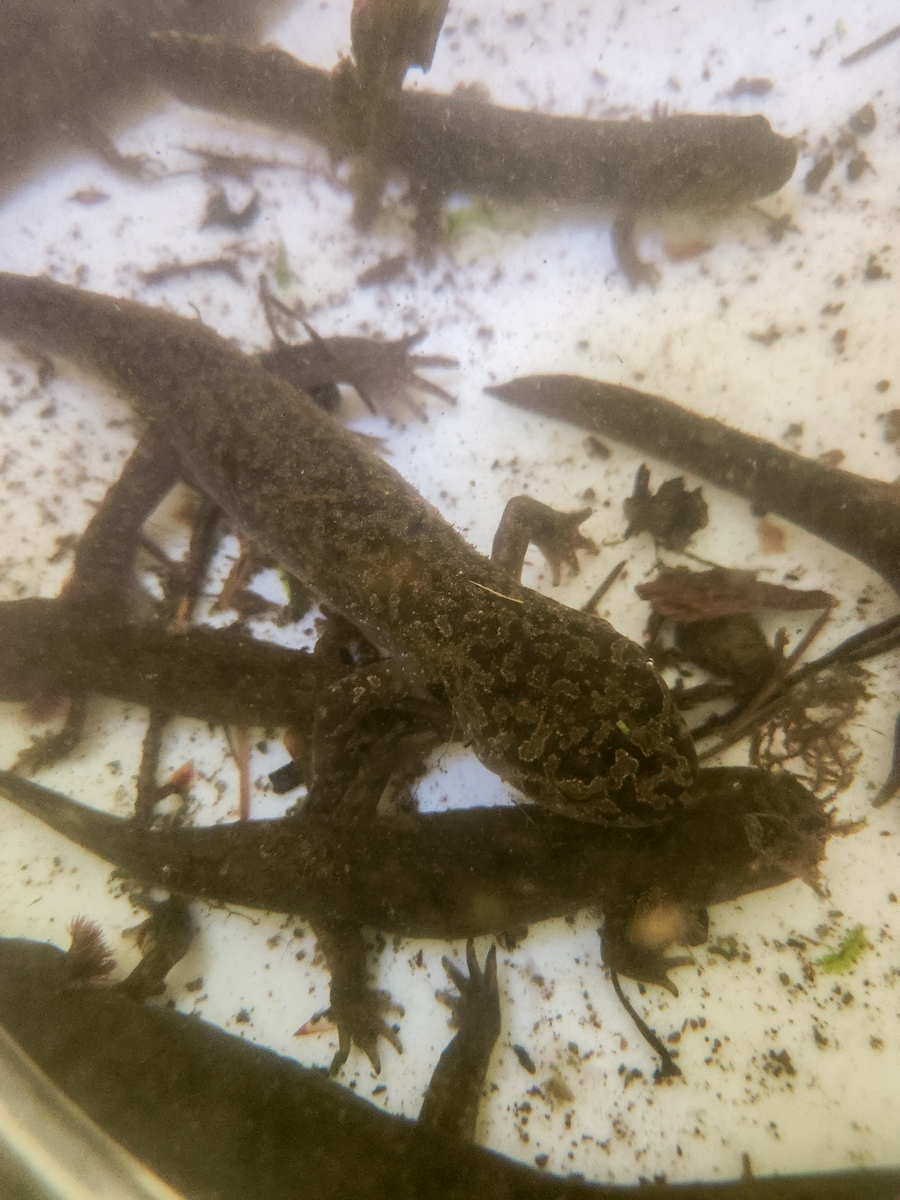
Coastal giant salamanders in a recovery tank before they are released back into the stream.
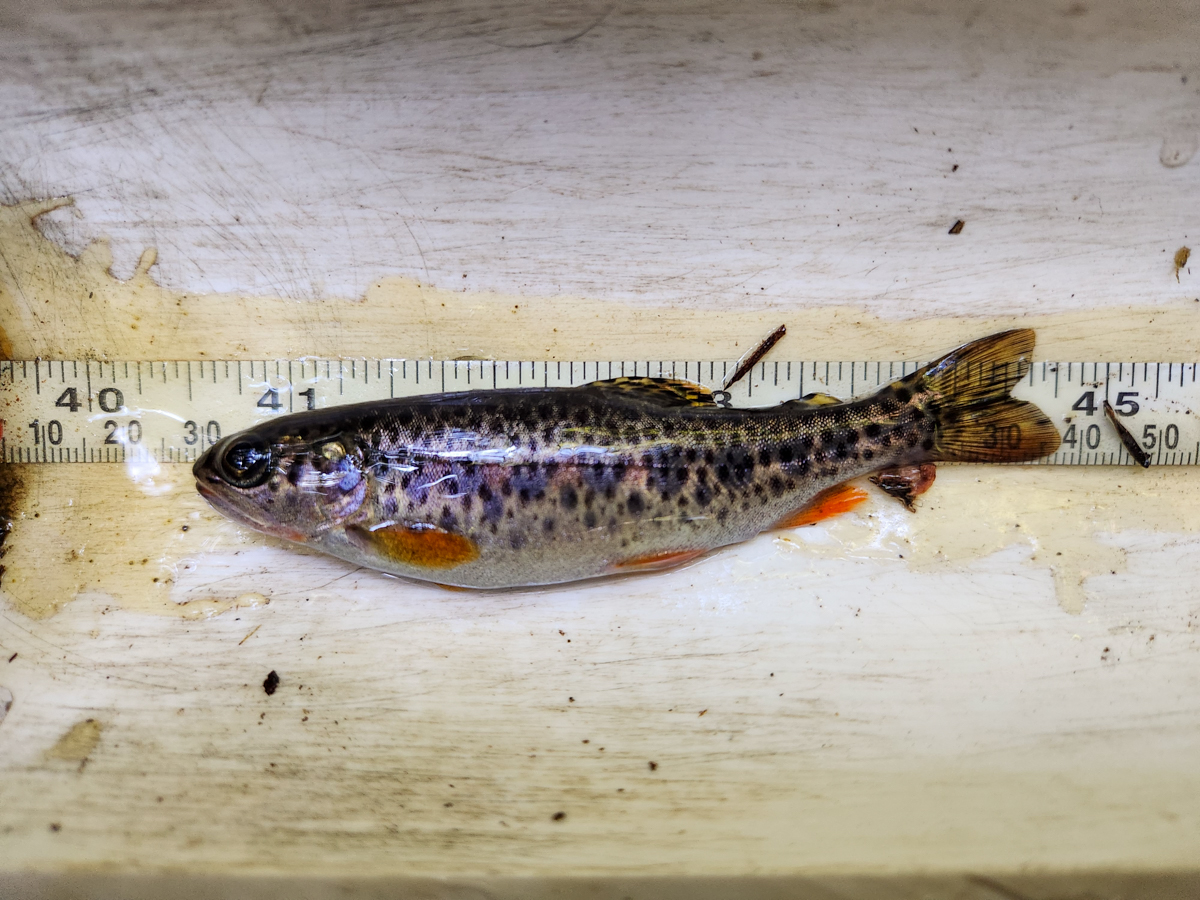
Cutthroat trout being measured at the proccessing station before being released back into the stream.
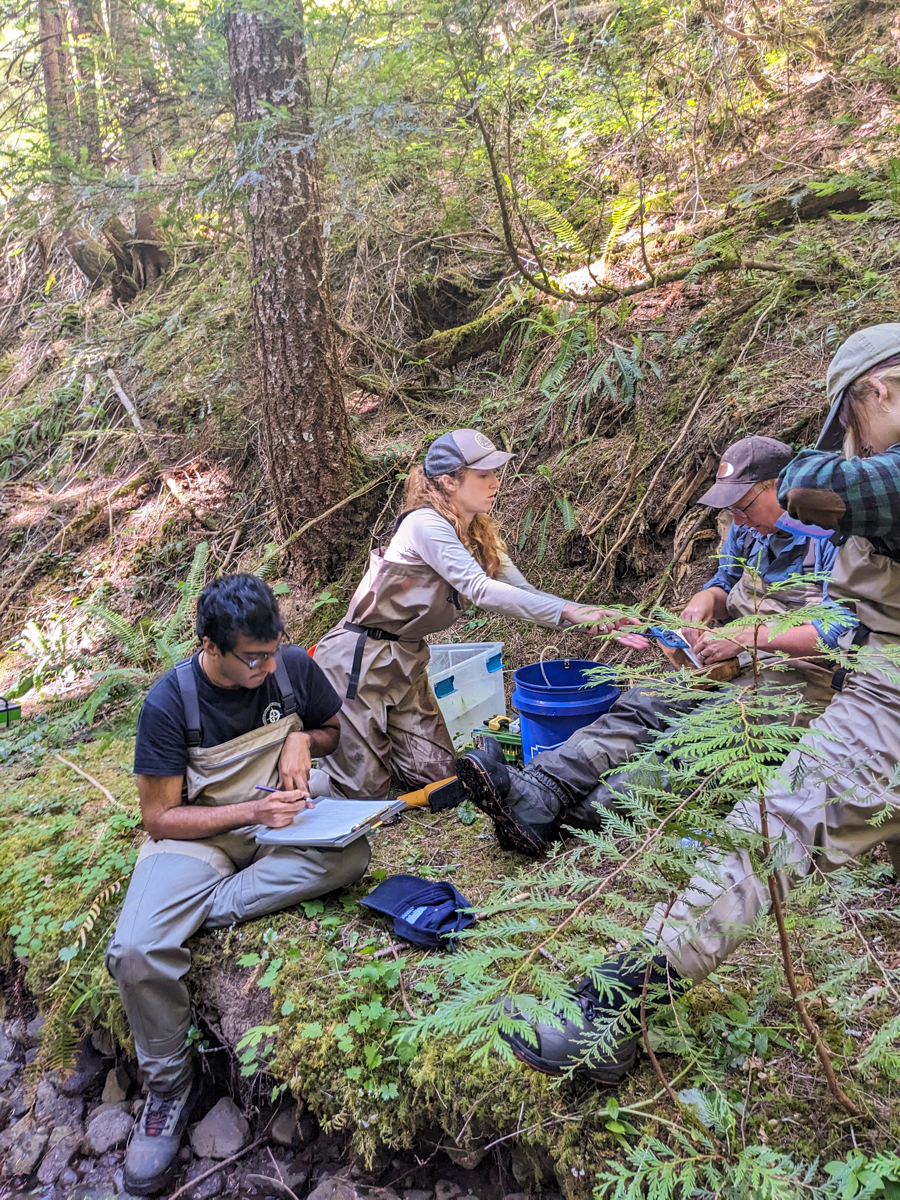
Researchers process fish and salamanders captured during a 3-pass depeletion electrofishing survey in a tributary of McRae Creek.
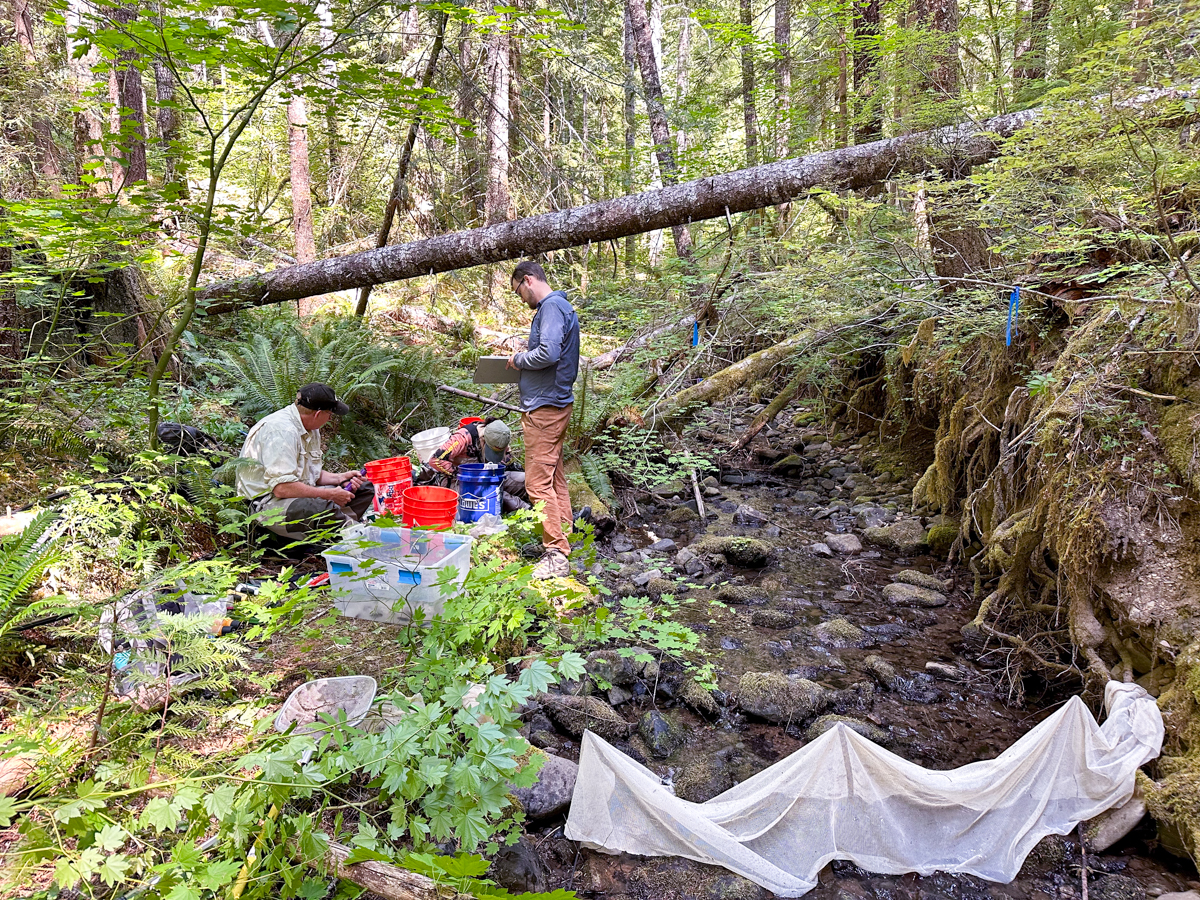
Researchers process fish and salamanders captured during a 3-pass depeletion electrofishing survey in a tributary of McRae Creek.
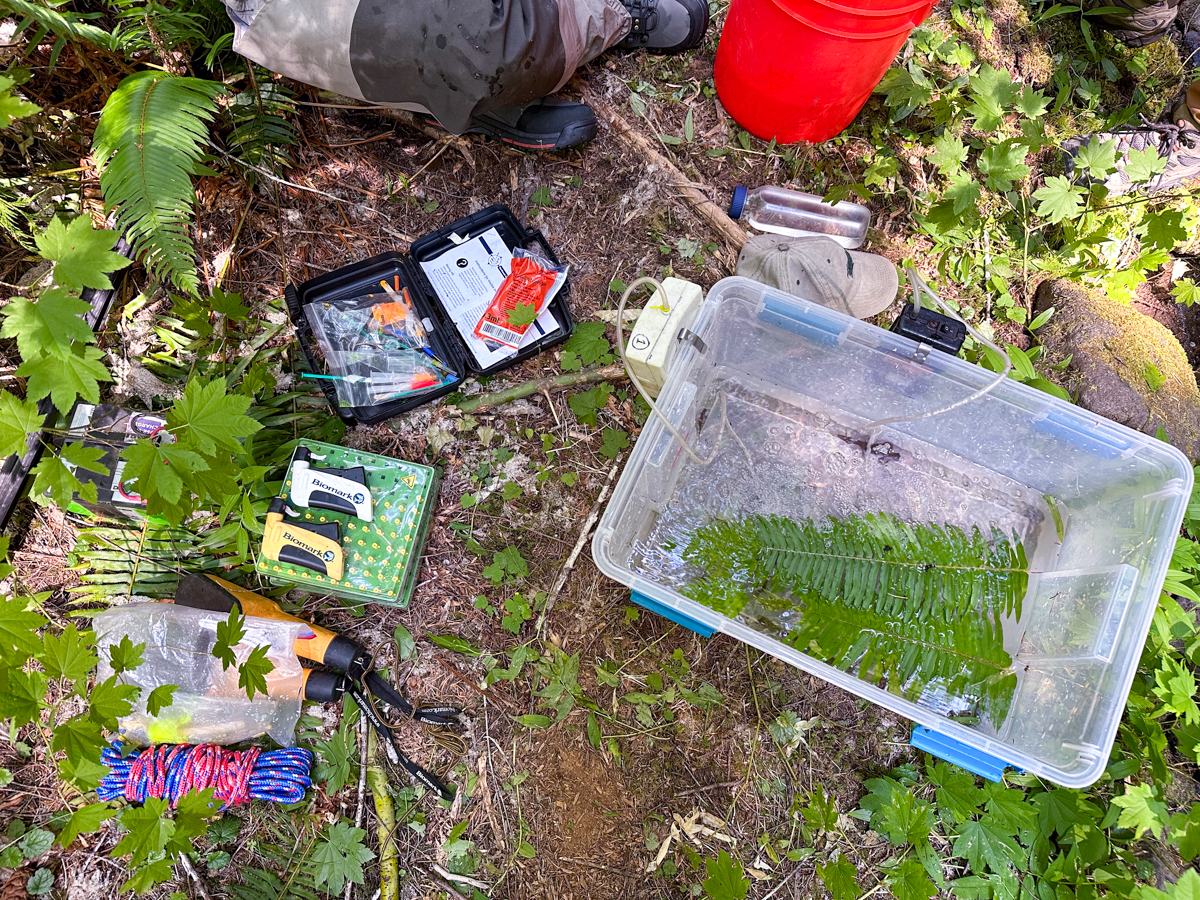
PIT tag and elastomer tag gear used at a processing station to measure growth.
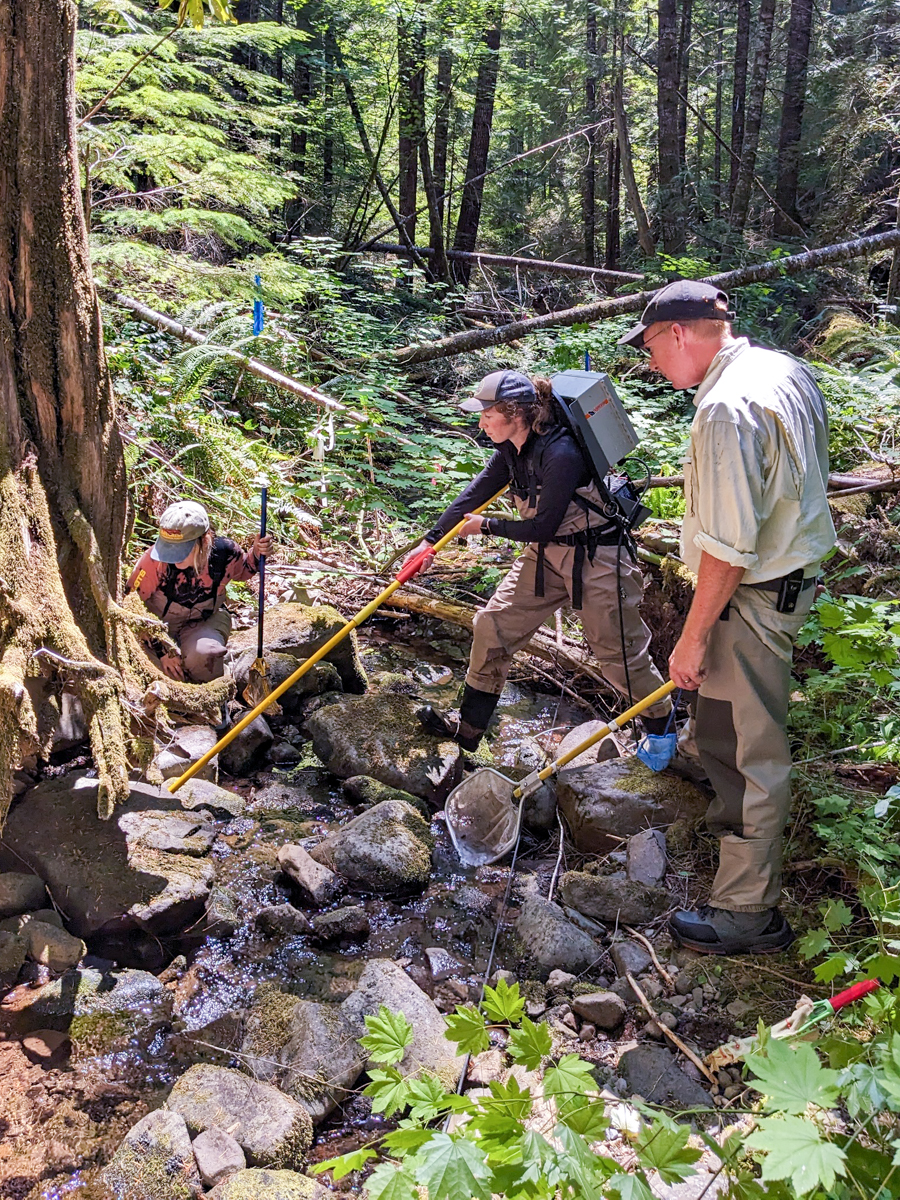
Hailey Bond (left), Madelyn Maffia (center), and Dana Warren (right) electrofish a small pool in a tributary of McRae Creek.
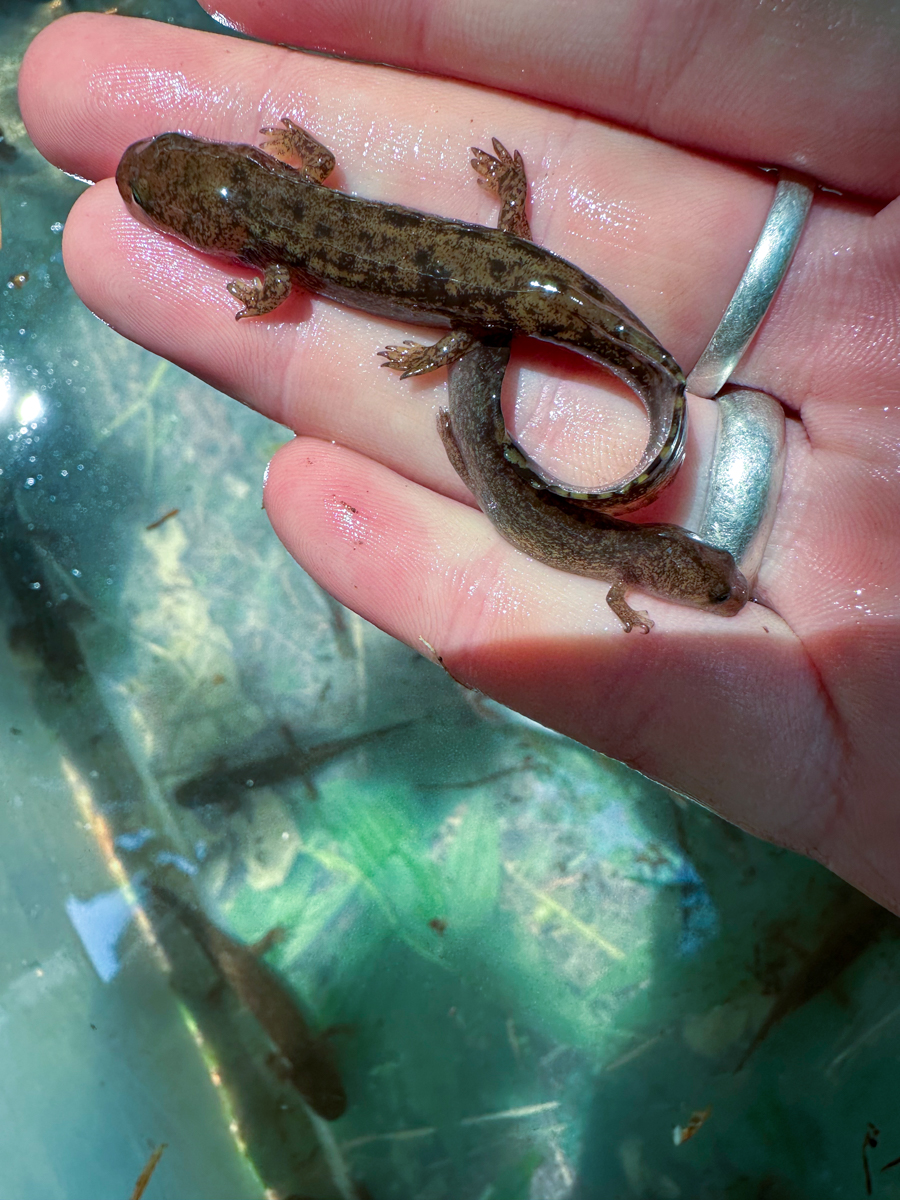
Coastal giant salmanders from a tributary of McRae Creek.
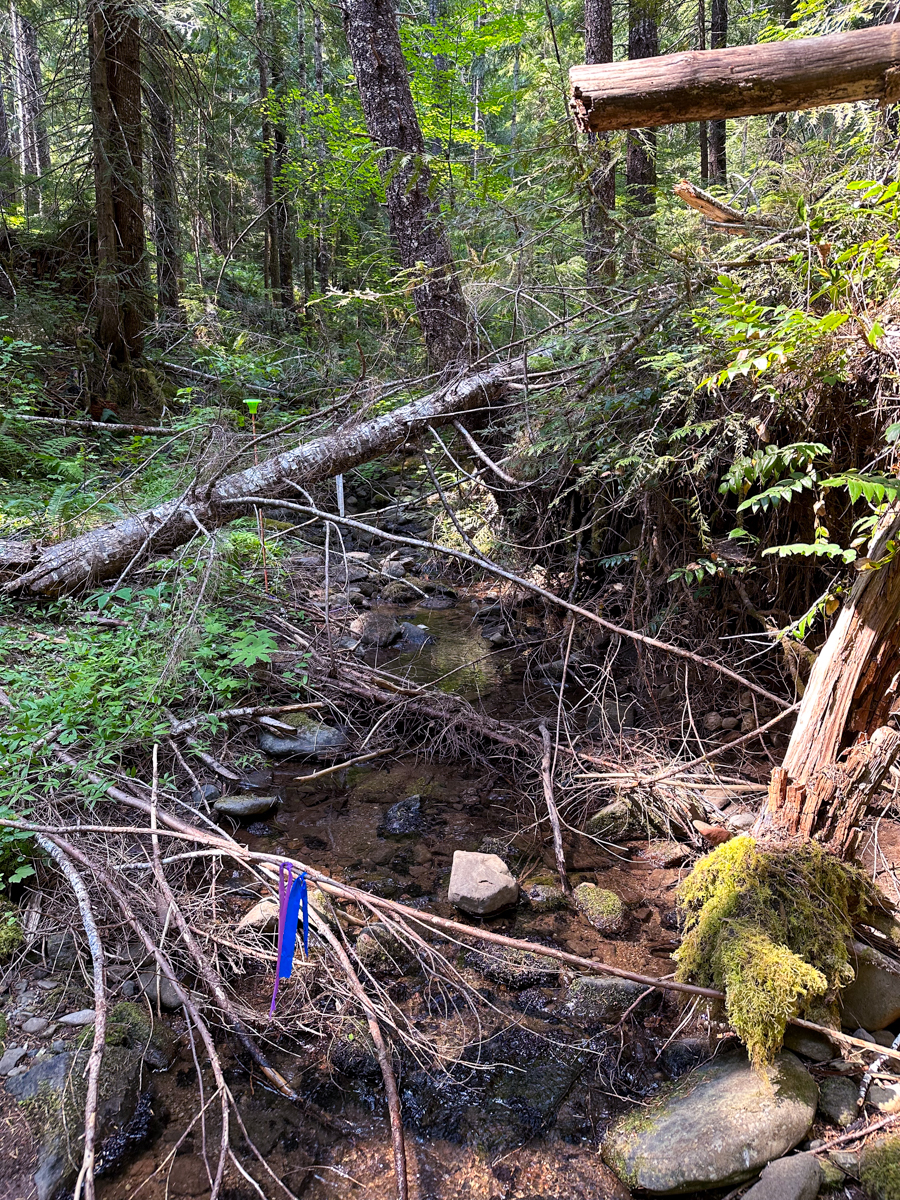
Upper section of the low-flow reach prior to diverting half of the flow.
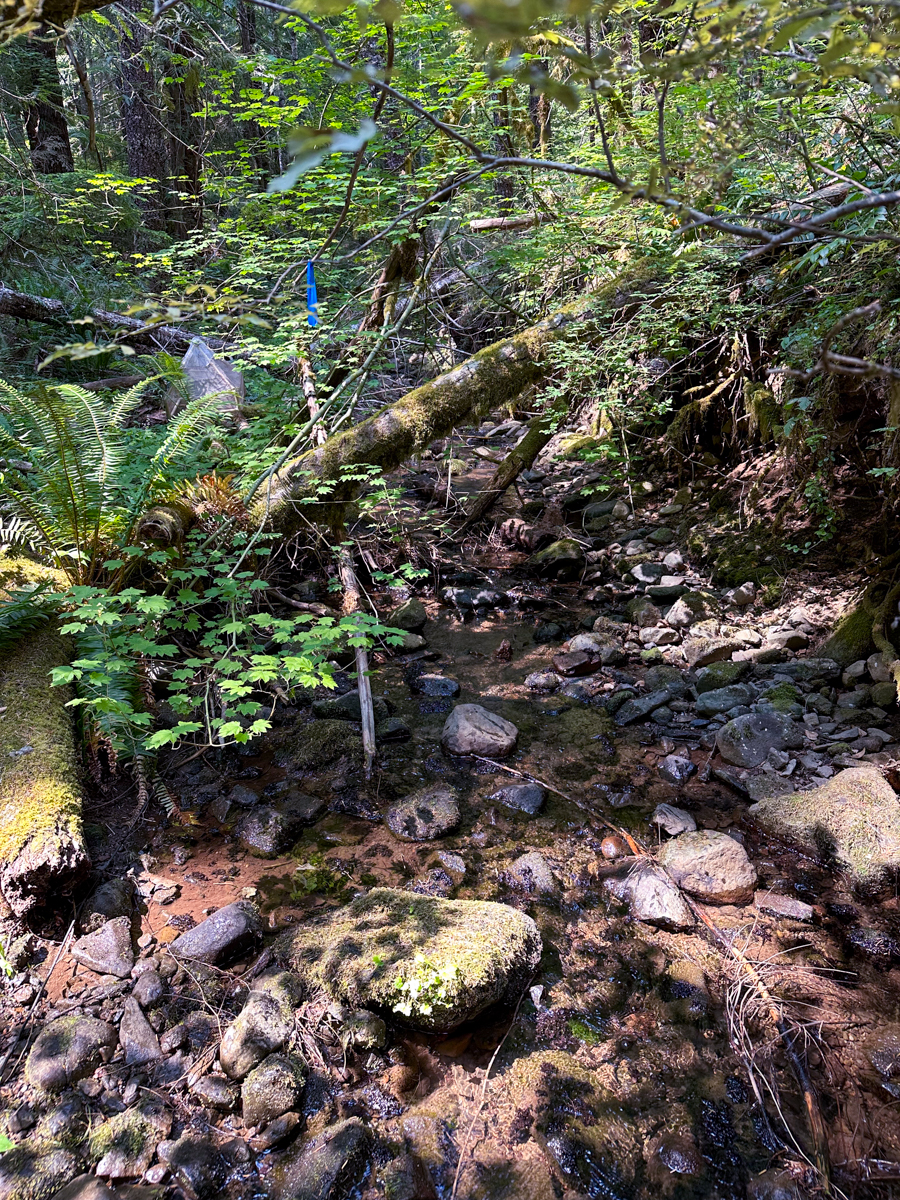
Middle section of the low-flow reach prior to diverting half of the flow.
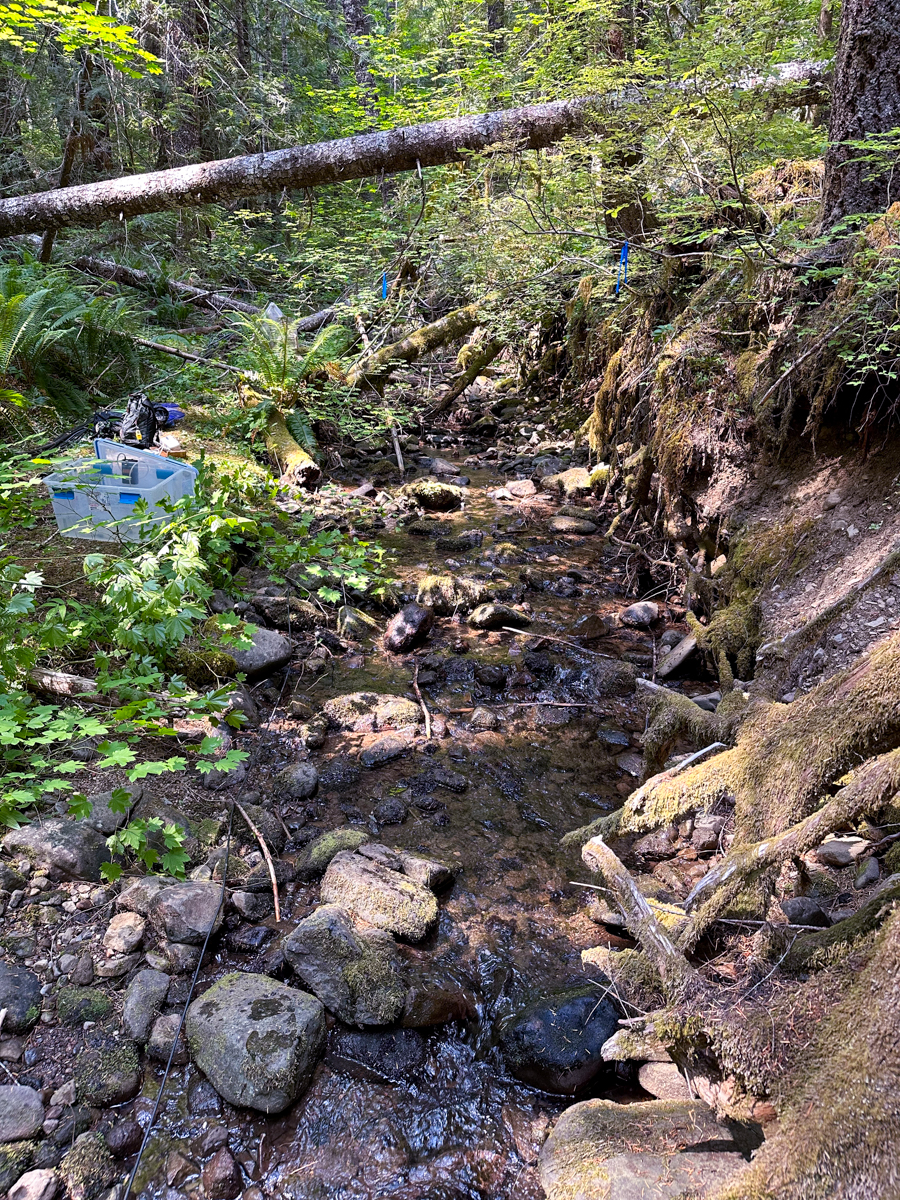
Middle section of the low-flow reach prior to diverting half of the flow.
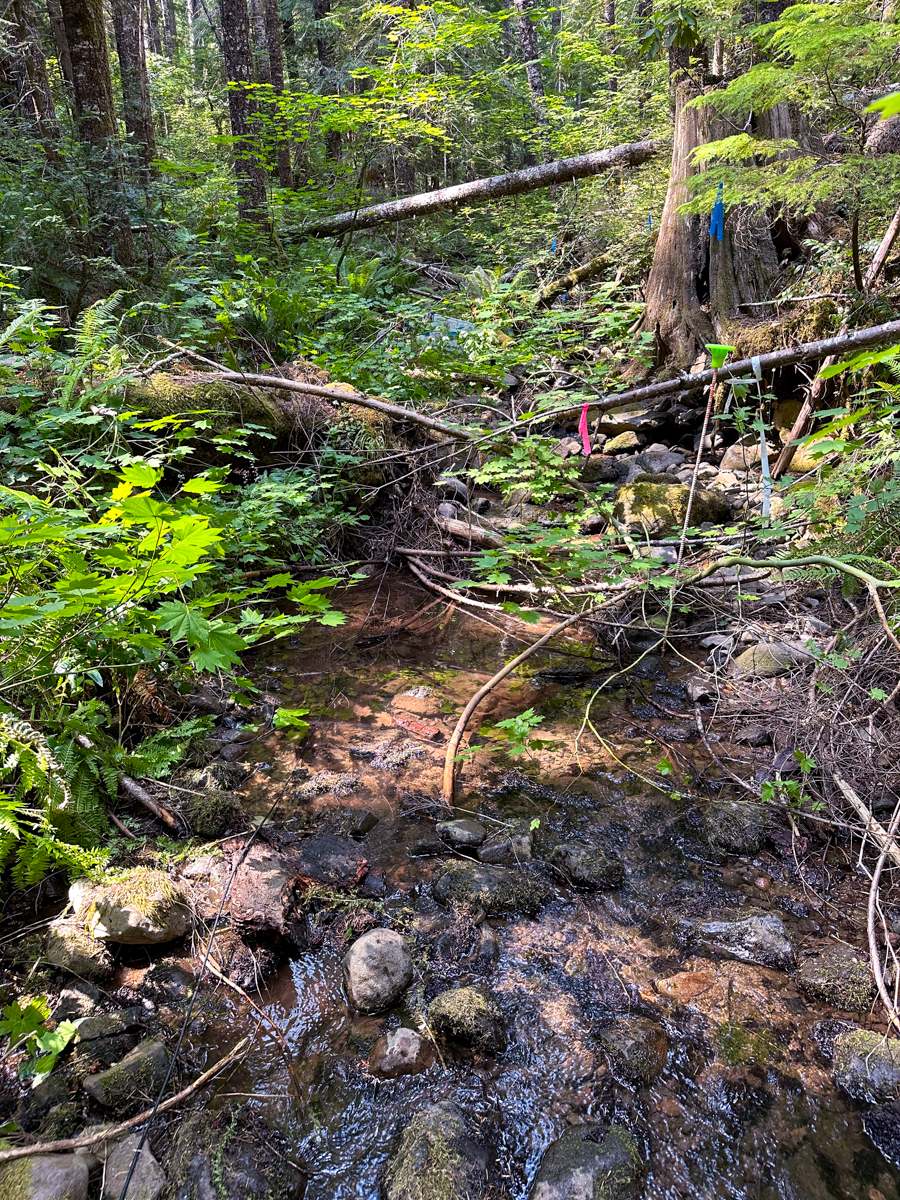
Middle section of the low-flow reach prior to diverting half of the flow.
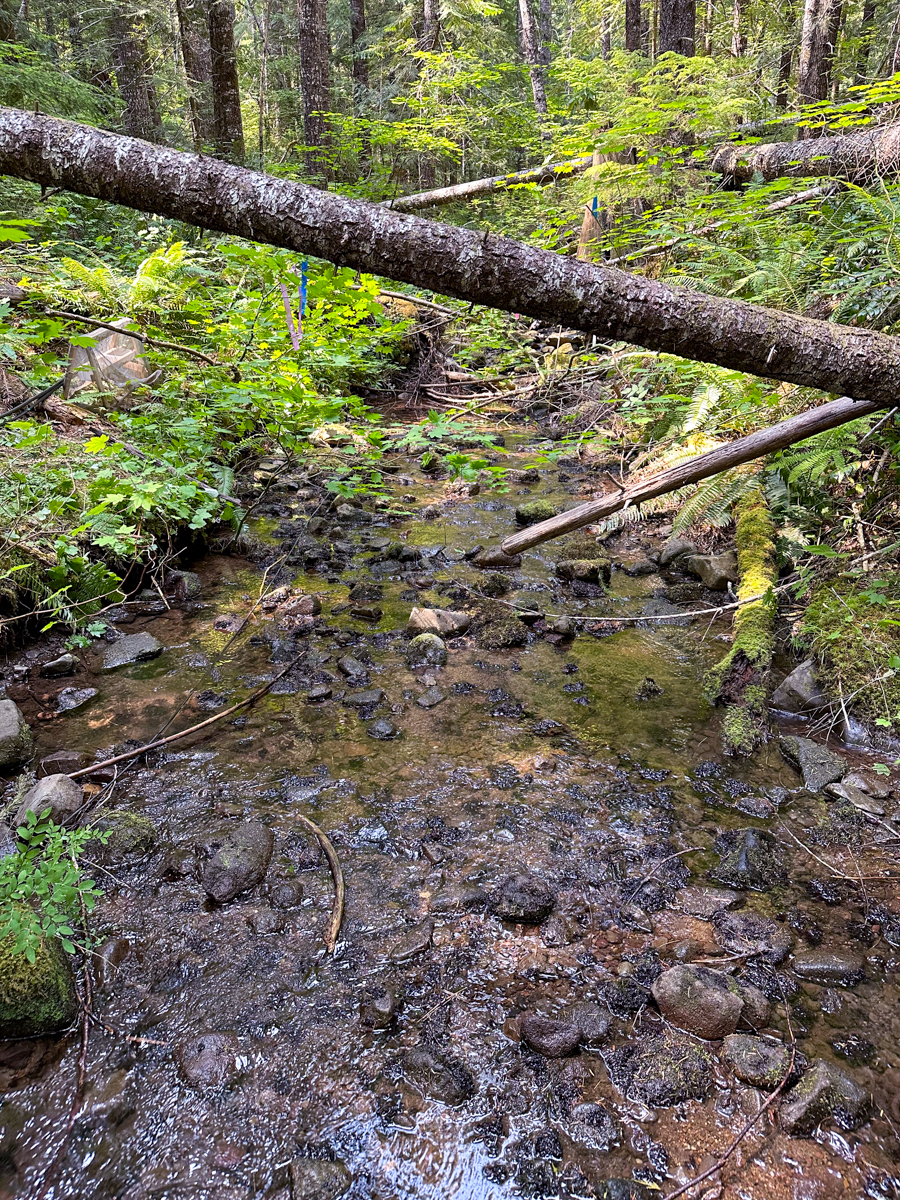
Lower section of the low-flow reach prior to diverting half of the flow.
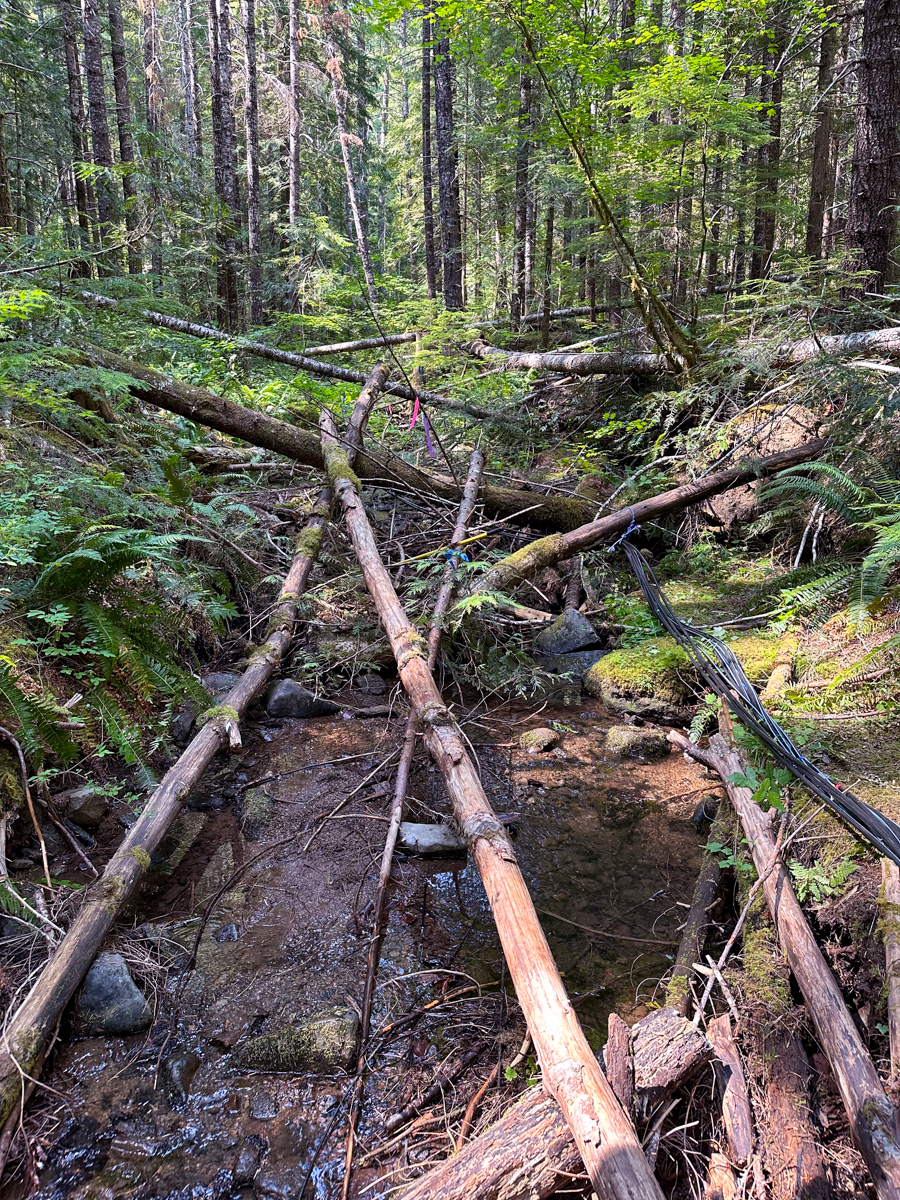
Empty lines running along the bank of the low-flow reach prior to the start of the experimental setup.
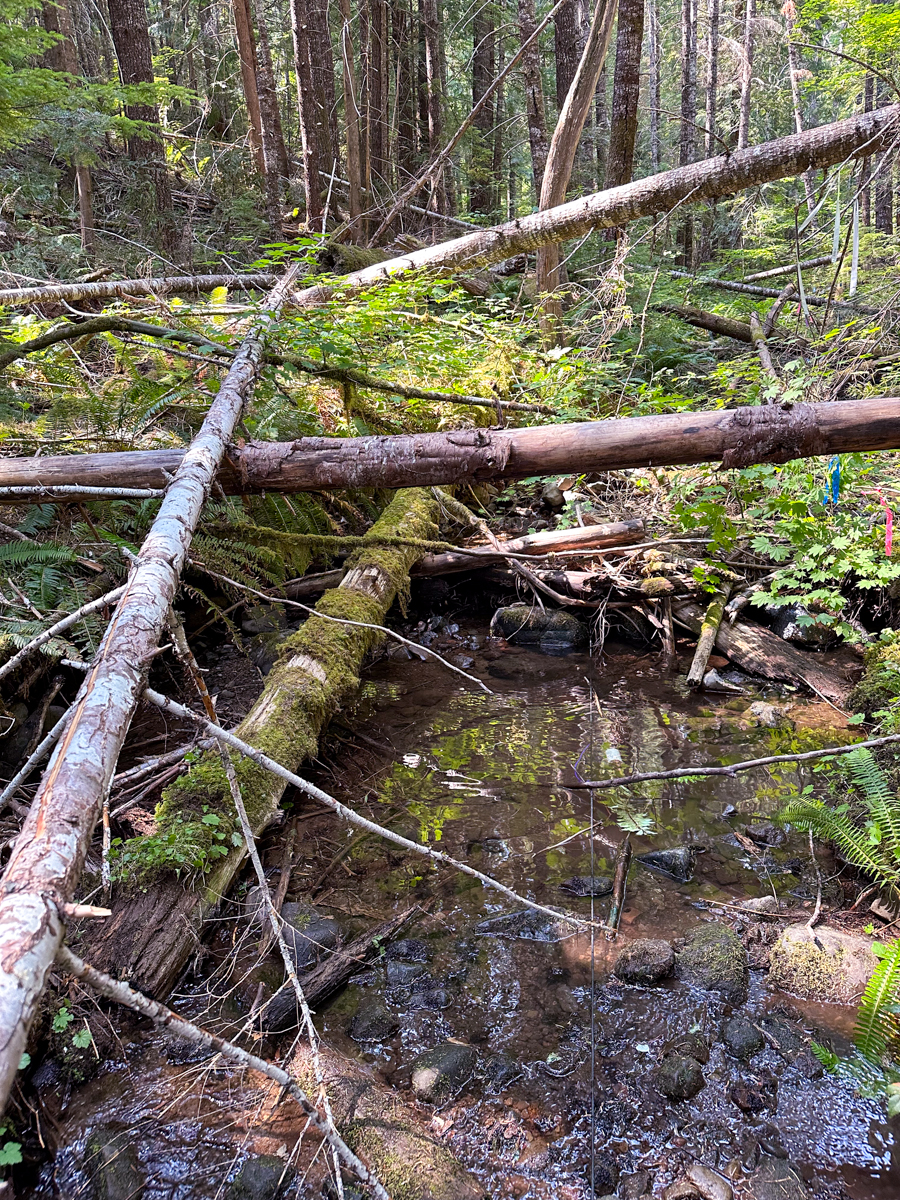
Structurally complex pool habitat in the low-flow reach.
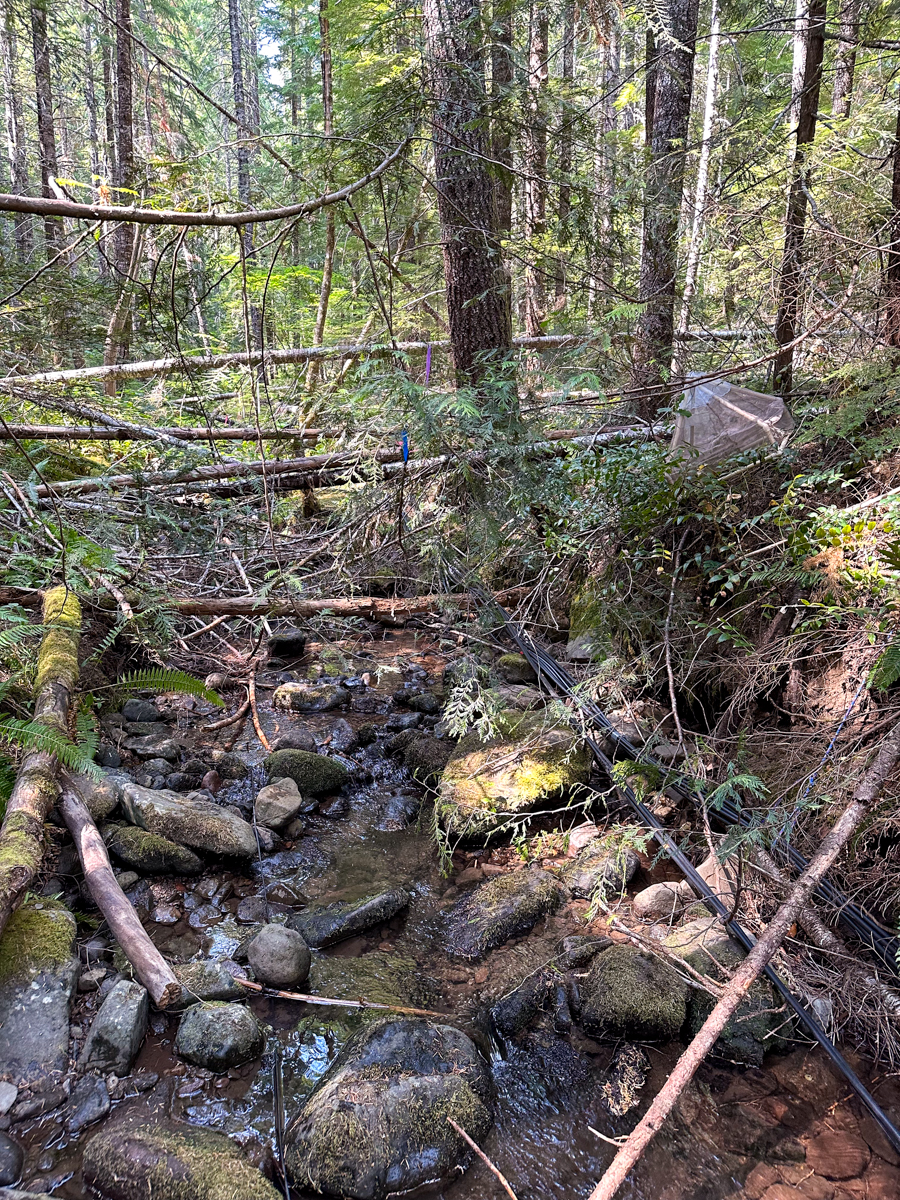
Empty lines running along the bank of the low-flow reach prior to the start of the experimental setup.
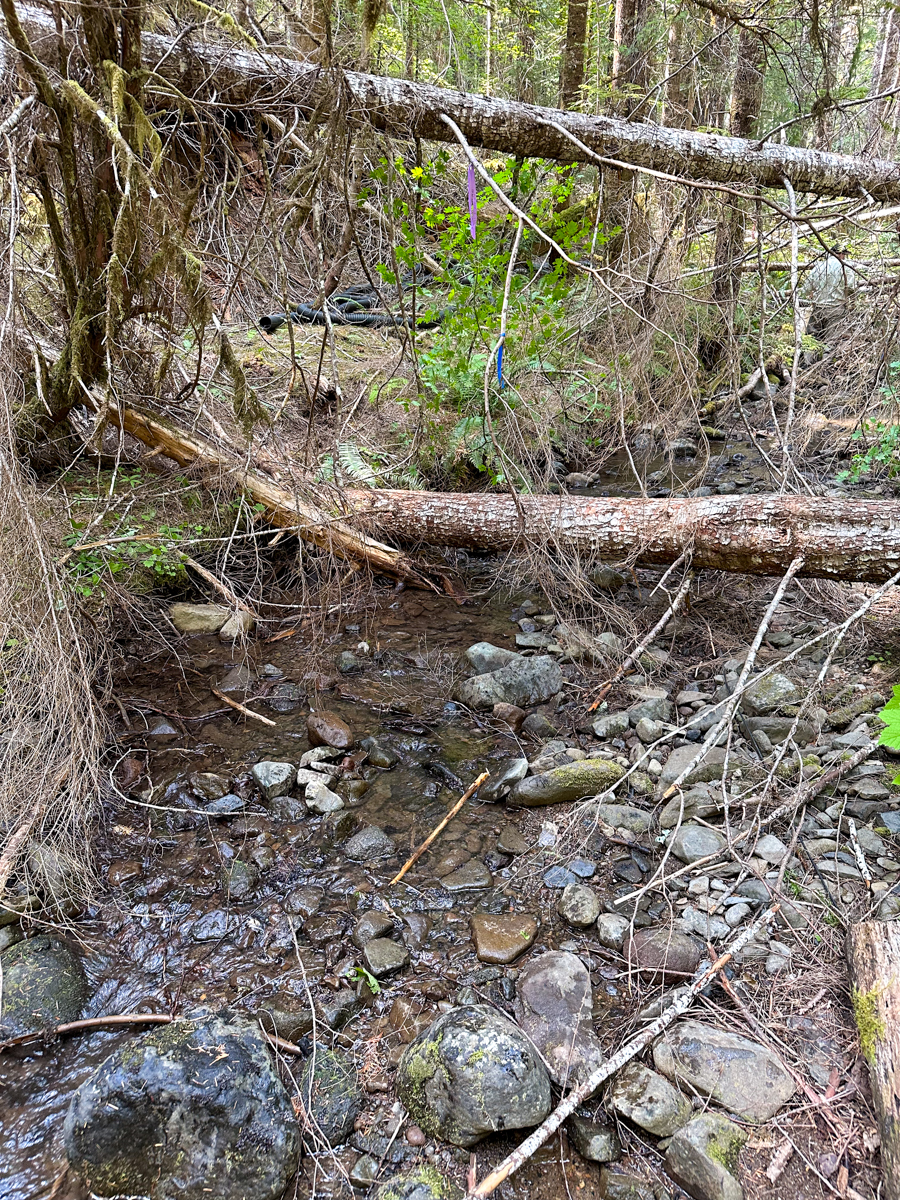
Section of the low-flow reach prior to the set up of the flow diversion.
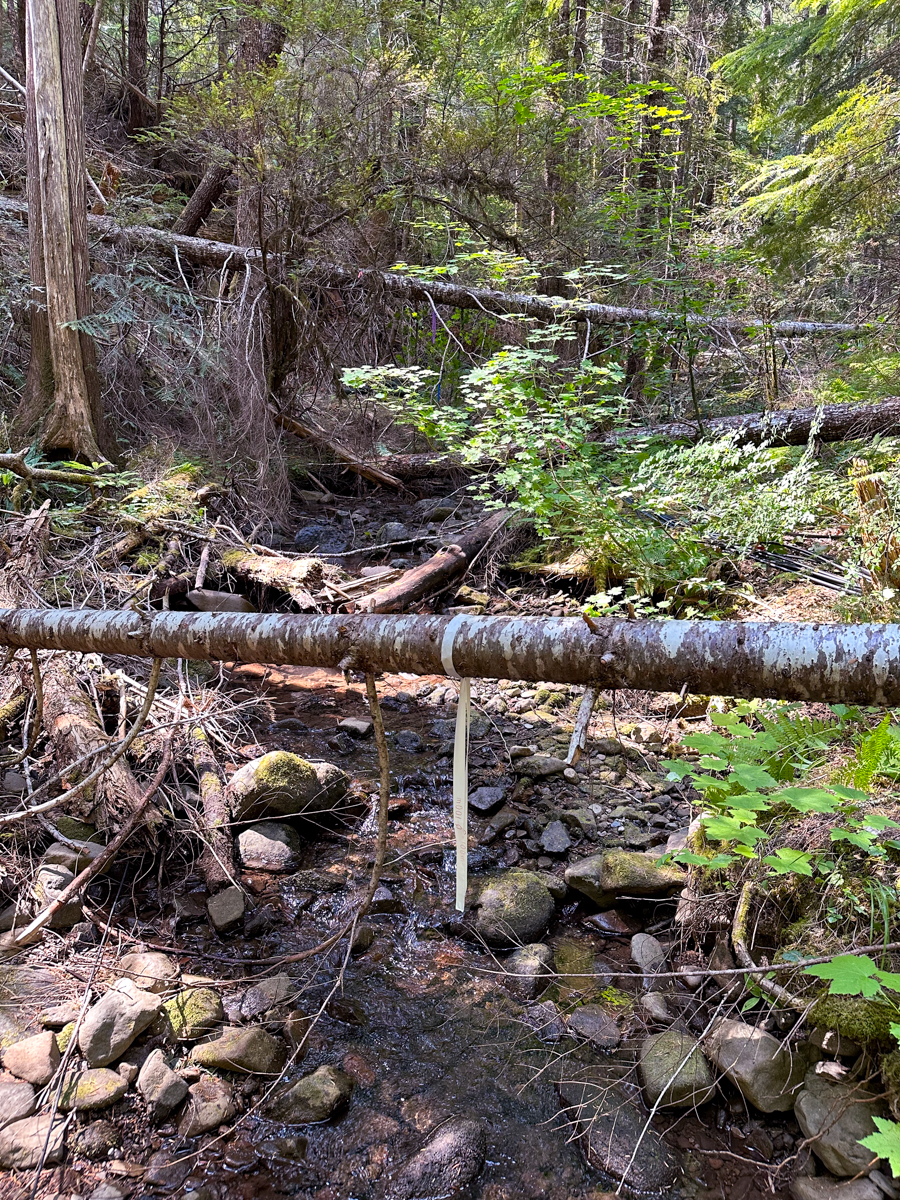
Bottom of the fishing section in the low flow reach prior to the start of the experimental setup.
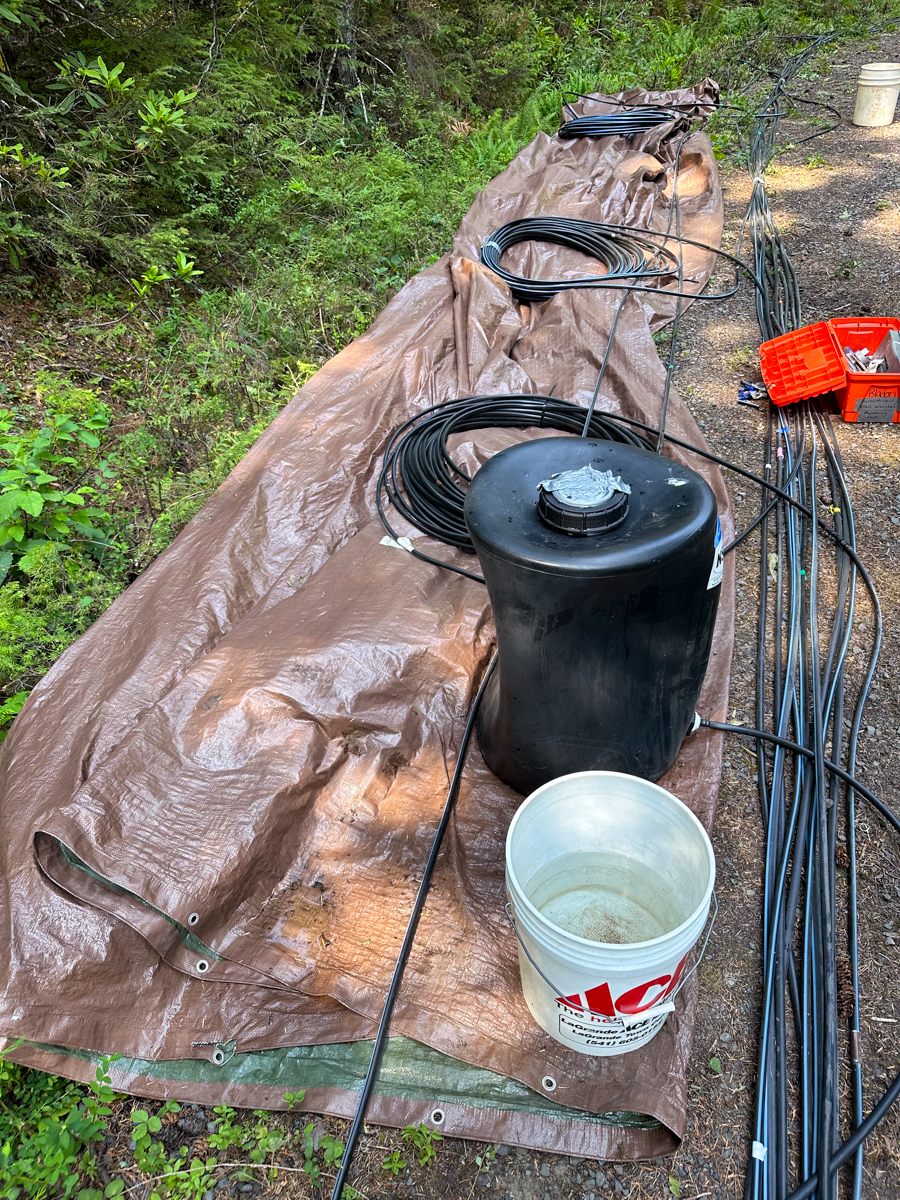
Coil system used to passively warm diverted water before it re-enters the increased temperature reach.
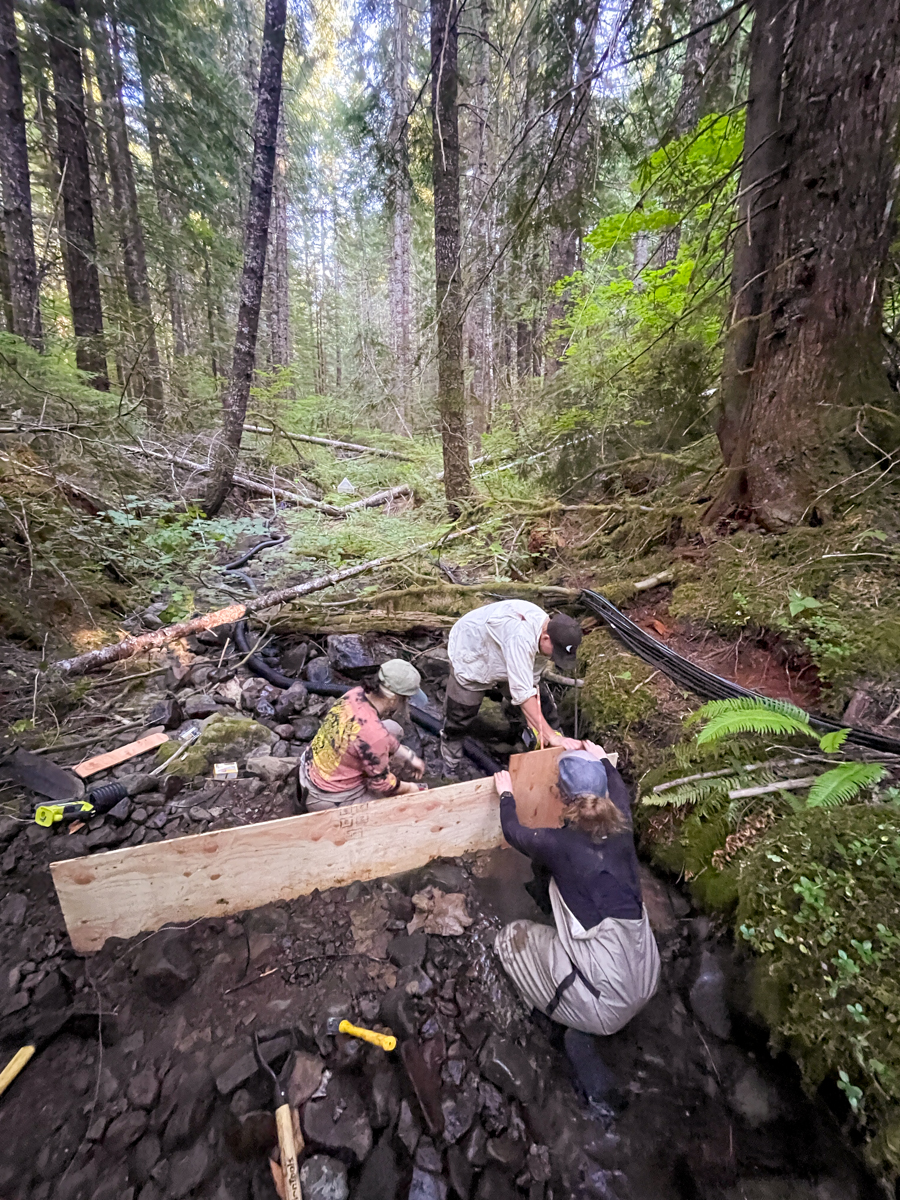
Researchers set up the flow diversion that diverts approximately 50% of the streamflow and creates the reduced flow (low-flow) reach.
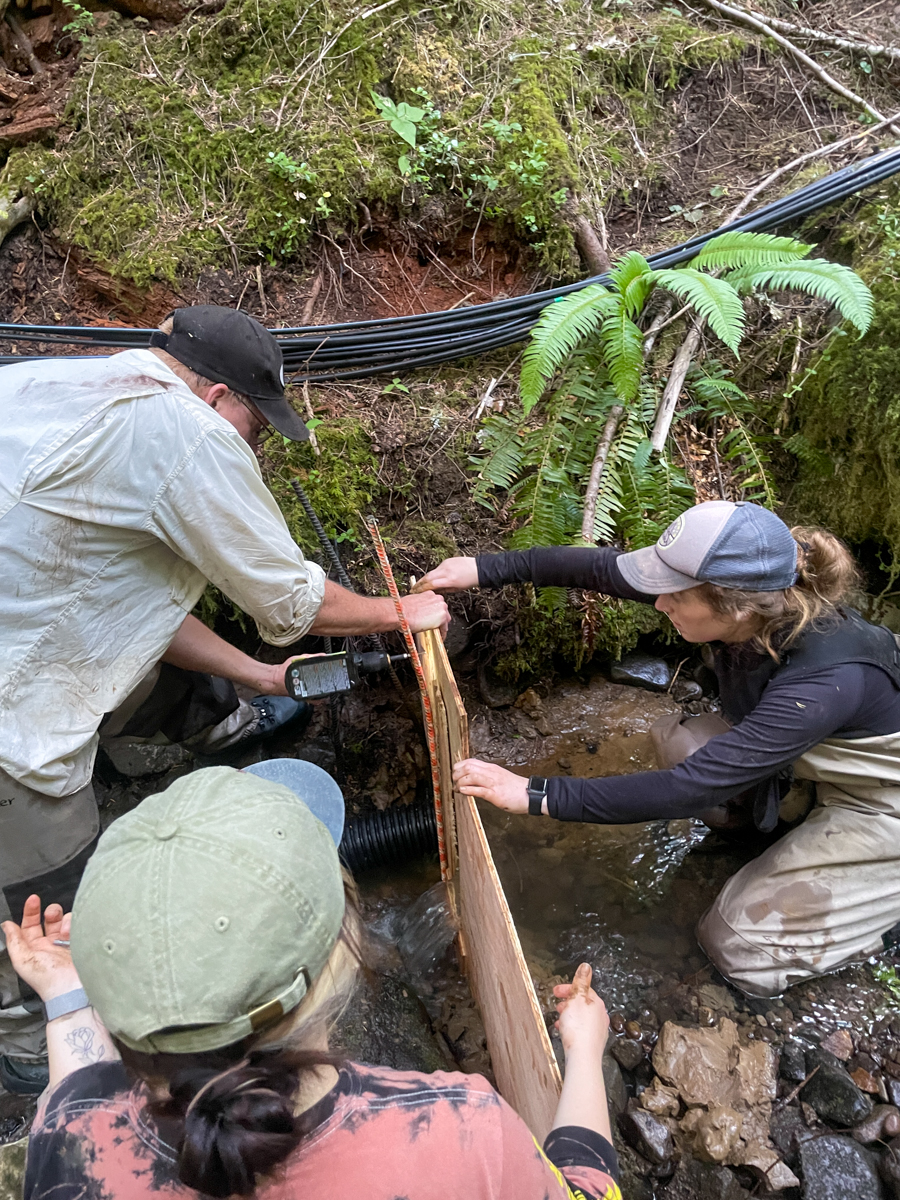
Researchers set up the flow diversion that diverts approximately 50% of the streamflow and creates the reduced flow (low-flow) reach.
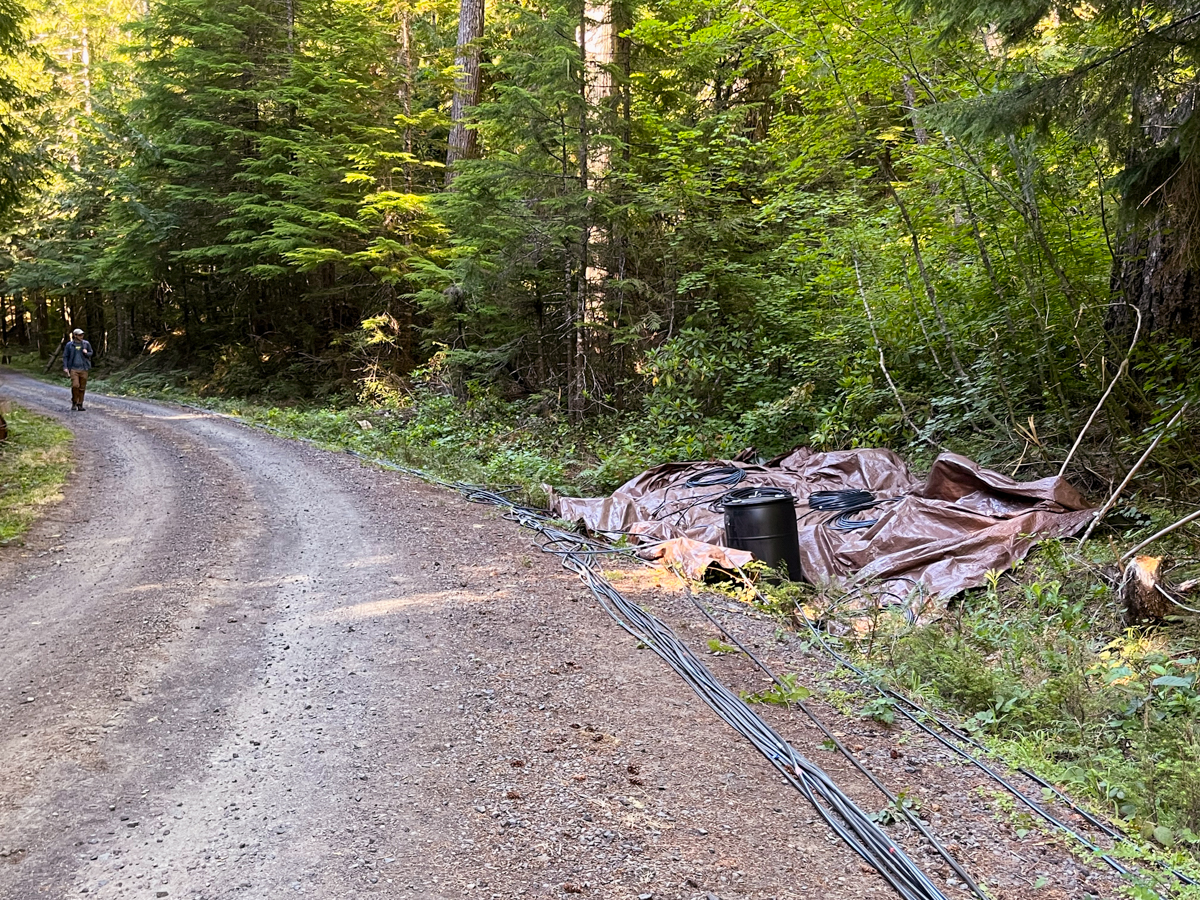
Water travels through black tubing that is exposed to the sunlight to passively warm it and then re-enters the stream in the experimentally warmed (+Temp) reach.
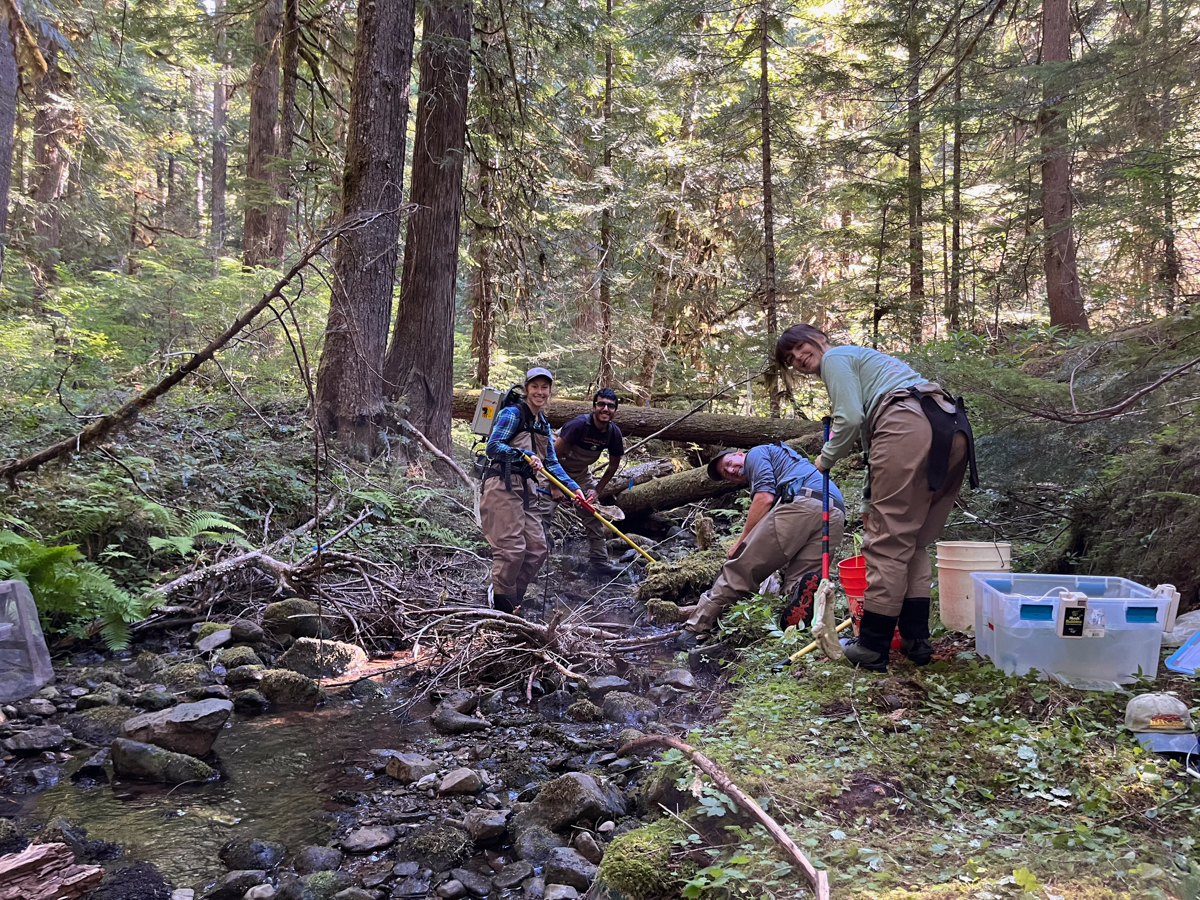
Sampling fish and salamanders in a tributary of McRae Creek.
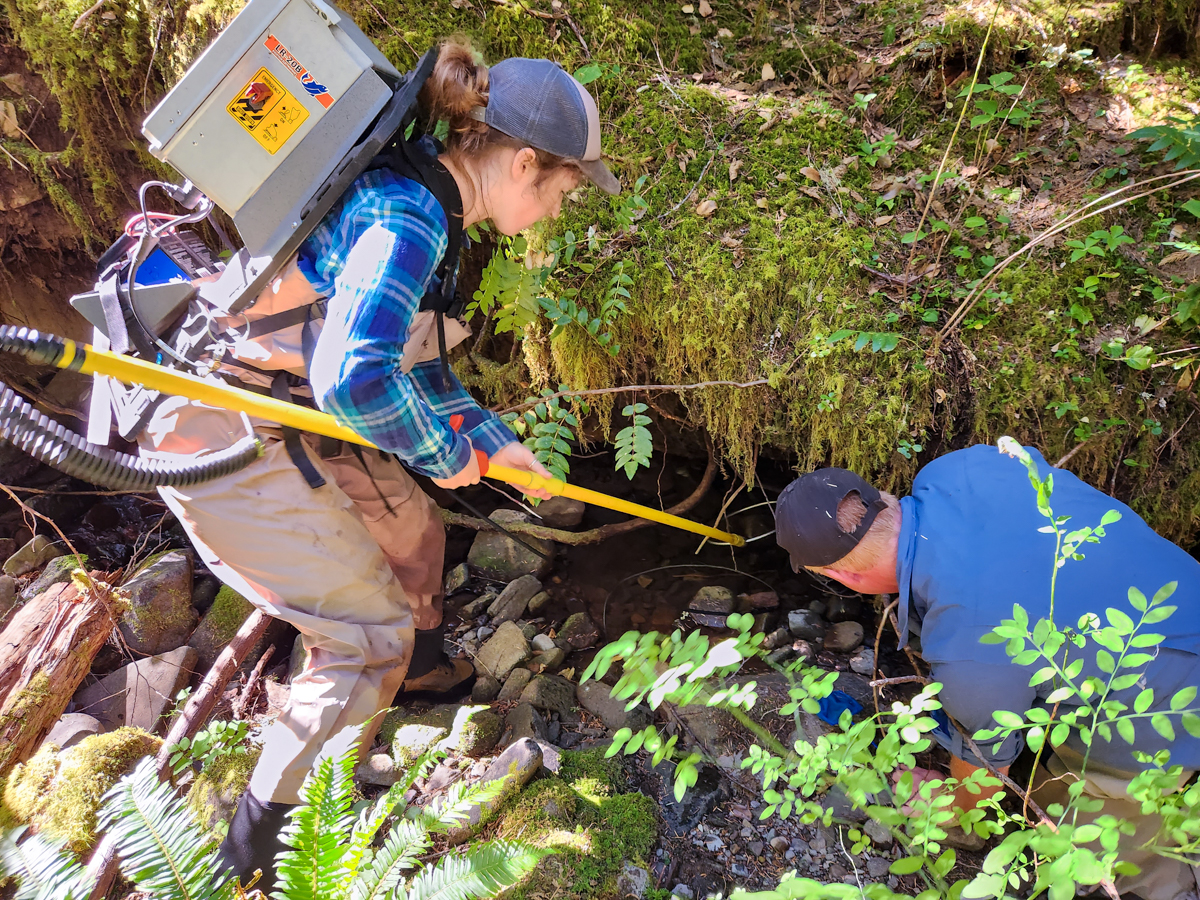
Graduate student Maddie Maffia and Professor Dana Warren attempt to electrofish under a deep undercut bank.
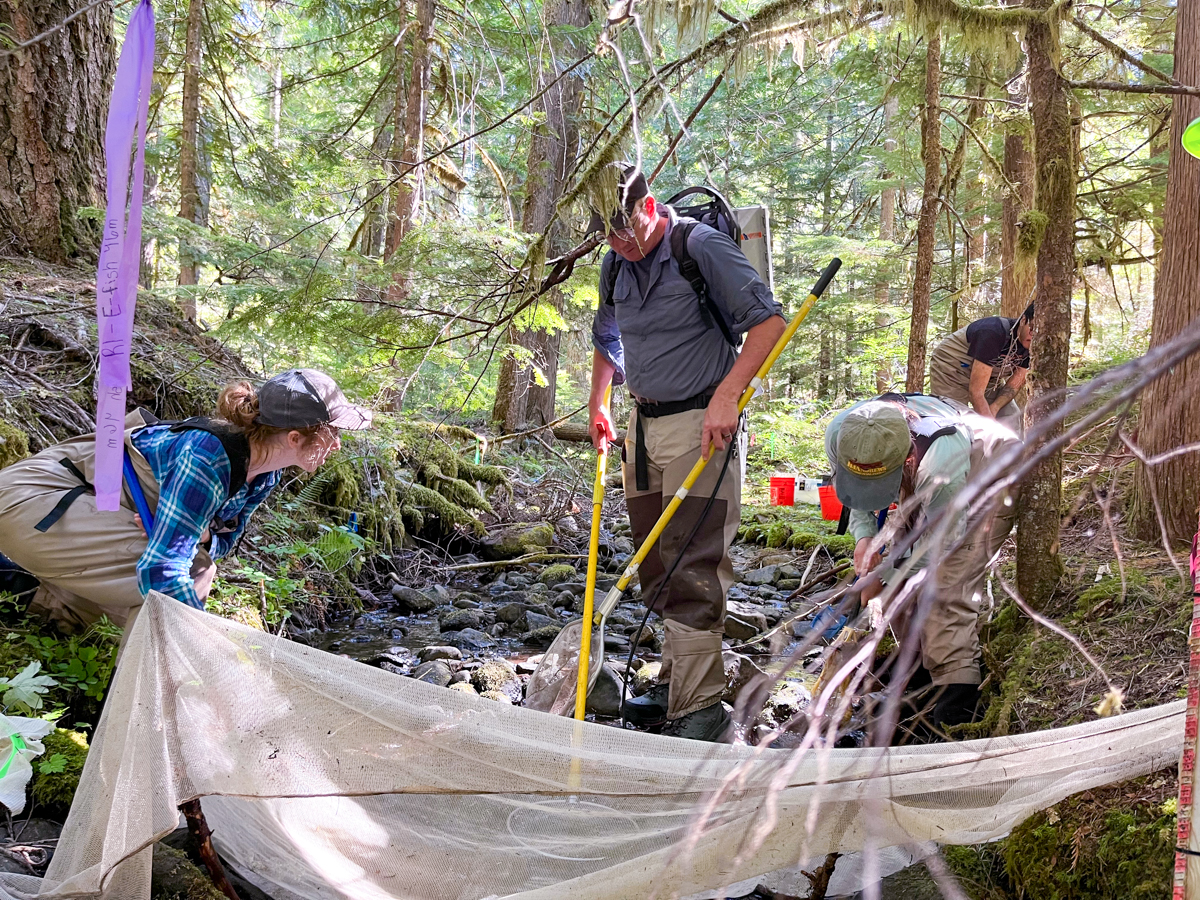
An upstream net that closes the system during electrofishing prevents the movement of fish and salmanders into and out of the system.
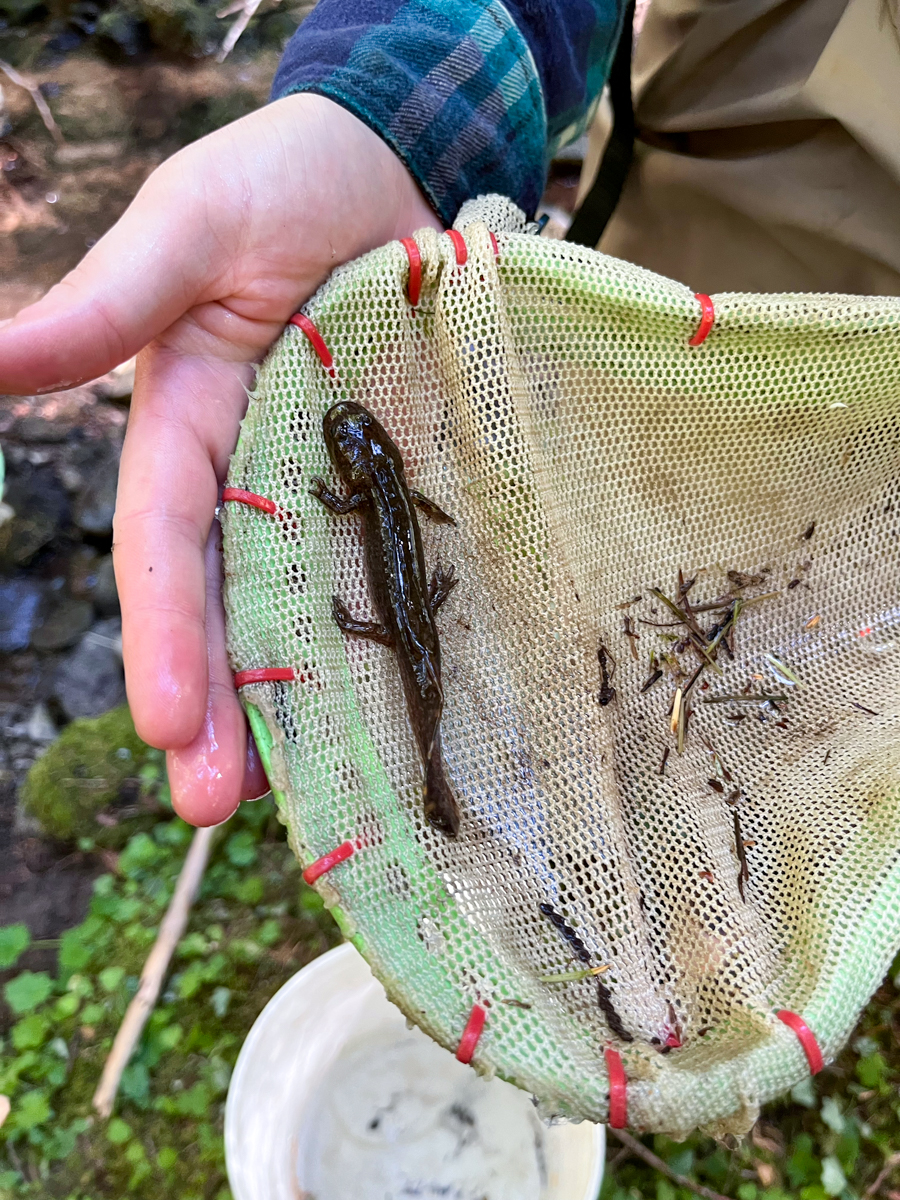
A terrestrial coastal giant salamanders.
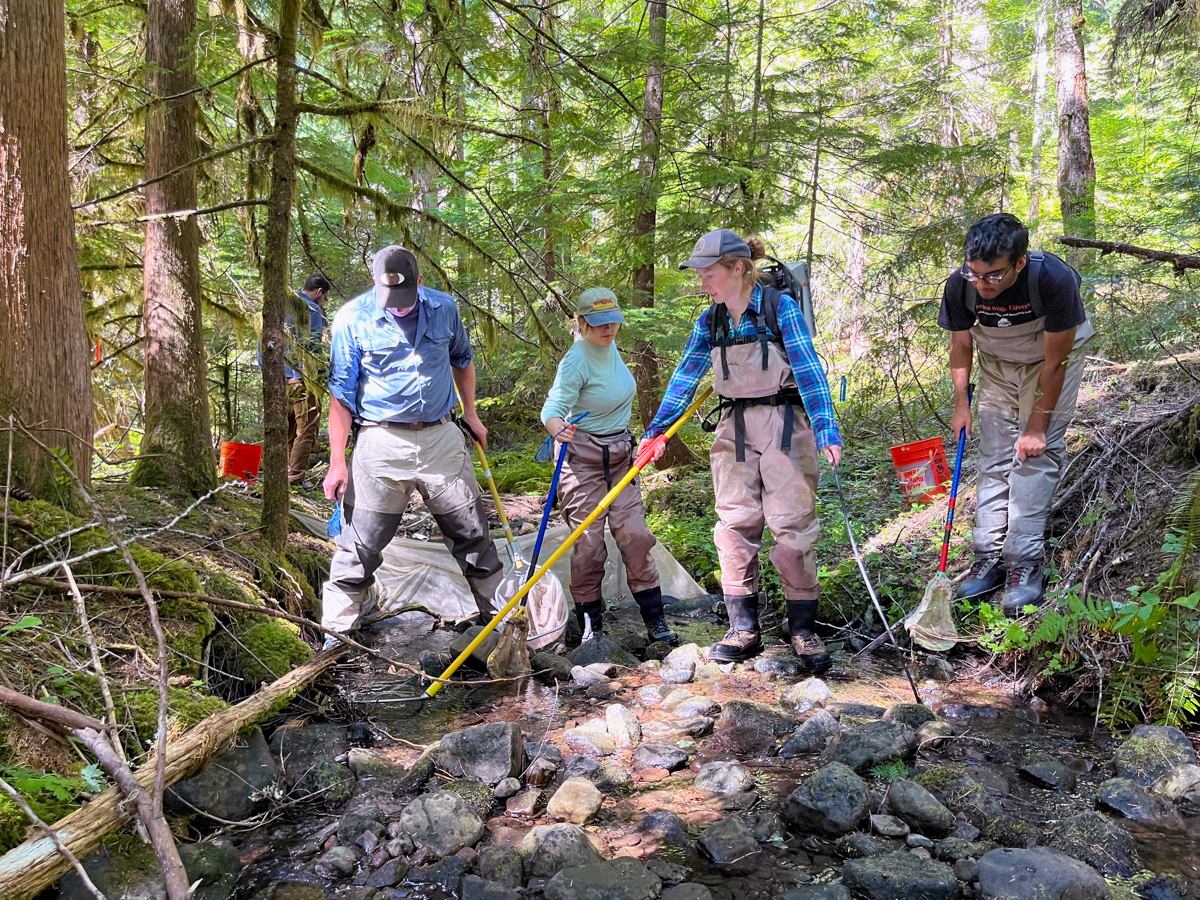
Sampling fish and salamanders in a tributary of McRae Creek.
Sampling fish and salamanders in a tributary of McRae Creek.
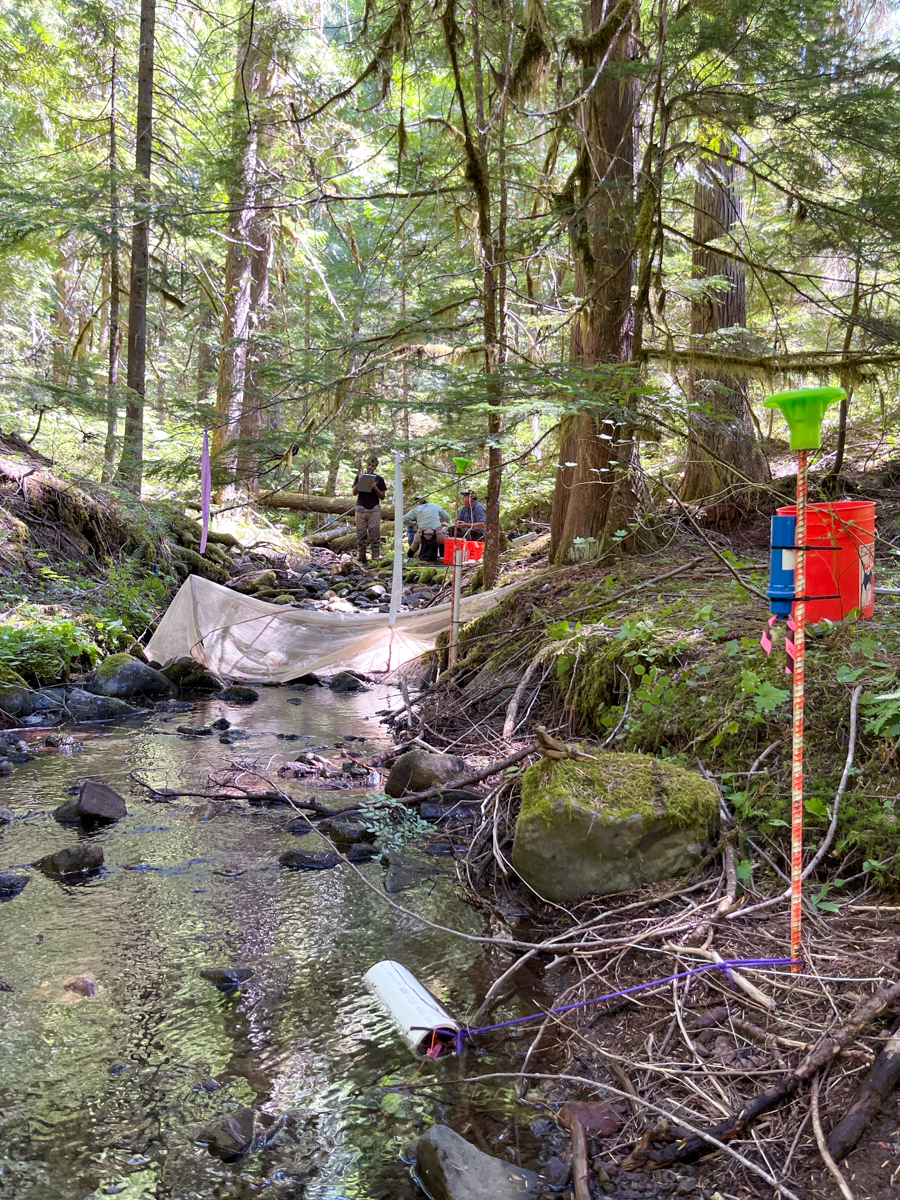
Sampling fish and salamanders in a tributary of McRae Creek.
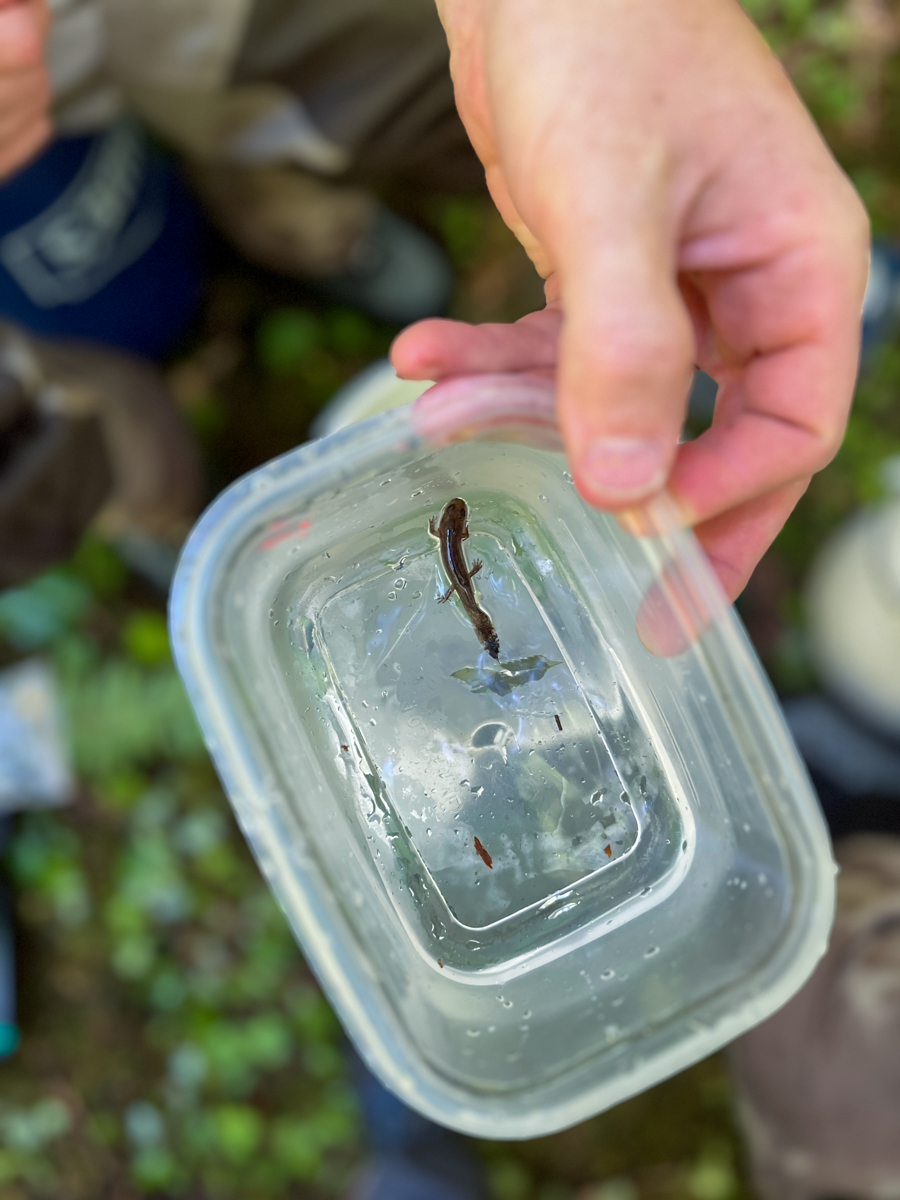
A young pacific giant salamander in the a tupperwear before being weighed.
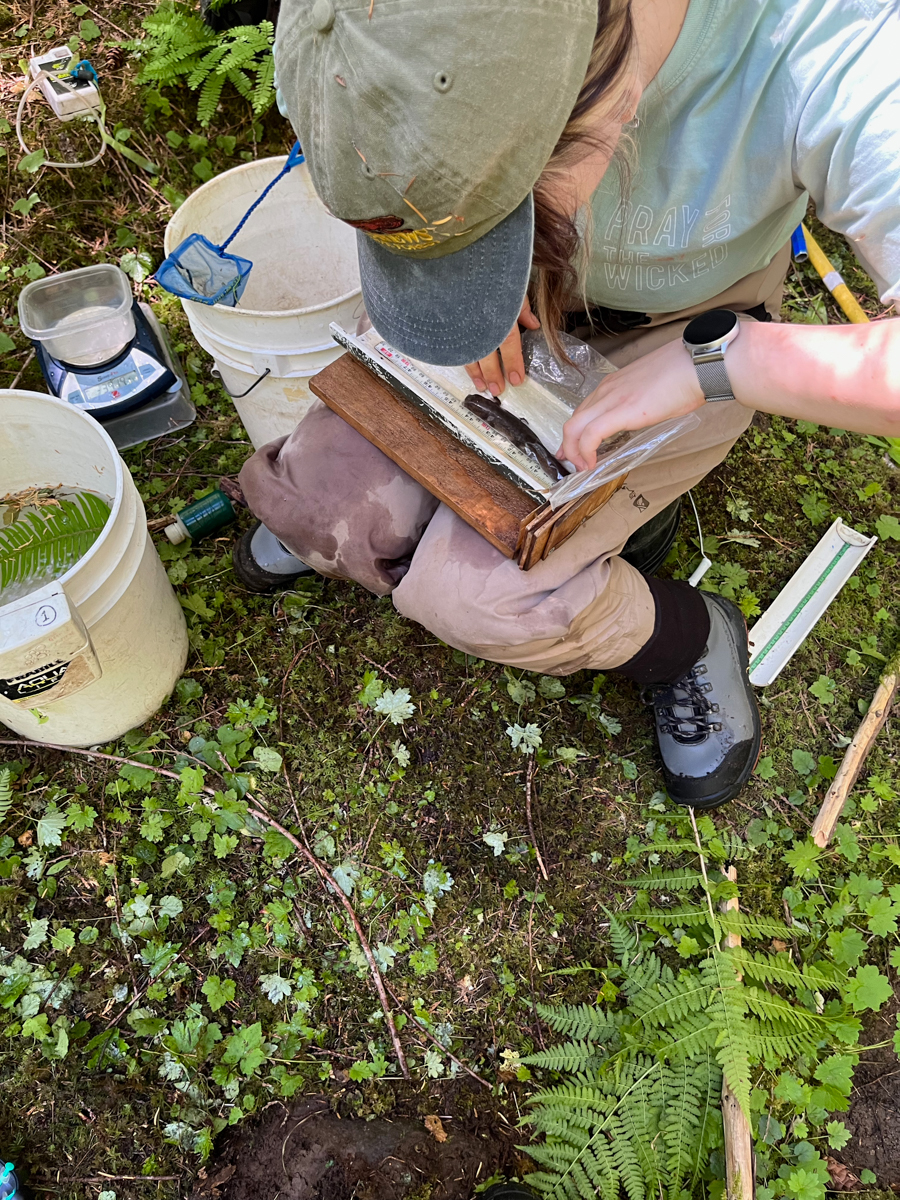
Hailey Bond collects length measurements of a salmander.
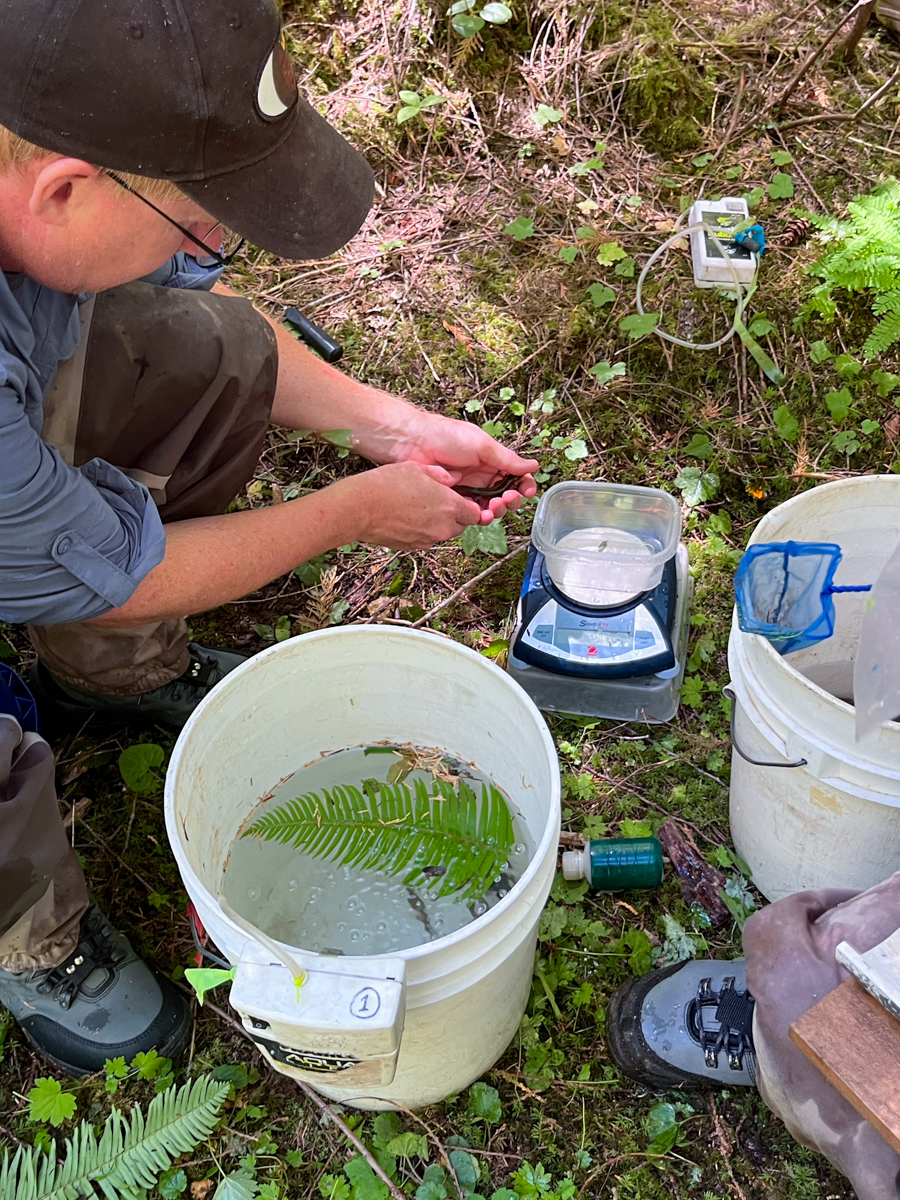
Dana Warren collects the weight of a salamander.
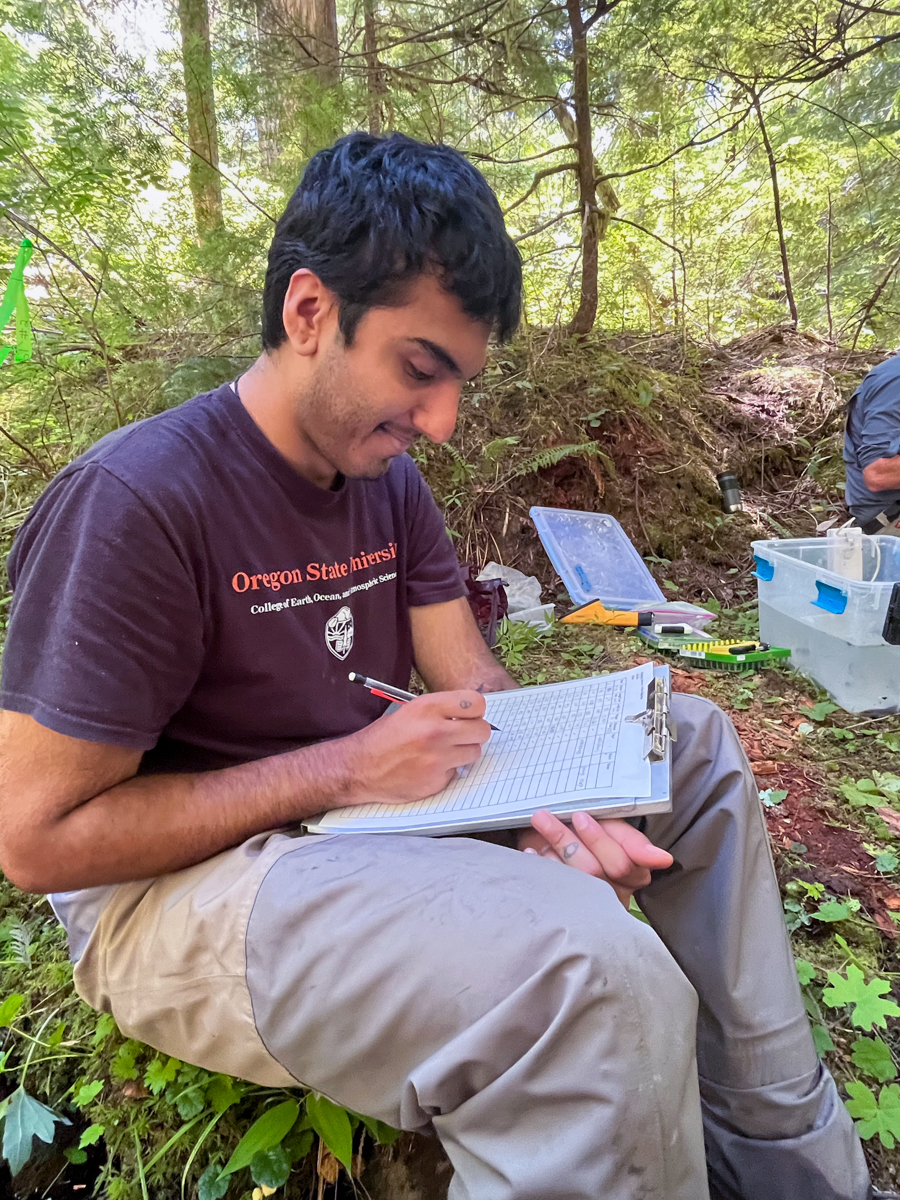
Undergraduate student Adrian Puga records data as fish and salmanders are processed.
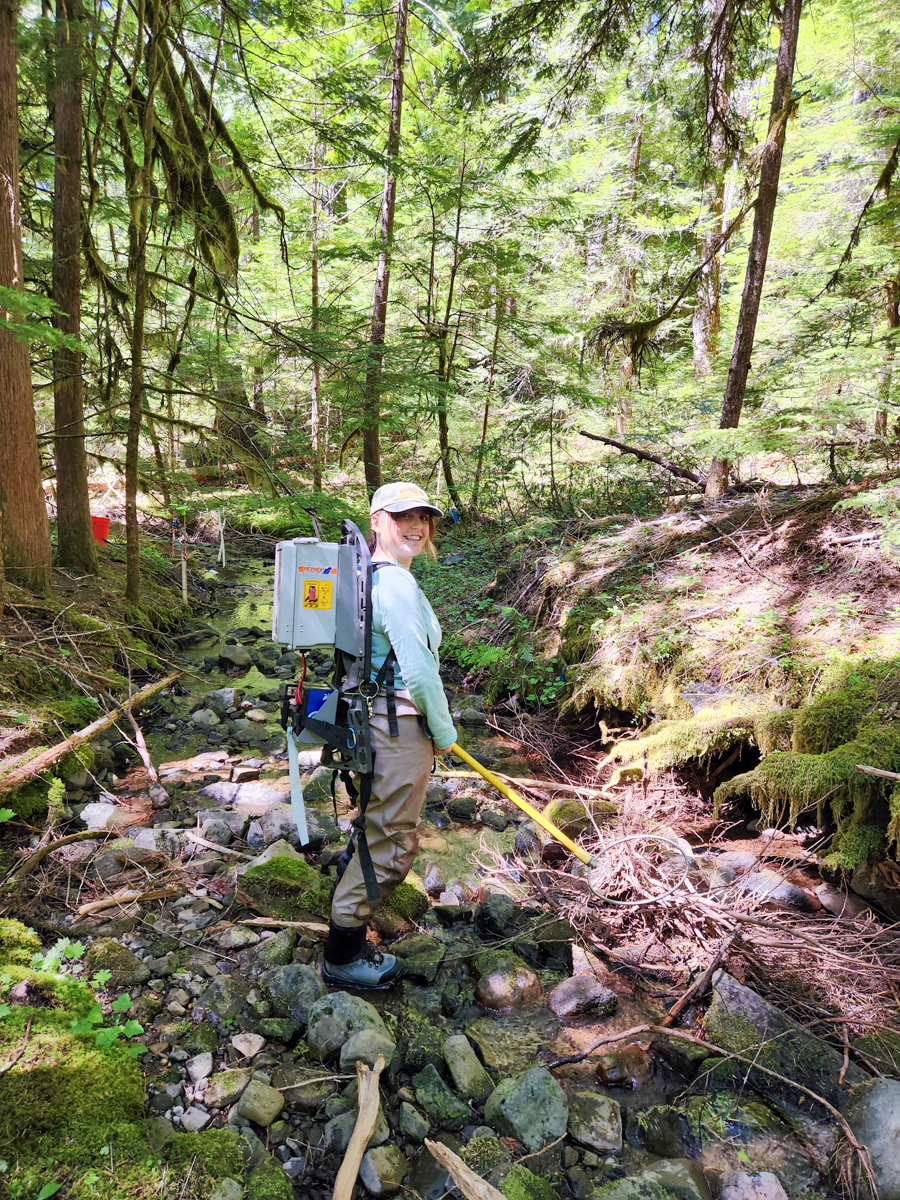
Undergraduate student Hailey Bond with an electofishing backpack.
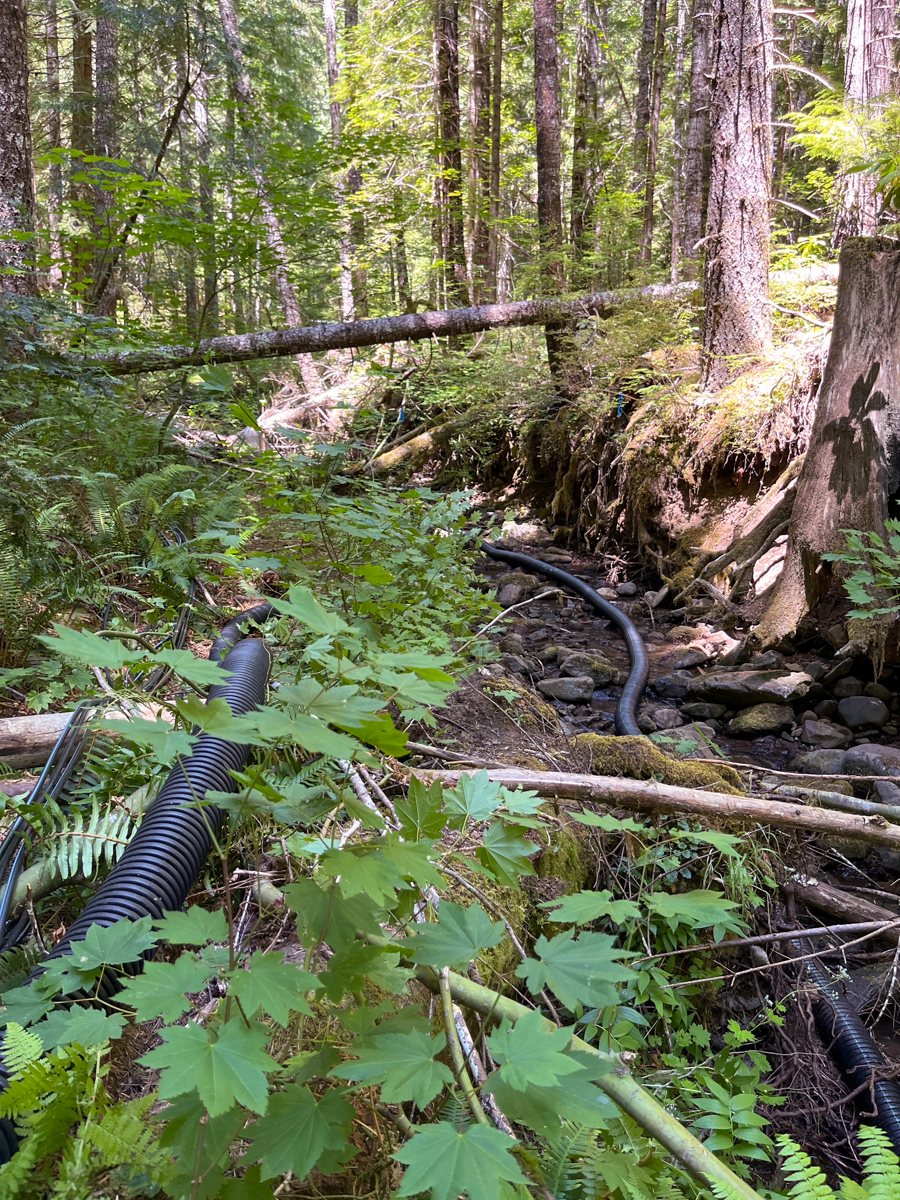
Diverted water being carried through a large plastic line in the low-flow reach.
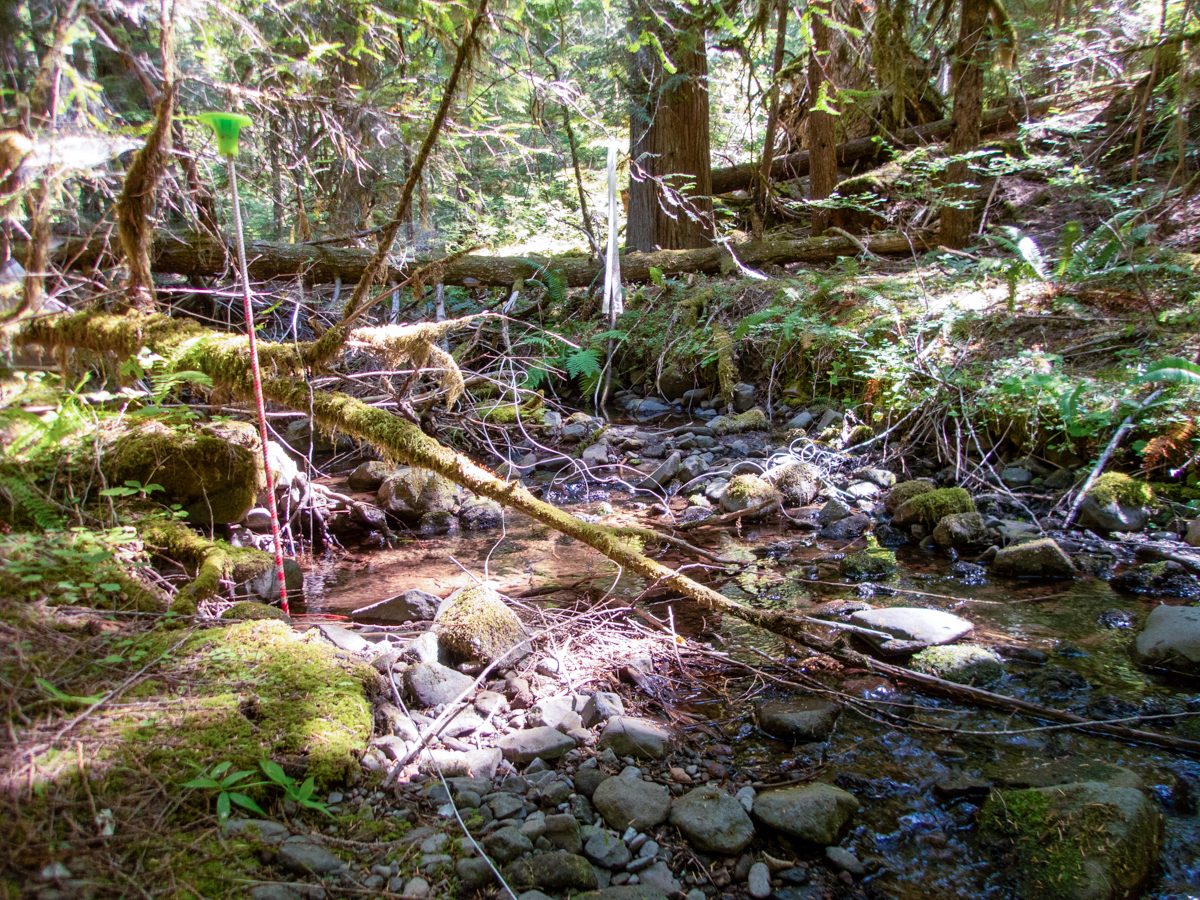
The upper portion of the reference reach.
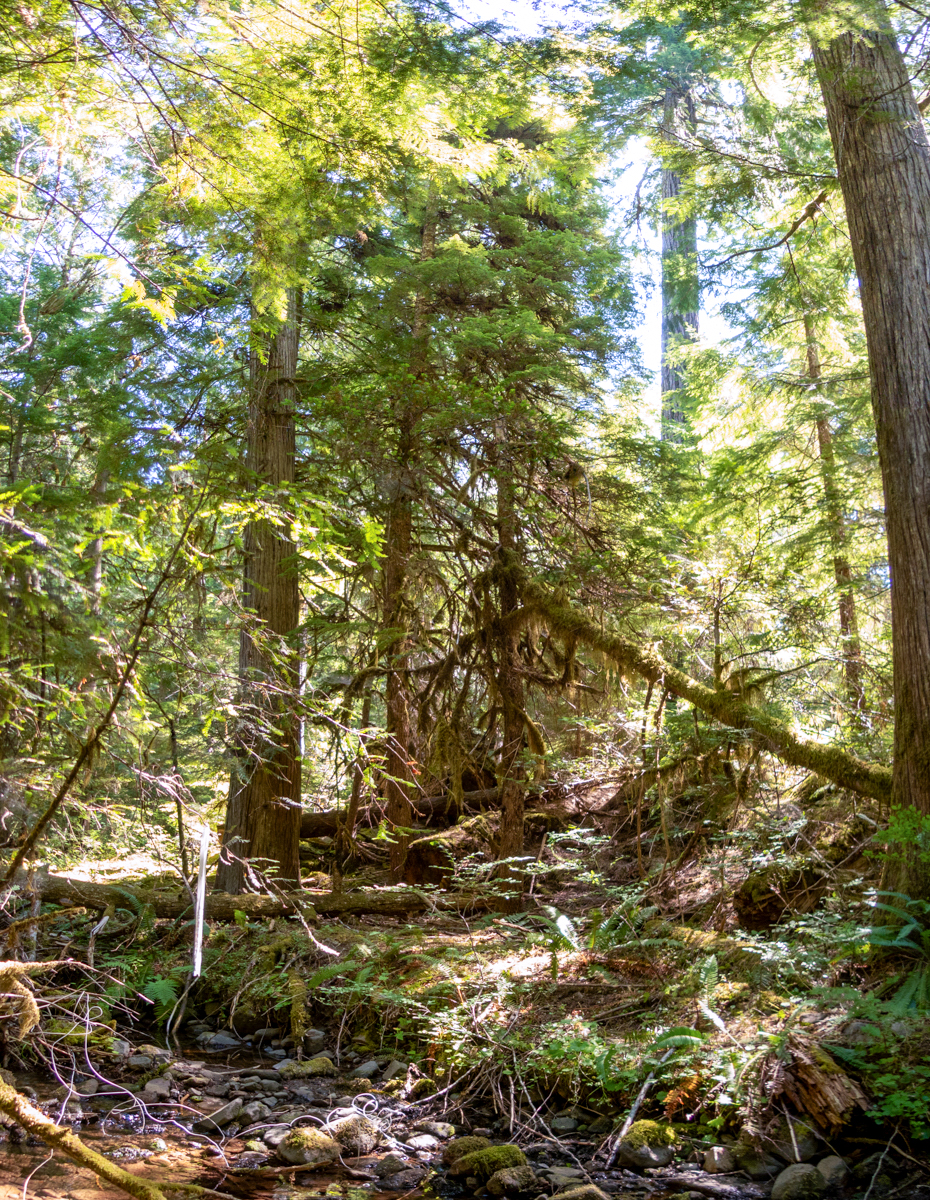
Large trees in the riparian area of the upstream reference reach.
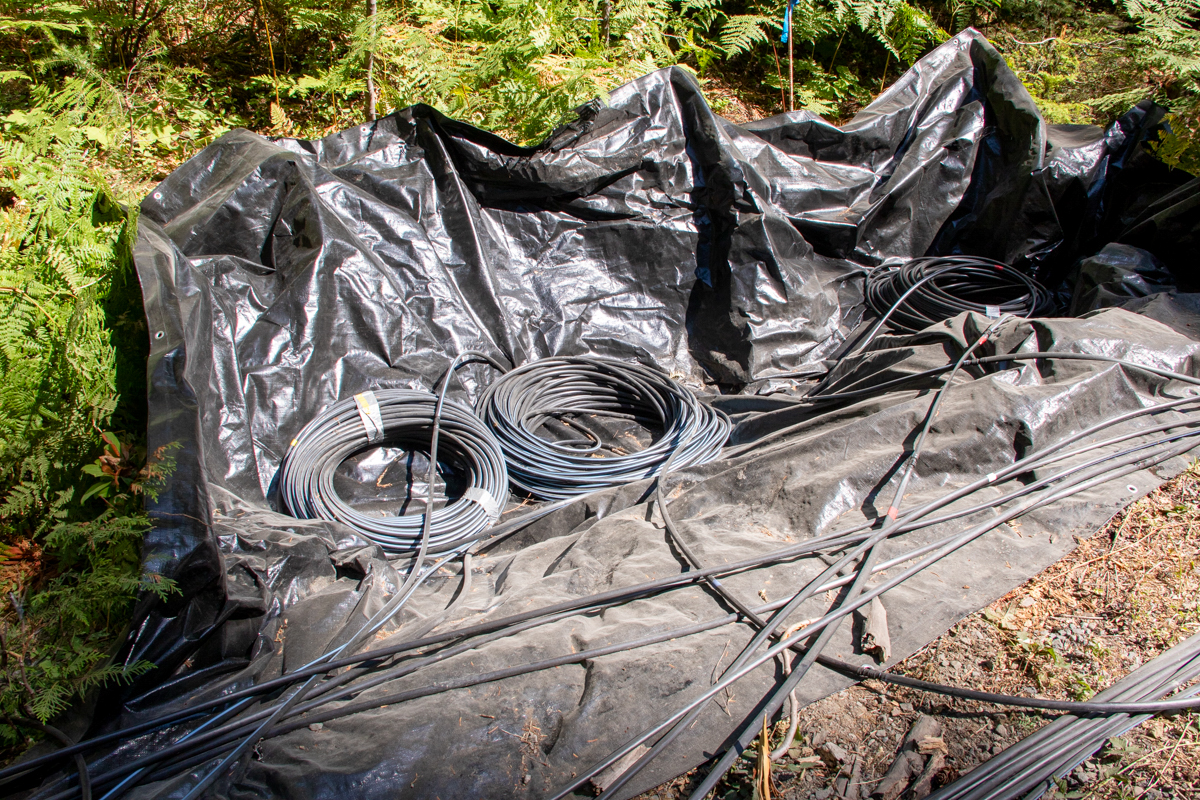
Coil system used to passively warm diverted water before it re-enters the increased temperature (+Temp) reach.
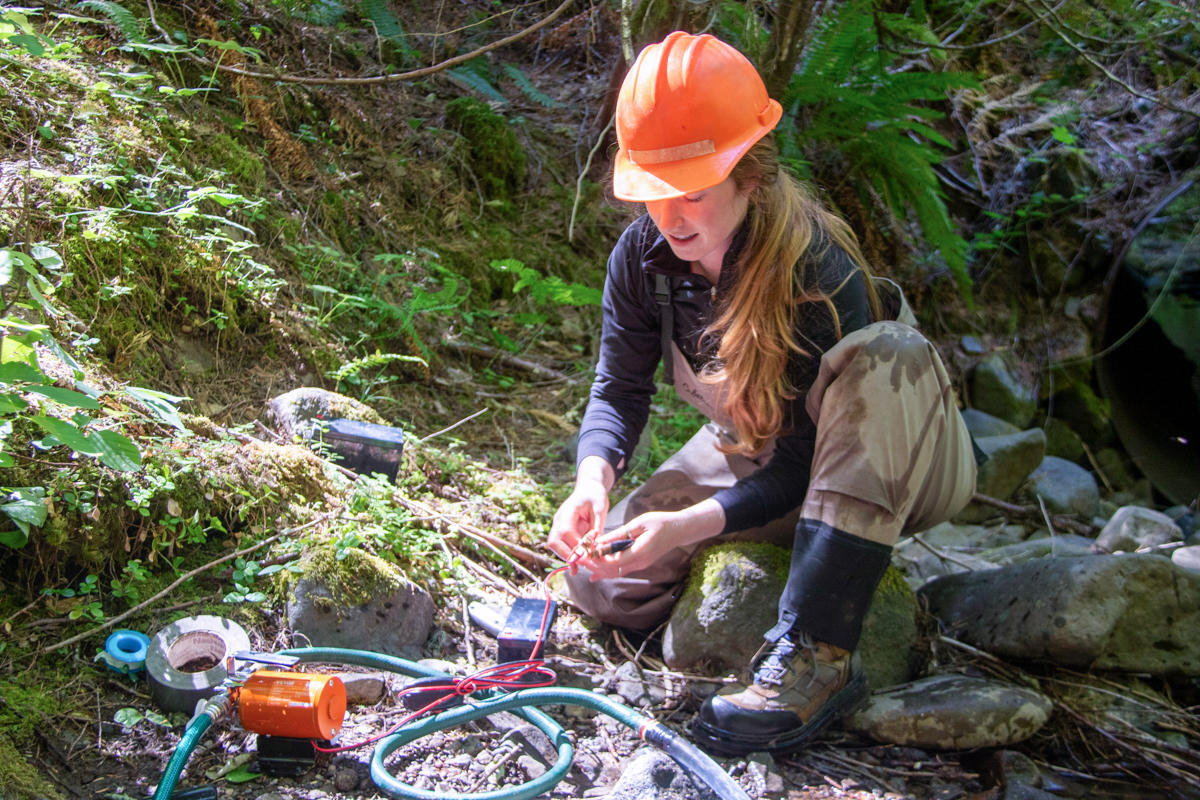
Graduate student Maddie Maffia sets up the siphon pump to divert water through the coil systems.
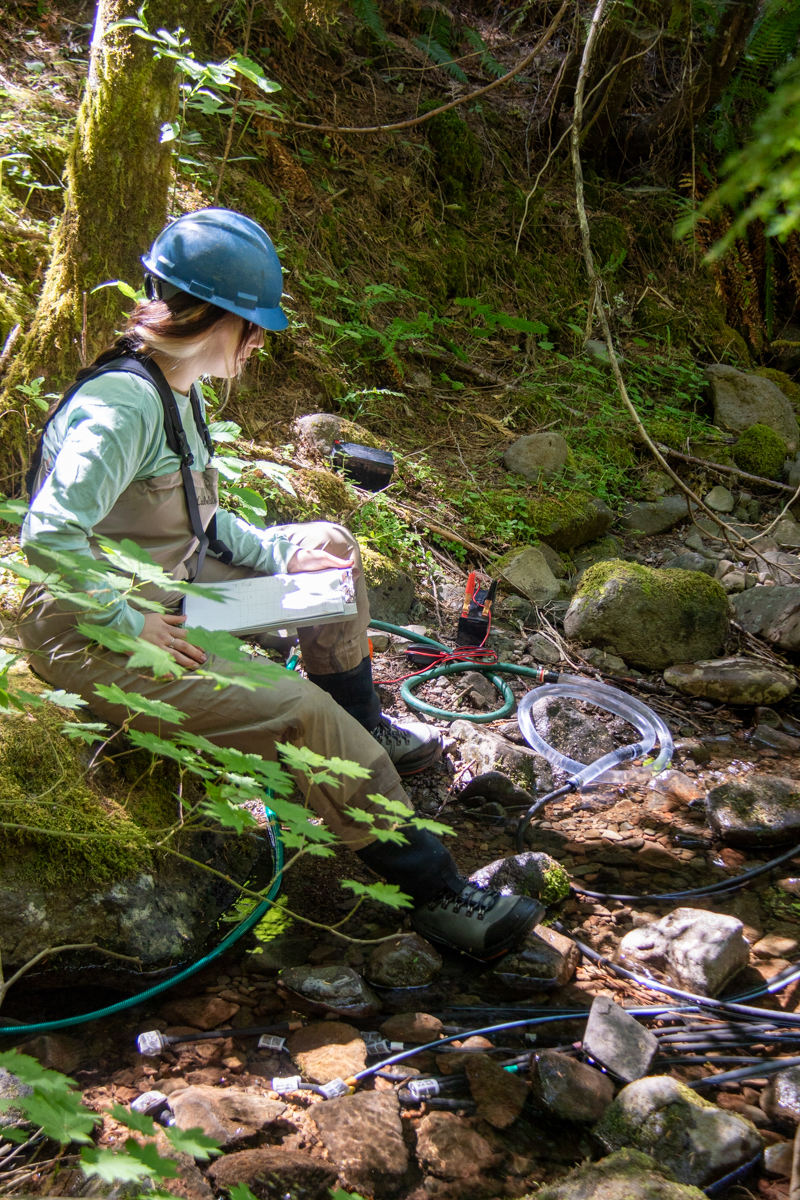
Undergraduate student Hailey Bond takes notes while checking the outflow of the lines.
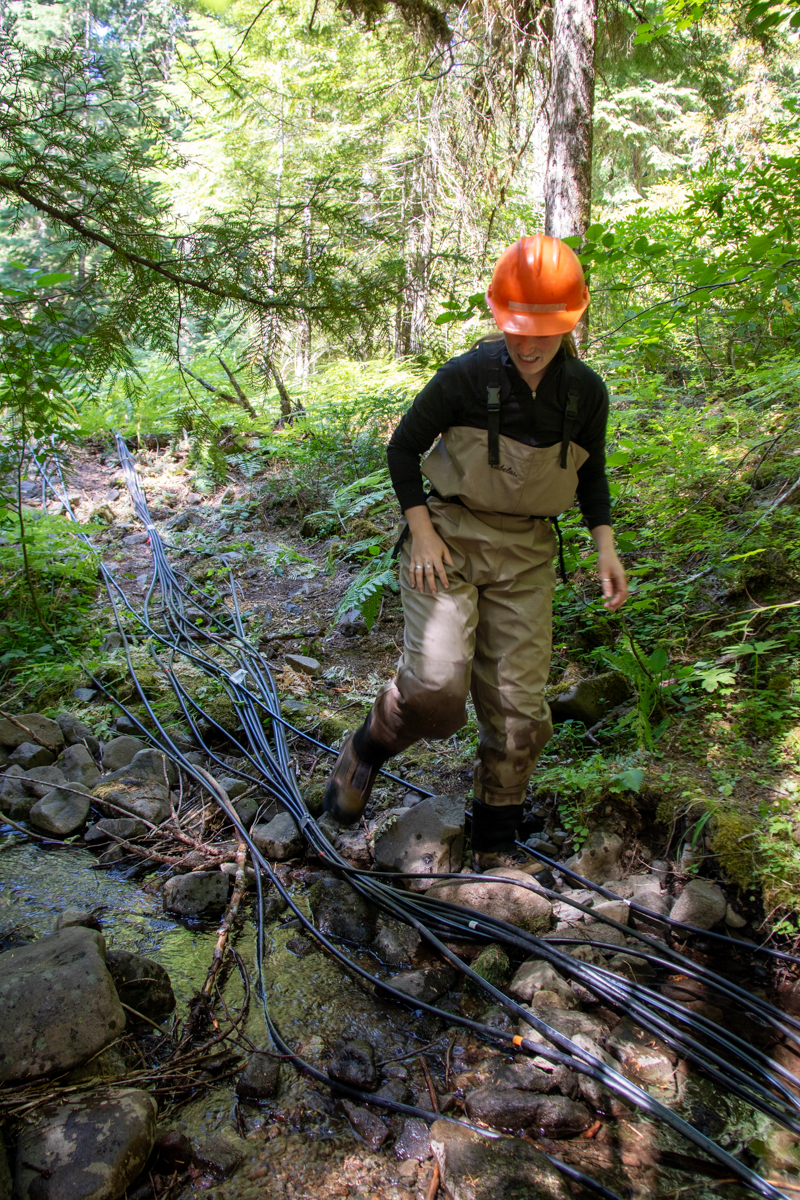
Graduate student Maddie Maffia walks along the streambed where tubing diverts water.
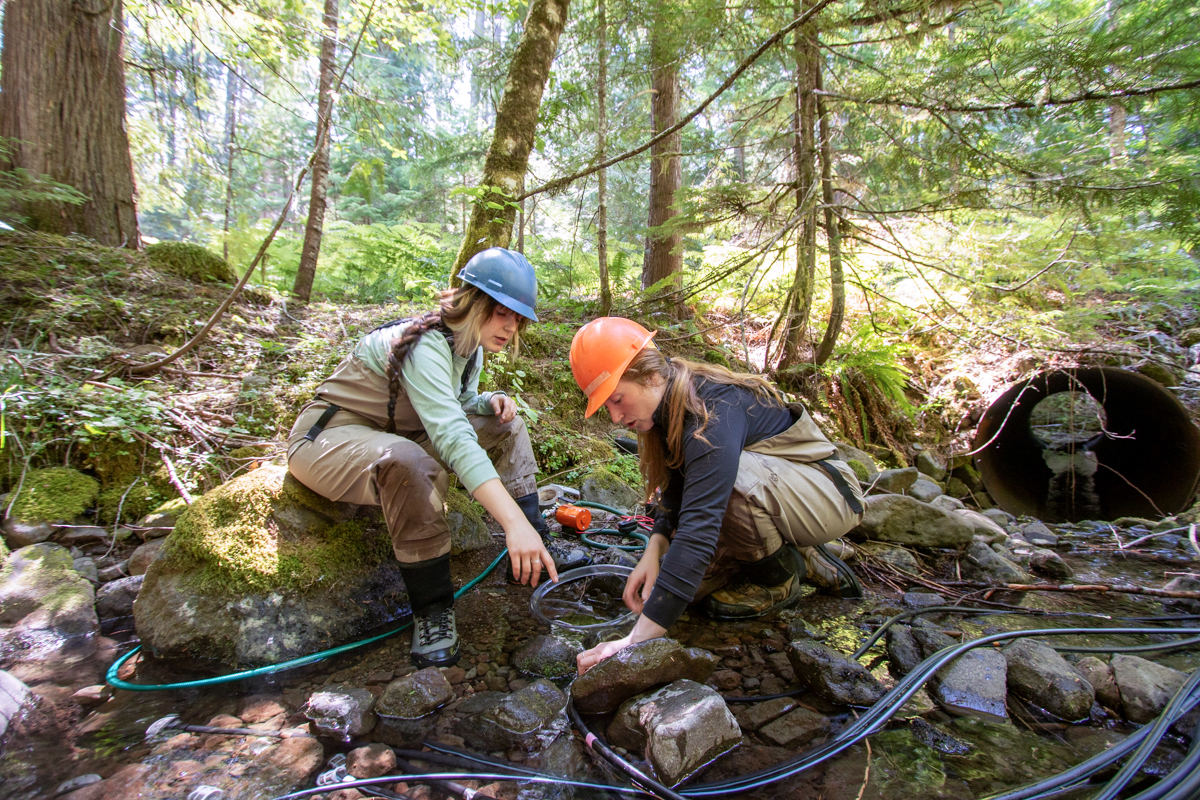
Maddie Maffia and Hailey Bond set up the siphon pump to divert and warm water through the coil system.
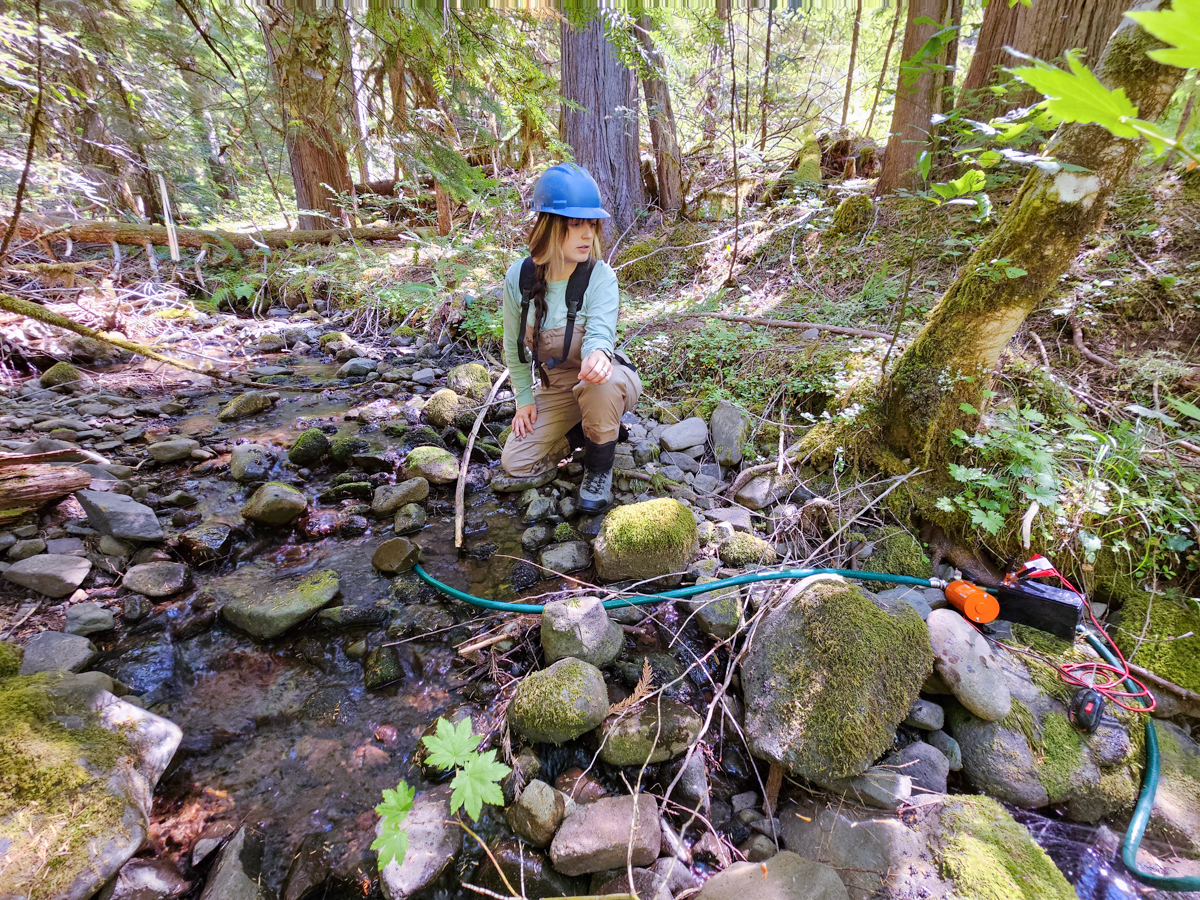
Undergraduate student Hailey Bond in the reference reach of the stream, where there are no experimental treatments.
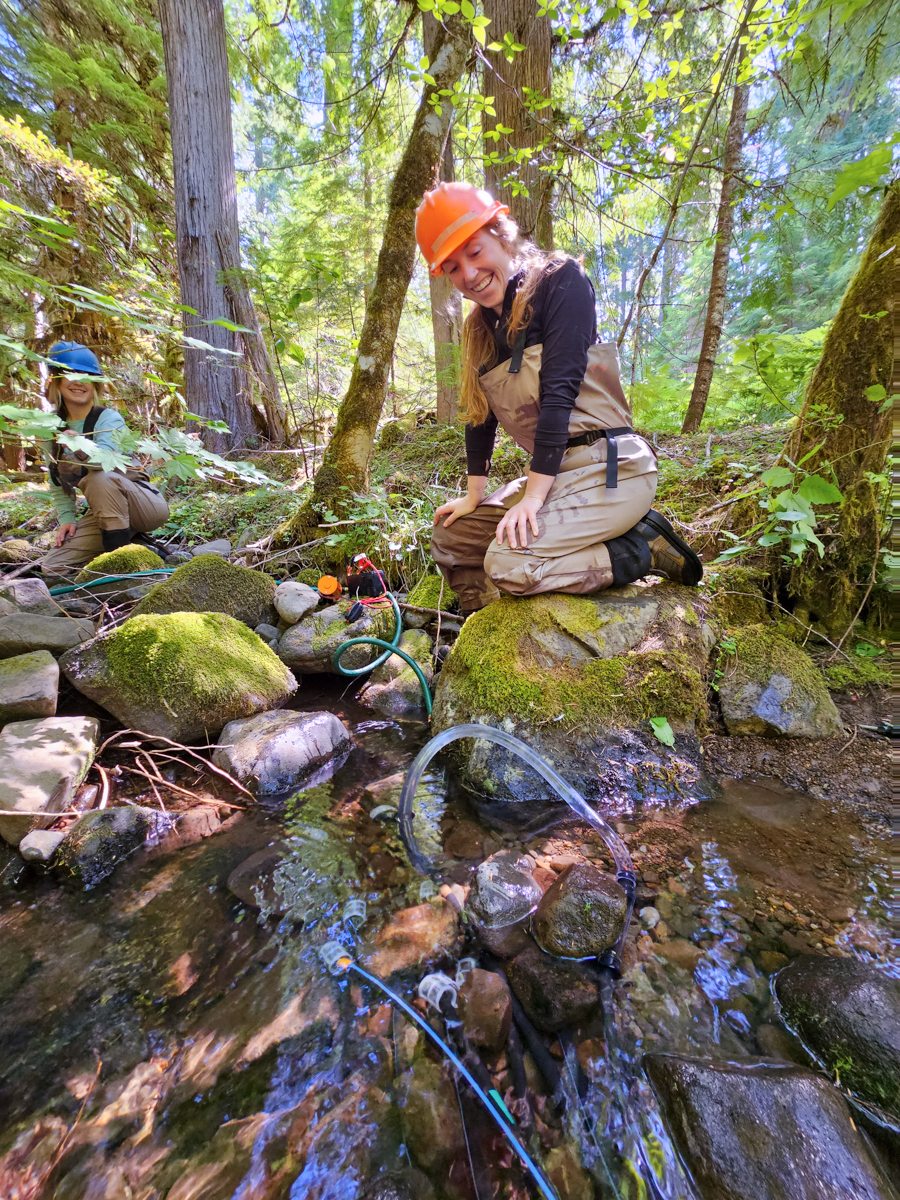
Graduate student Maddie Maffia waits for the siphone pump to move water through the ~200 meters of lines.
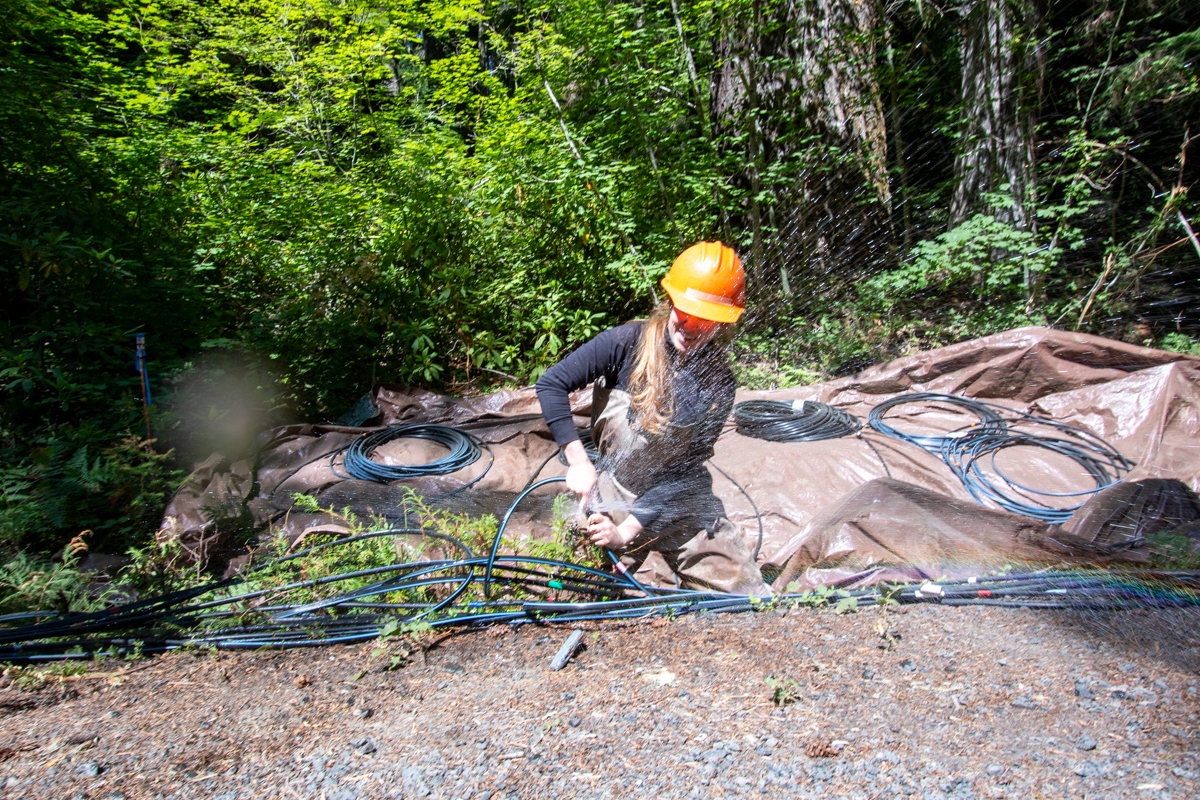
Graduate student Maddie Maffia fixes a hole in the line as it sprays water.
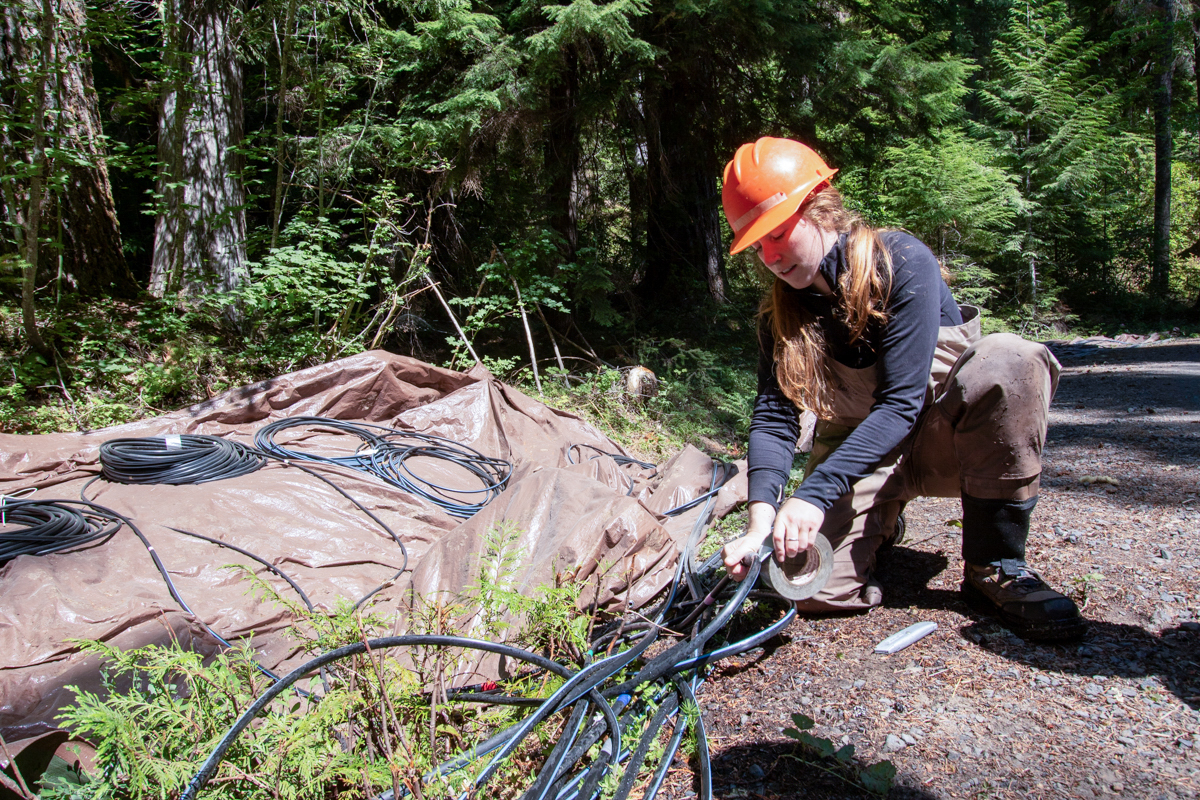
Graduate student Maddie Maffia repairs a hole in one of the lines.

Graduate student Maddie Maffia checking the coils to make sure water is moving through them.
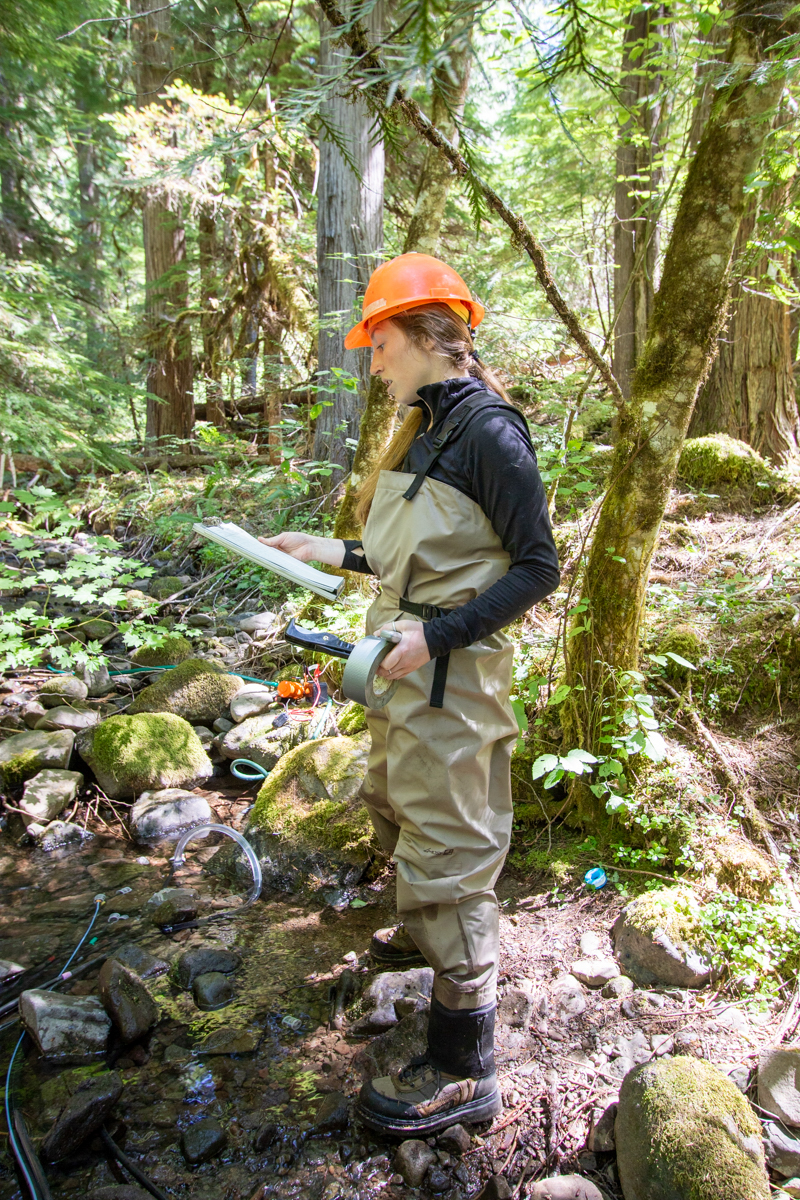
Graduate student Maddie Maffia takes notes on the water pressure of each of the lines.
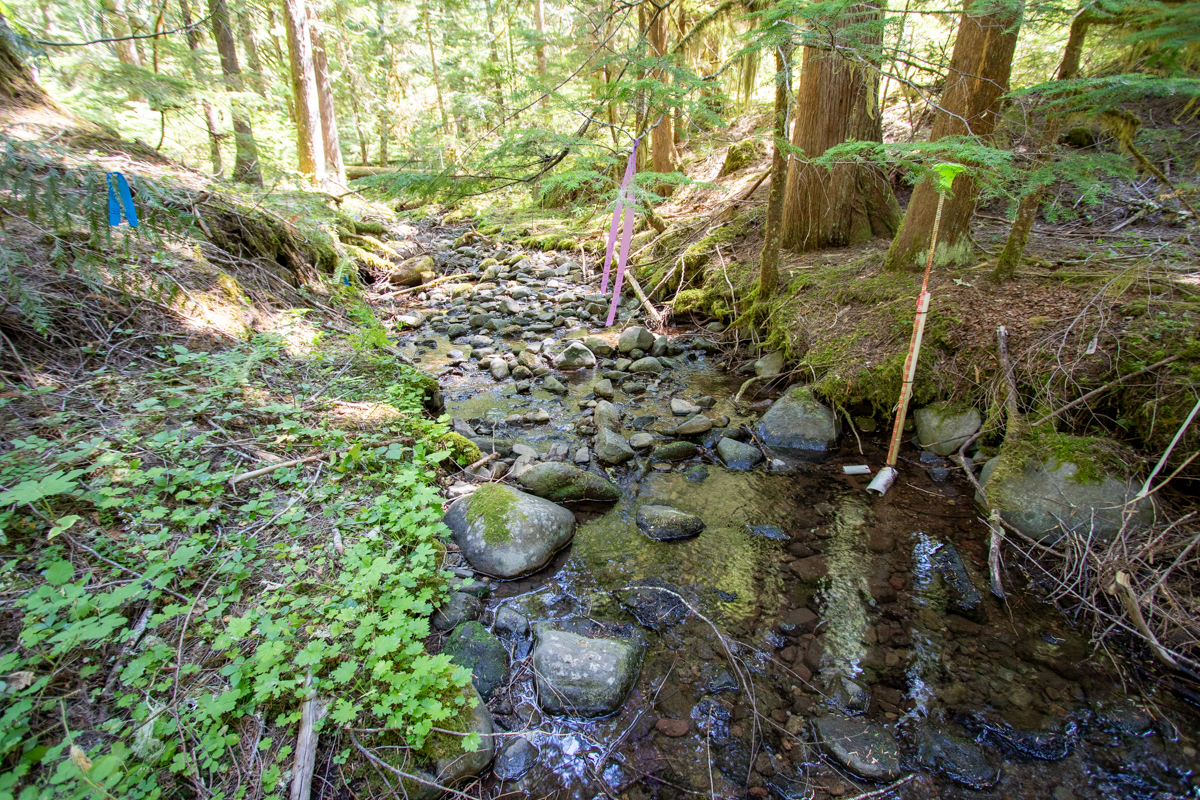
The upstream reference reach, where there is no reduced flow or increased temperature treatment.