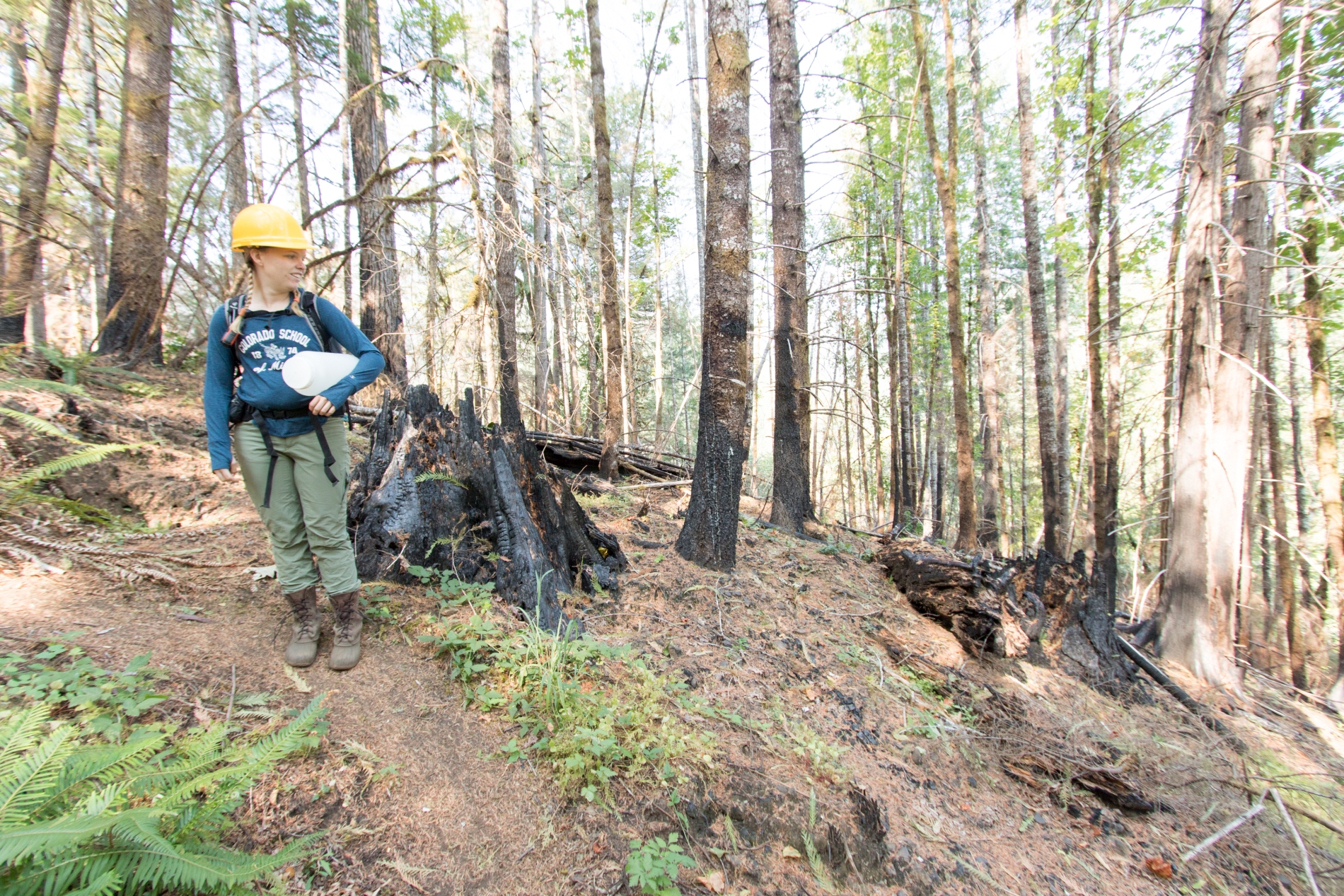
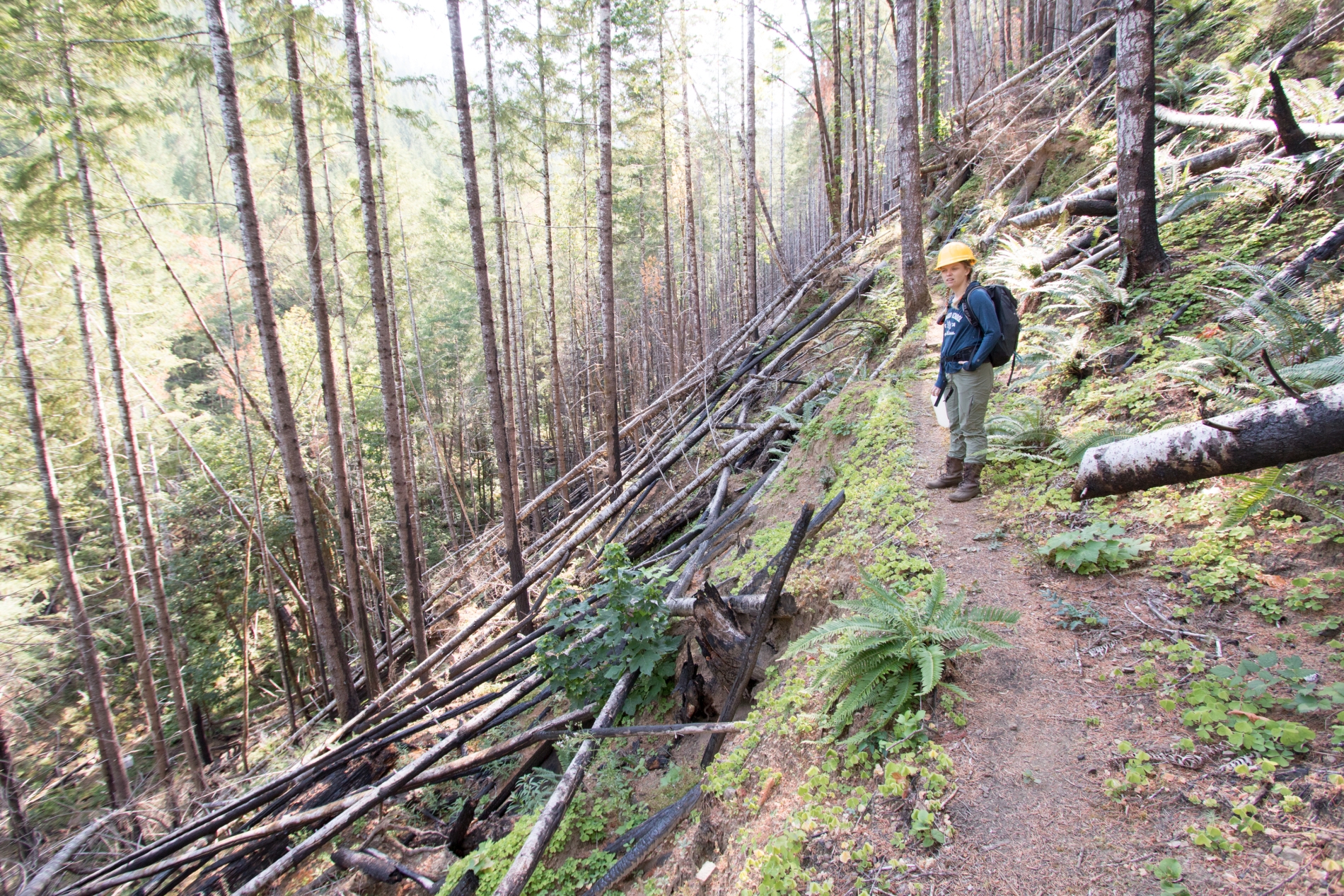
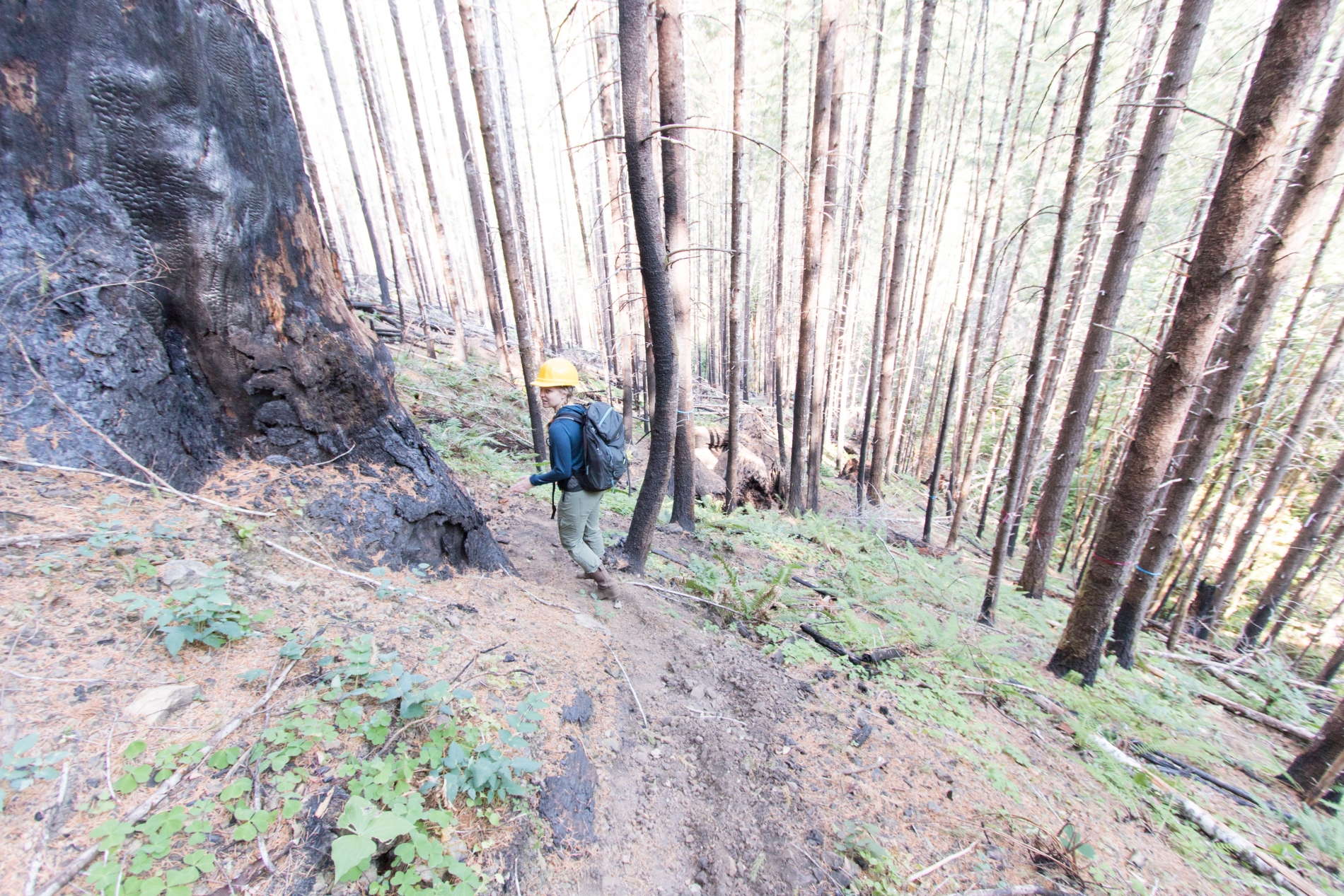
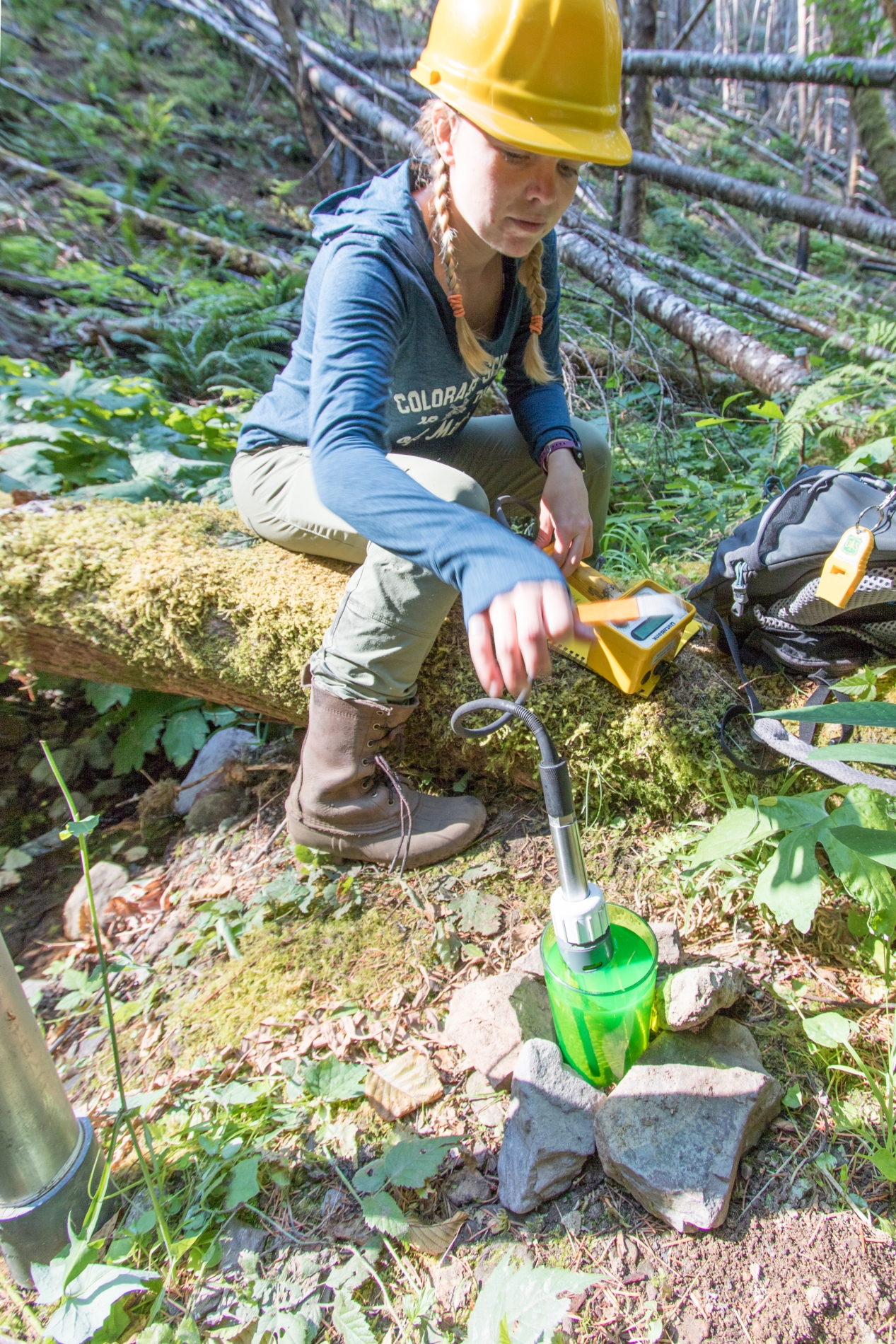
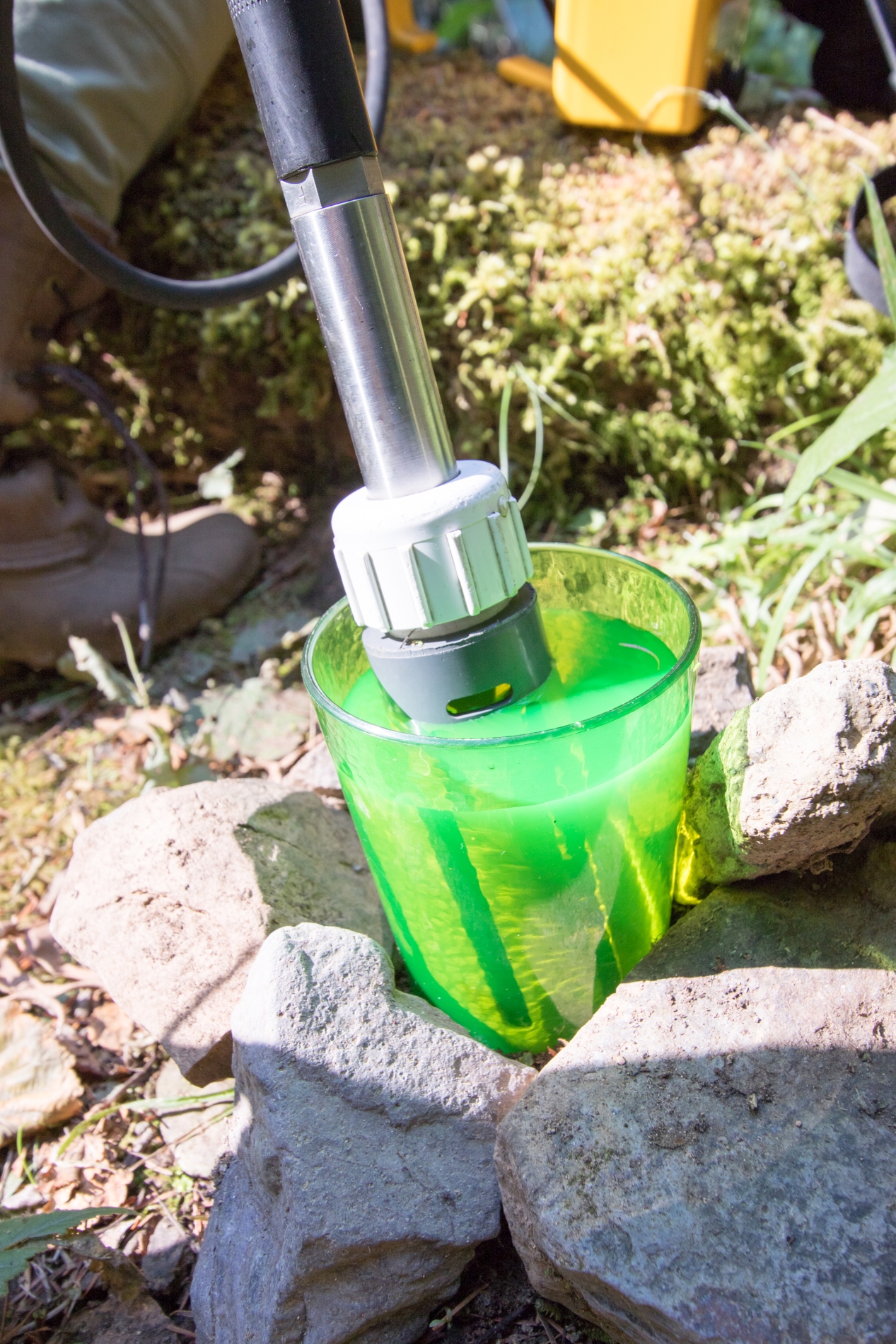
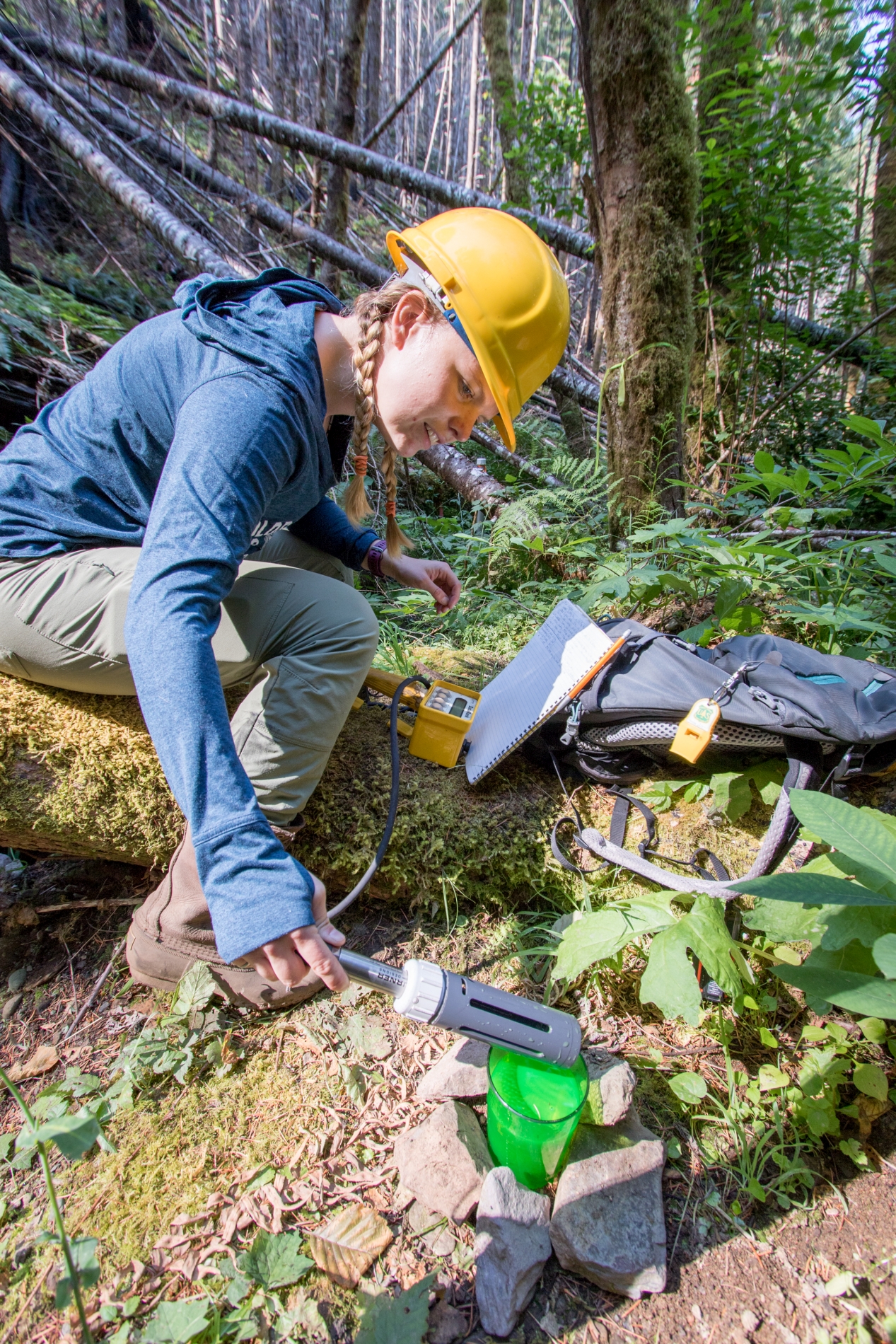
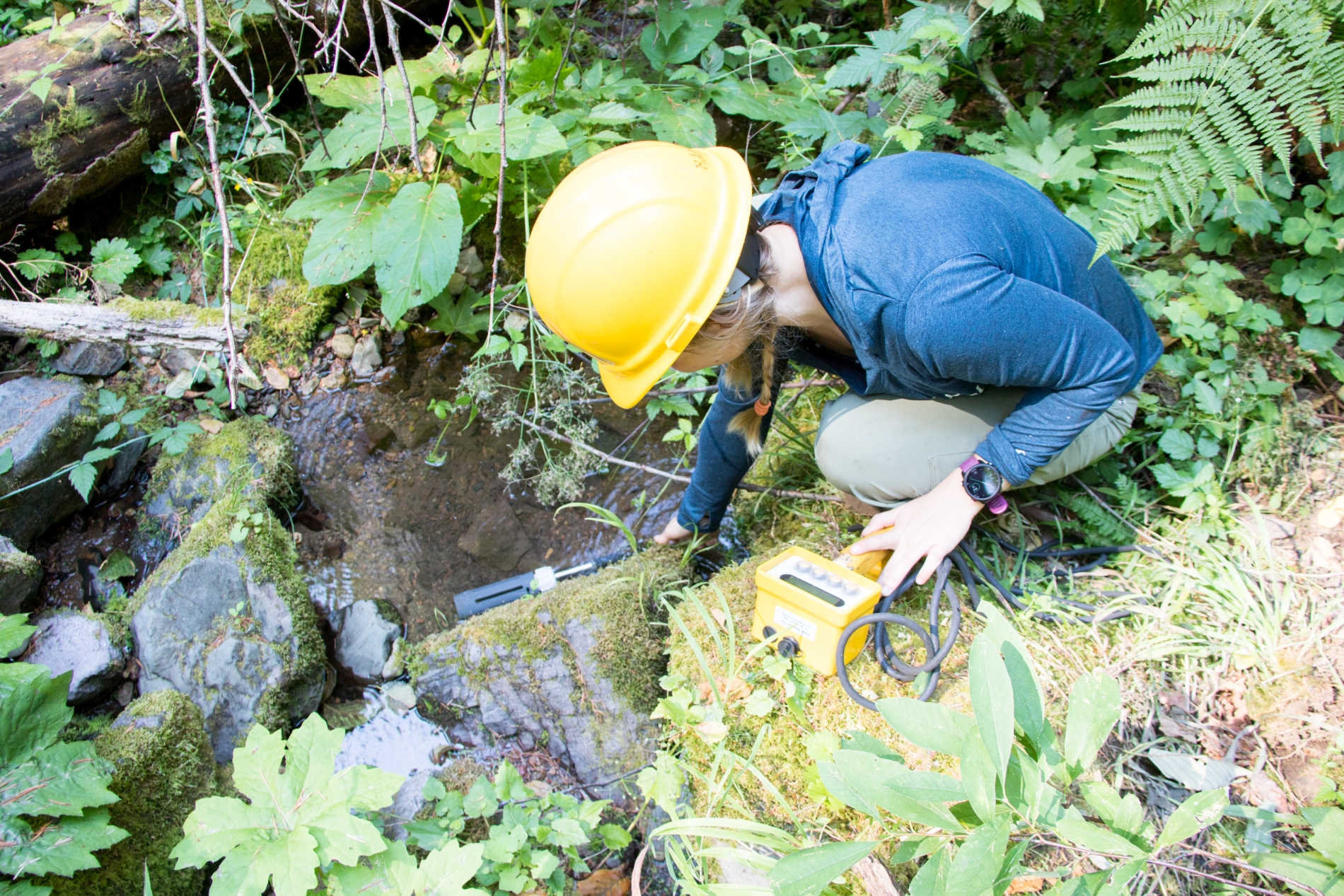
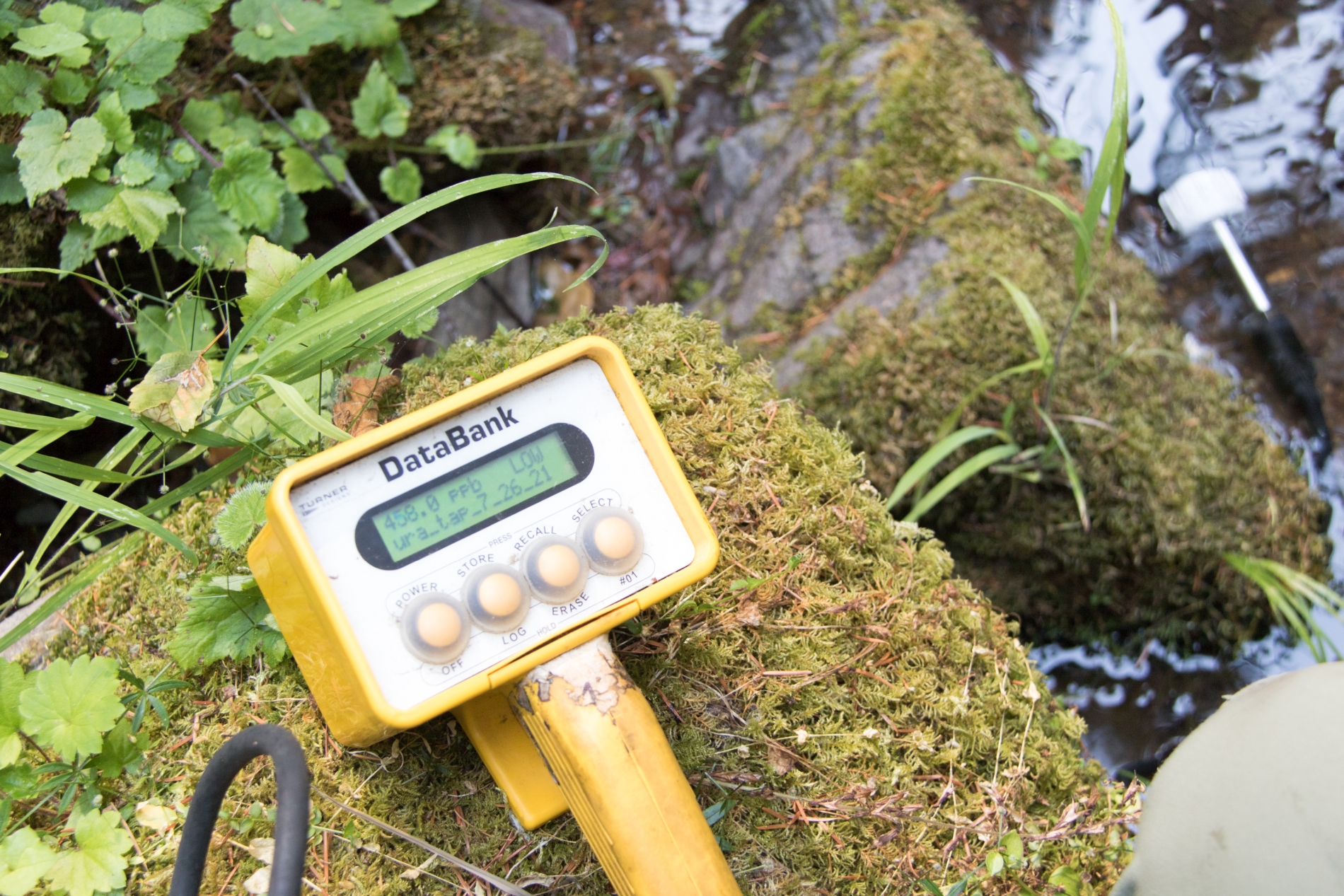
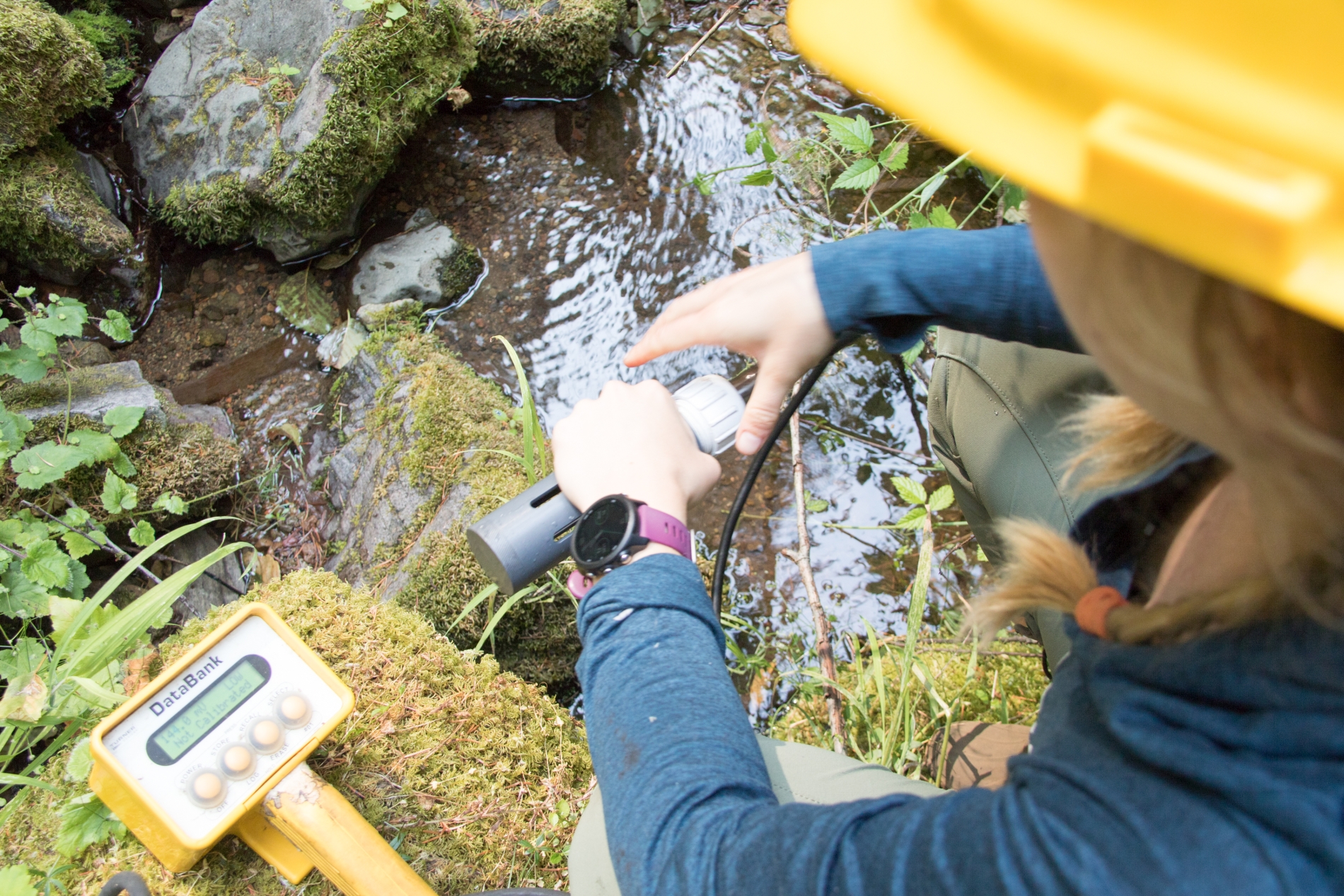
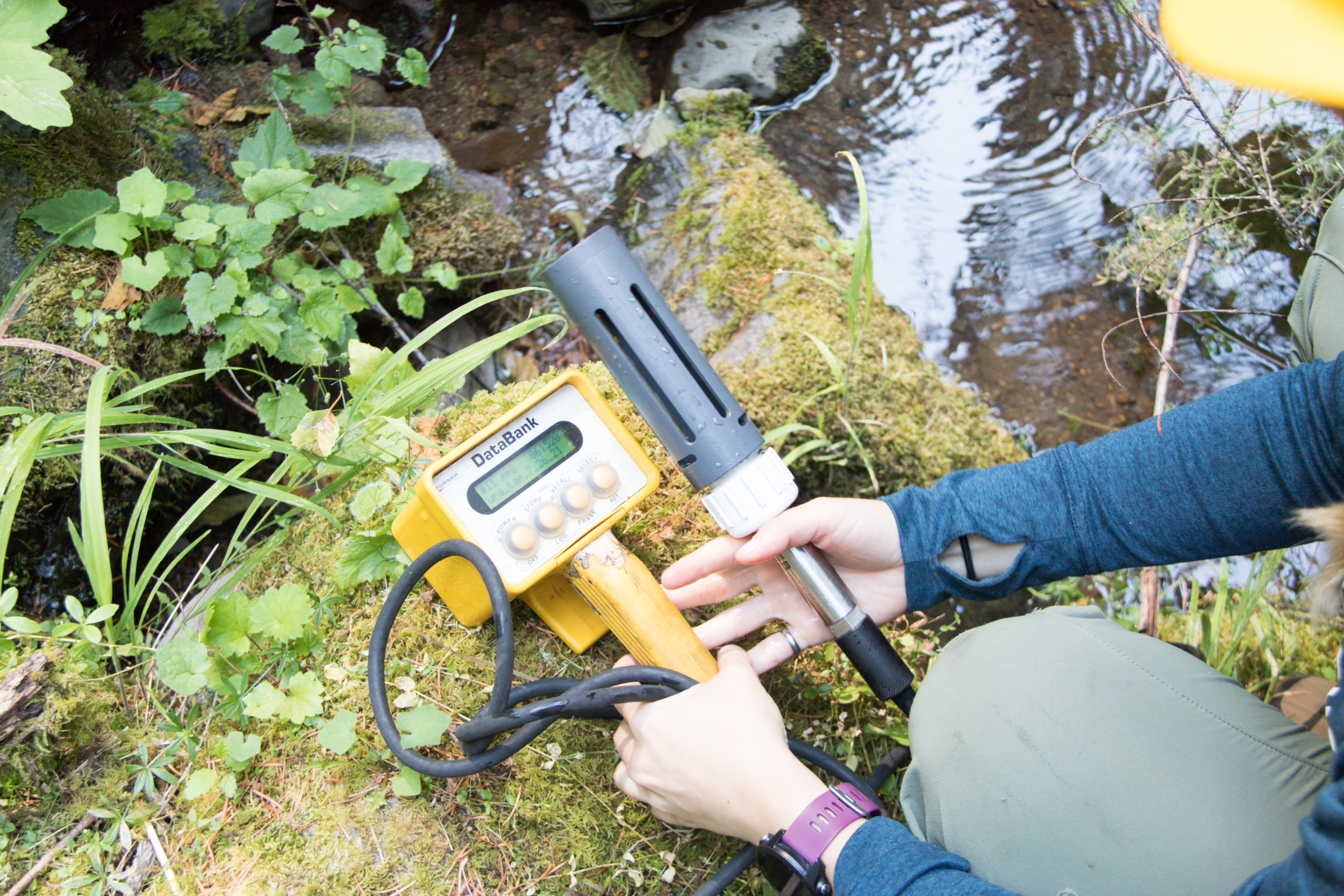
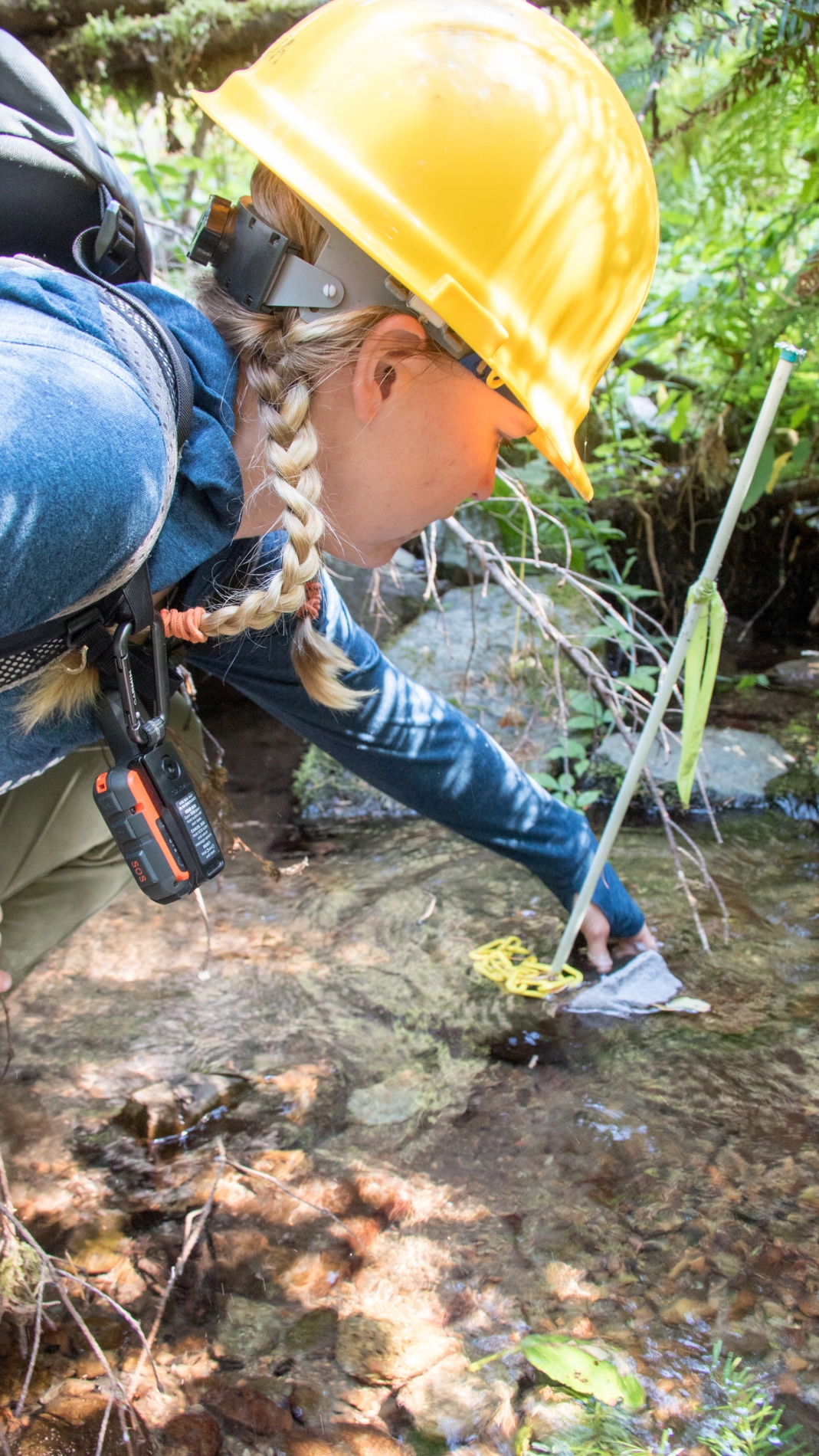
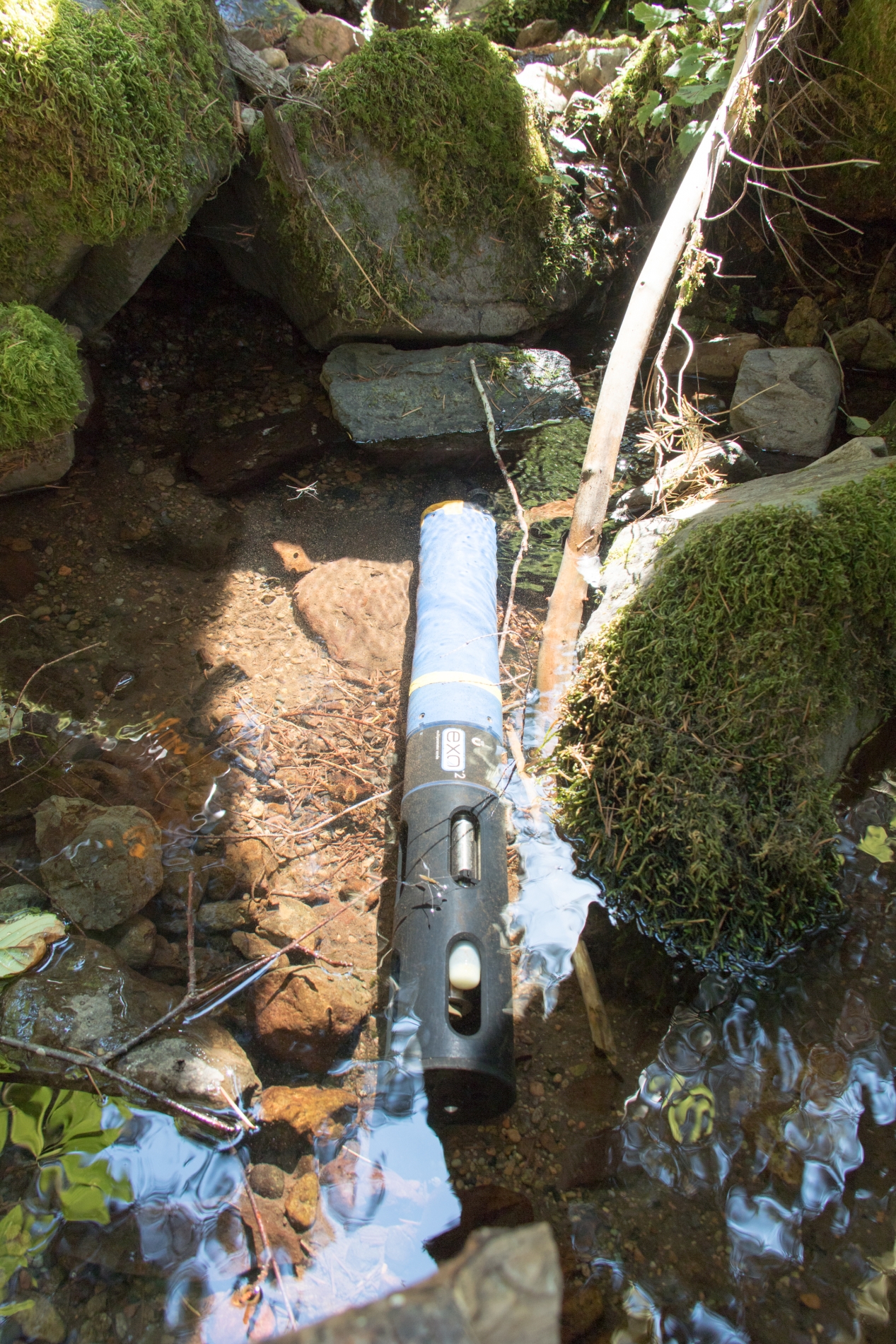
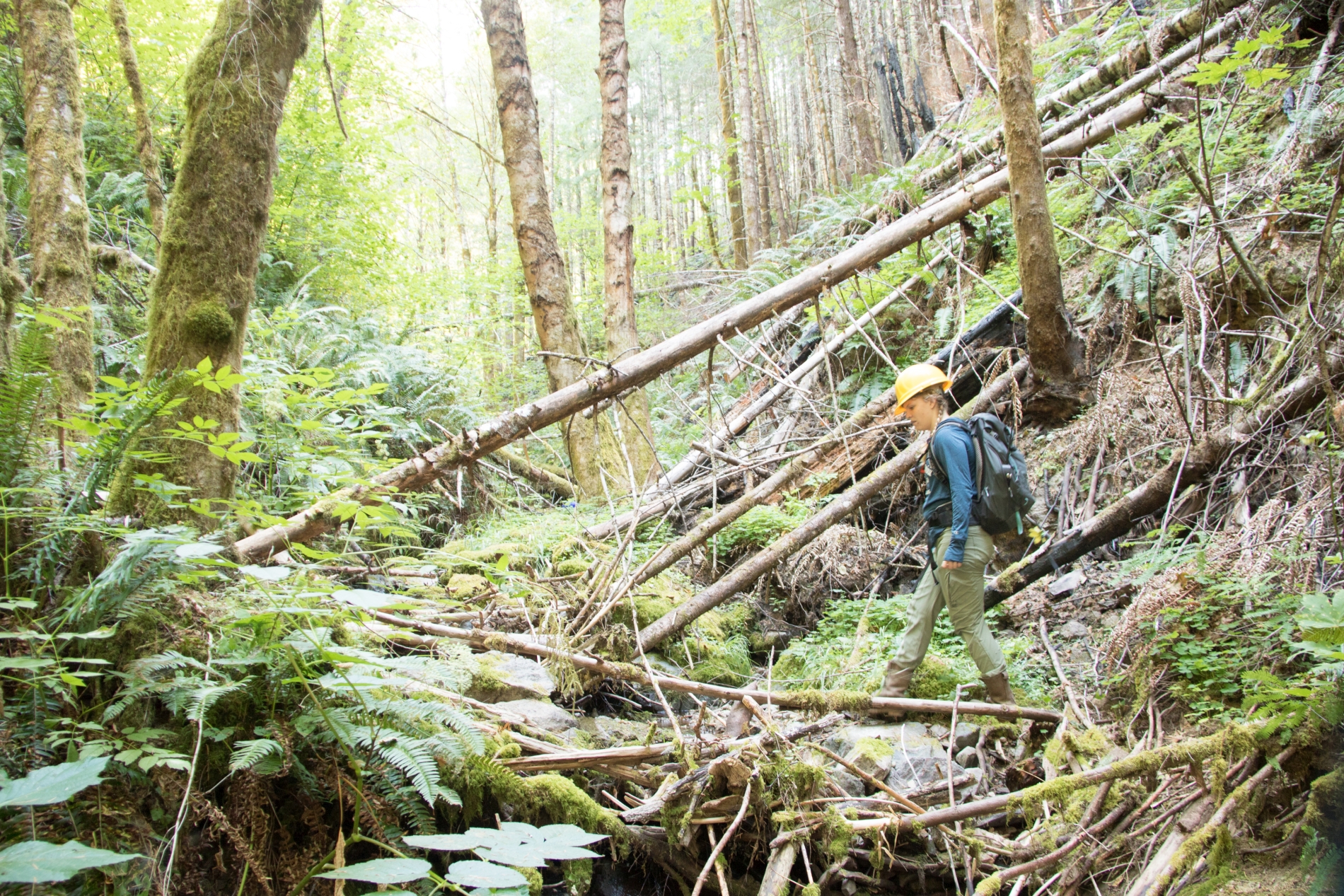
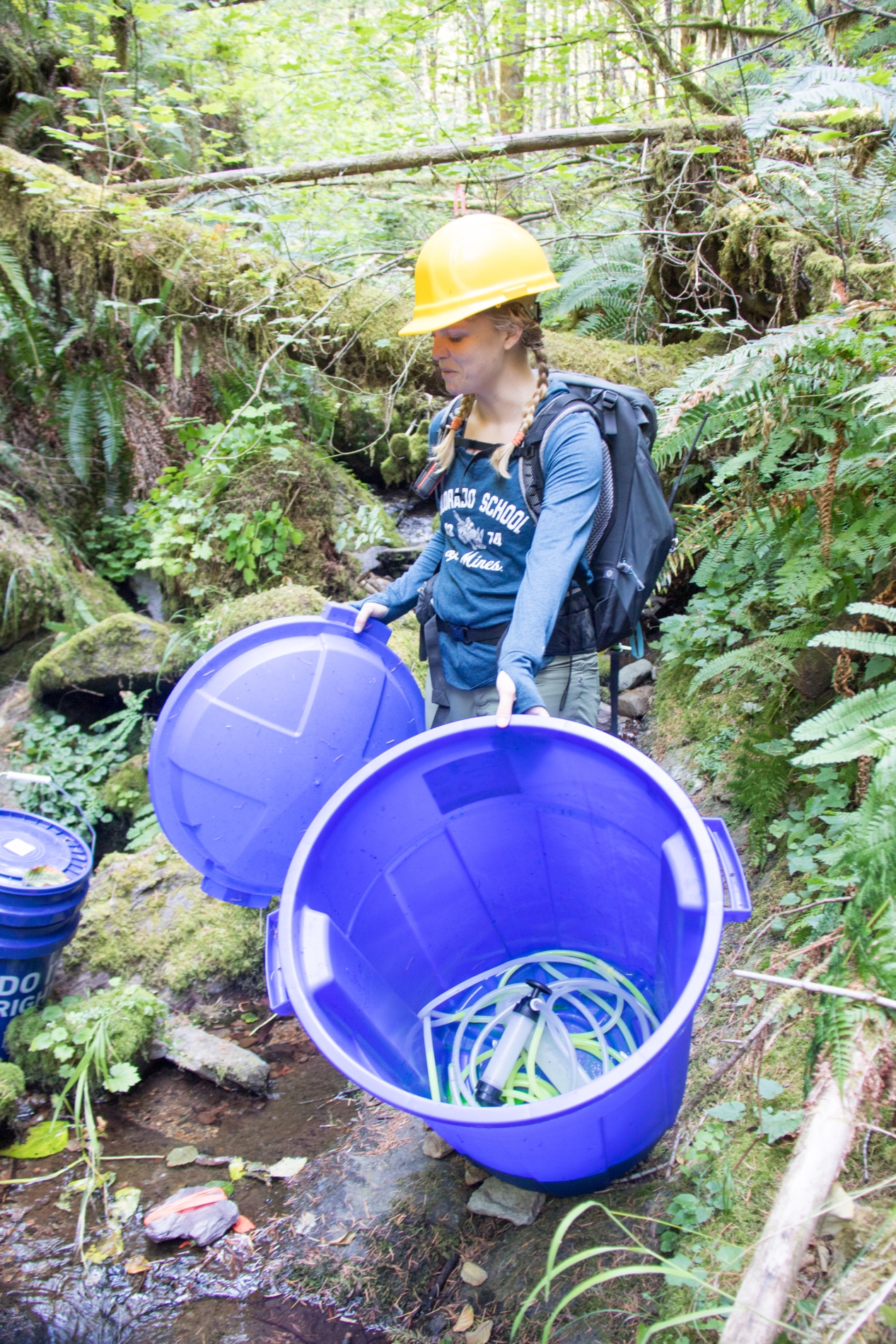
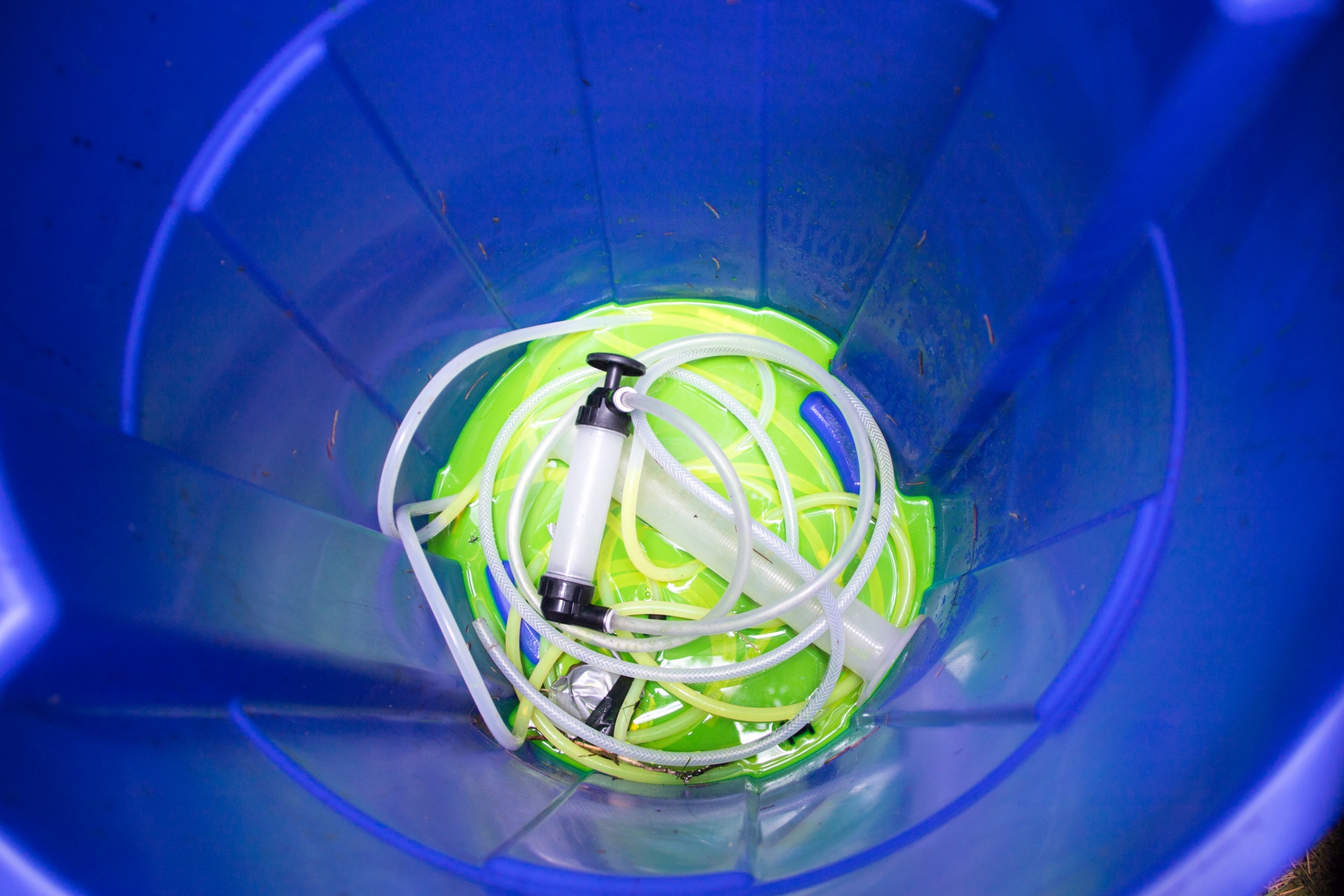
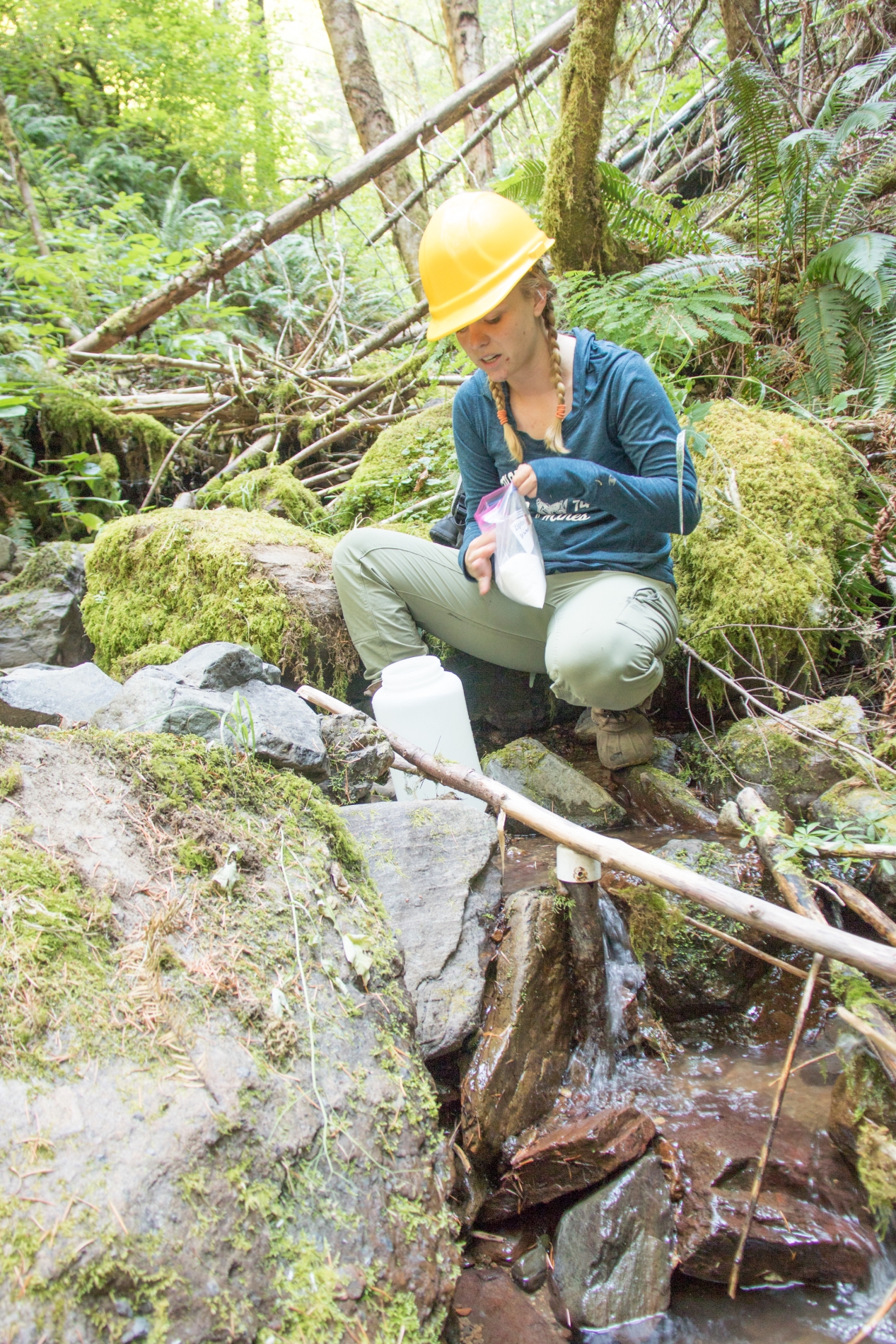
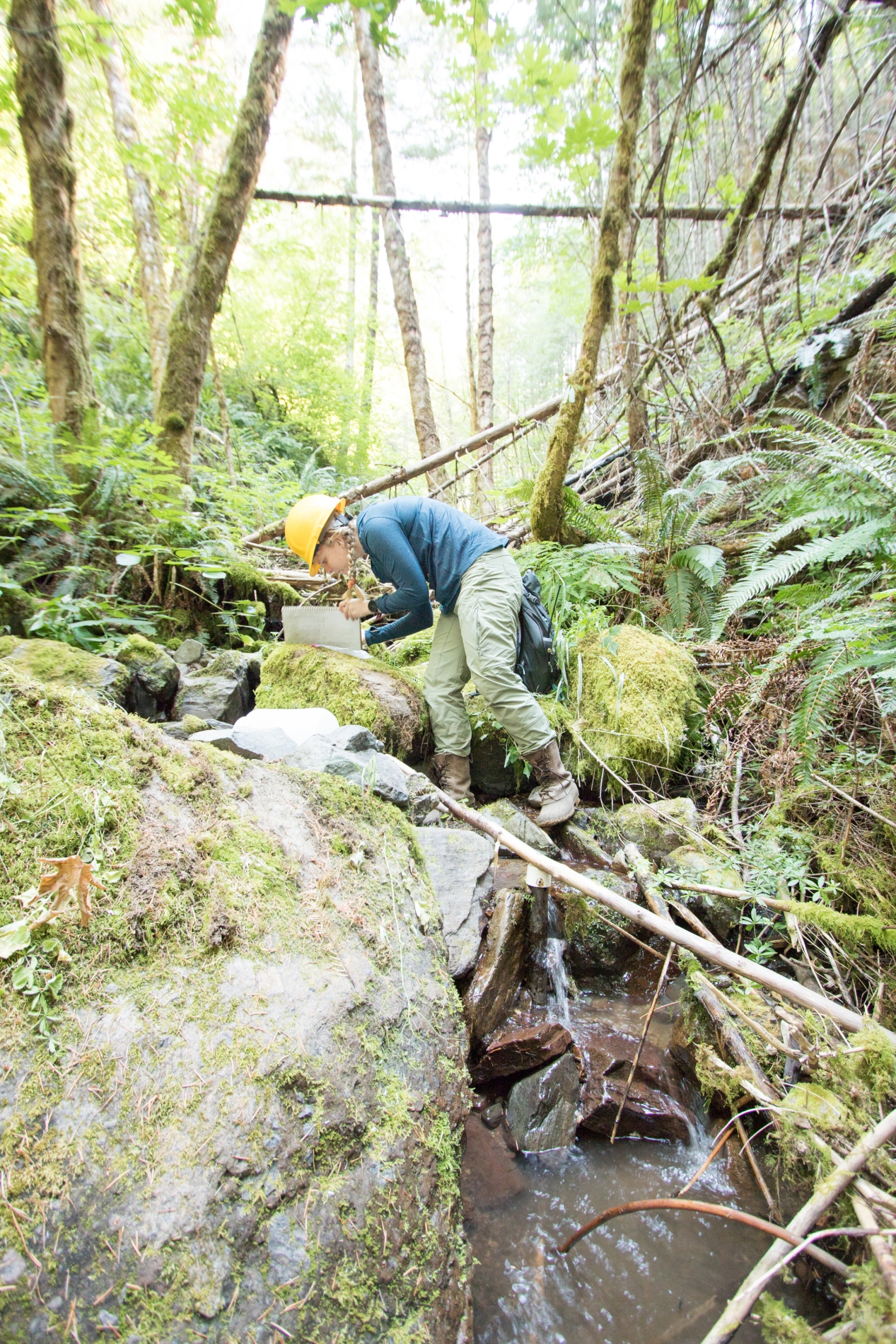
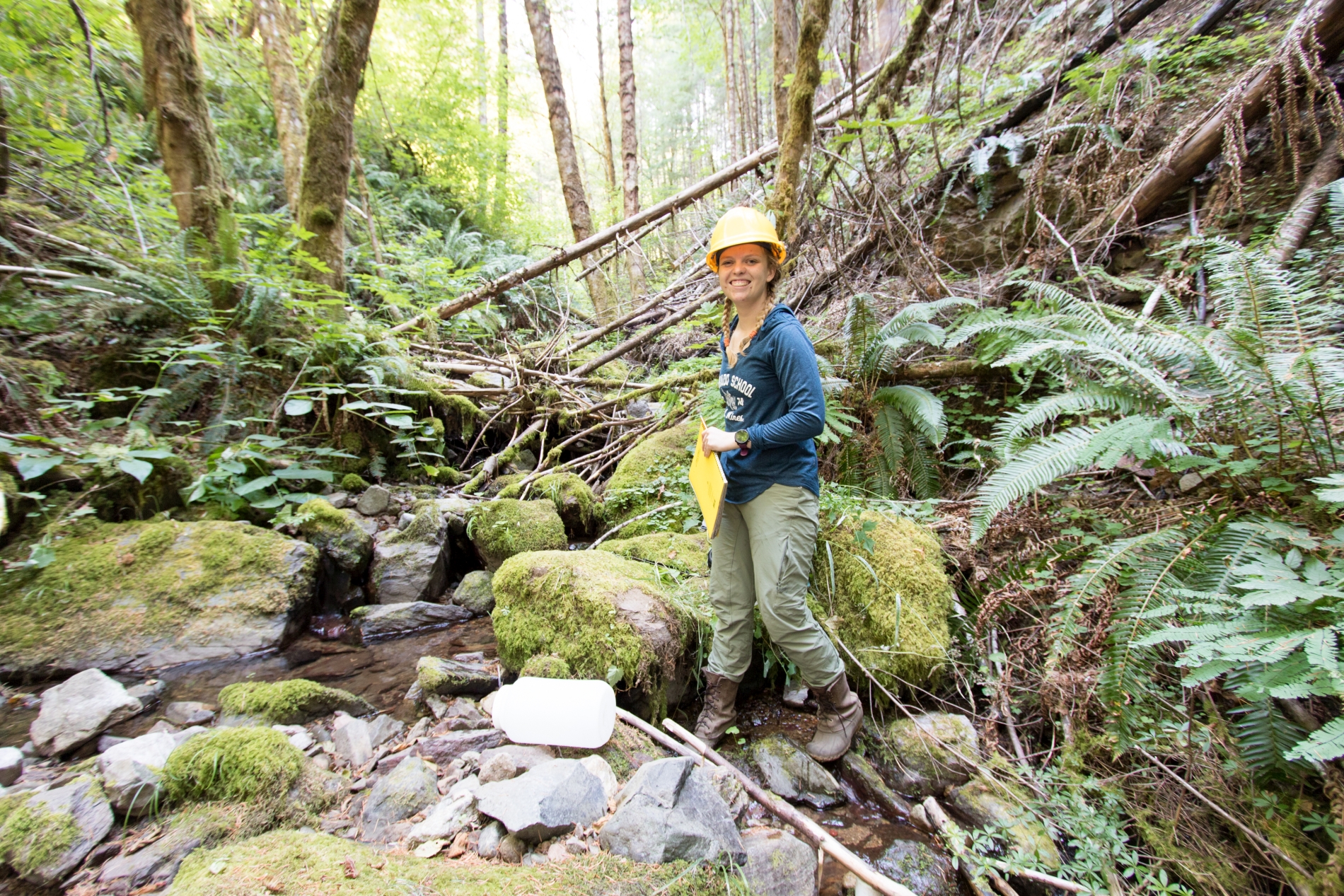
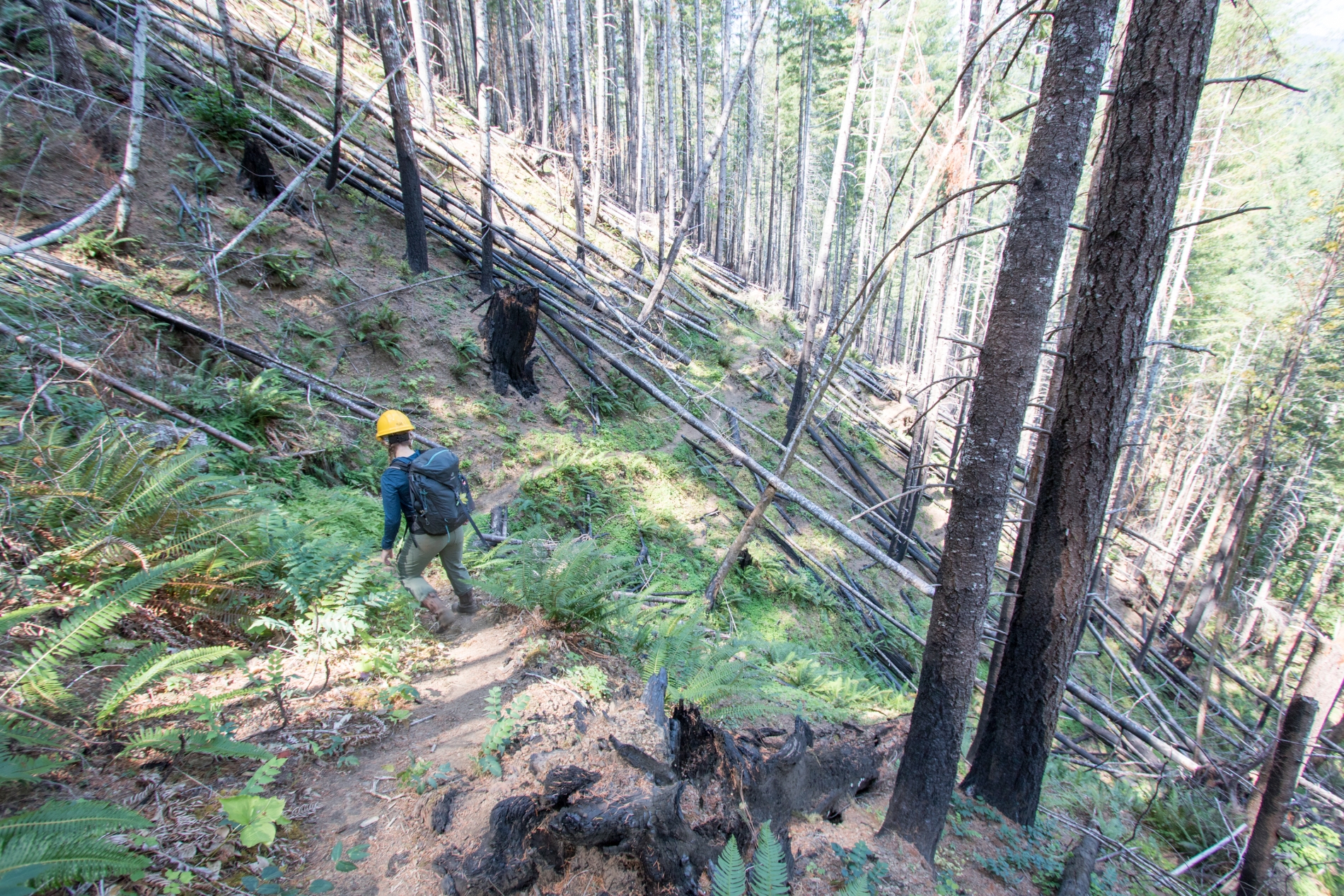
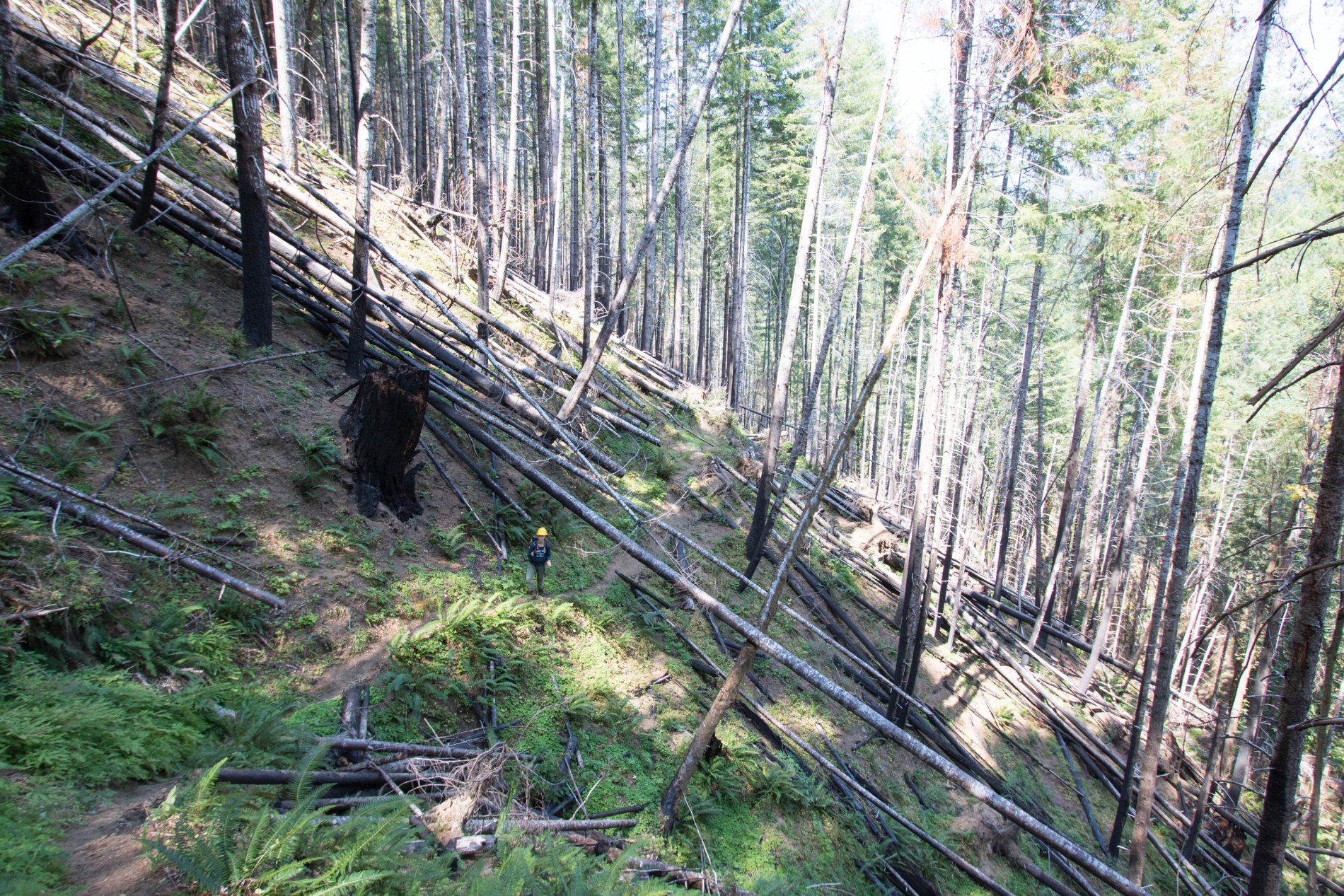
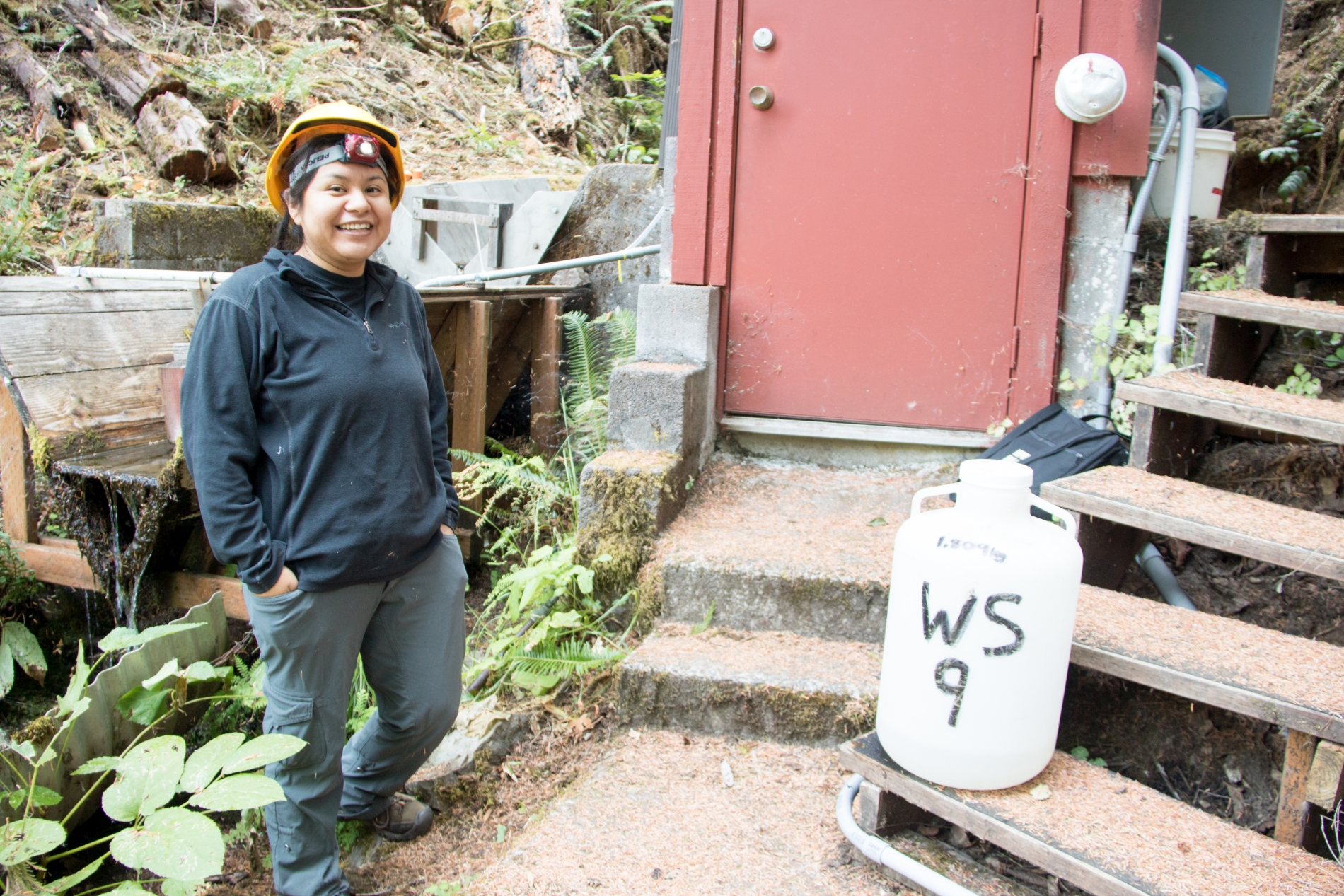
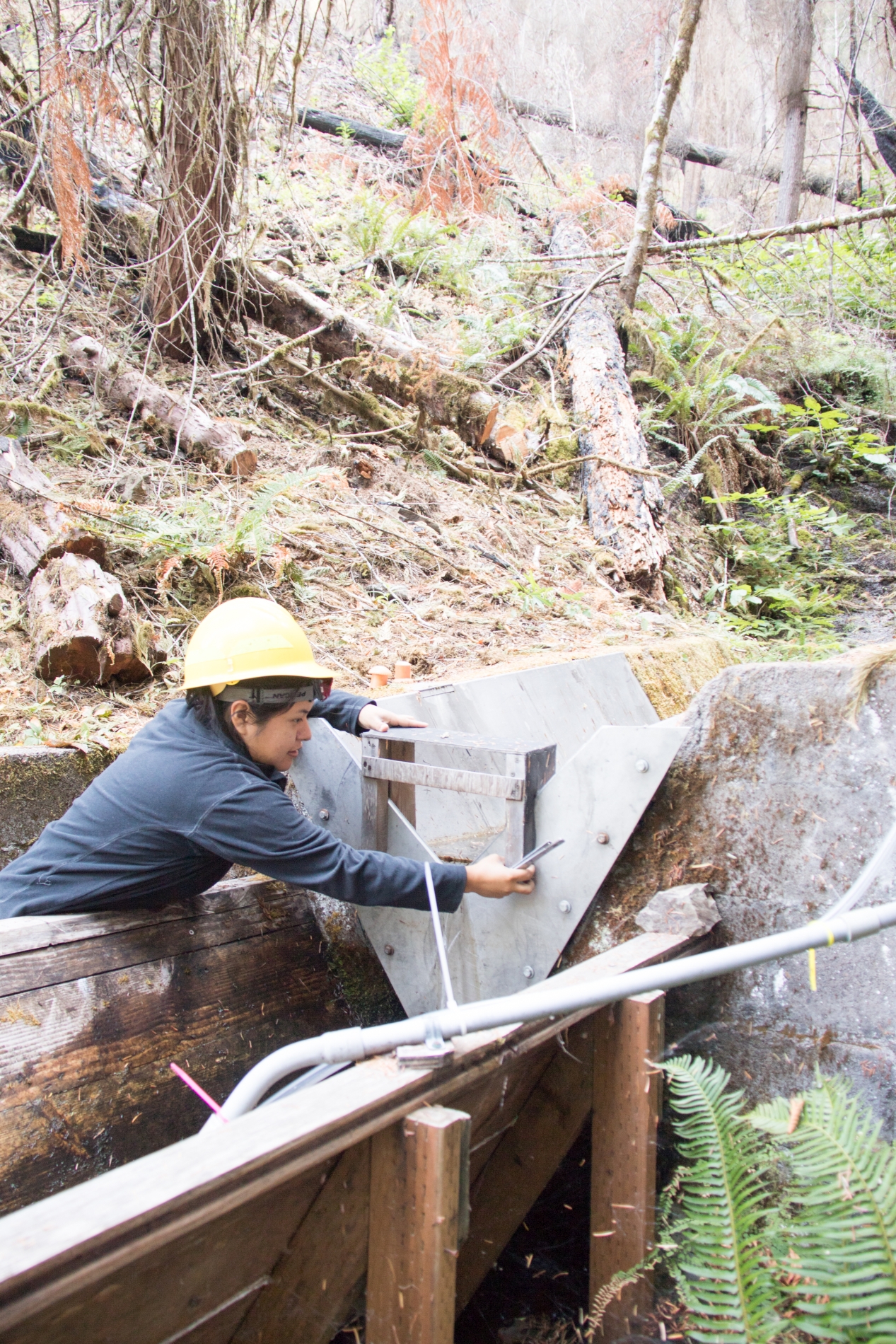
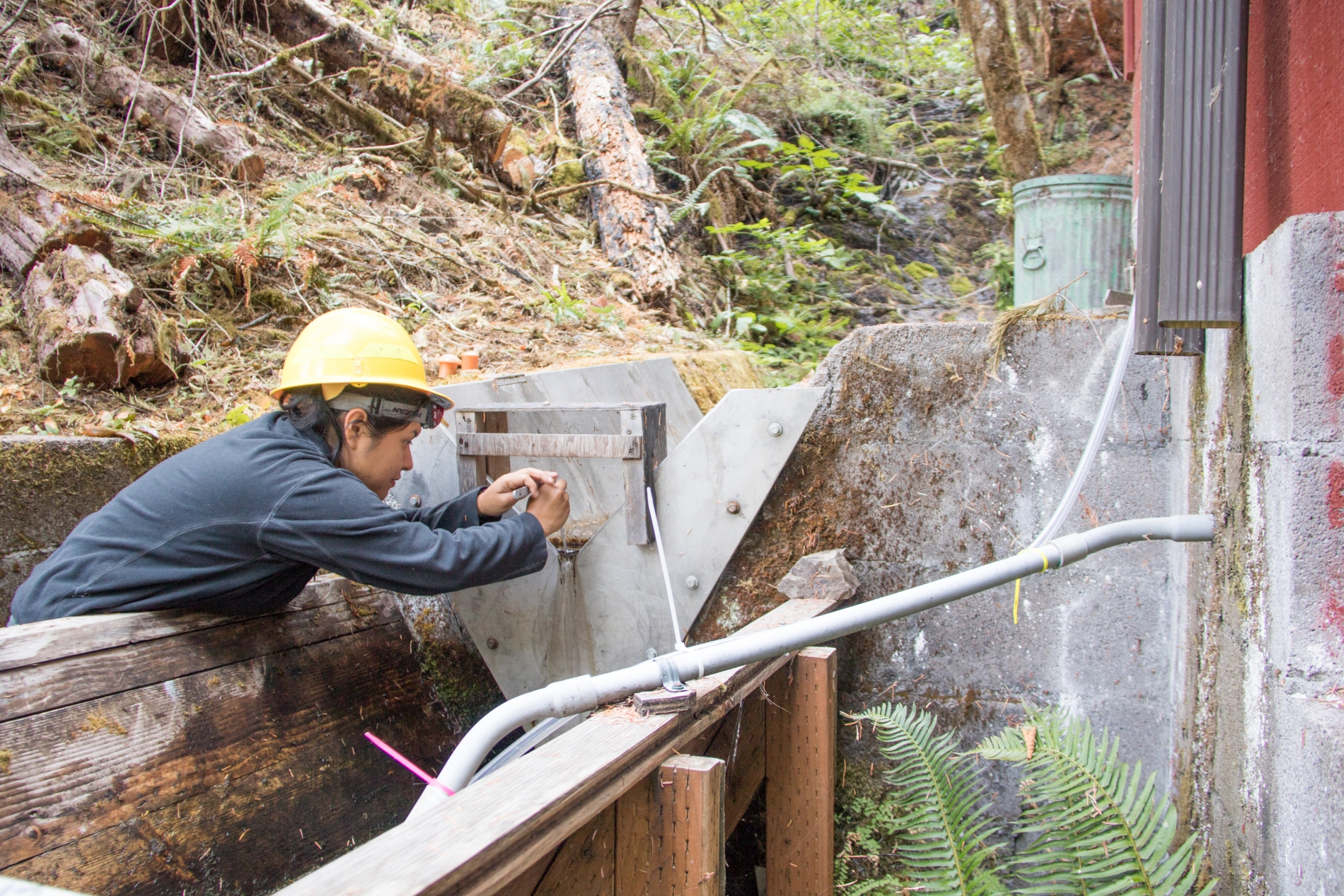
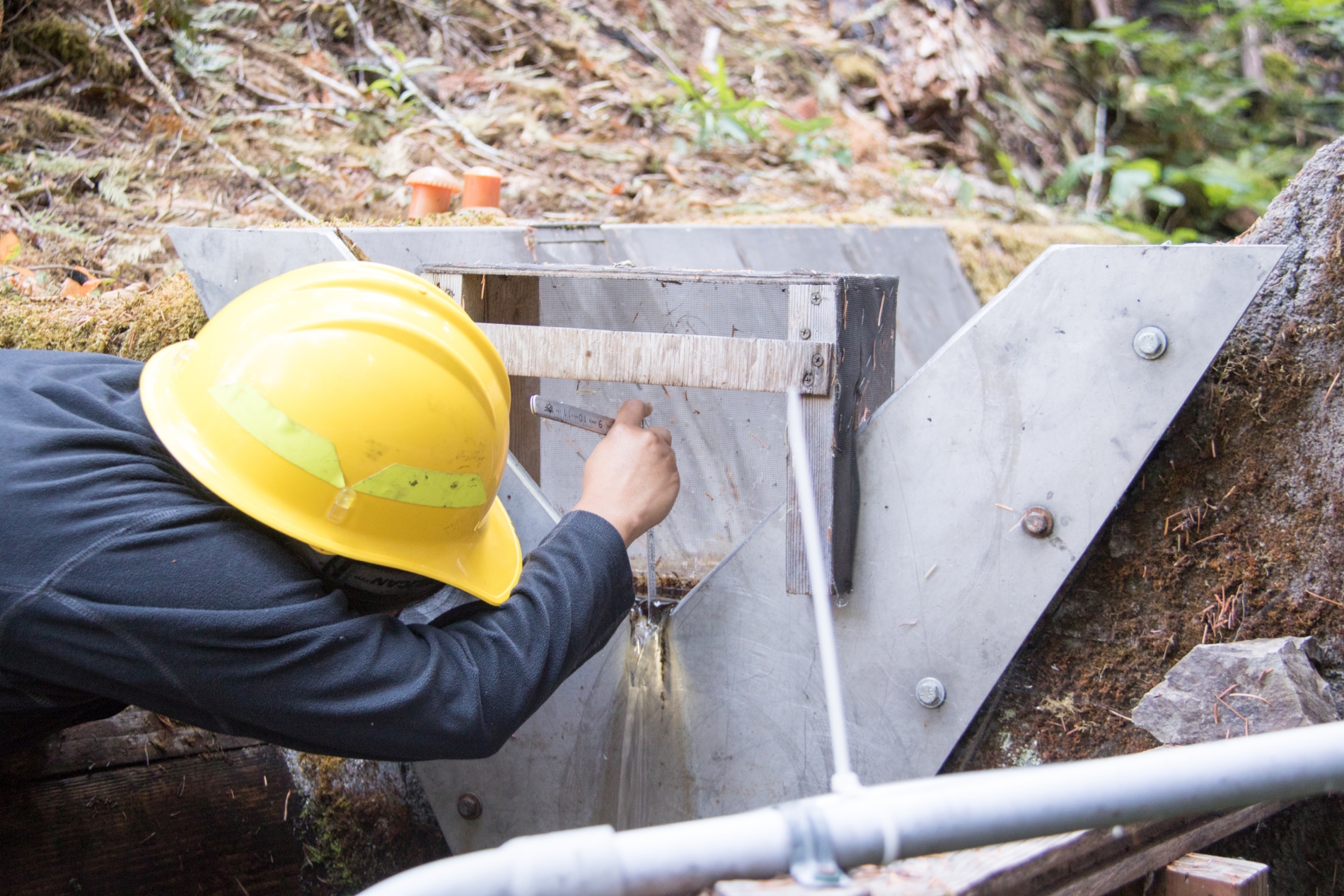
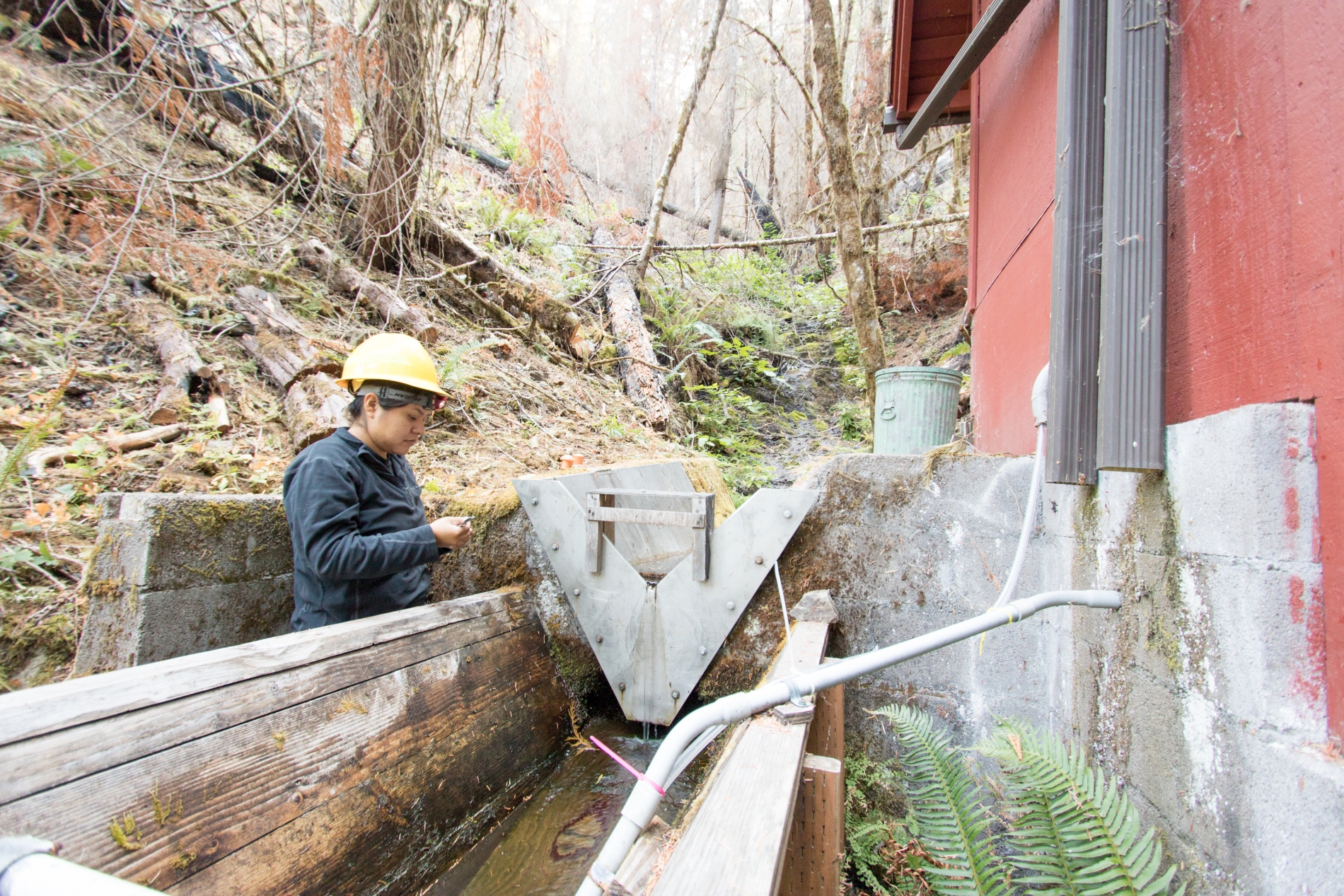
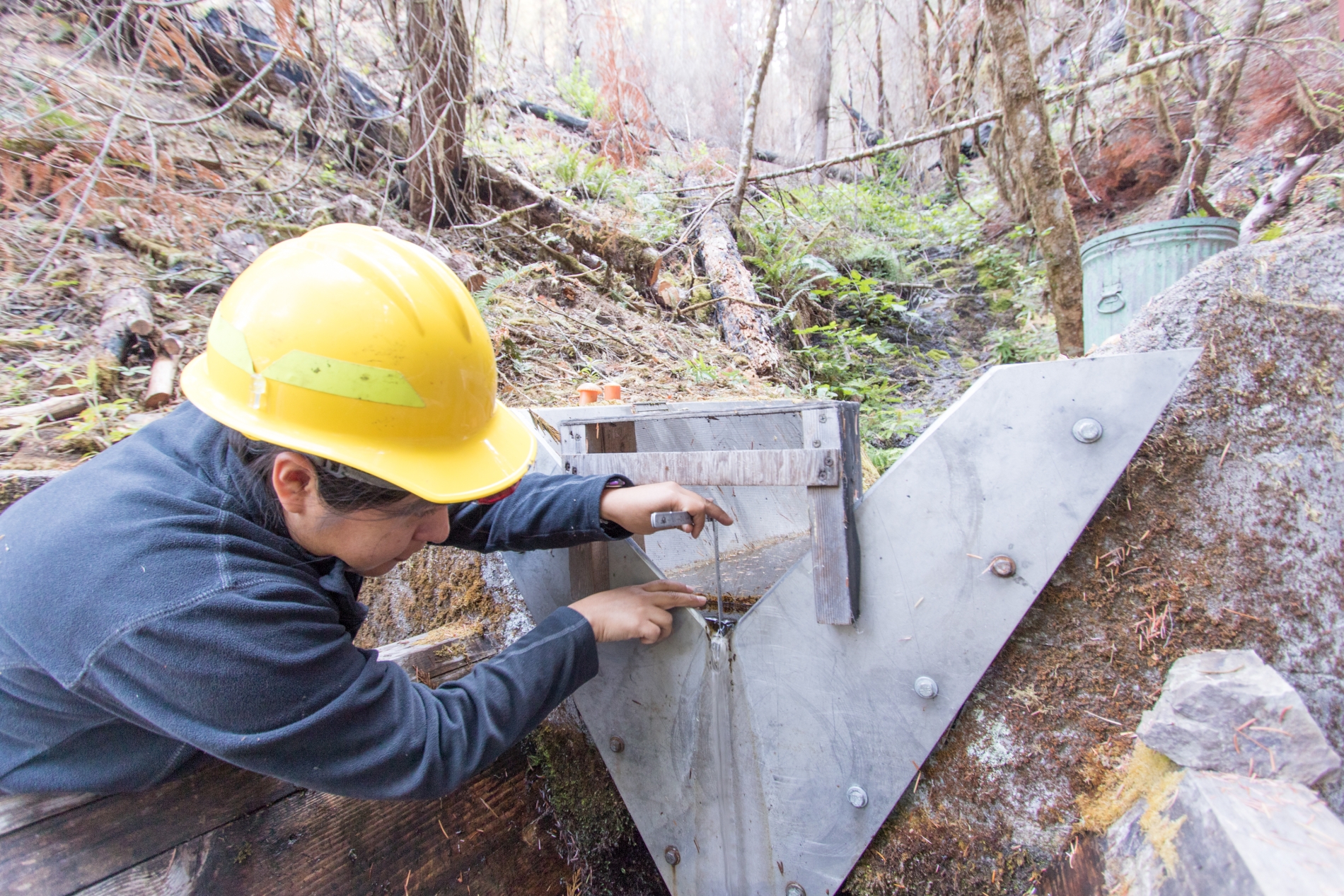
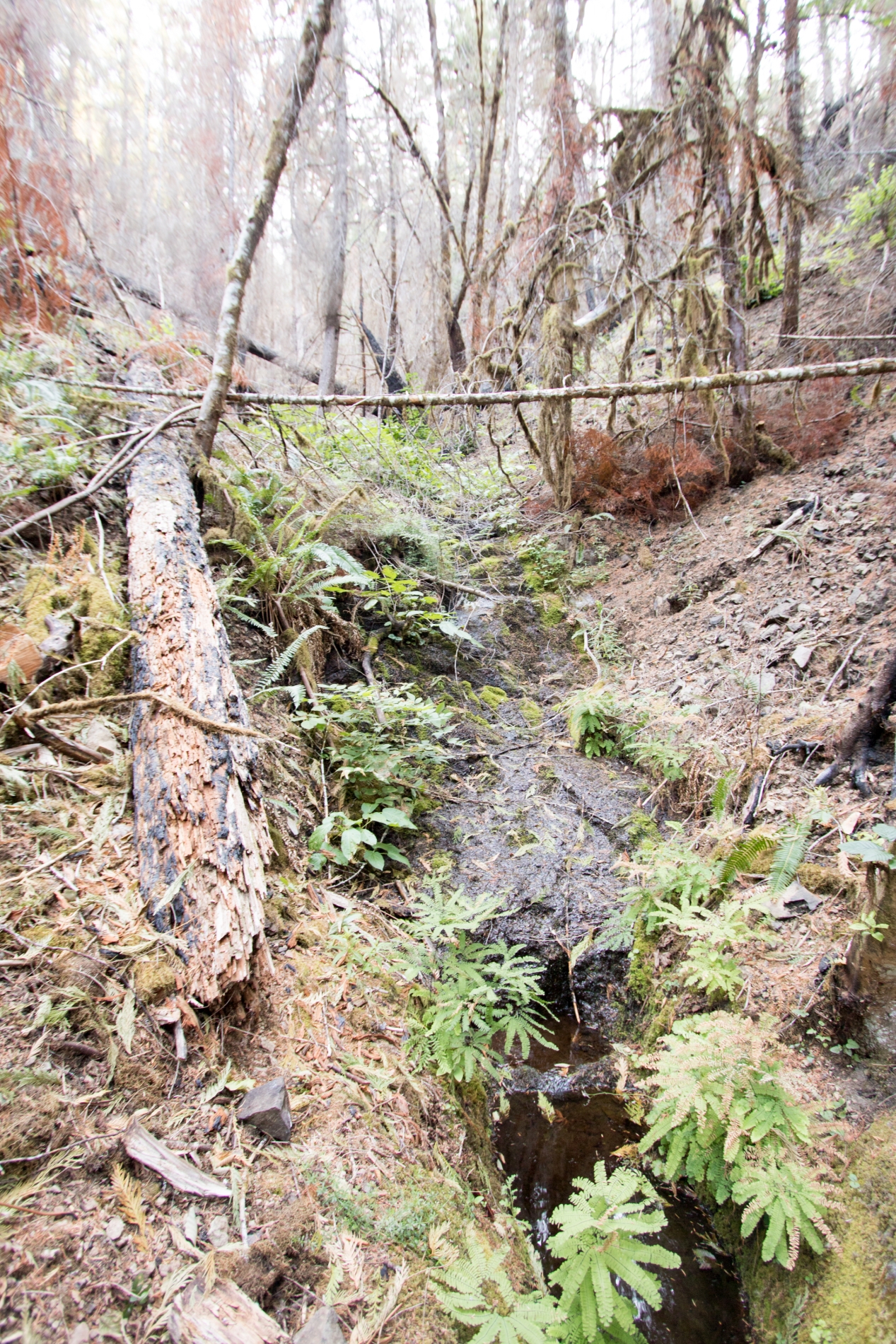
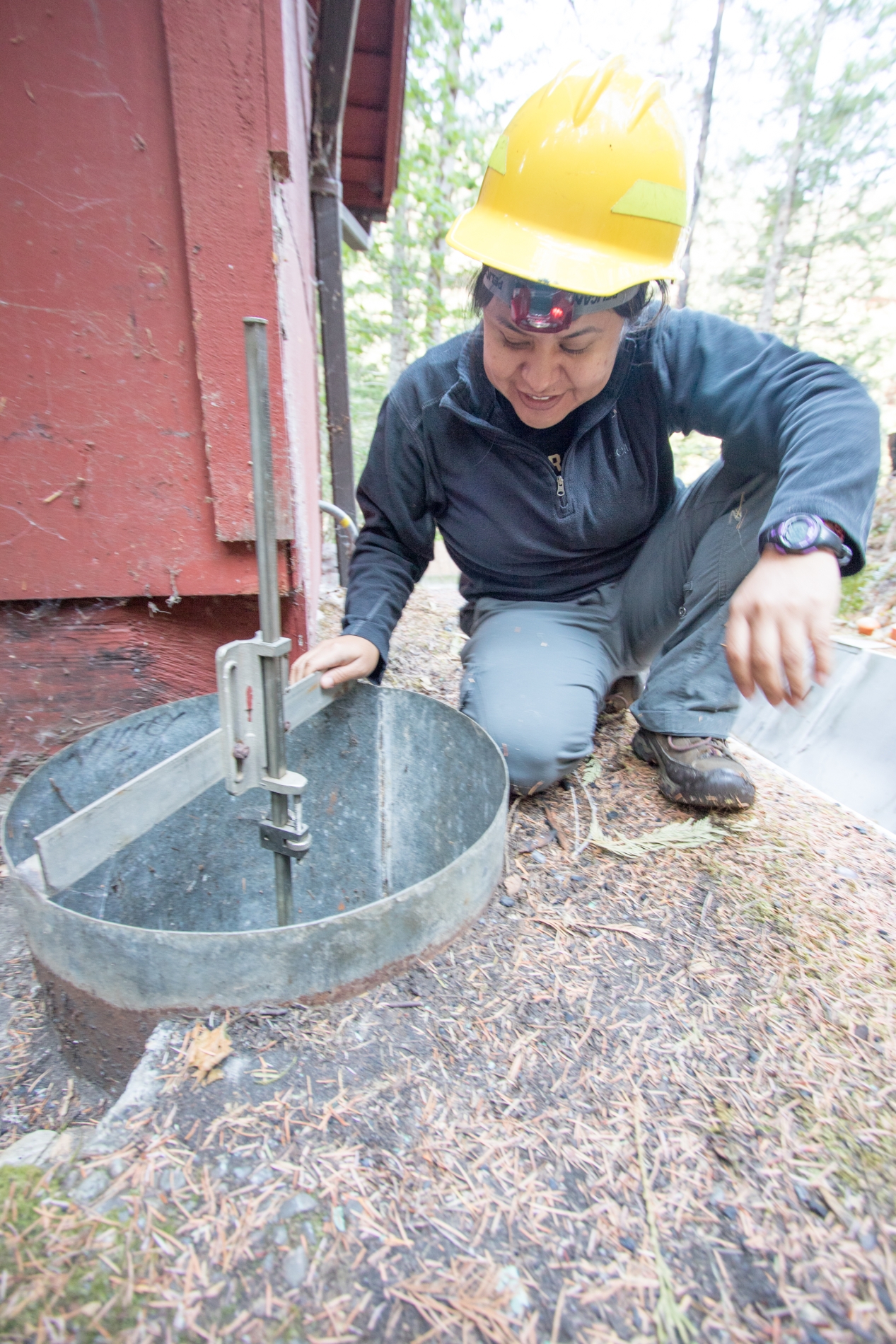
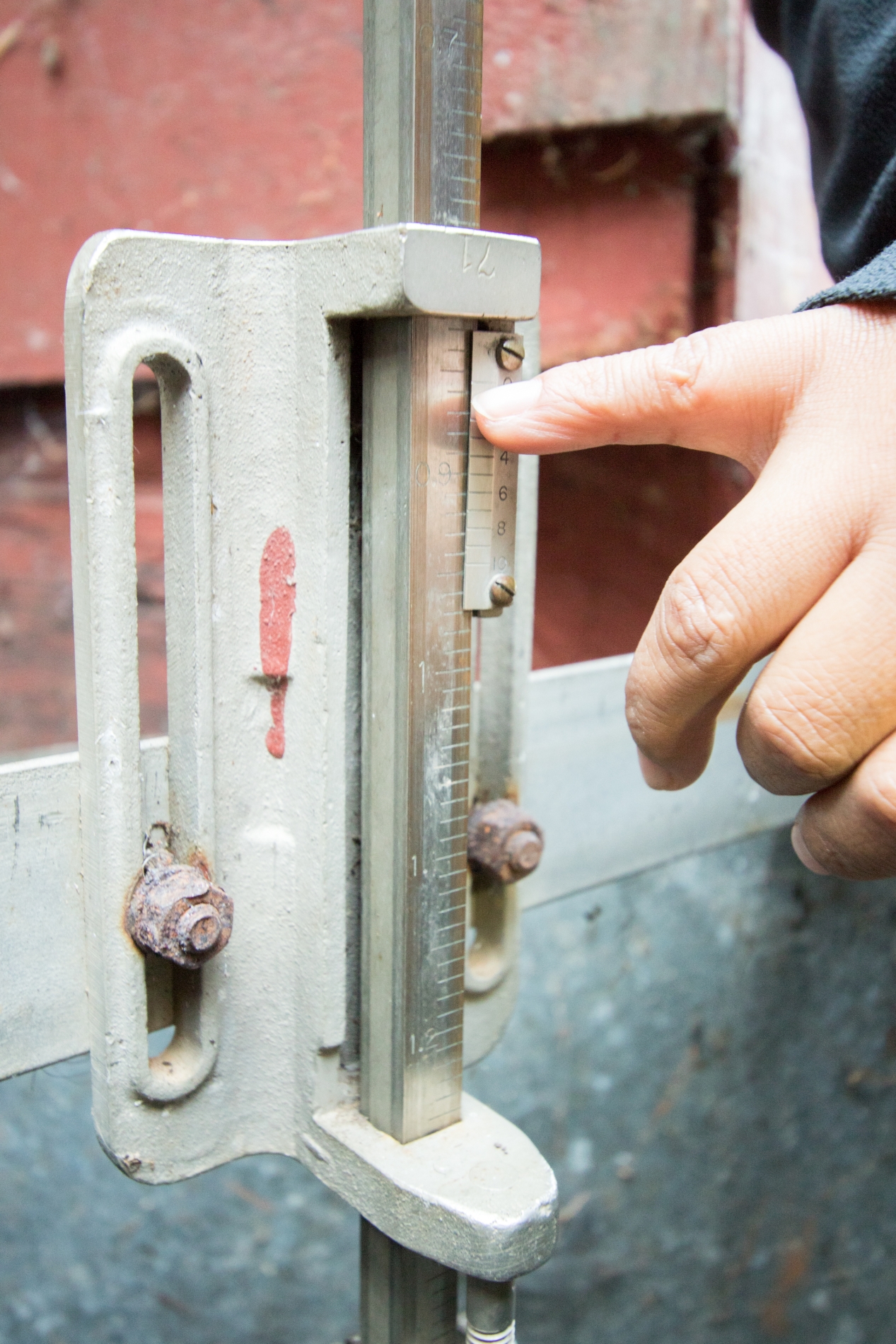
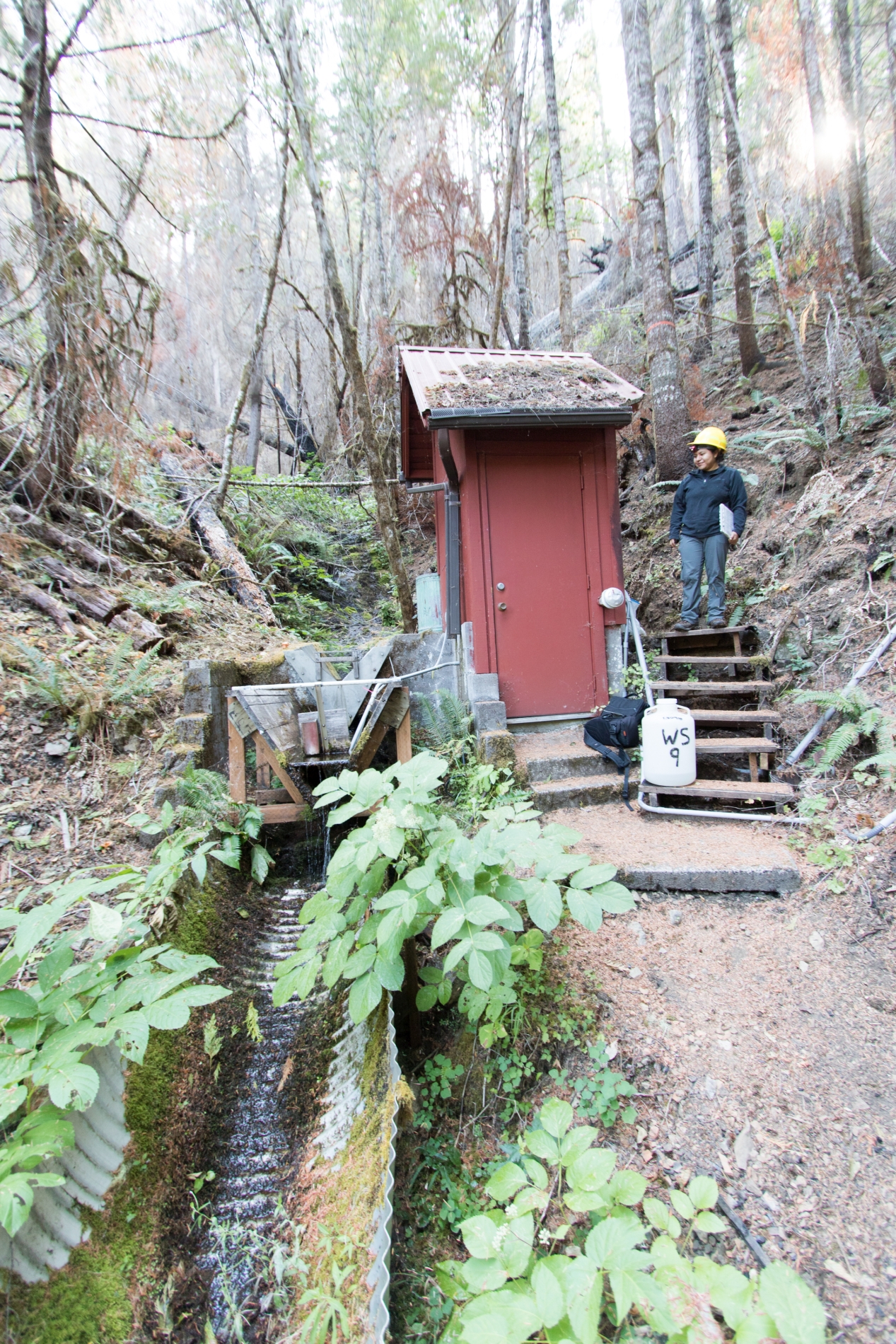
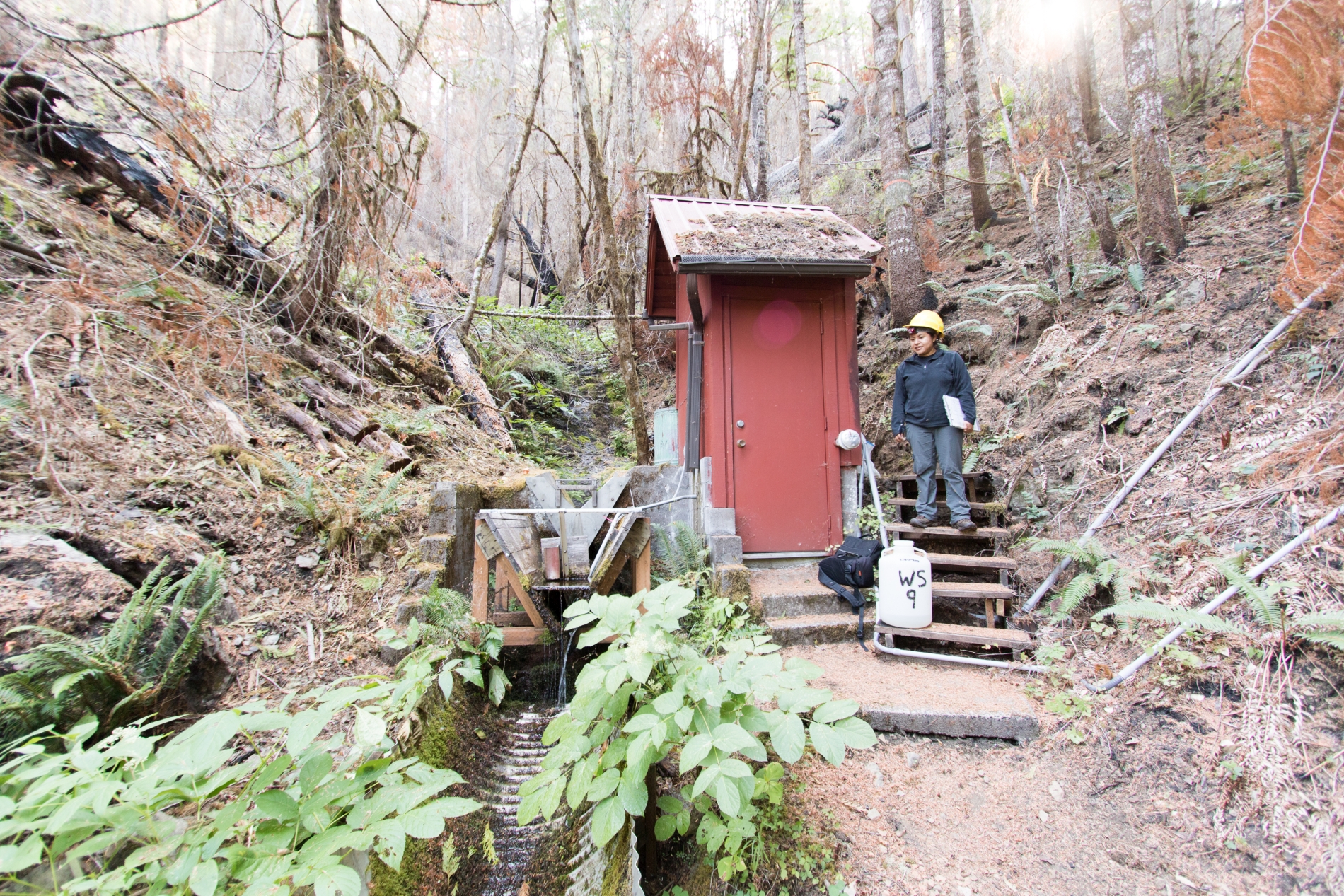
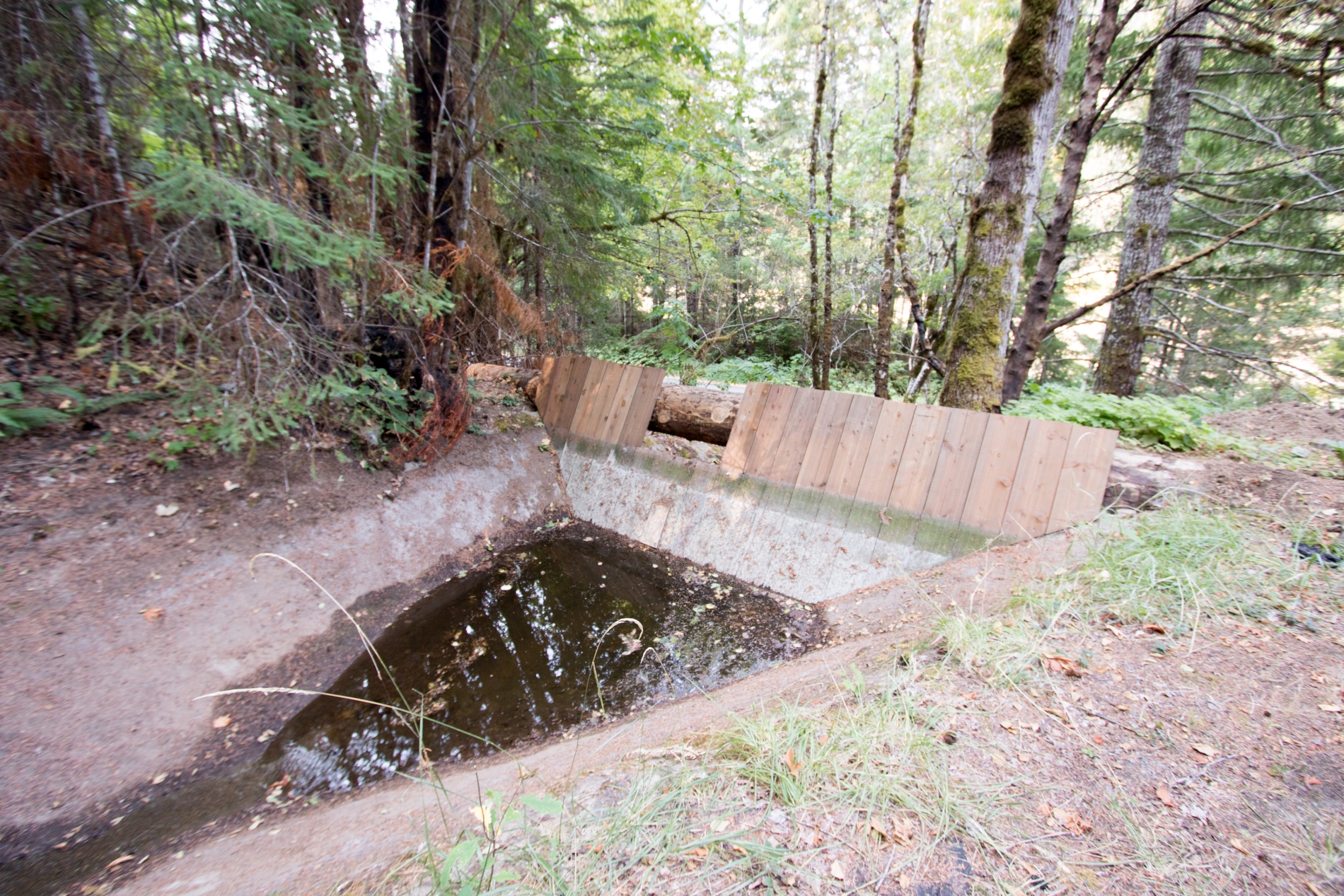
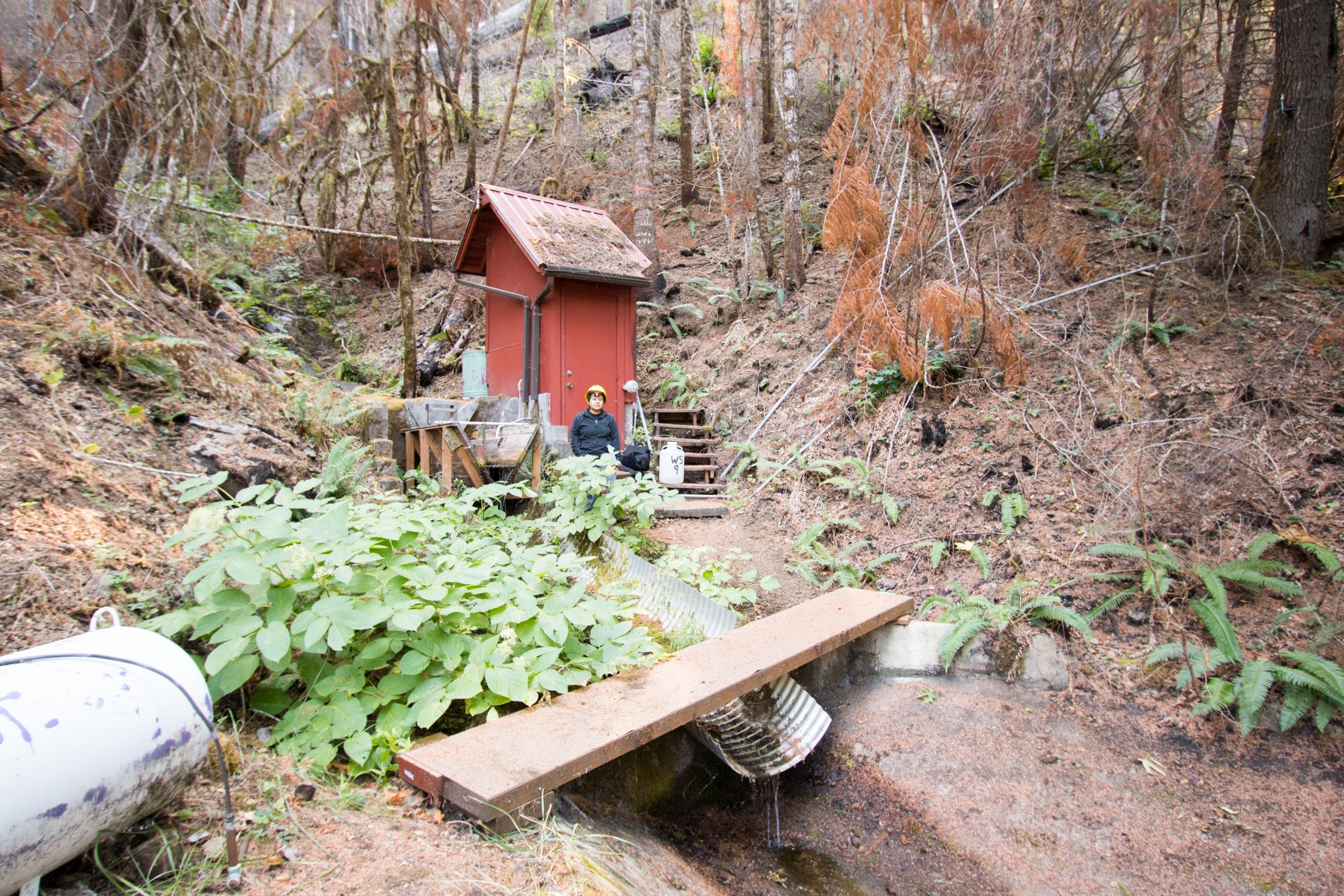
Stream guages were set up in the HJ Andrews Experimental Forest as early as 1949 (see more at dataset HF004) as part of a larger paired, gaged watershed study to detect changes in streamflow due to watershed treatments. Data continue to be collected on streamflow and stream chemistry from the gage. Sediment data from the stream is measured periodically to assess load and accumulation. Through decades of data from these Experimental Watersheds and Gauging Stations researchers are learning about water quantity, water chemistry, and water sediment as the forests around the streams change with time due to growth and disturbances such as harvest, wildfire, floods, and landslides.
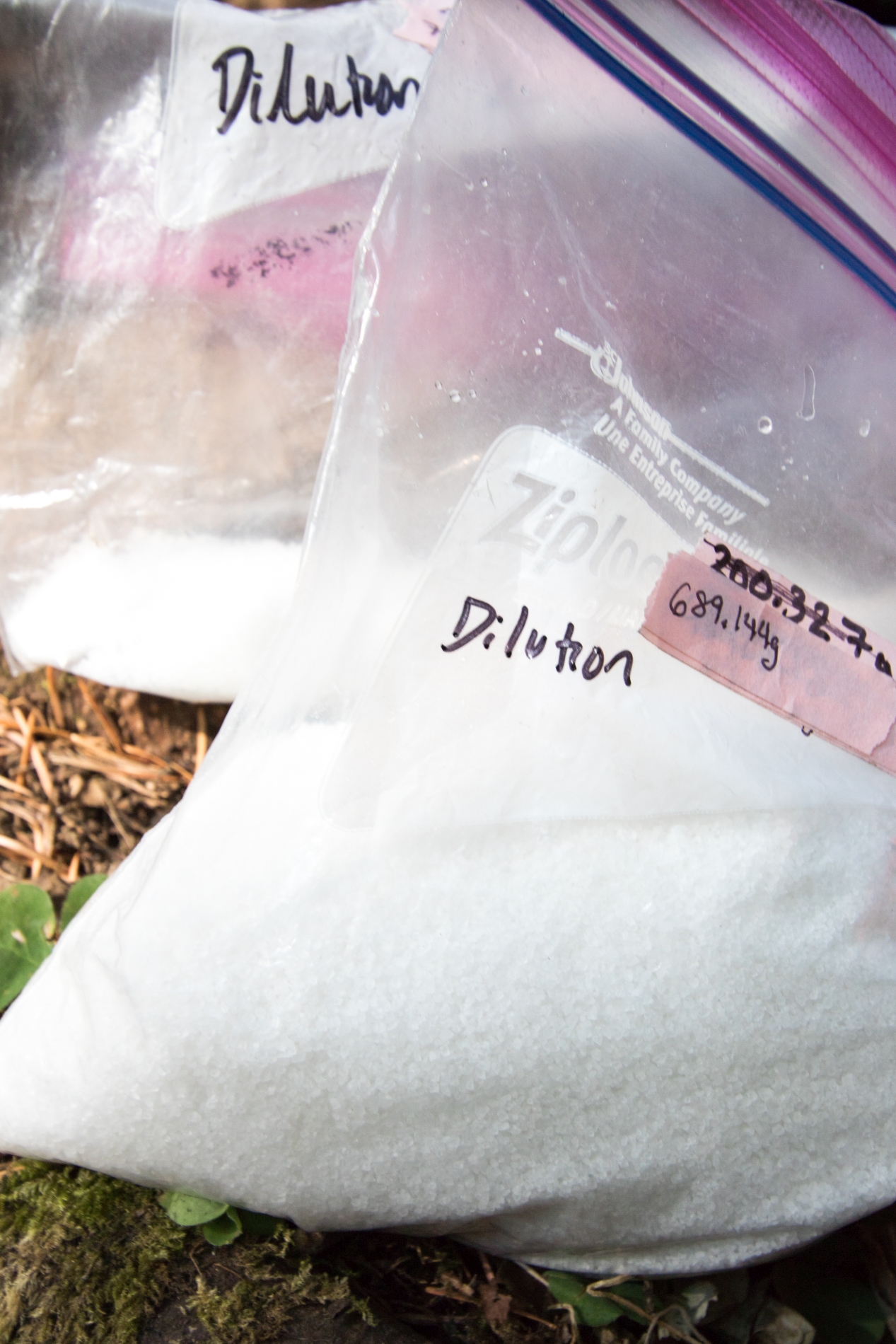
In a separate study about water and the flow of water, researchers are measuring how water moves into and out of the hyporheic zone of streams. The hyporheic zone is the area of sediment under and around a stream bed where water mixes from the soil into the stream area. The research of the hyporheic zone at the HJ Andrews Experimental Forest builds on decades of past research that has taken place in WS01 and extends our knowledge of what drives hyporheic exchange in mountain streams.