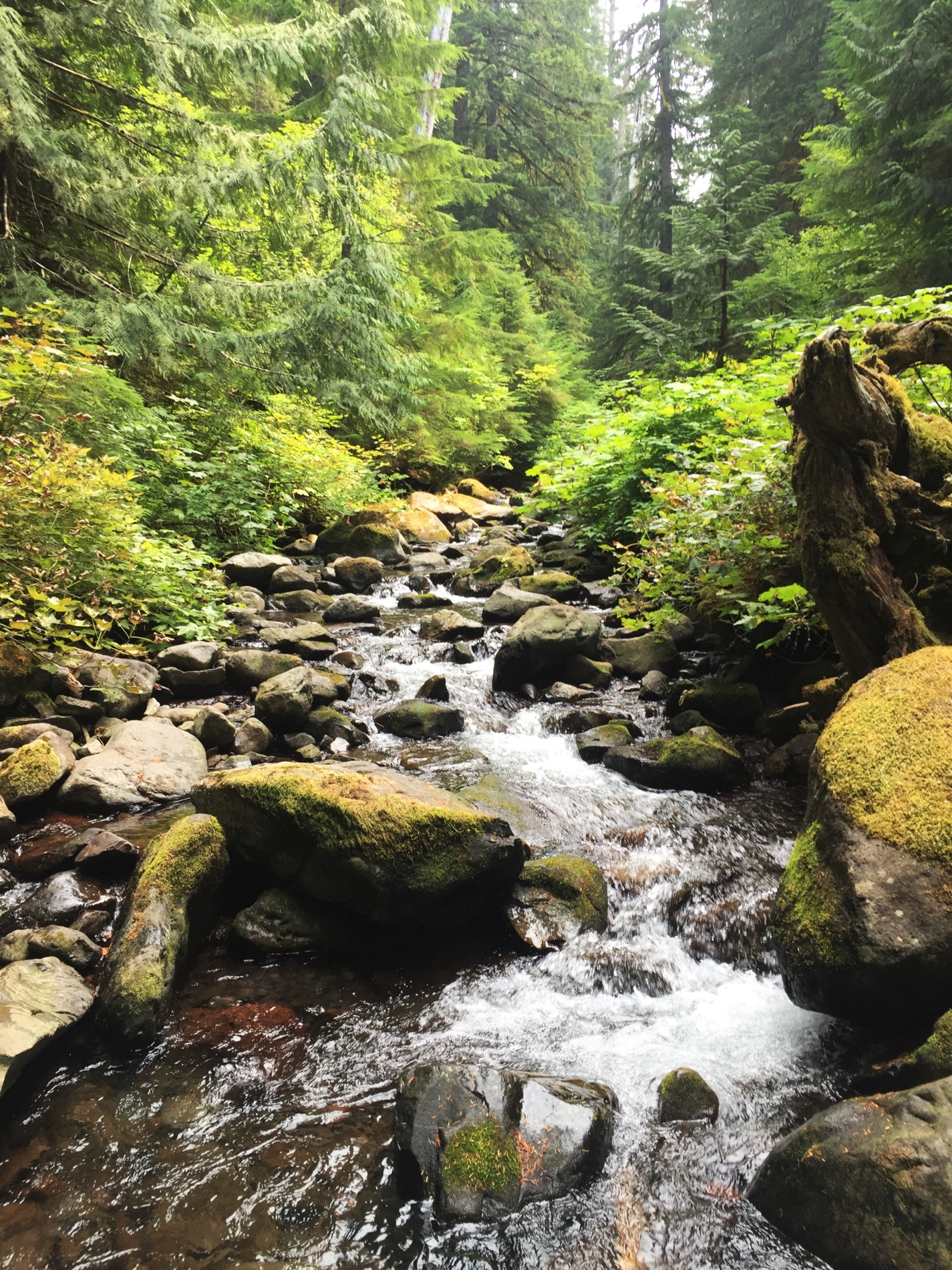
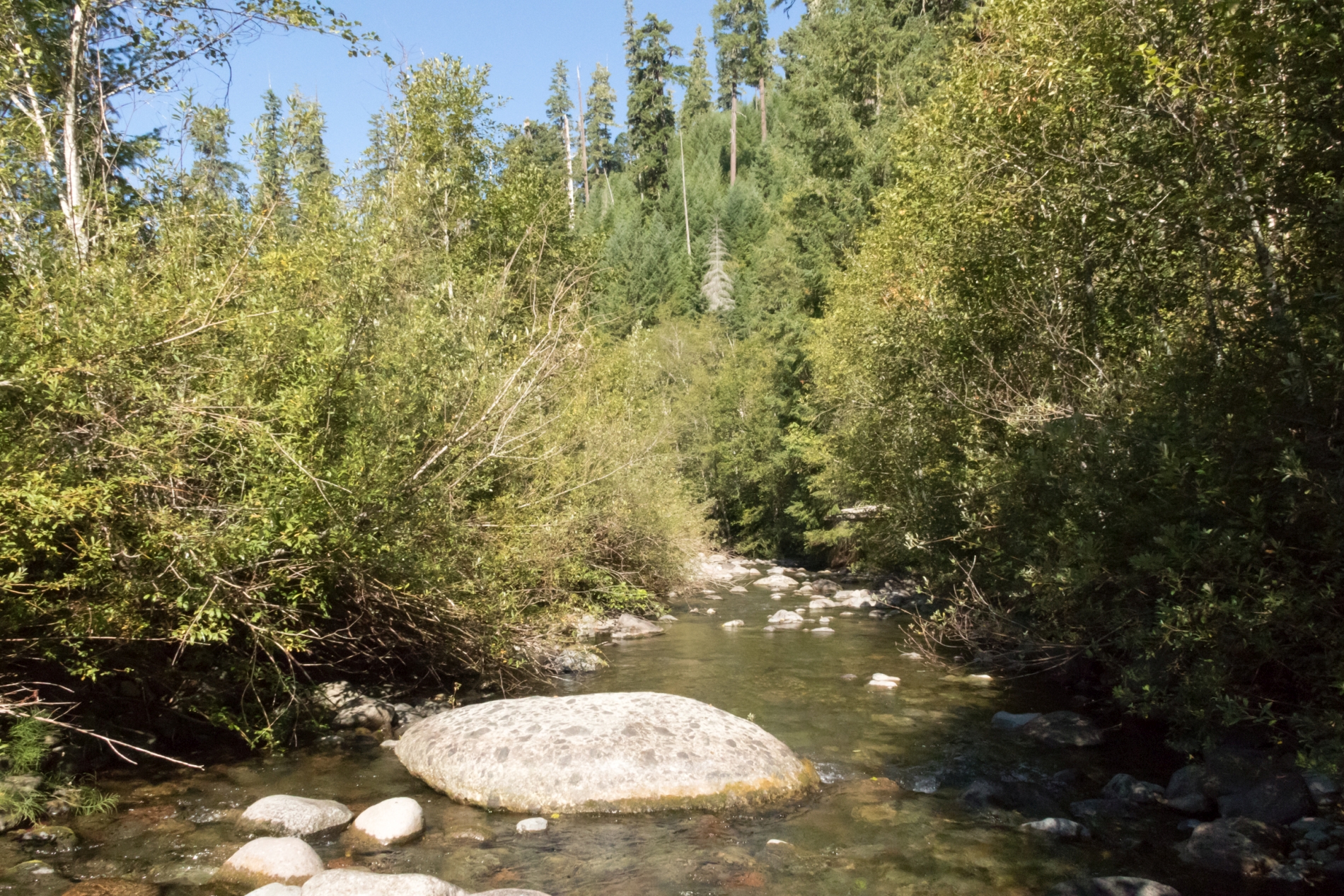
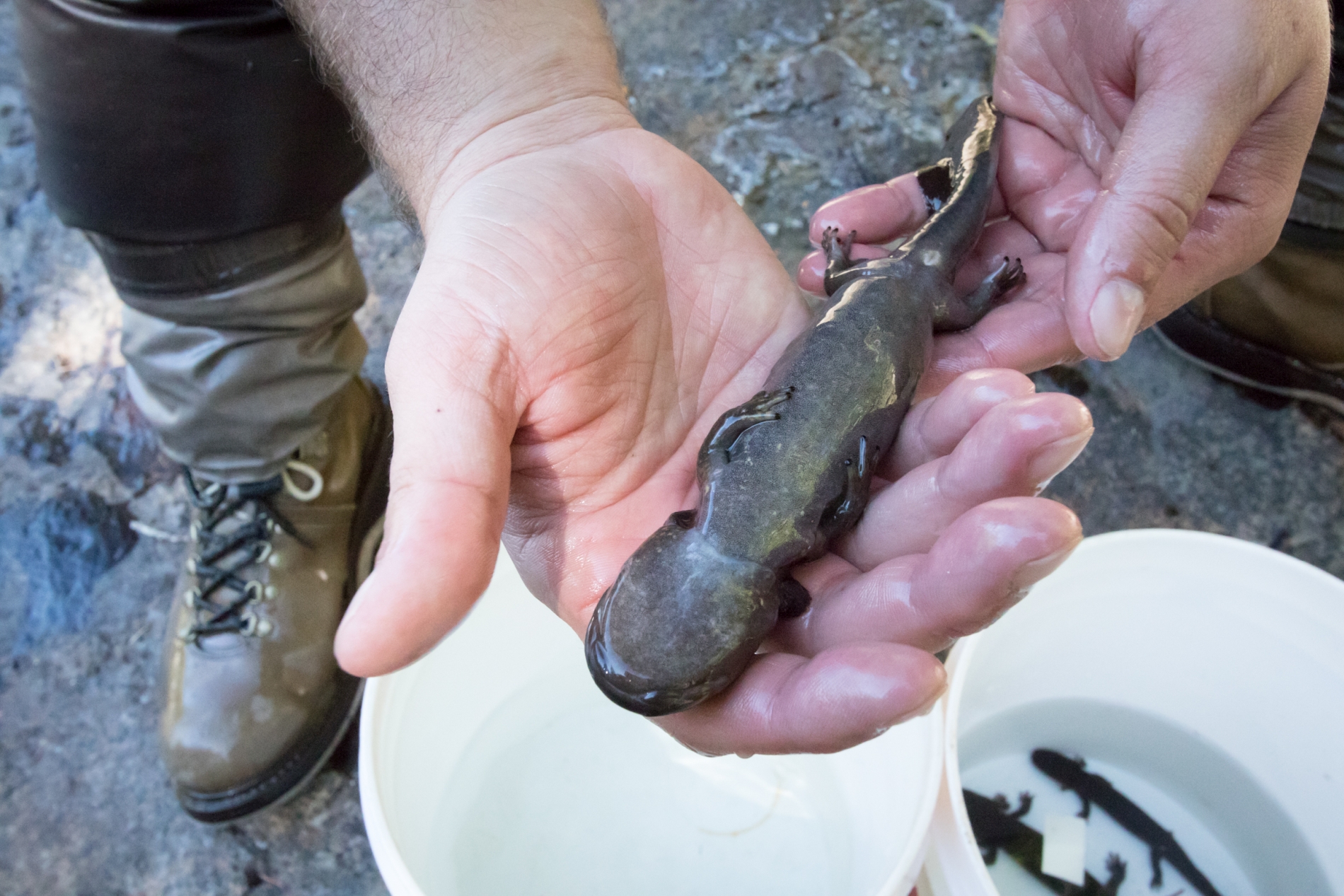
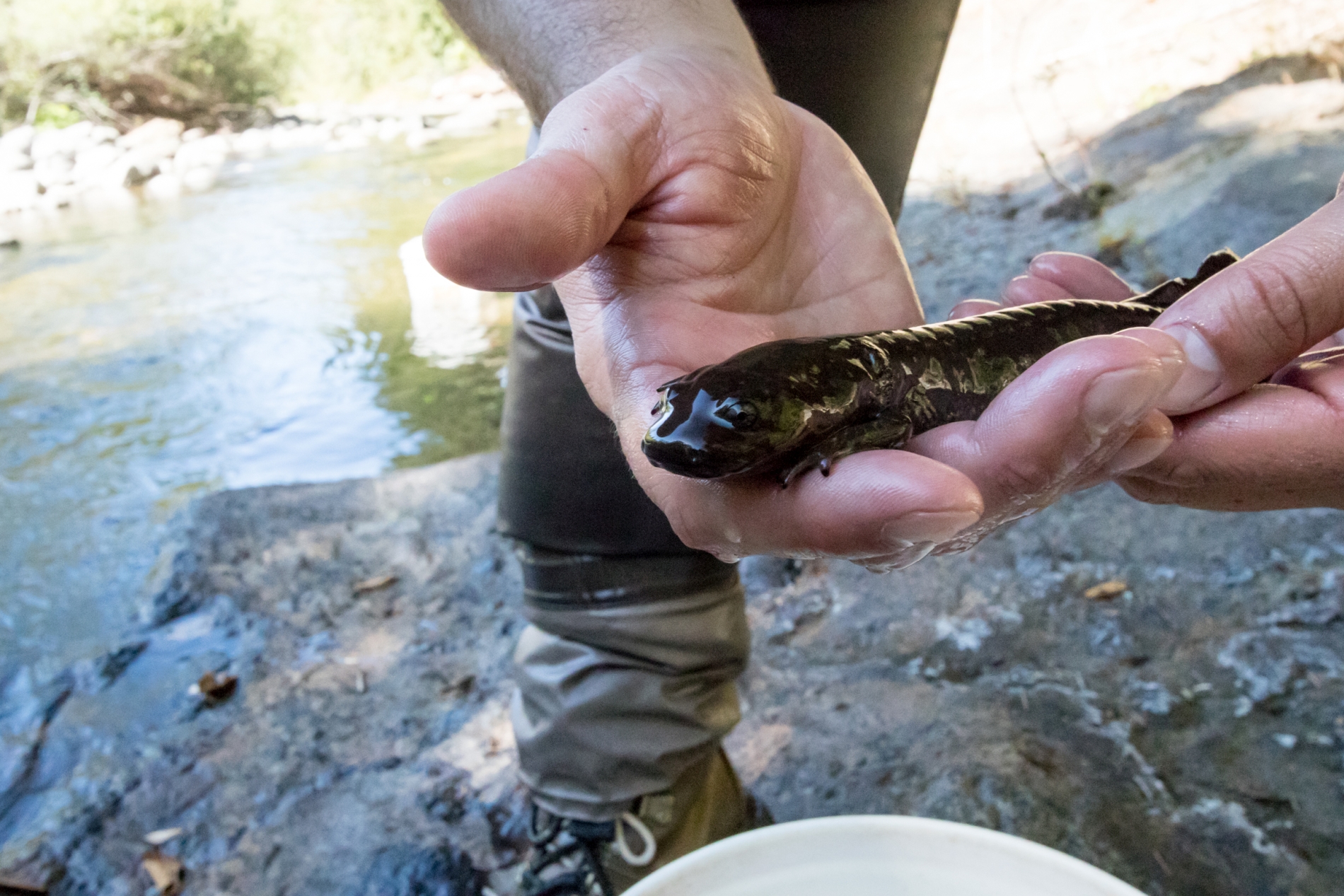
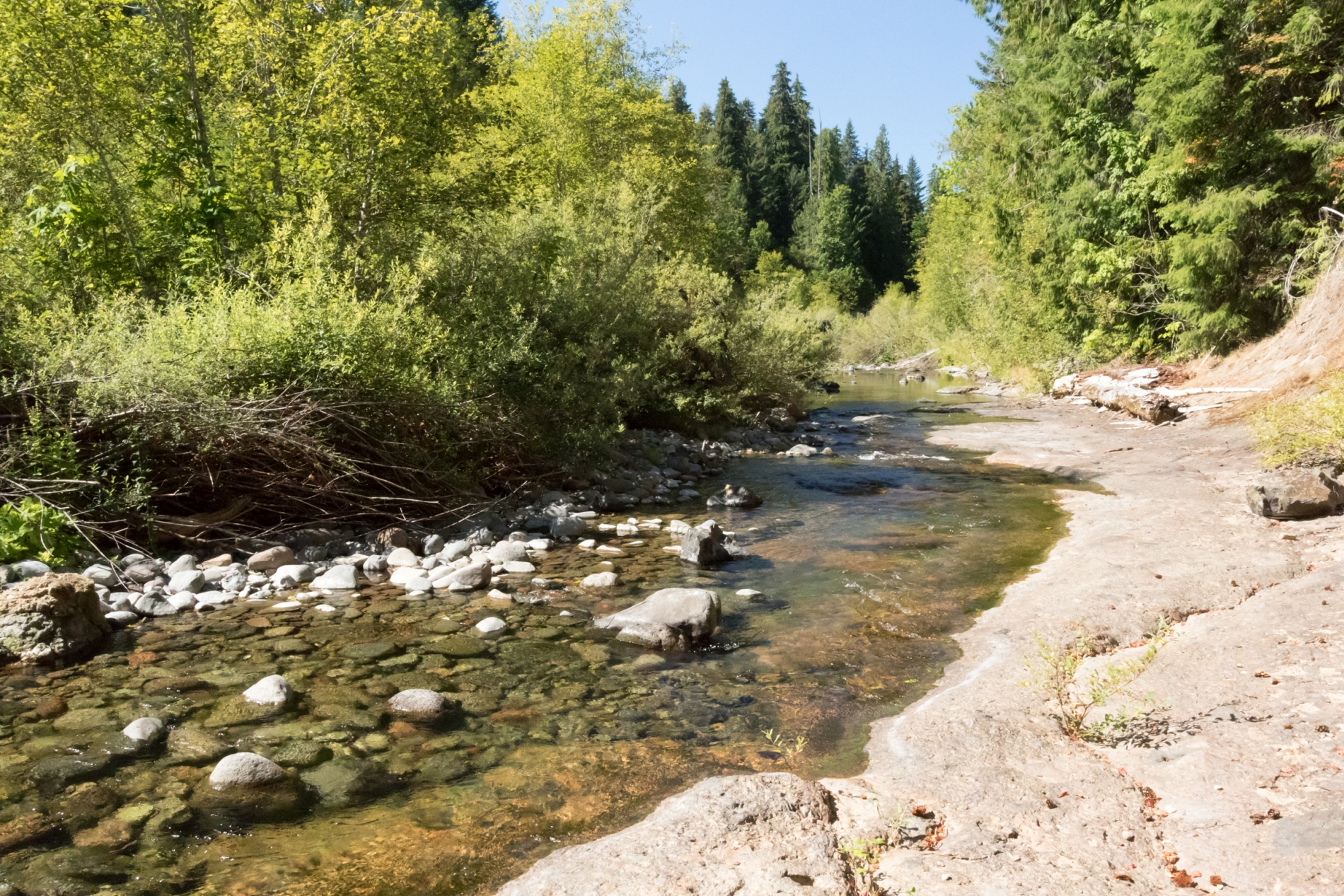
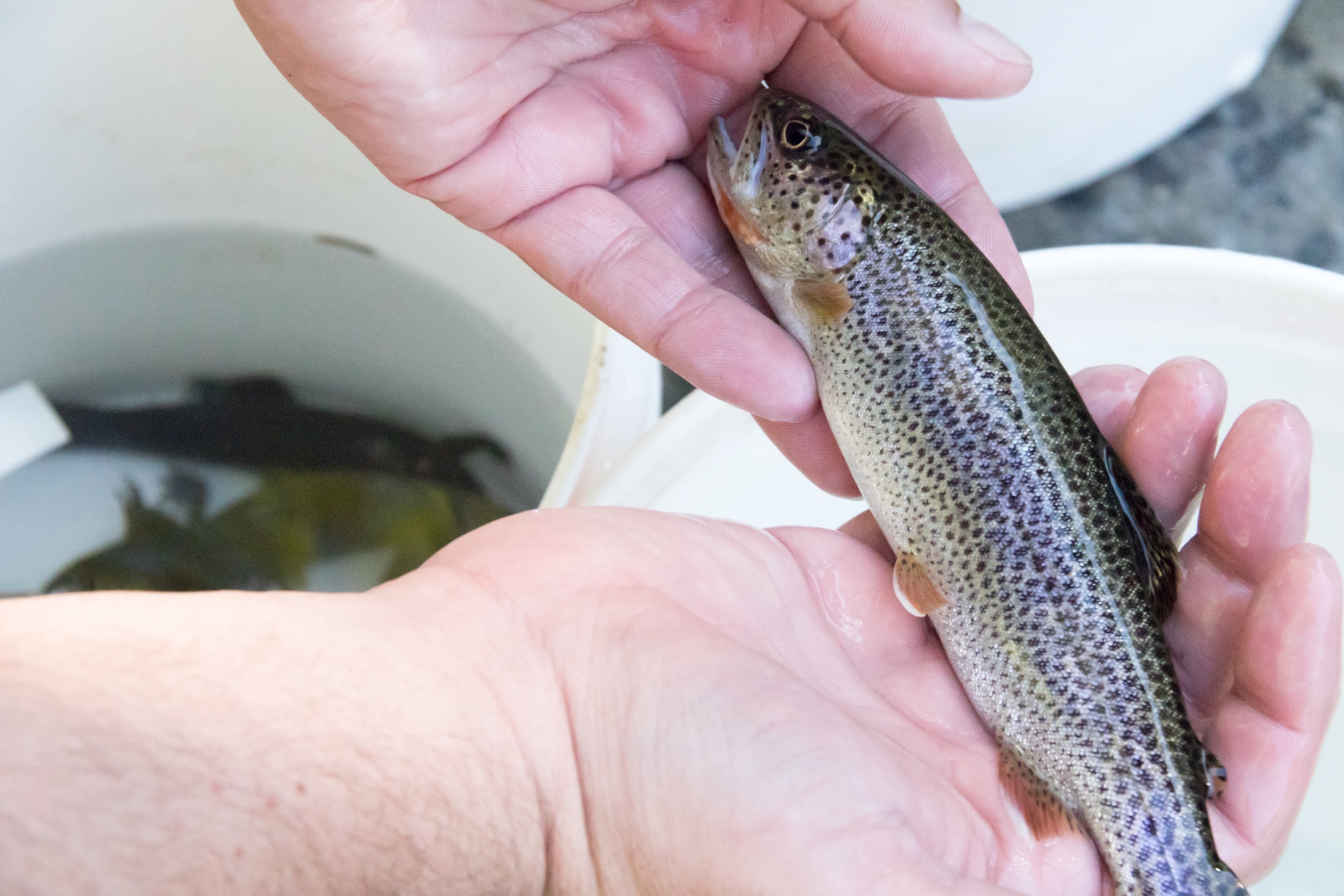
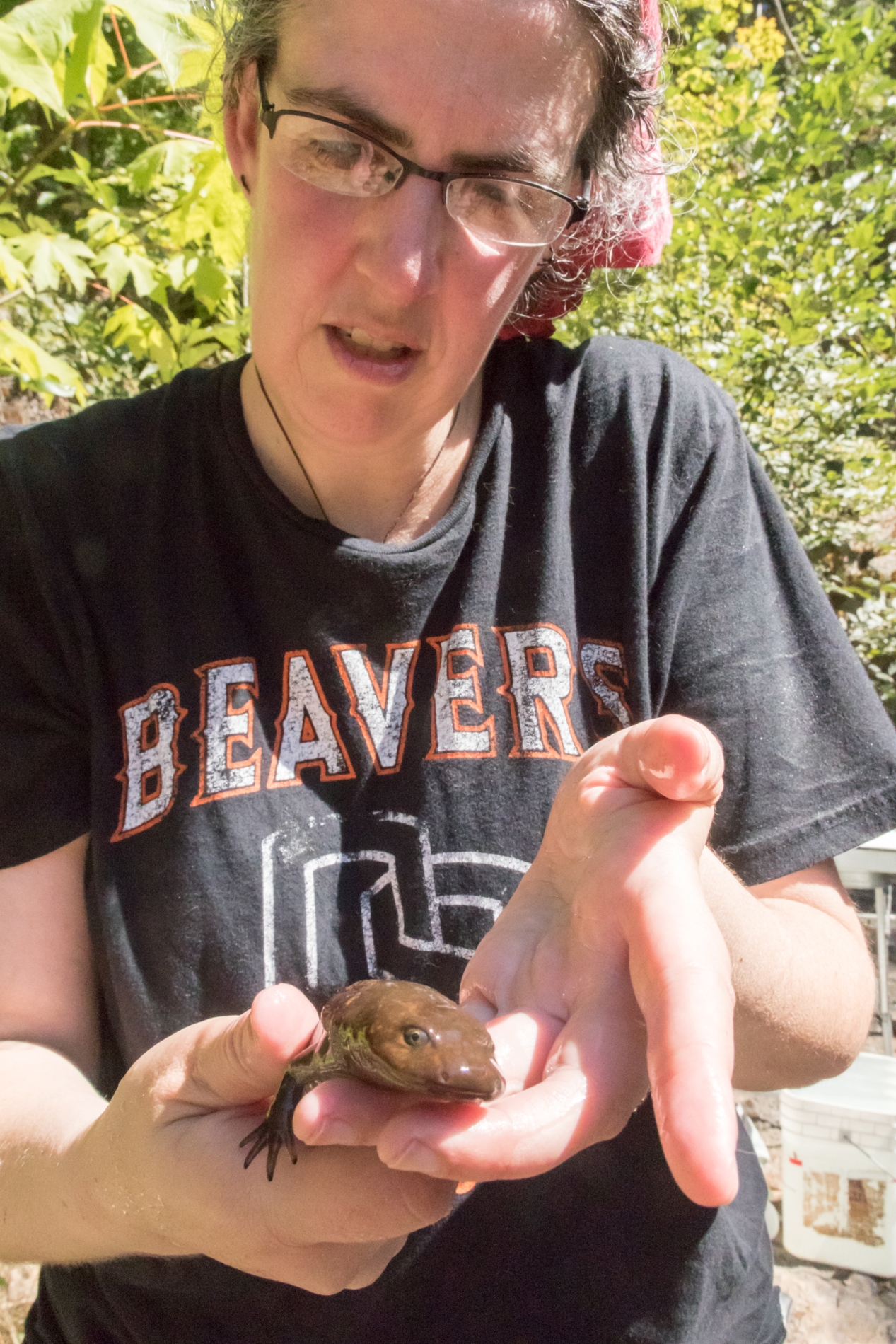
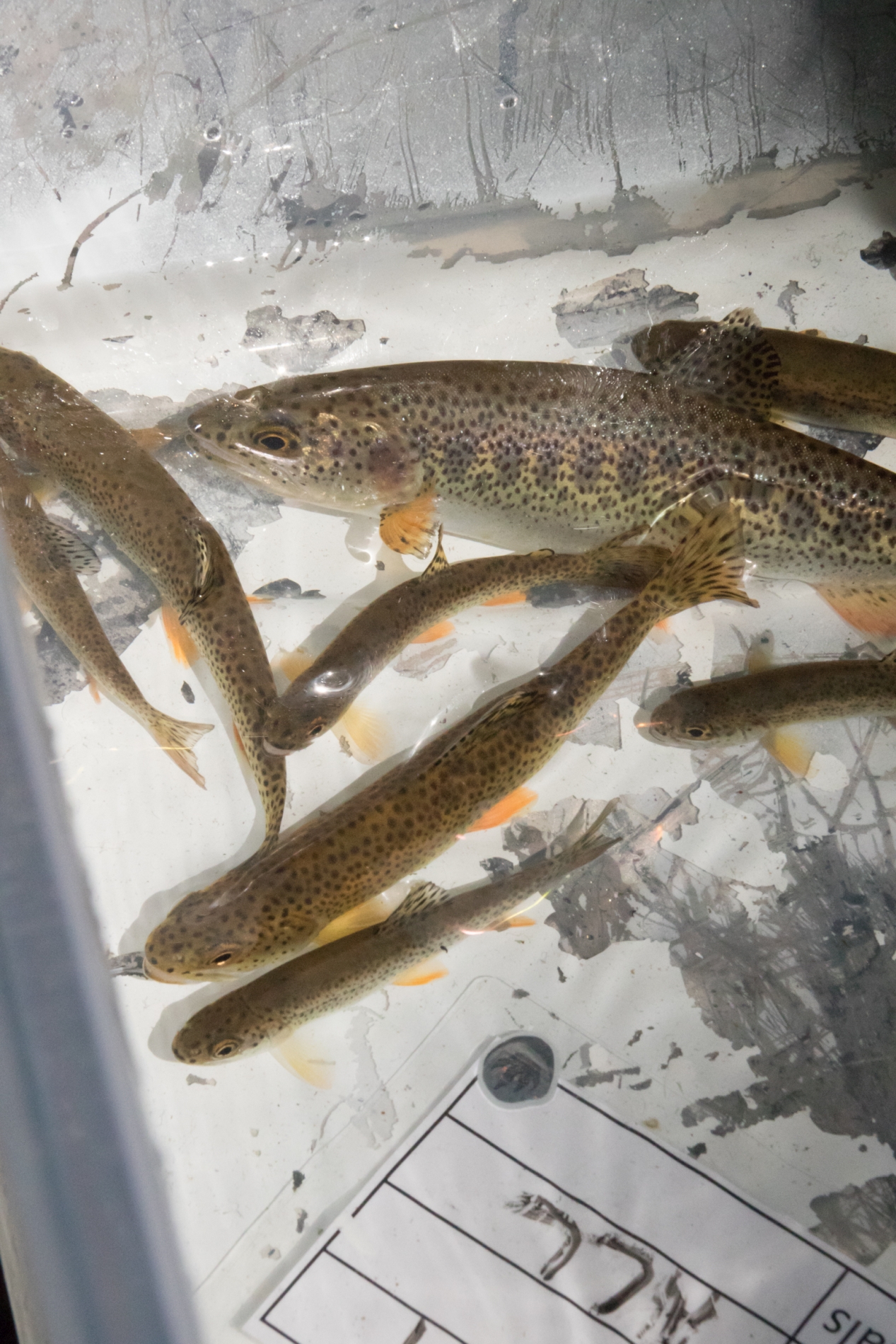
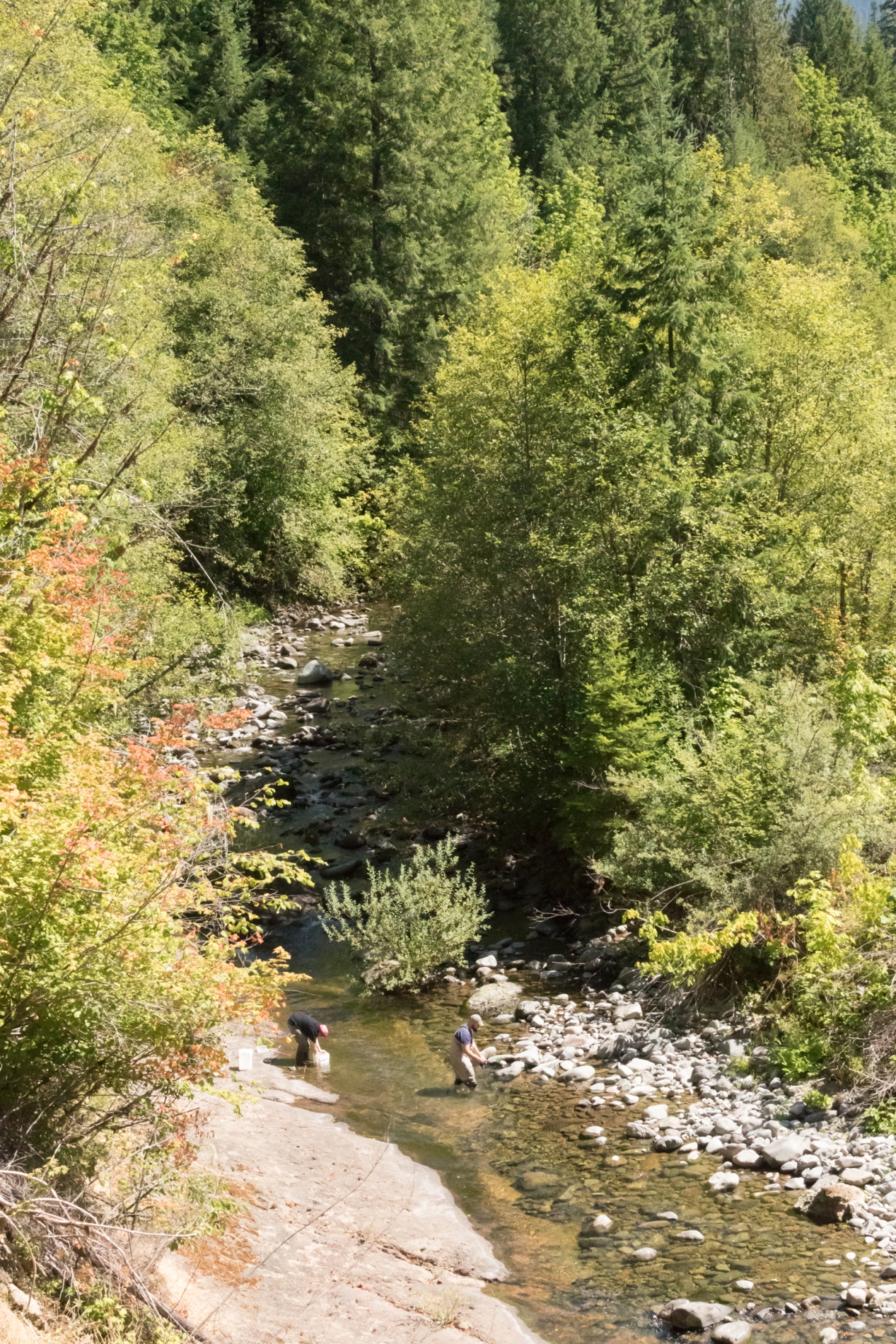
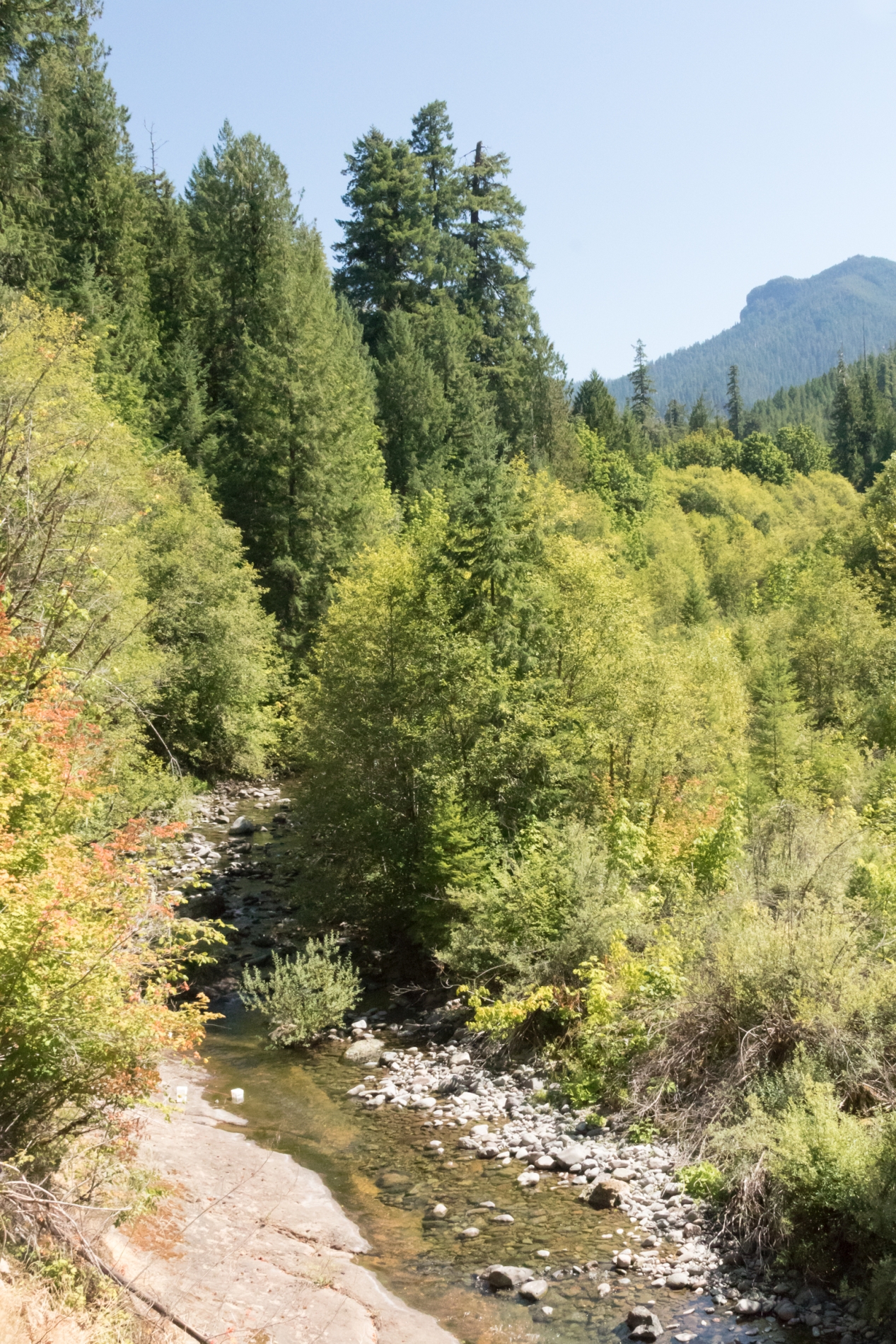
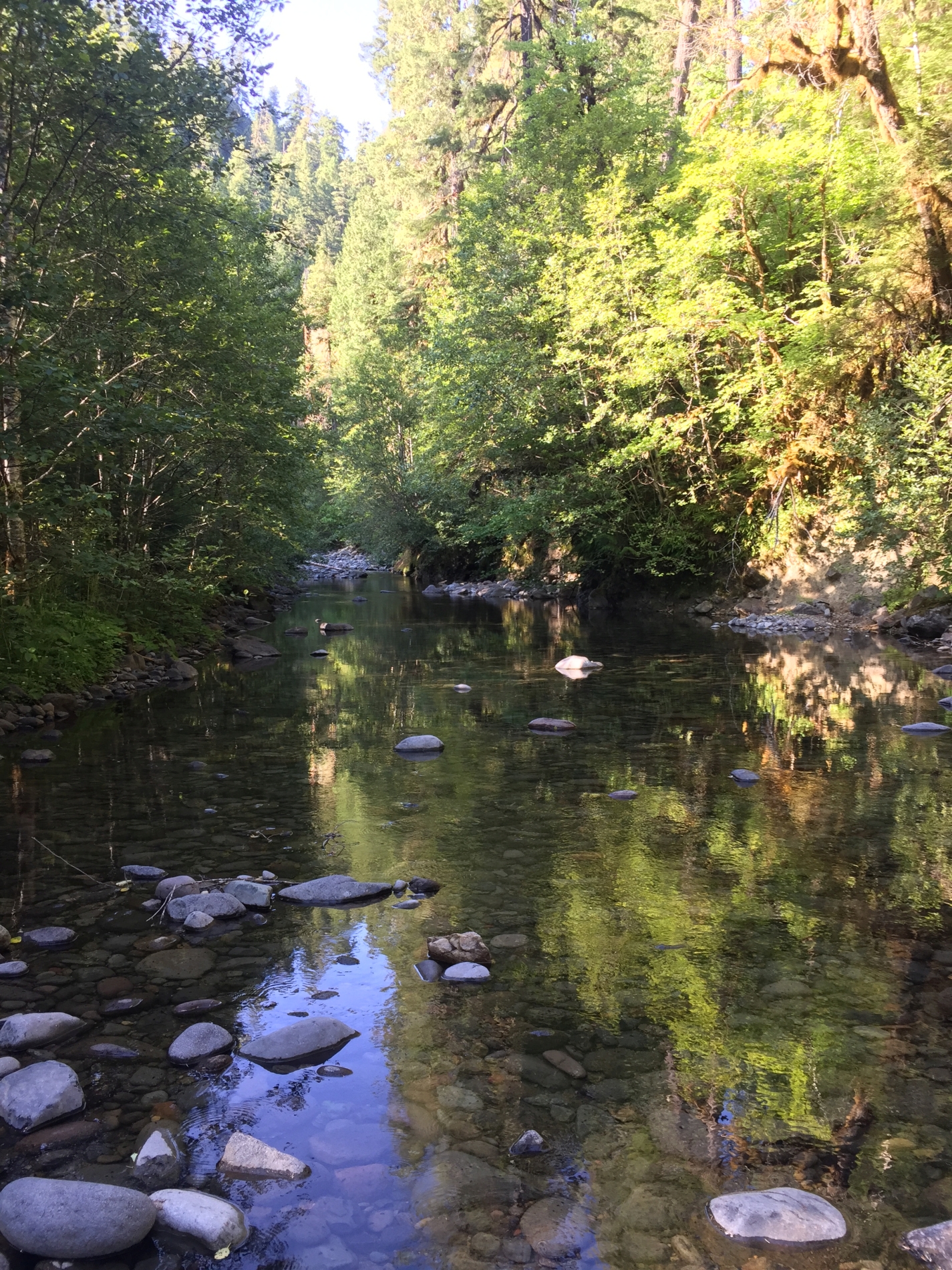
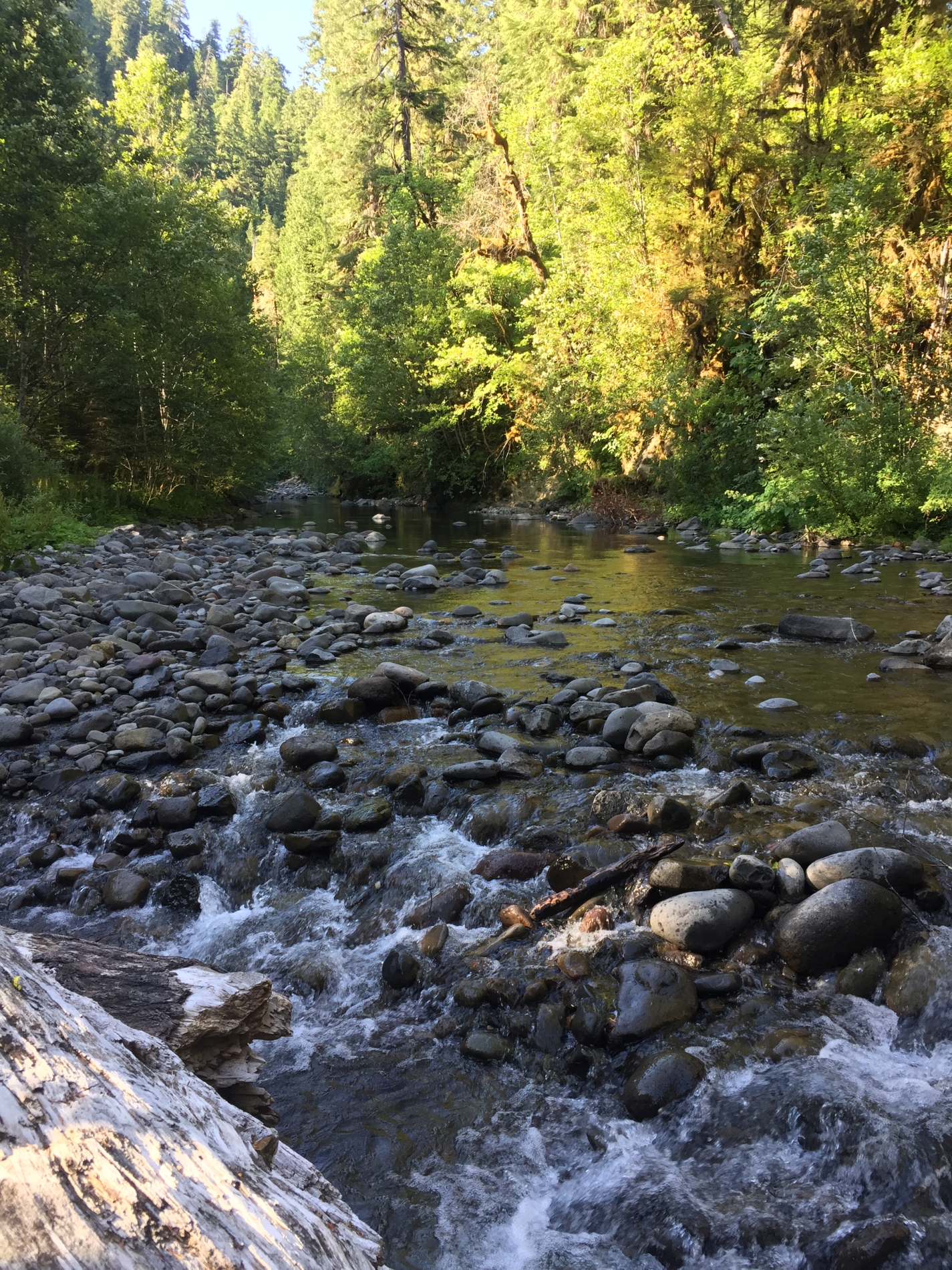
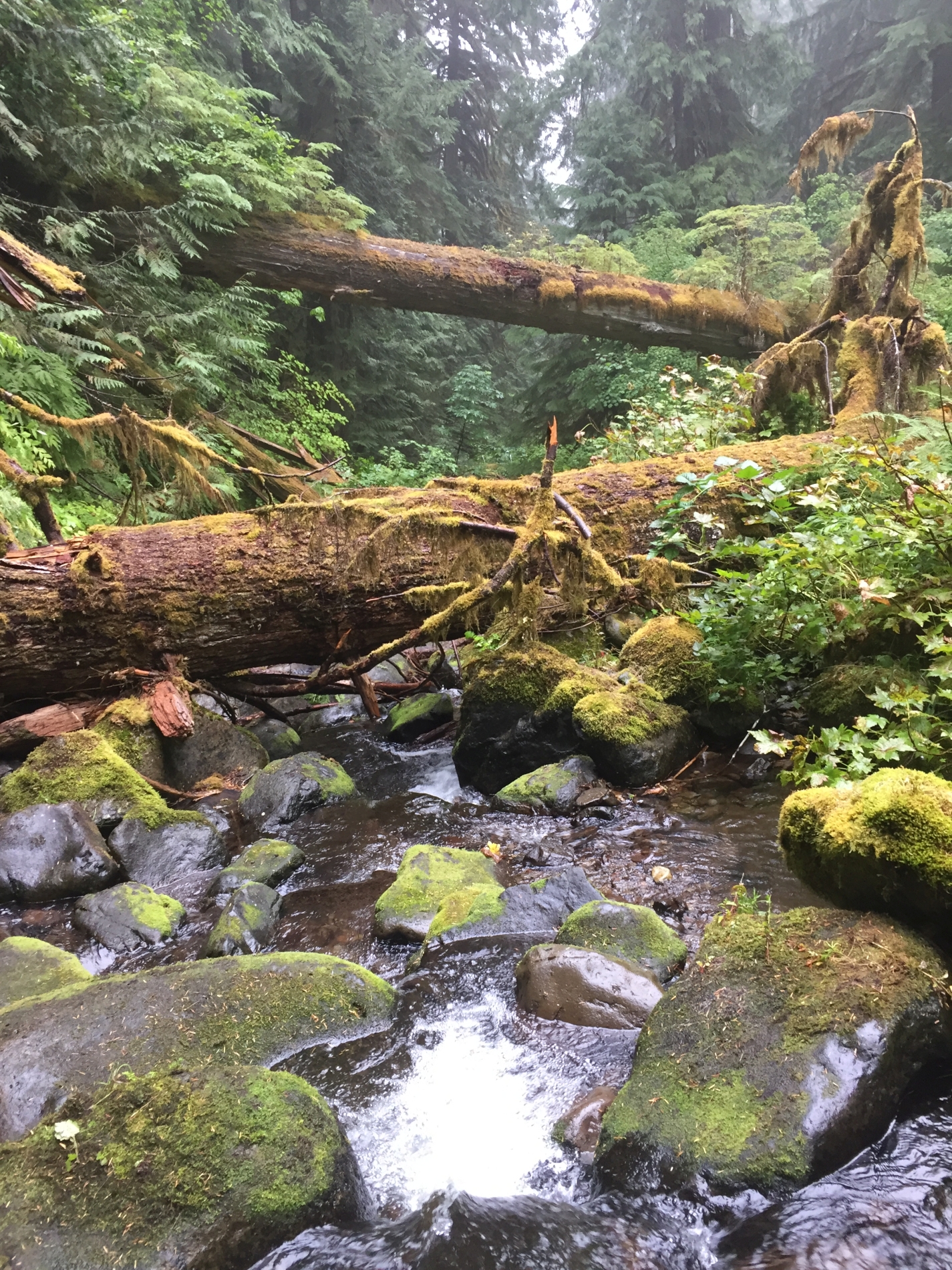
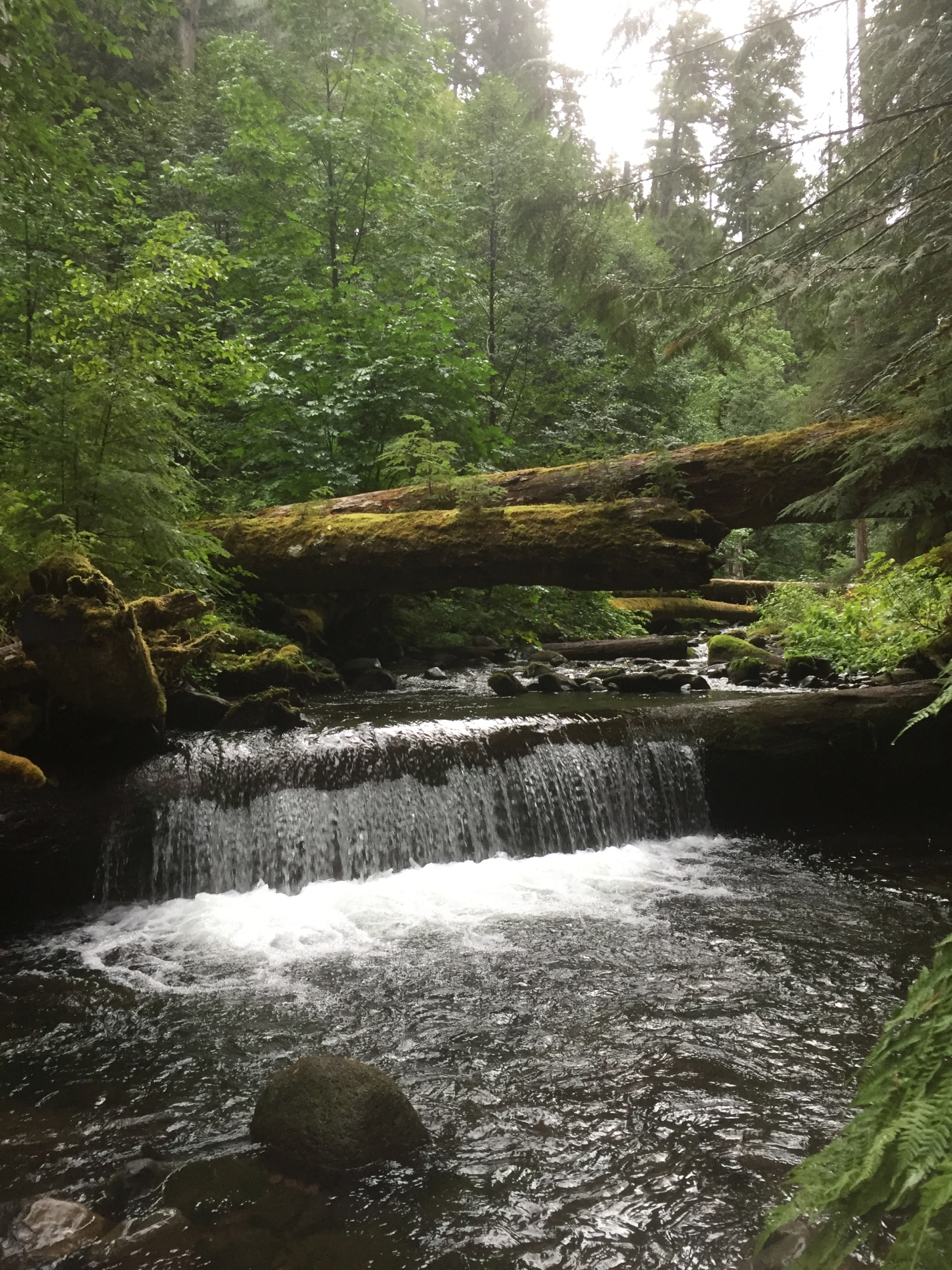
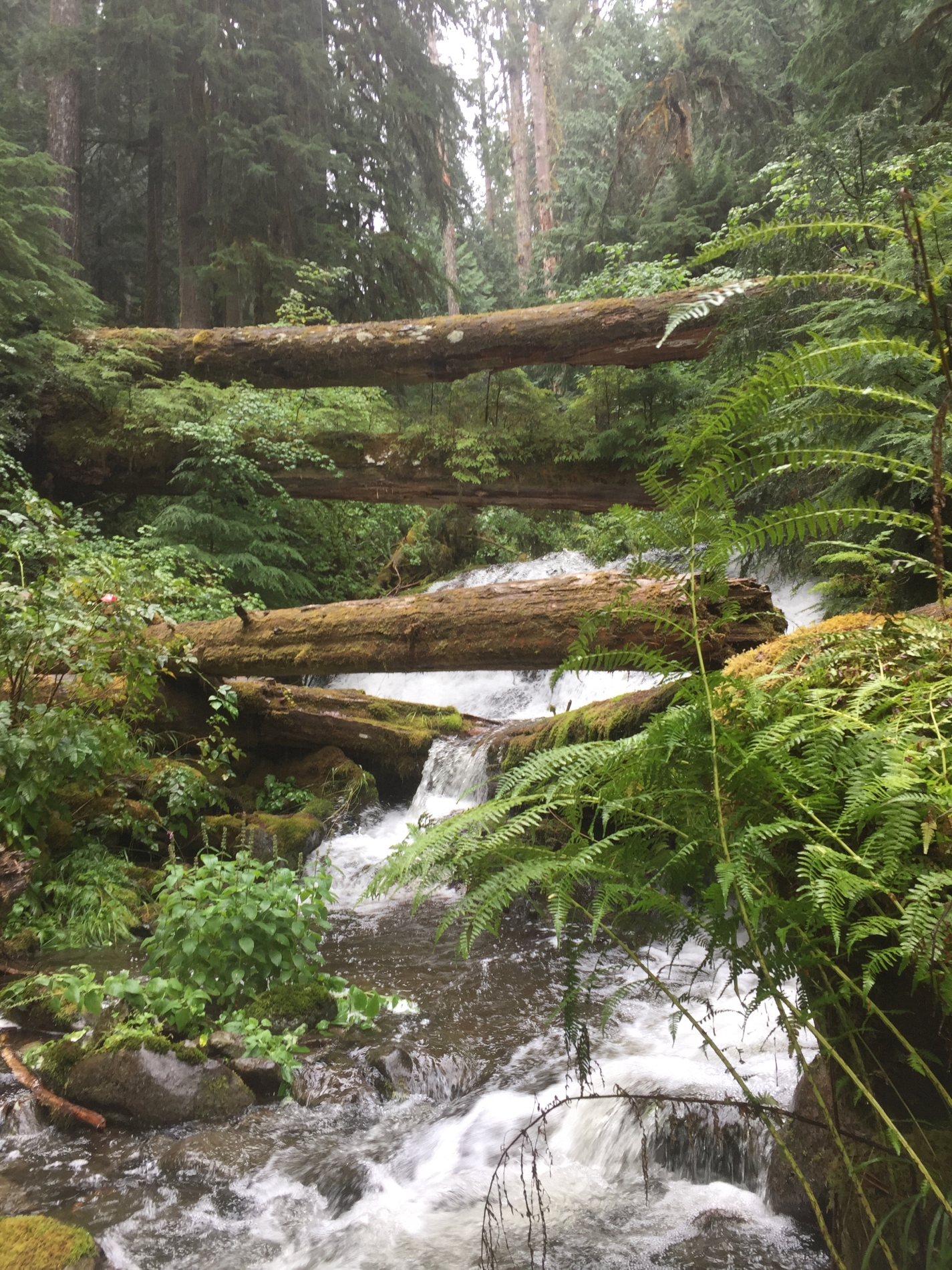
Stream networks expand and contract seasonally and changes in network connectivity affect transfer of matter and energy across trophic levels. Although many aquatic organisms in headwaters are well adapted to seasonal low flows others may experience stress from reduced summer habitat and instream food, increased water temperature, and increased vulnerability to predators (e.g., fishes). Climate change is expected to further contract summer stream networks and lead to reduced viability of fish populations in some parts of the network (i.e., headwaters). Long-term research at the Andrews Forest on two co-occurring aquatic vertebrate species, Coastal Cutthroat Trout, and Coastal Giant Salamander, has revealed complex population dynamics and variable responses to hydrologic variability. These aquatic vertebrates might have different responses to climate change and stream drying because of their habitat requirements and mobility—with salamanders able to inhabit smaller or more disconnected streams than fishes. The "Spatially Explicit Sampling of Aquatic Vertebrates" study, run by Ivan Arismedi at Oregon State University, extends the study of salamanders and cutthroat trout by examining how their population size and structure differ along the entire stream network. The project aims to answer how habitat variables influence relative patterns of abundance of aquatic vertebrates at the entire Andrews Forest stream network.
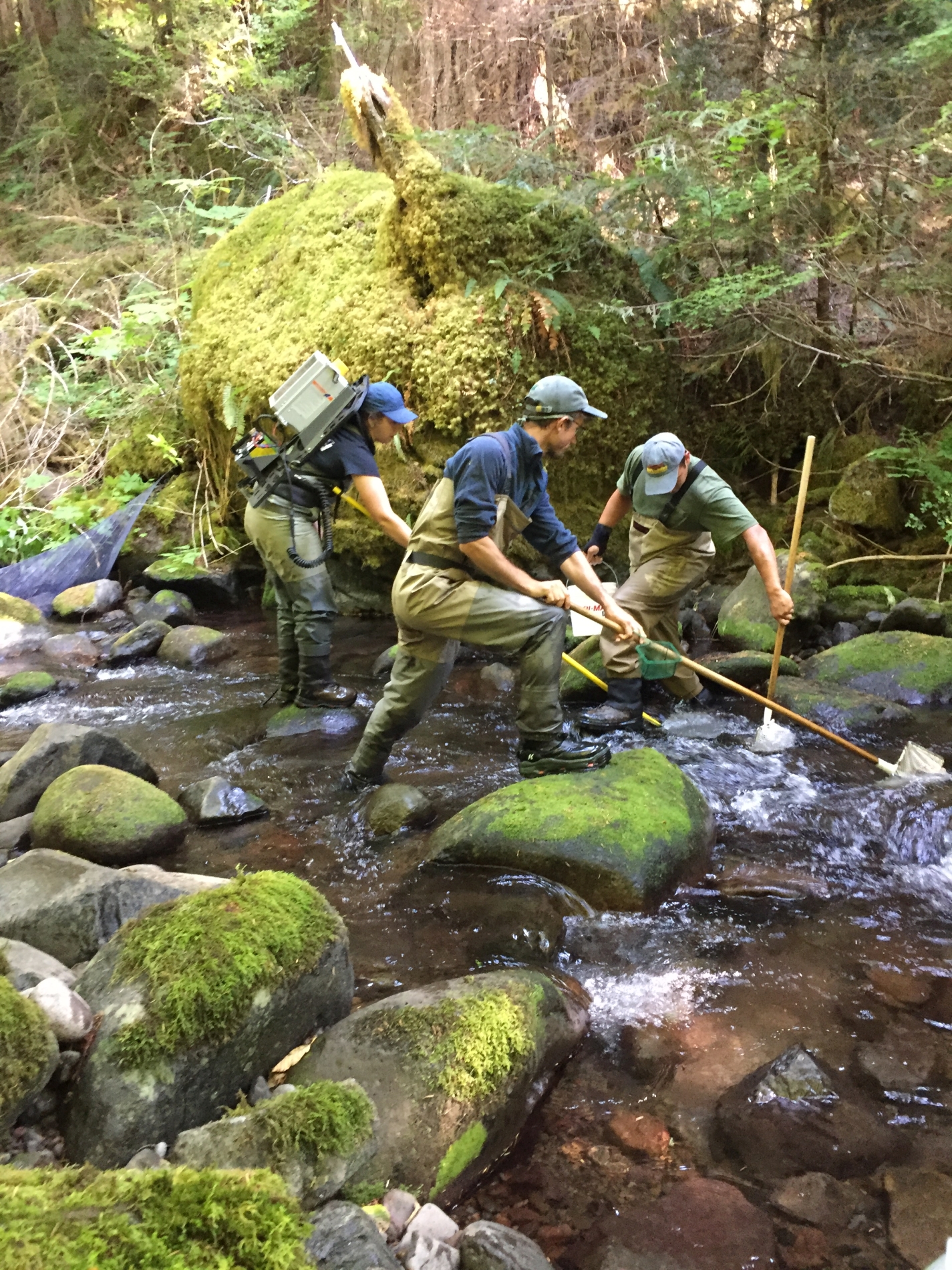
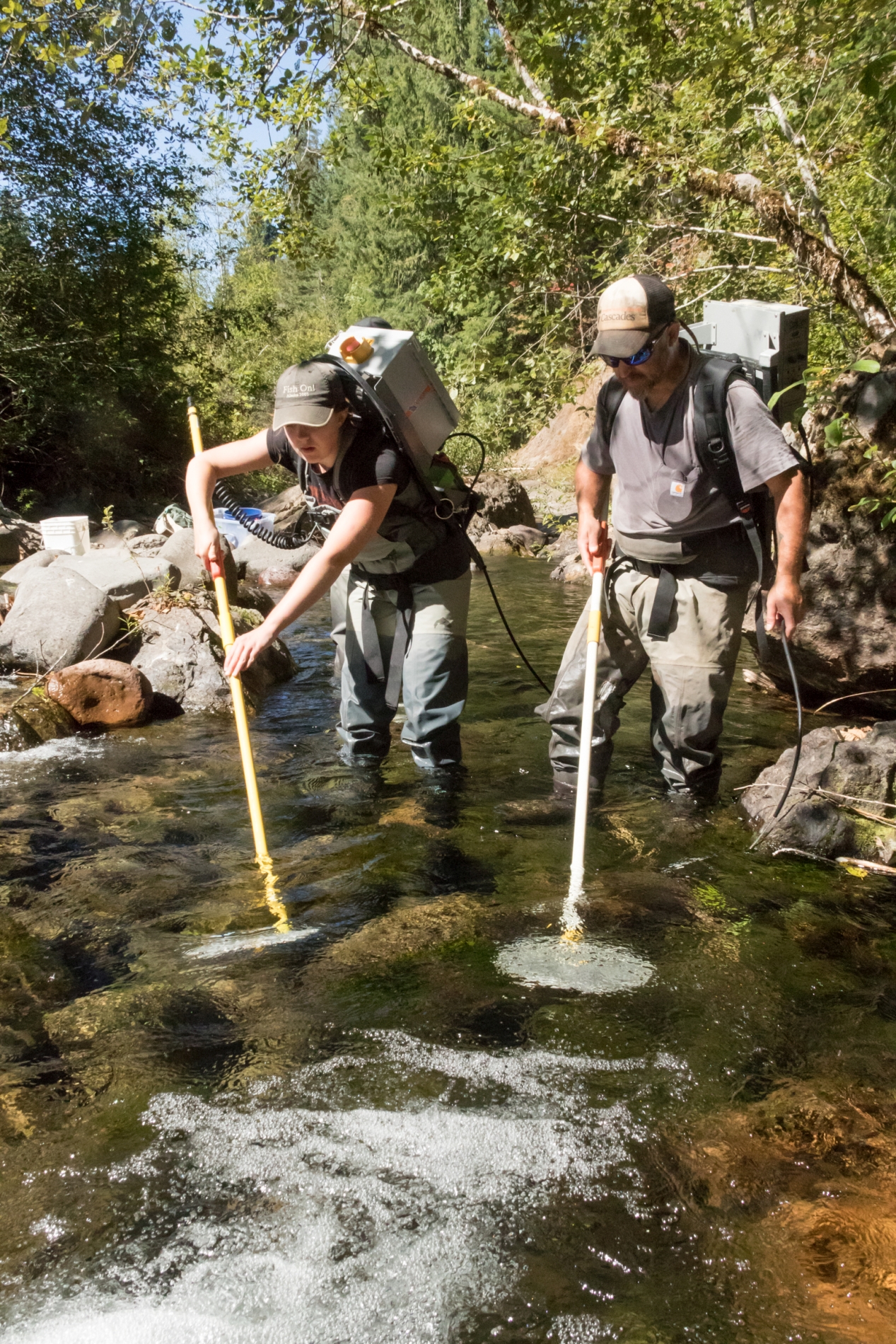
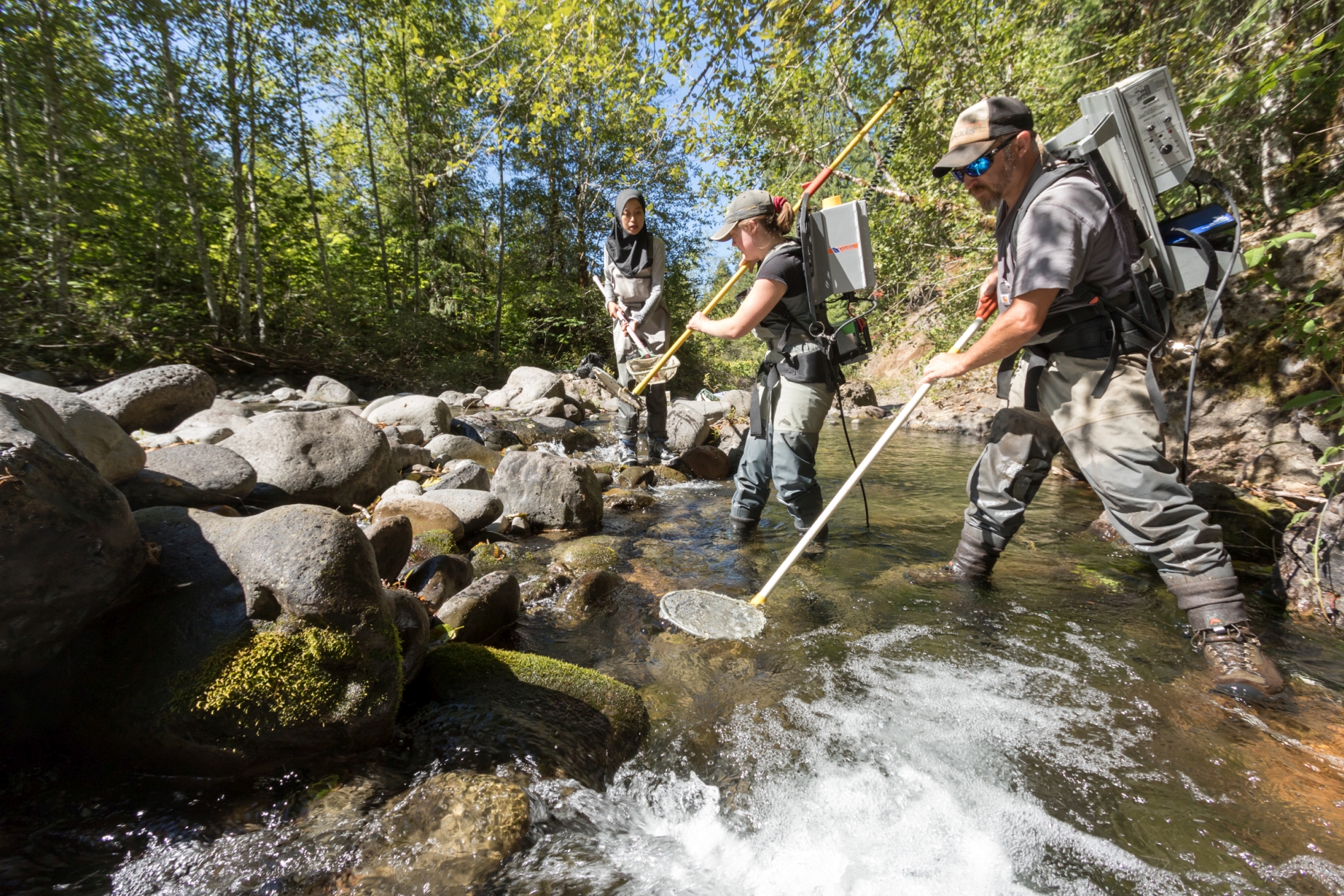
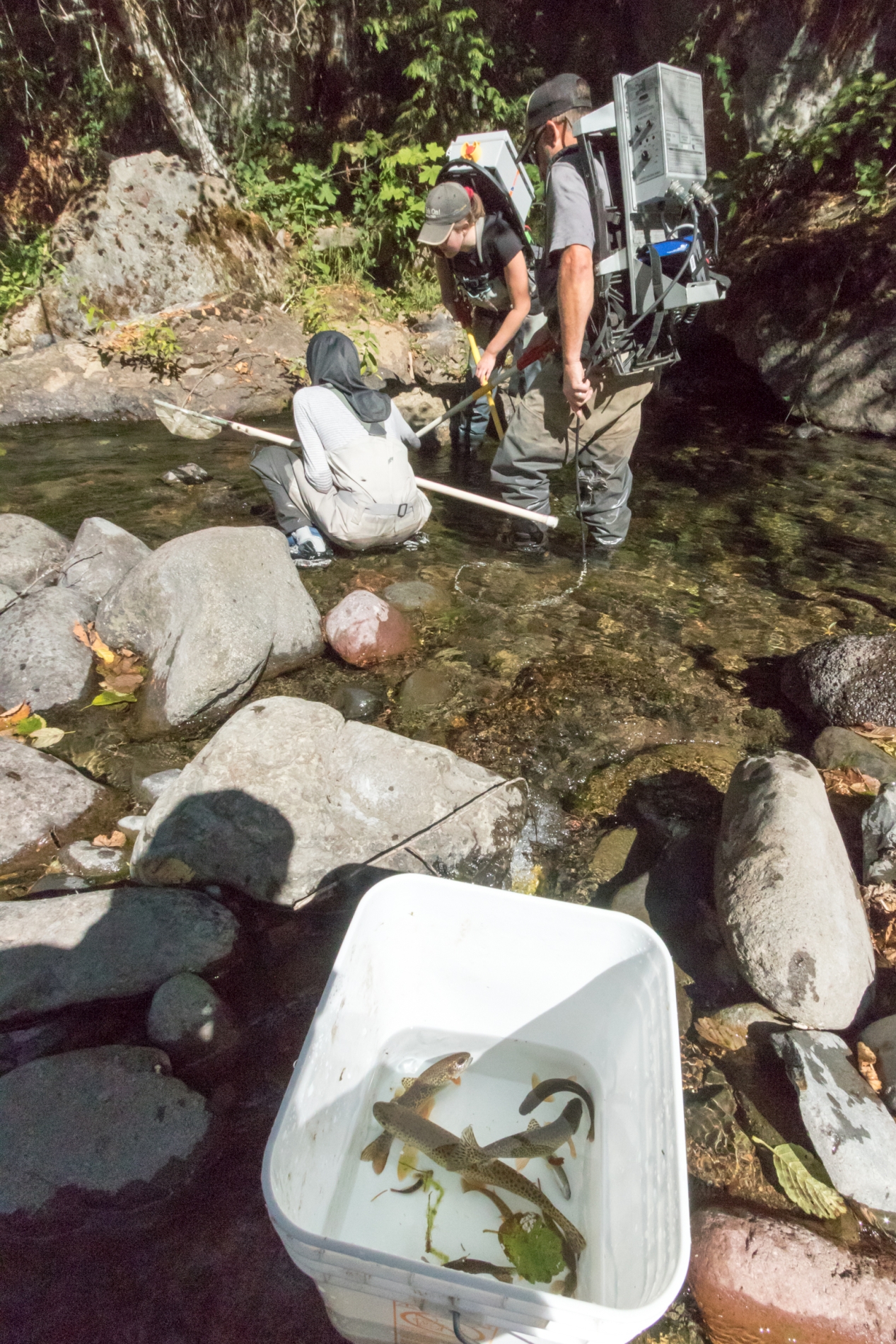
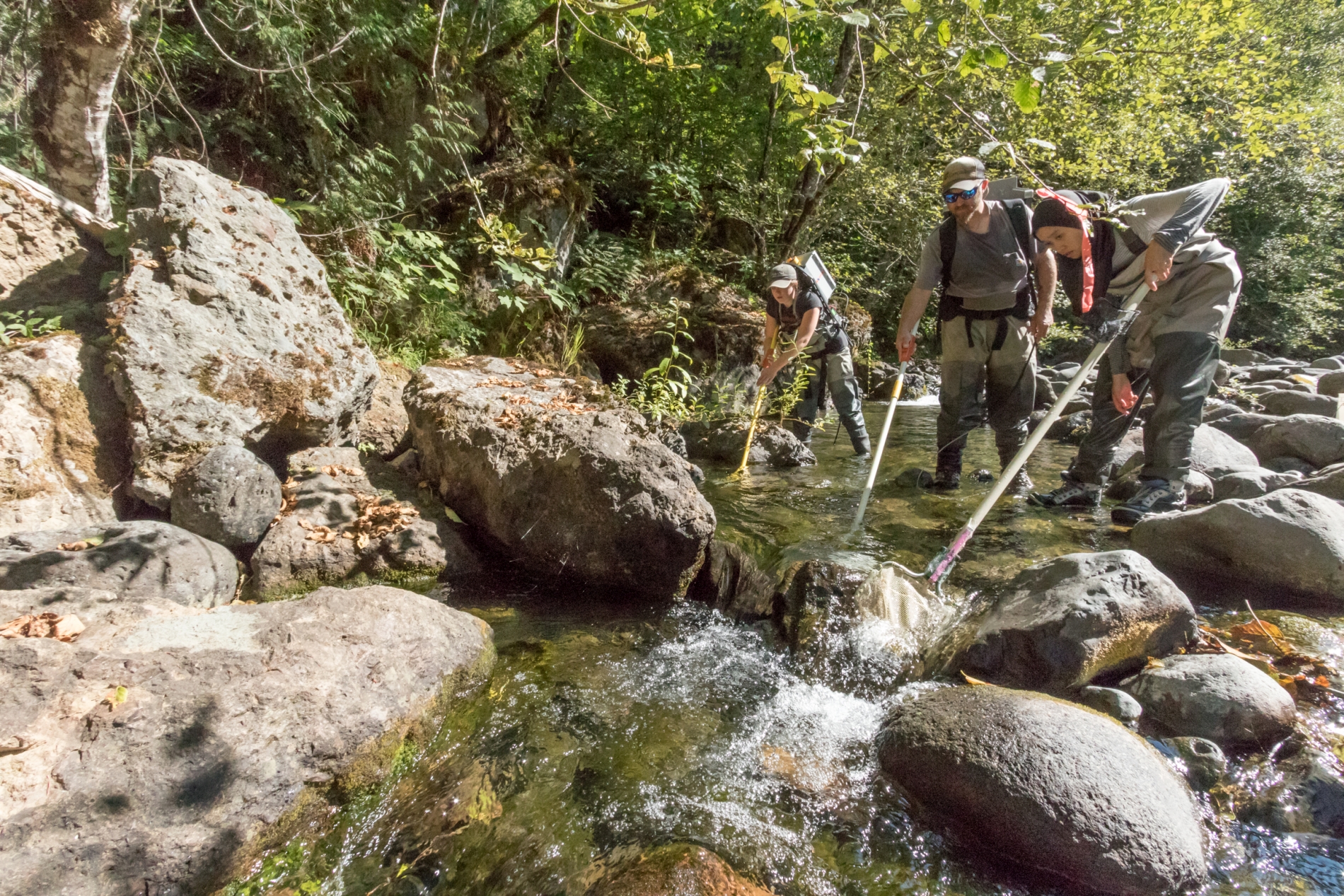
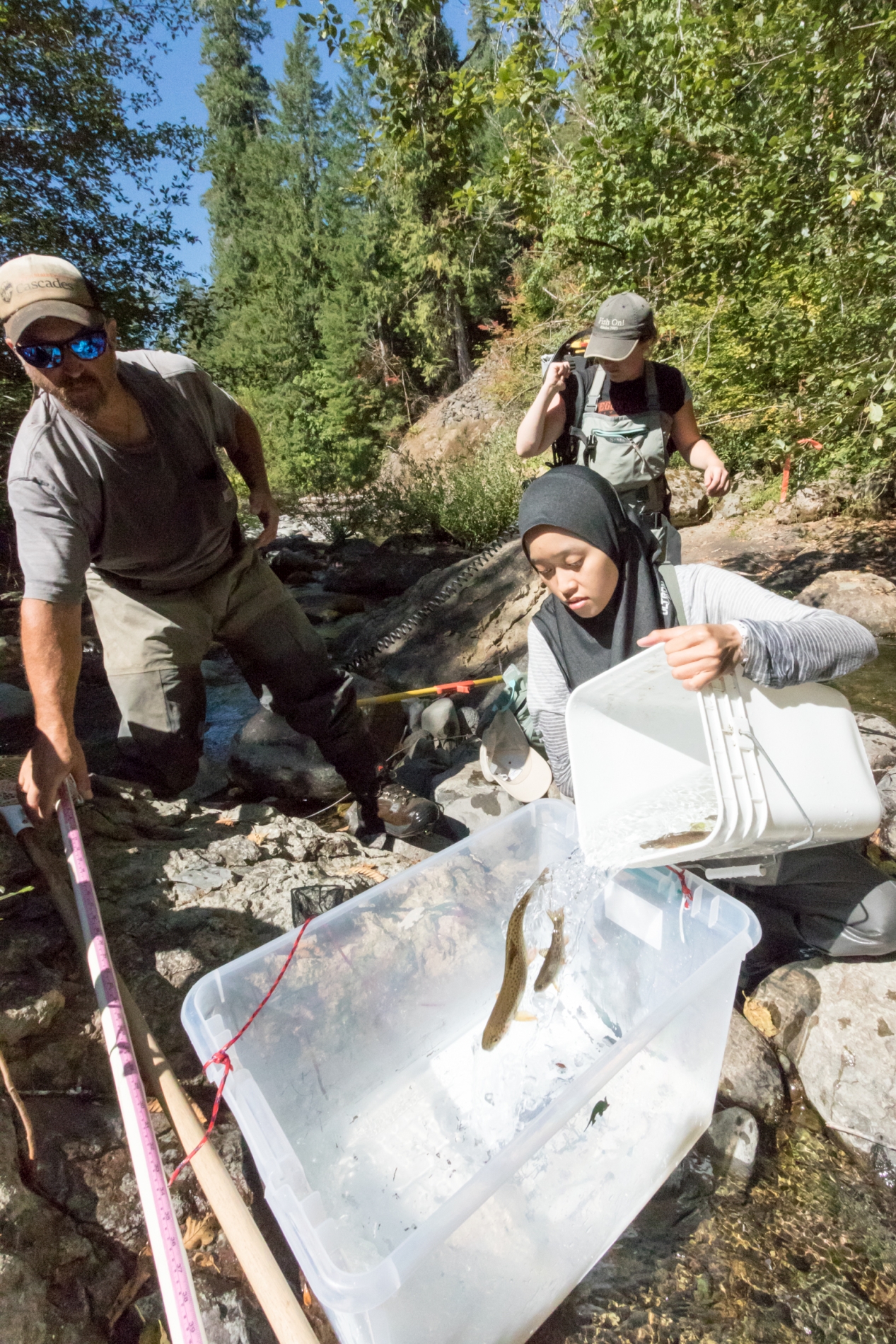
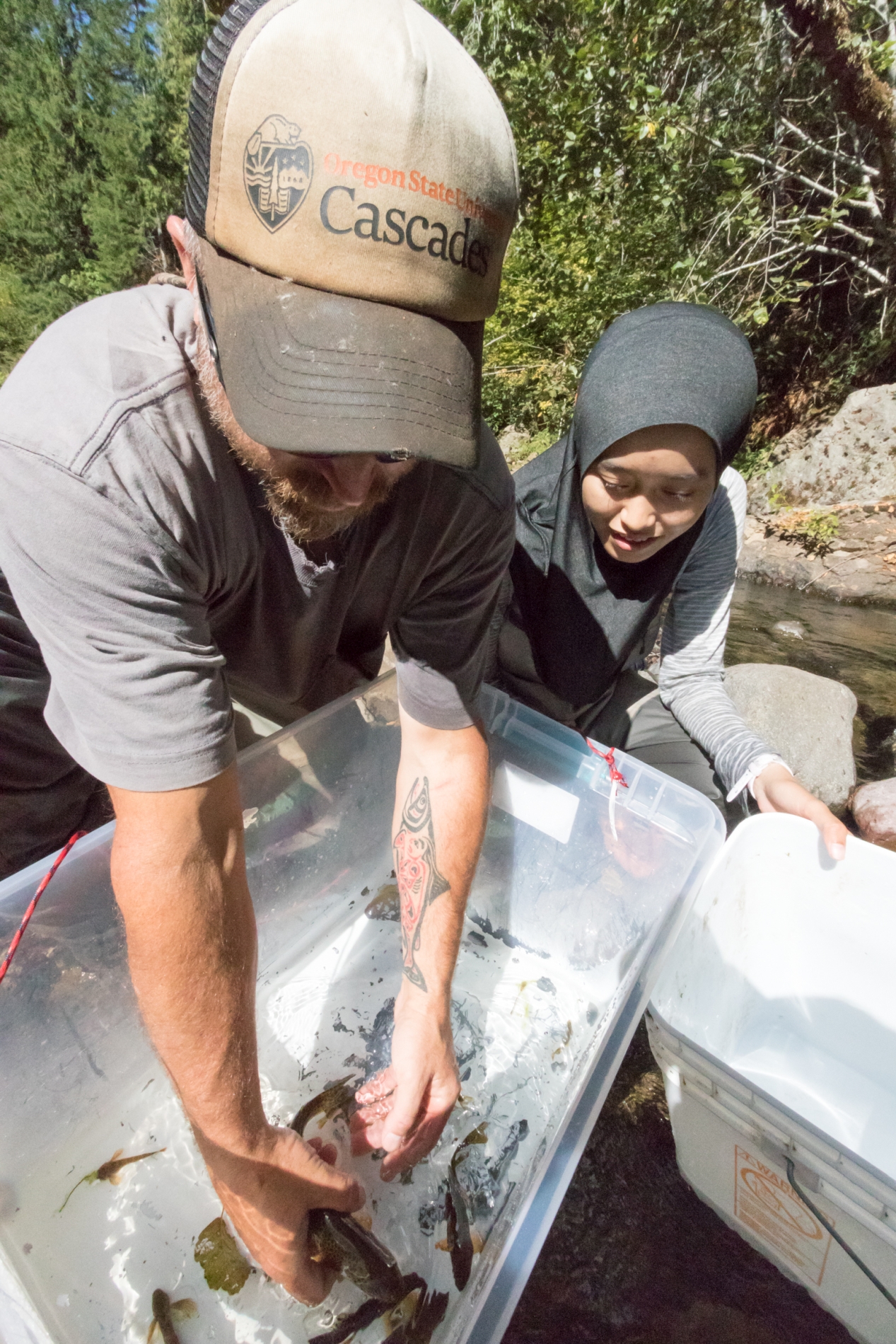
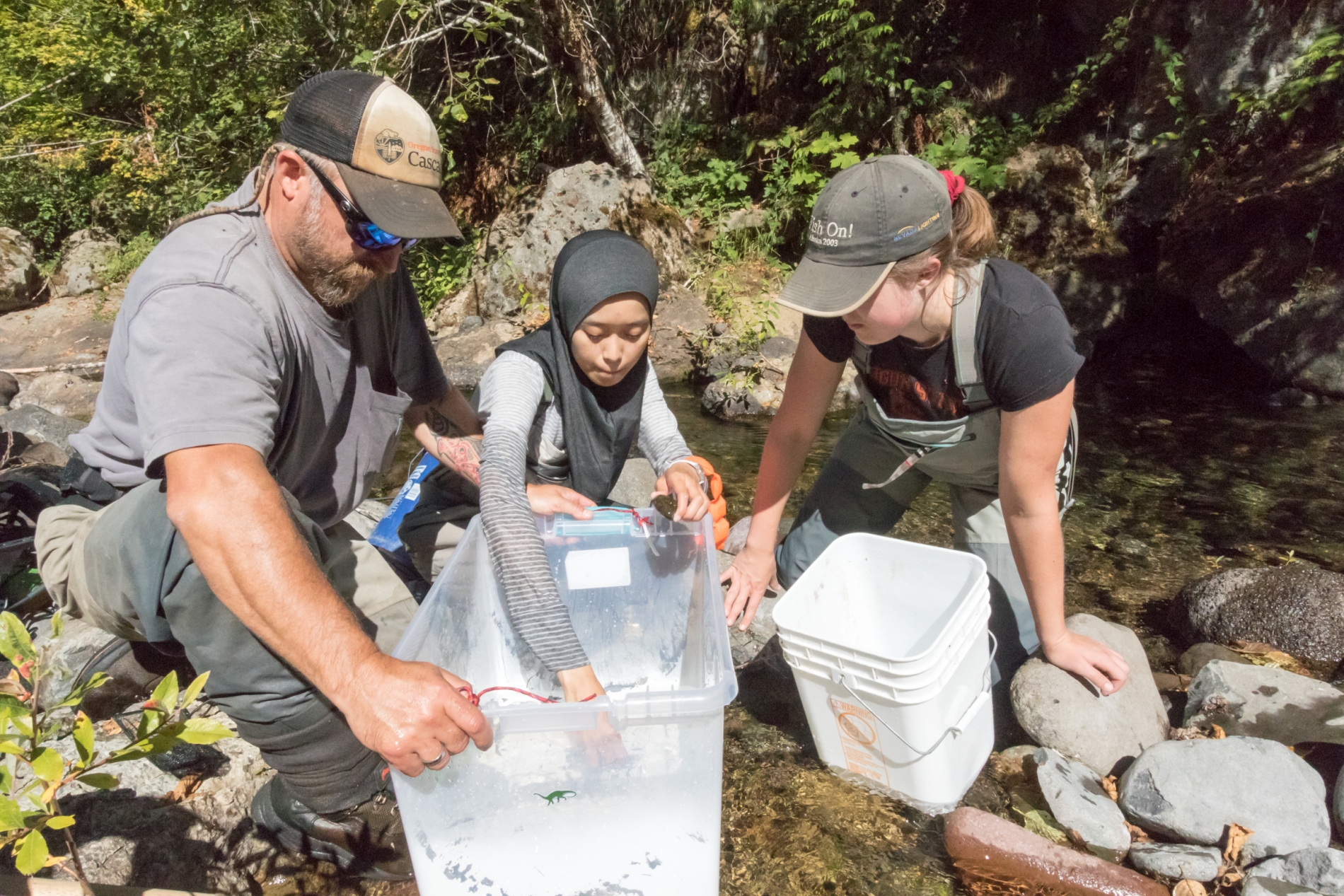
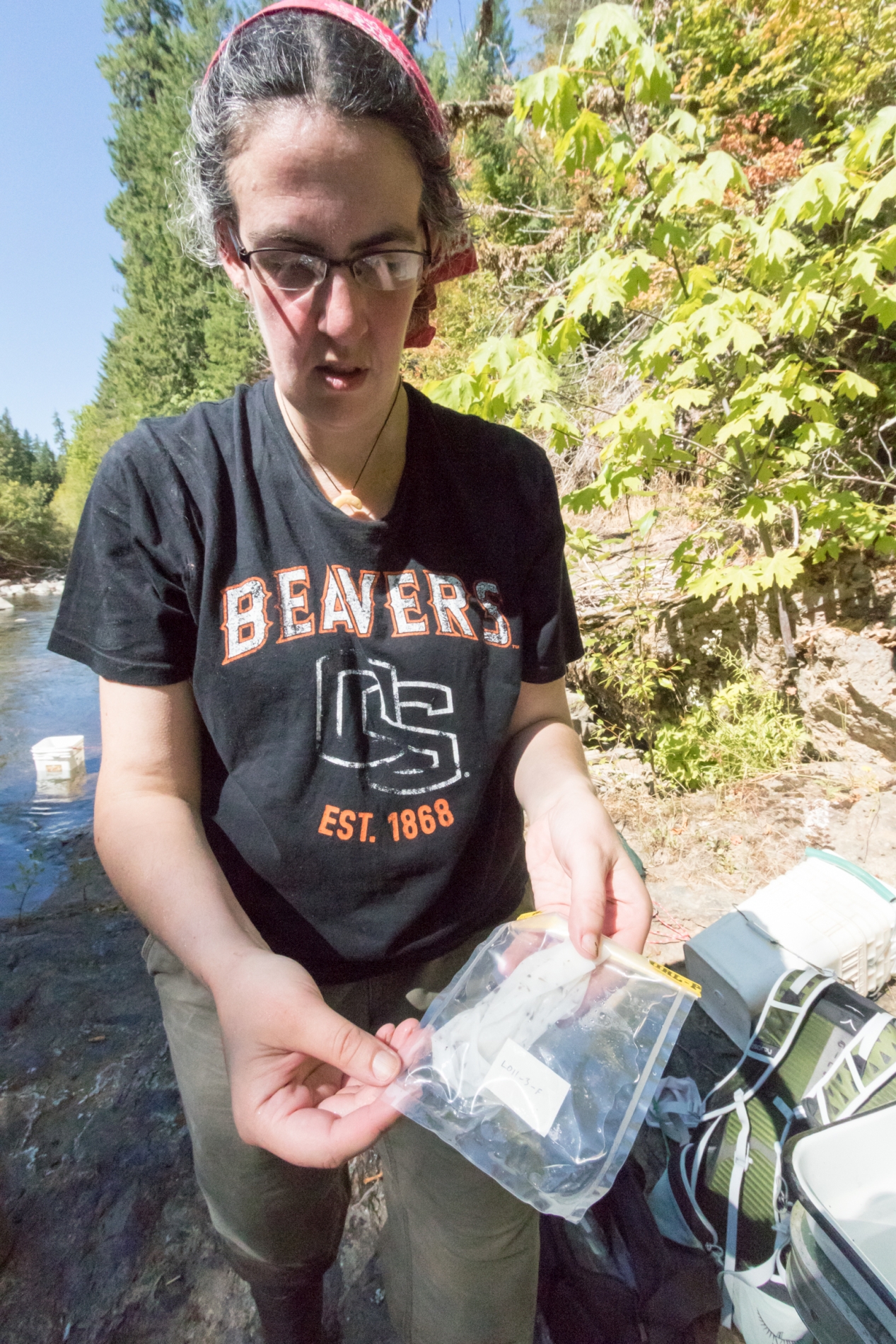
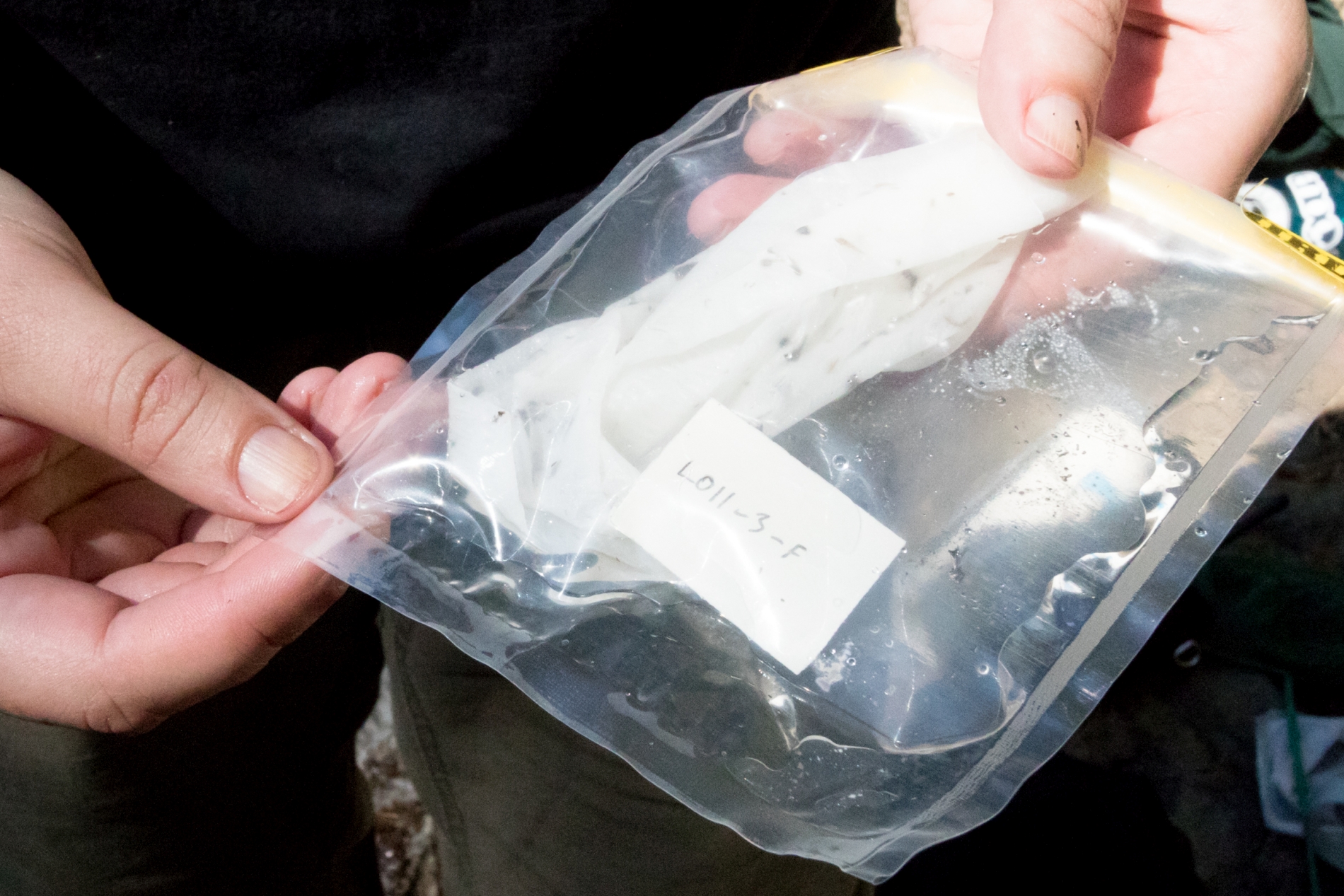
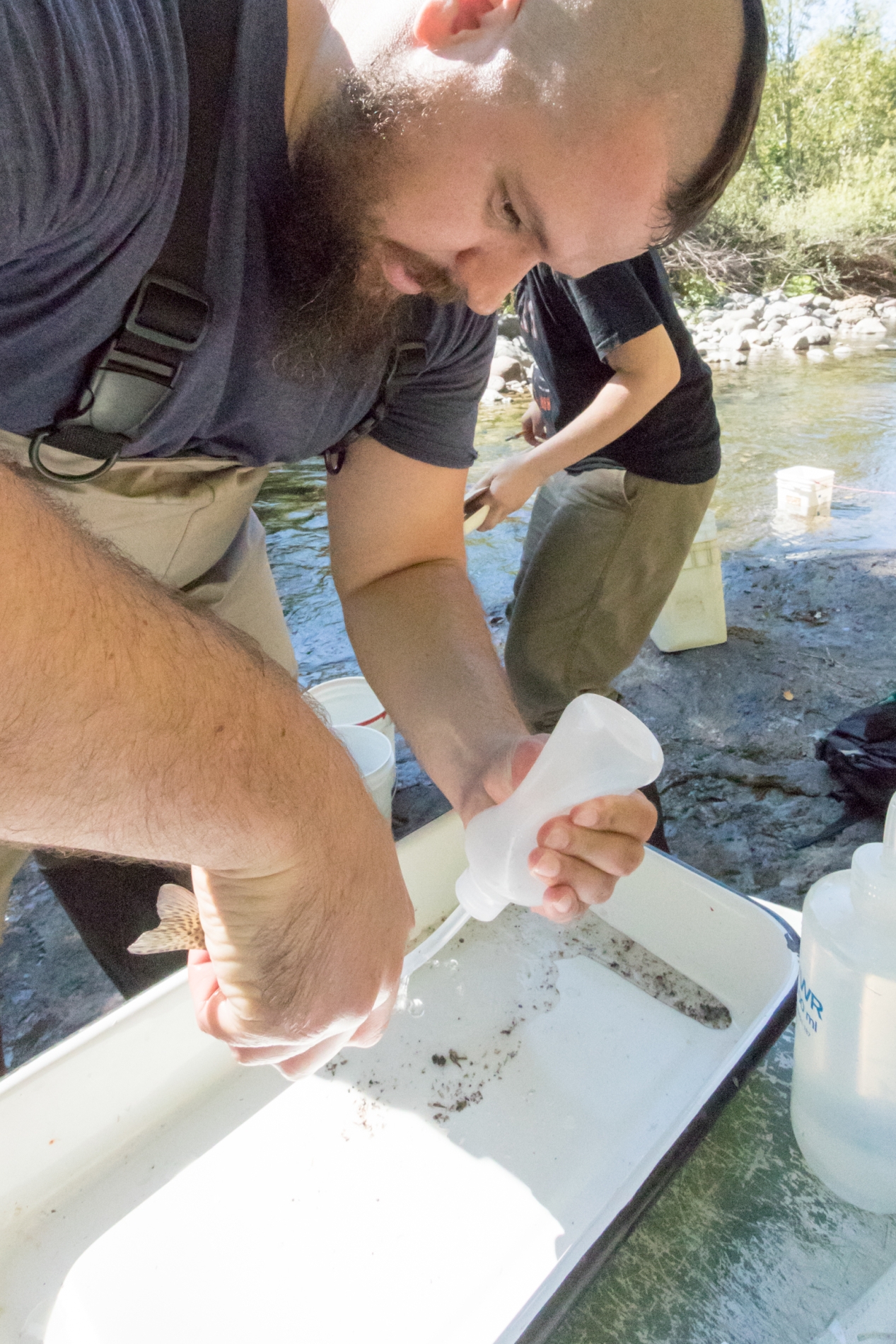
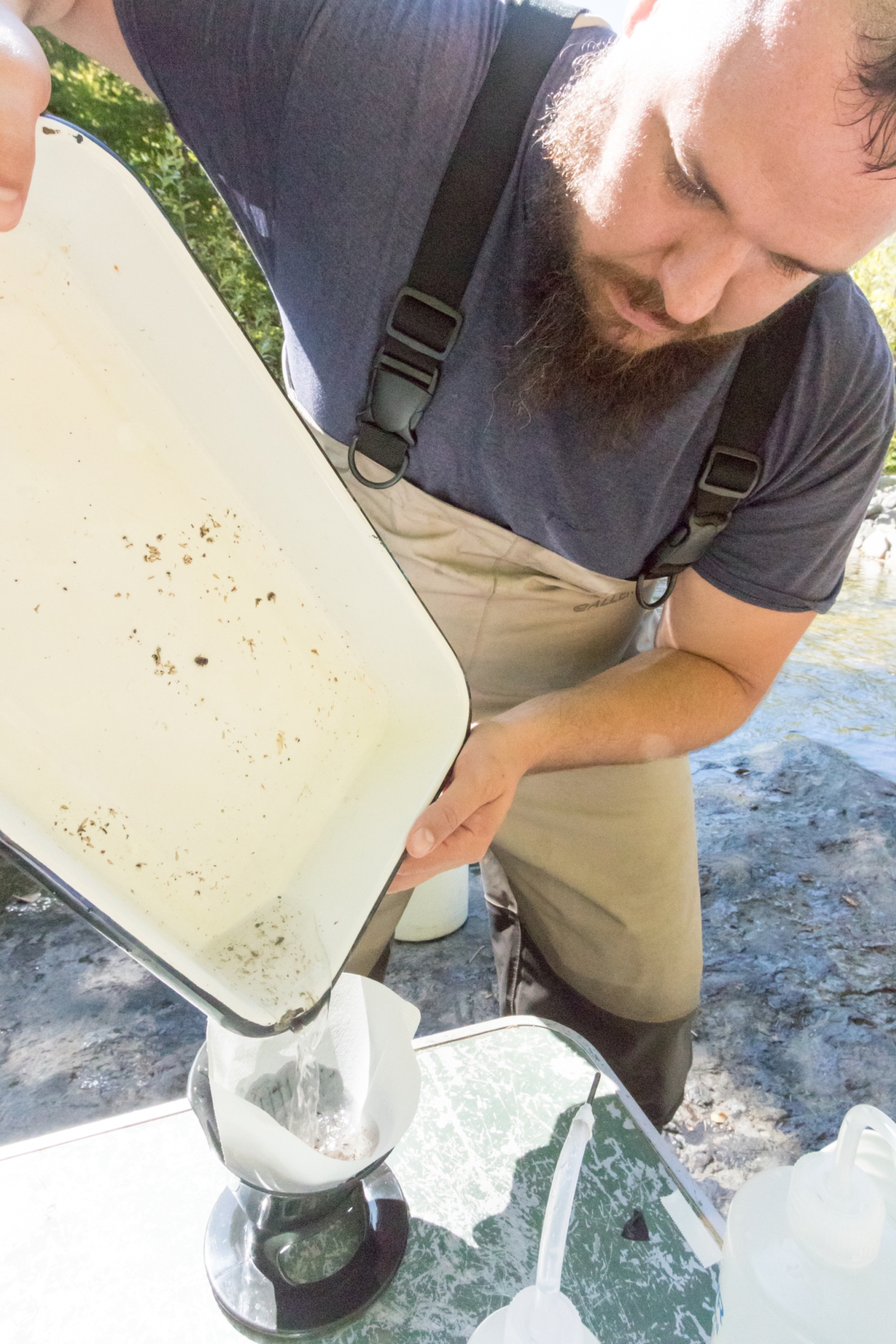
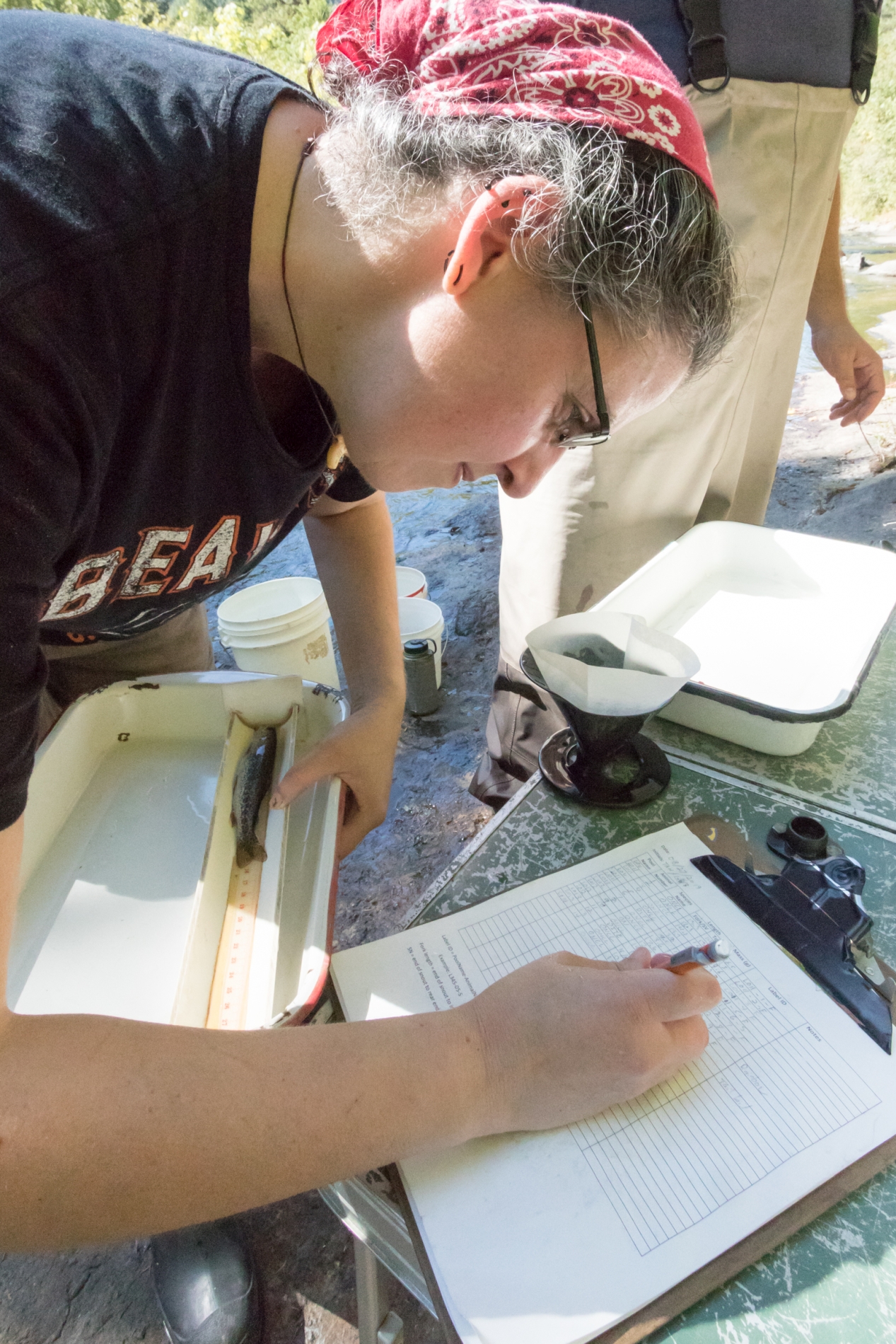
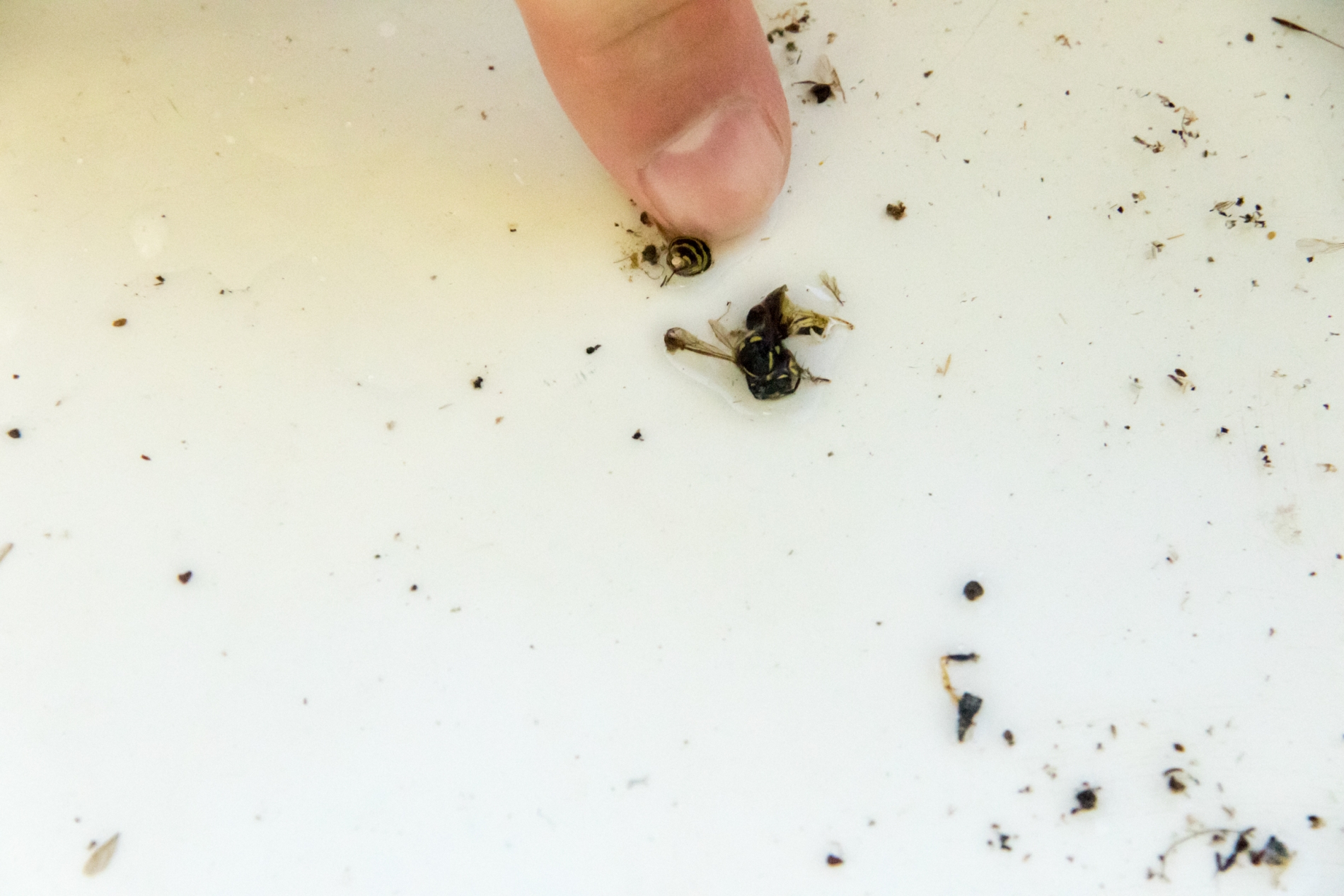
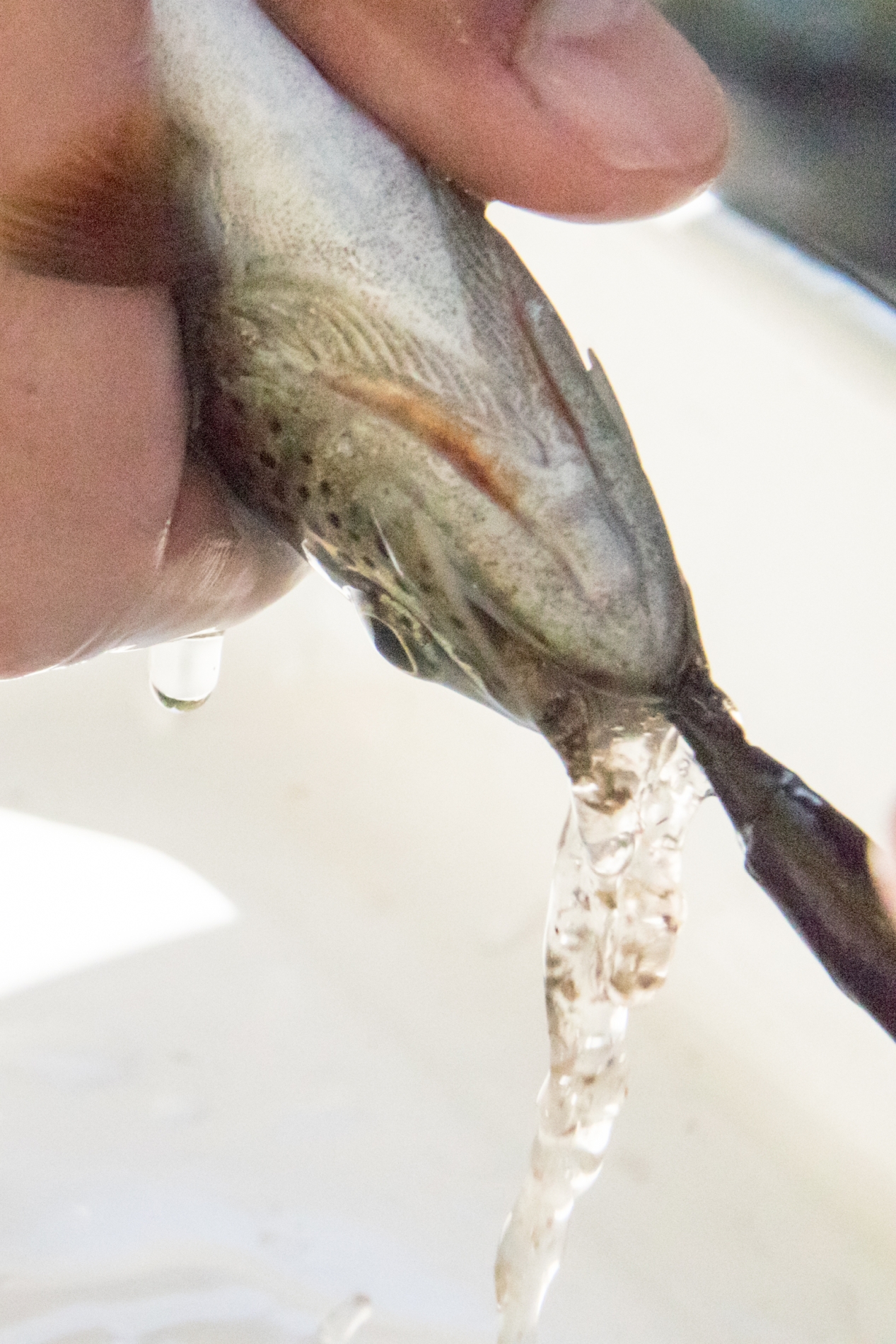
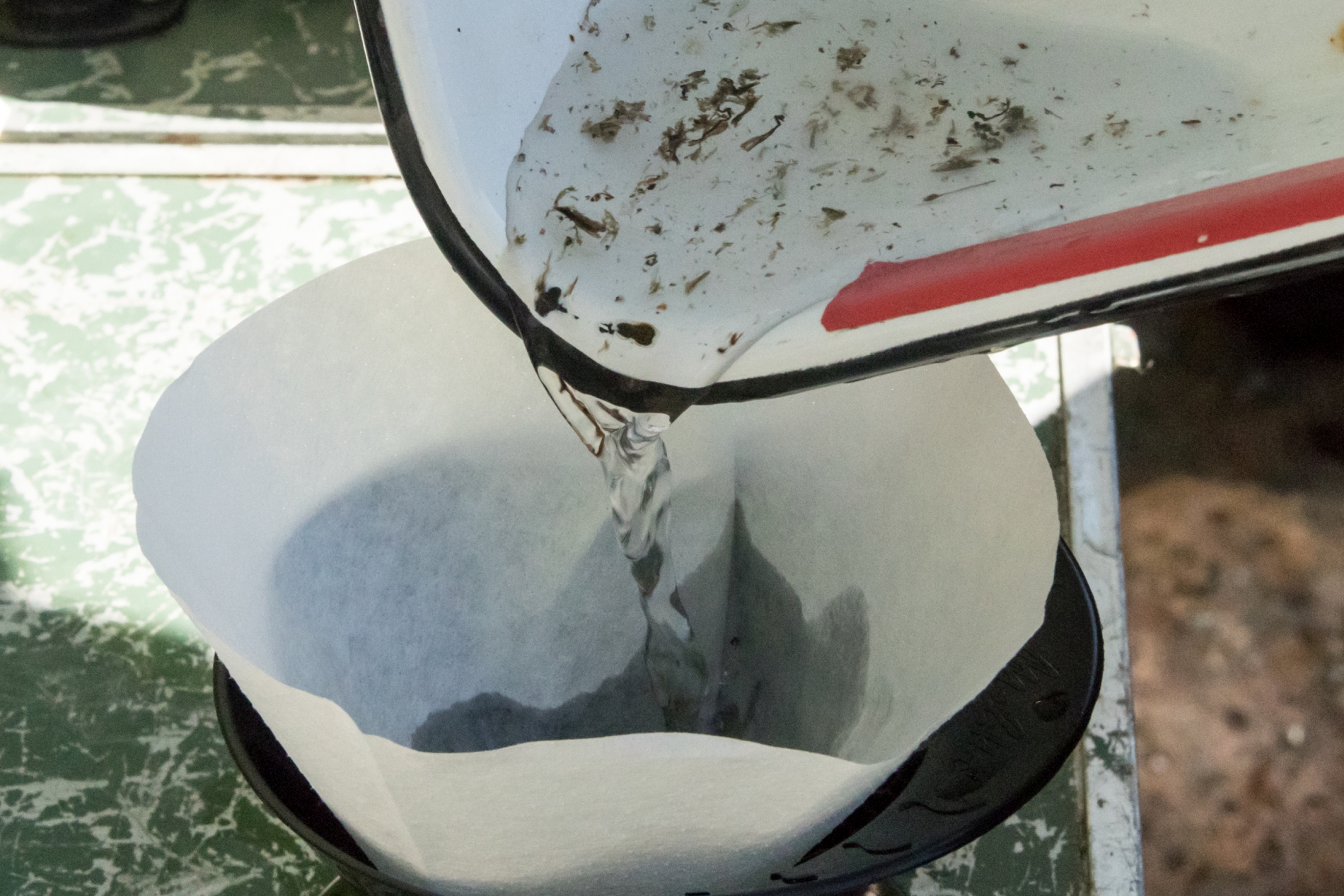
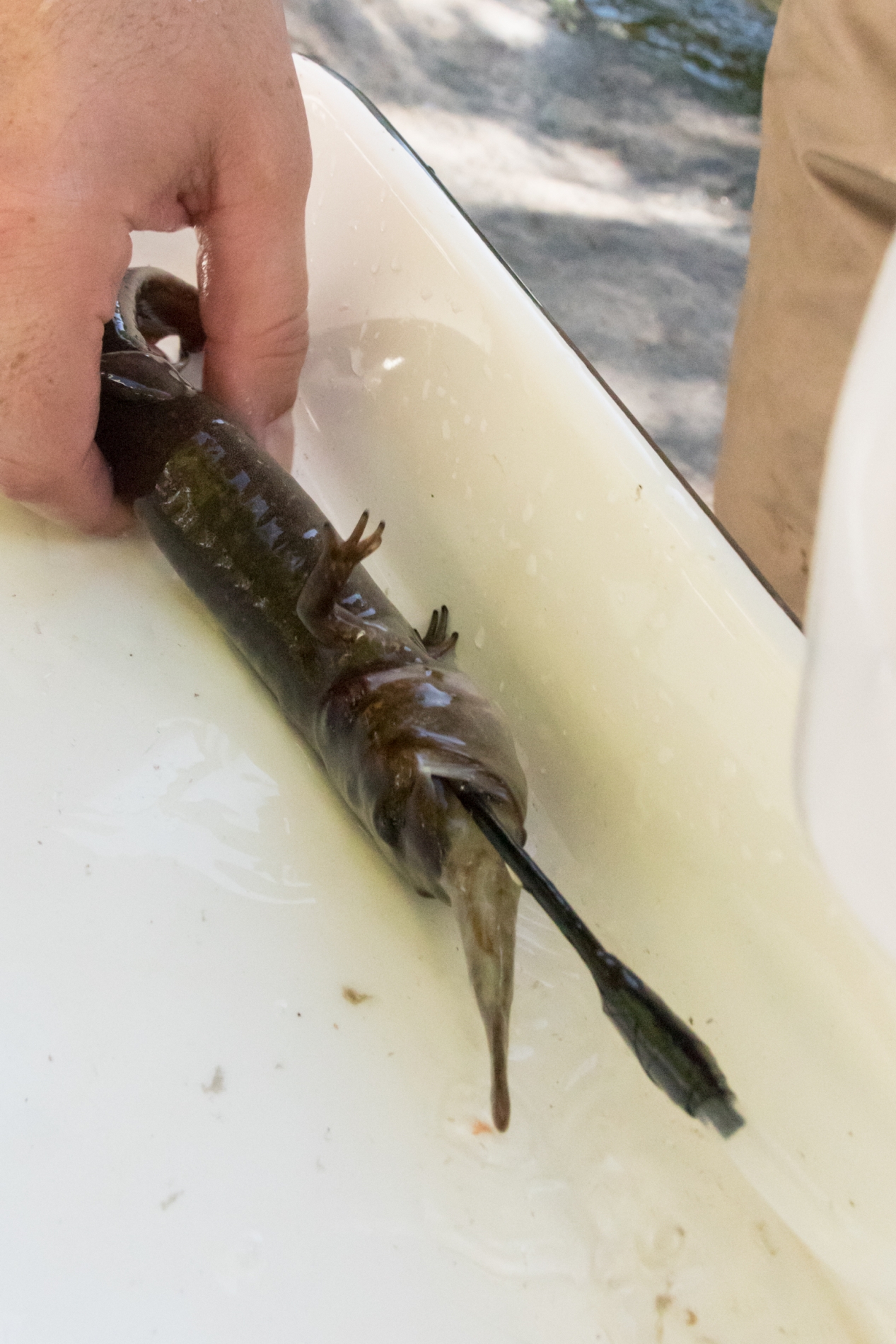
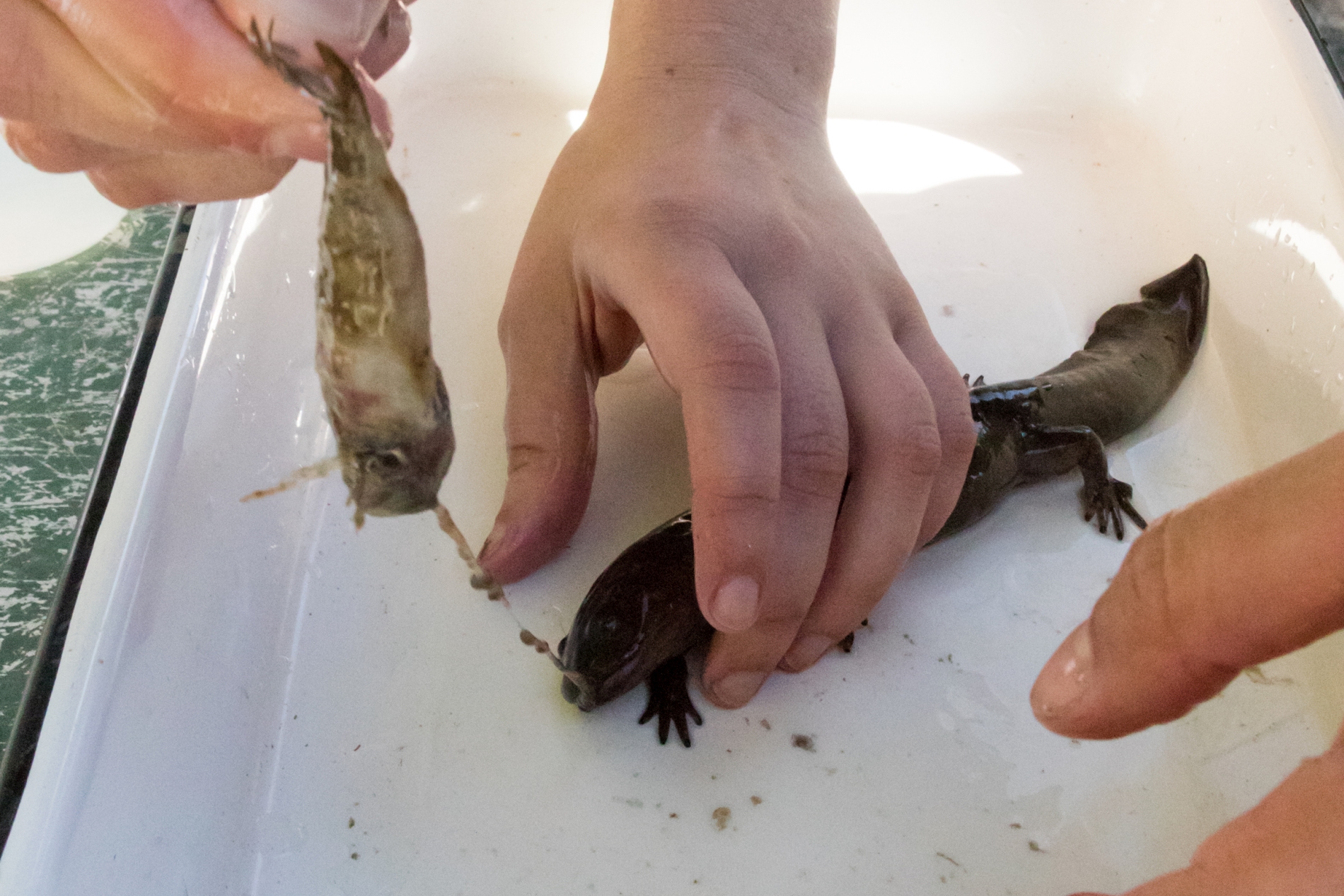
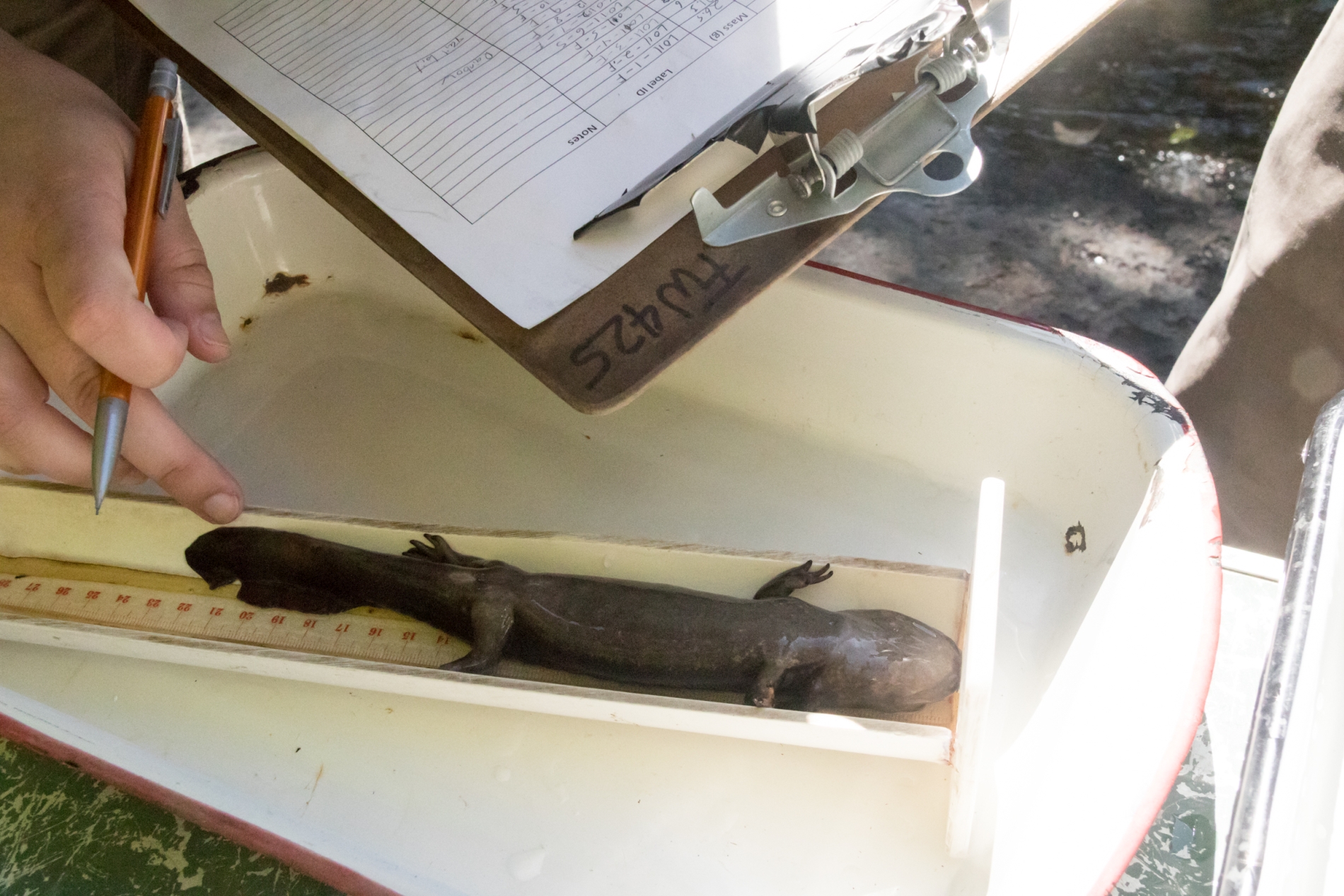
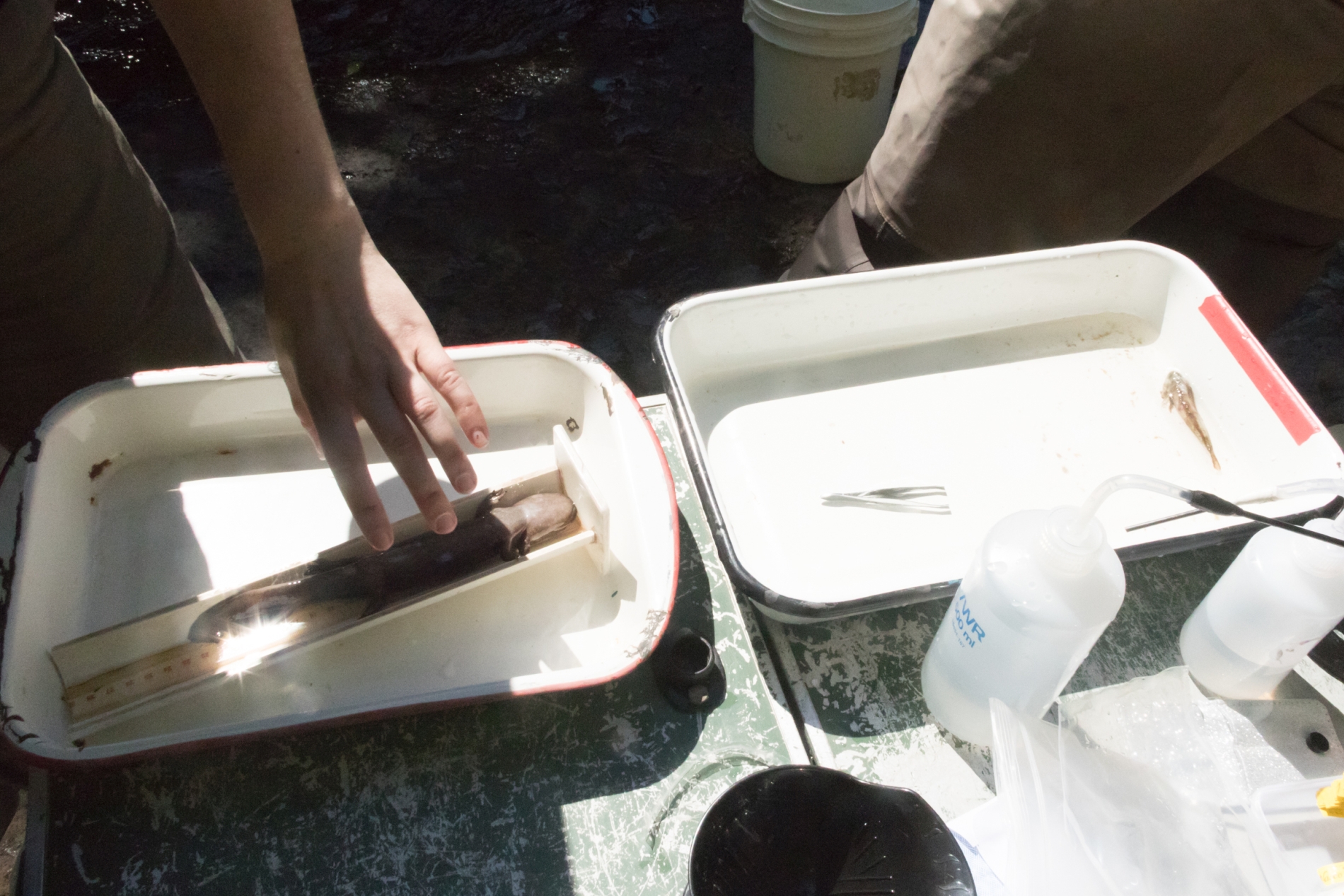
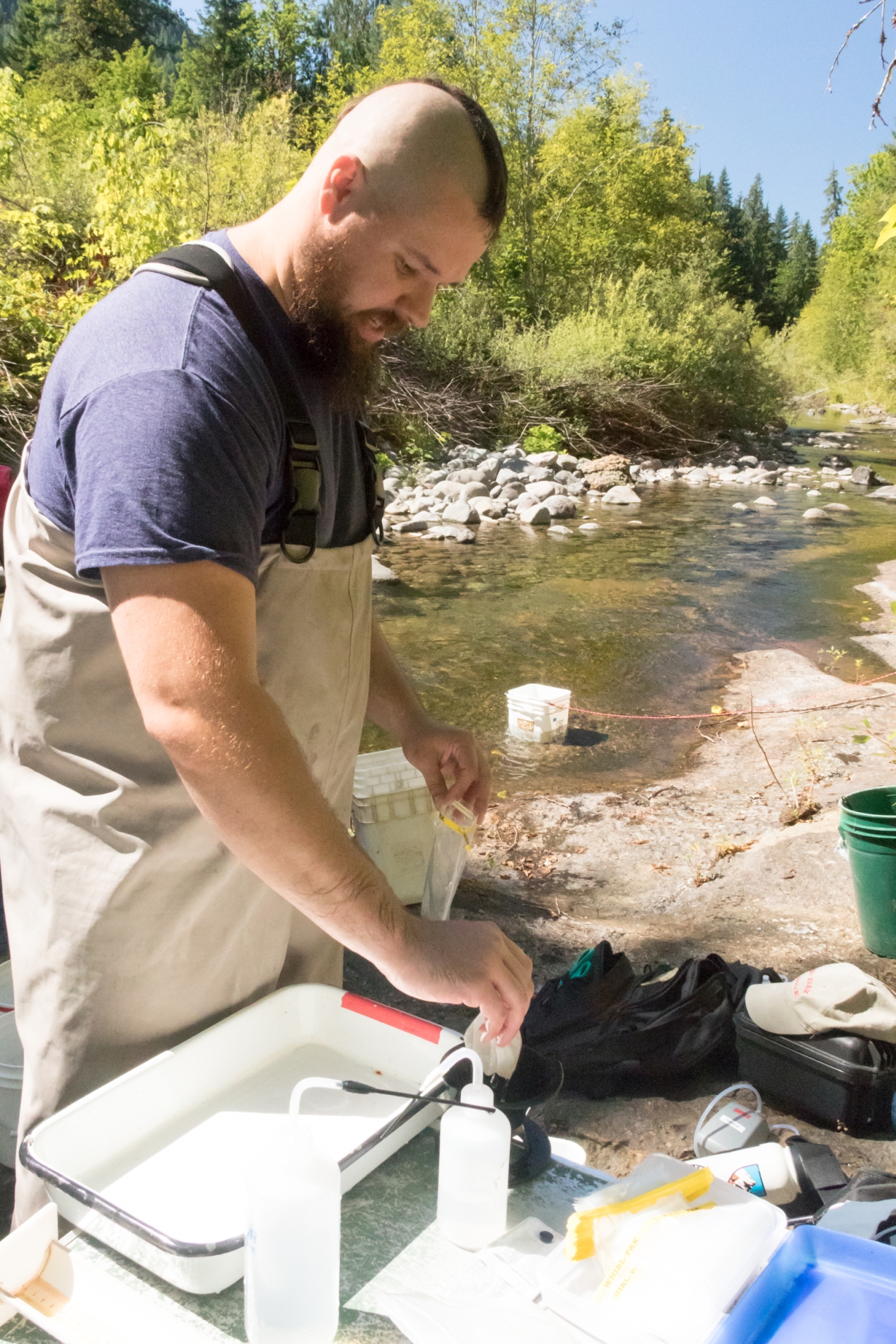
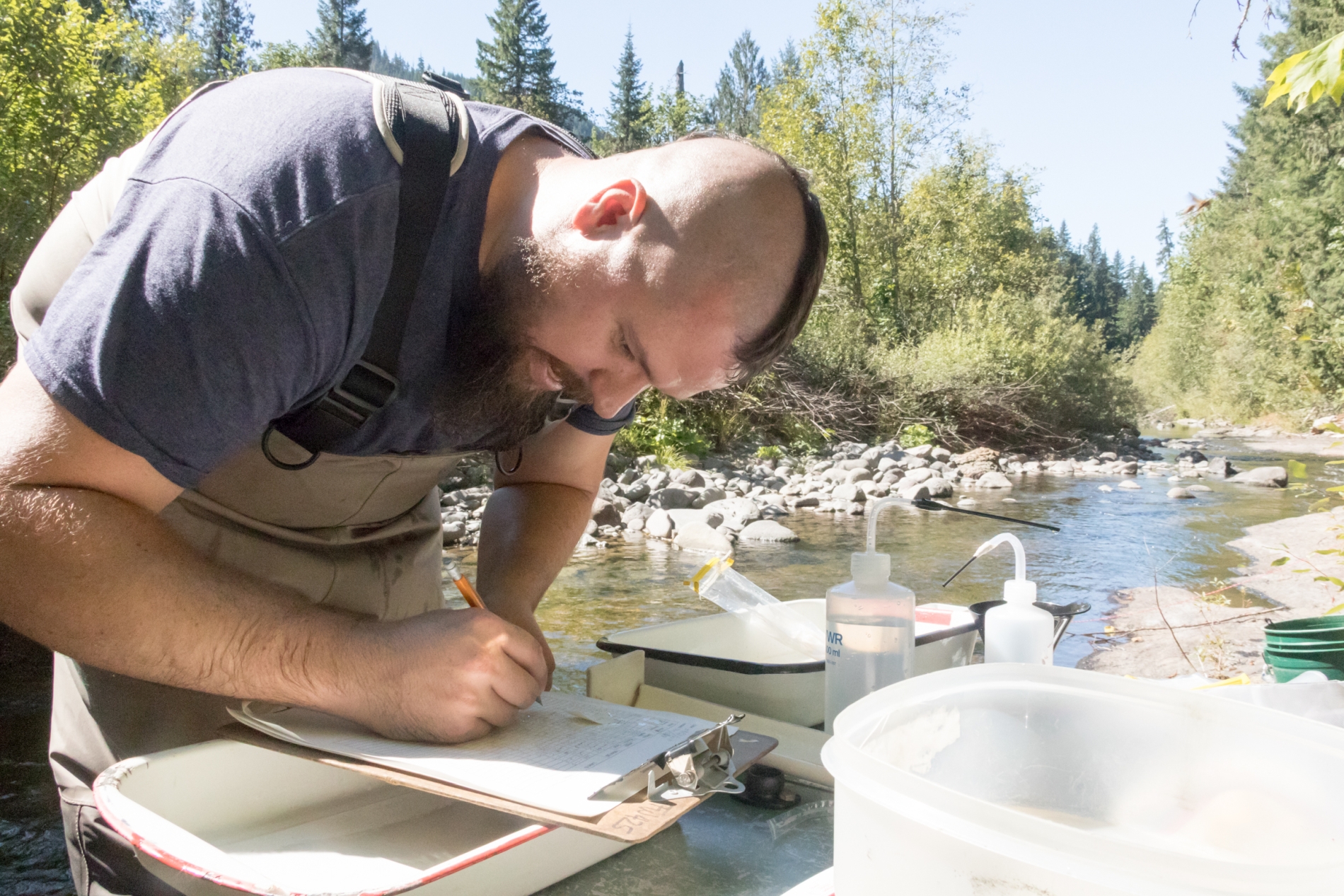
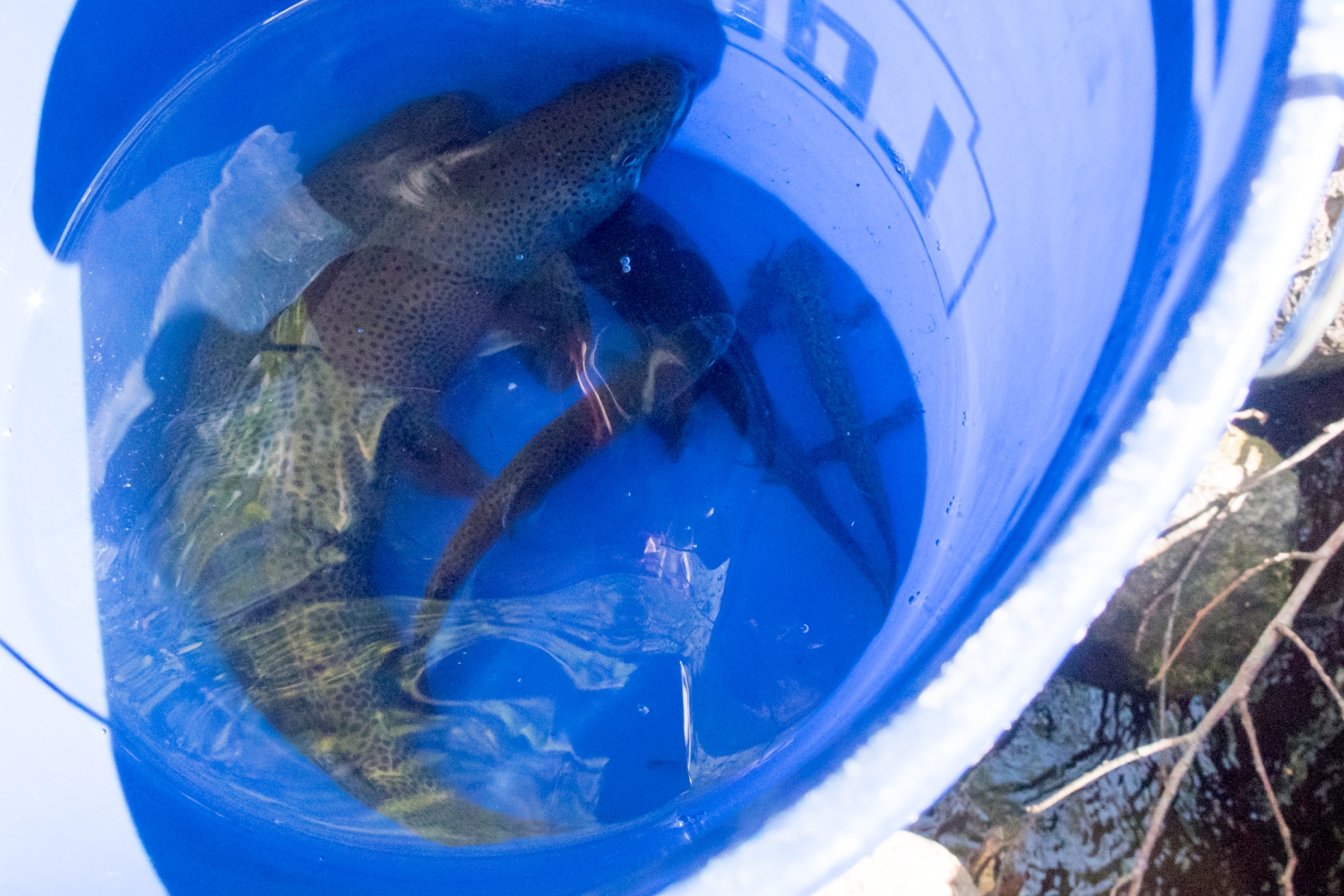
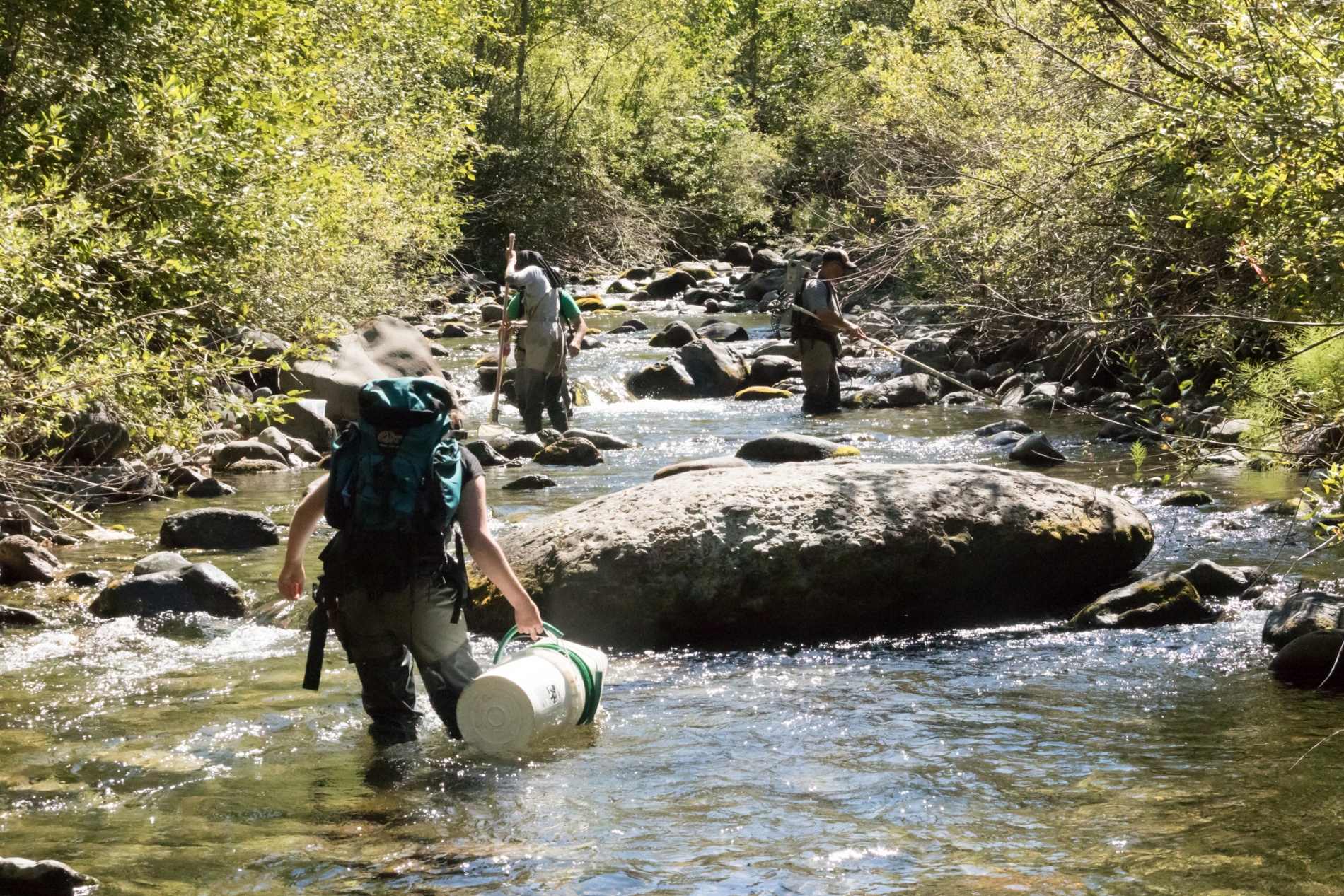
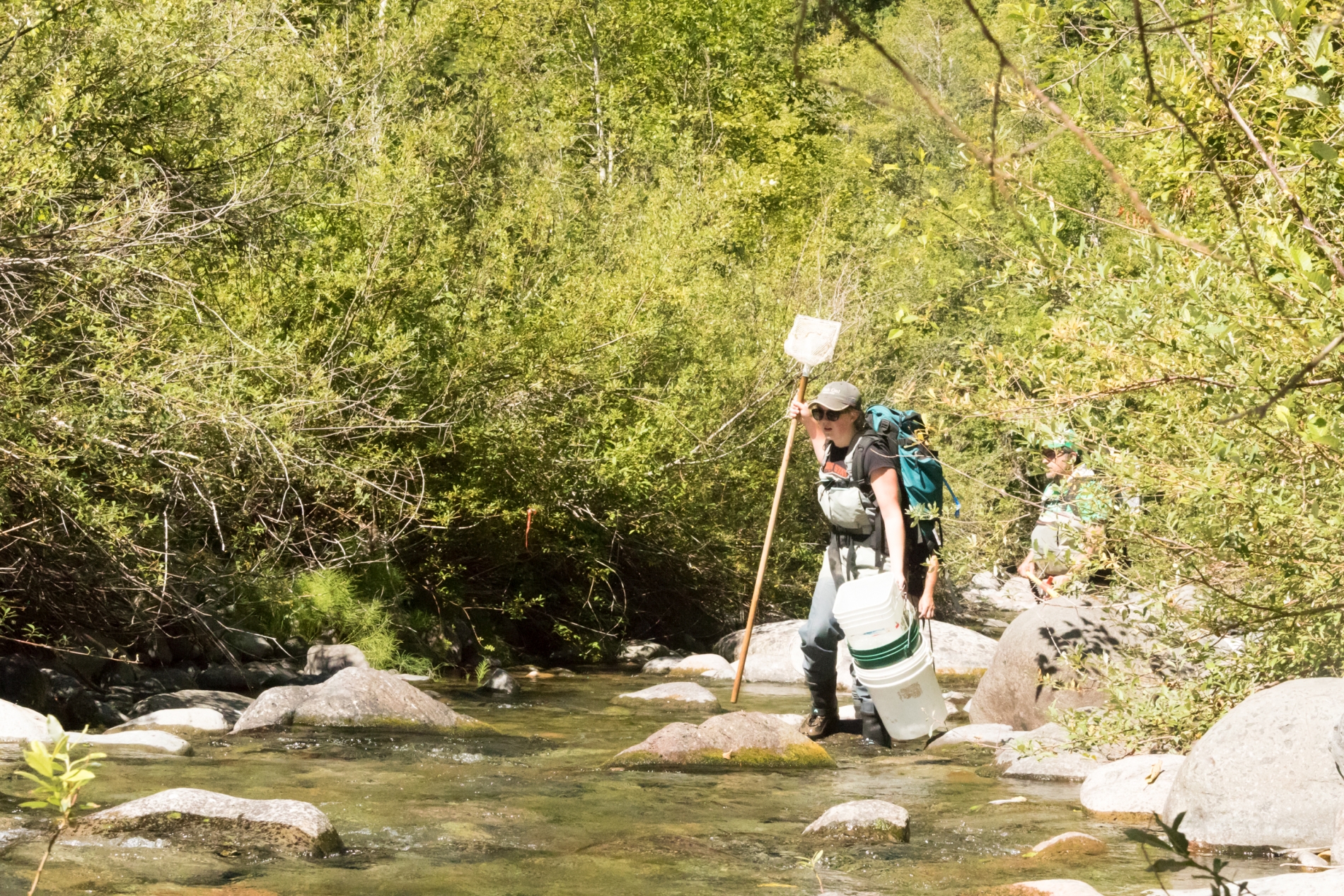
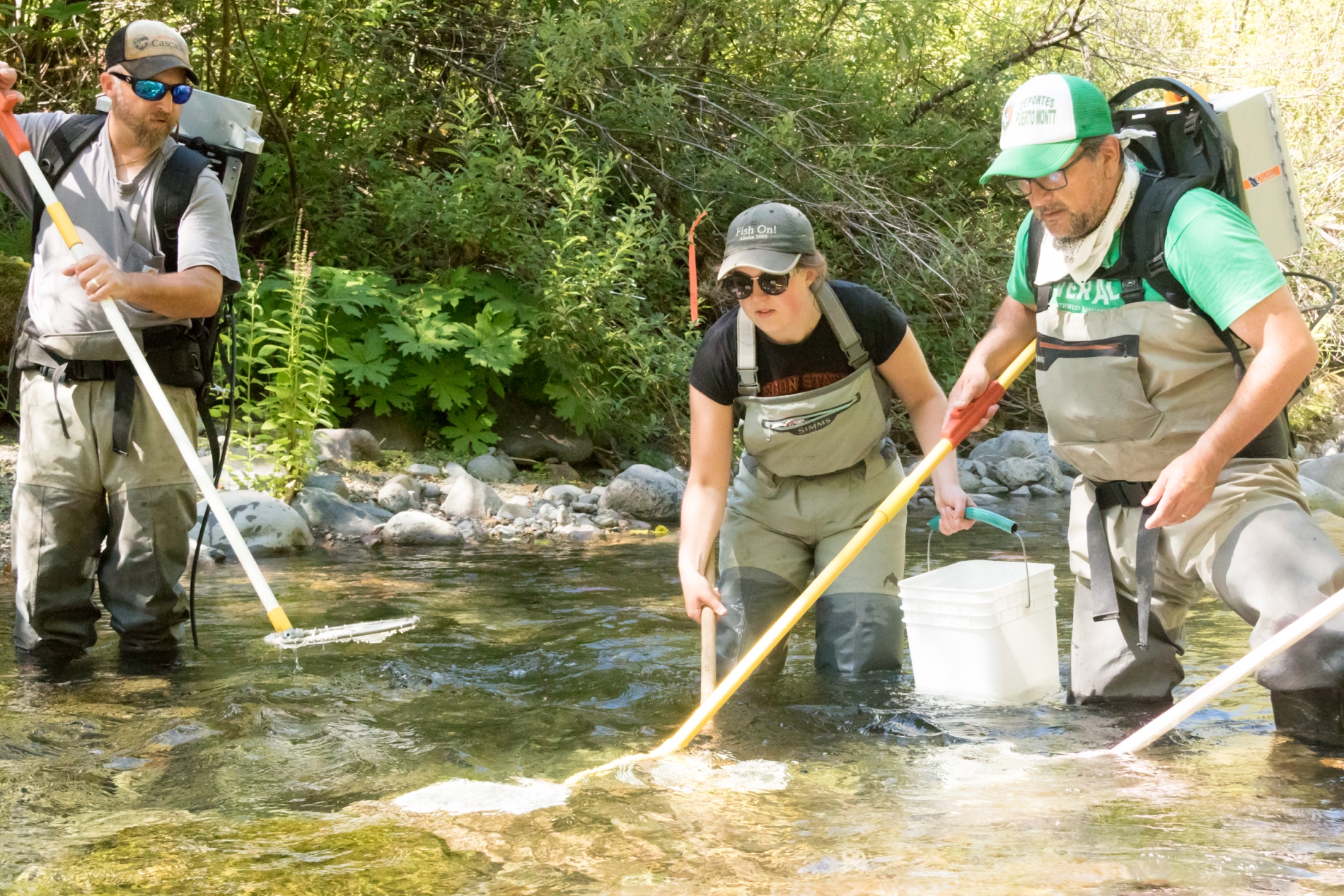
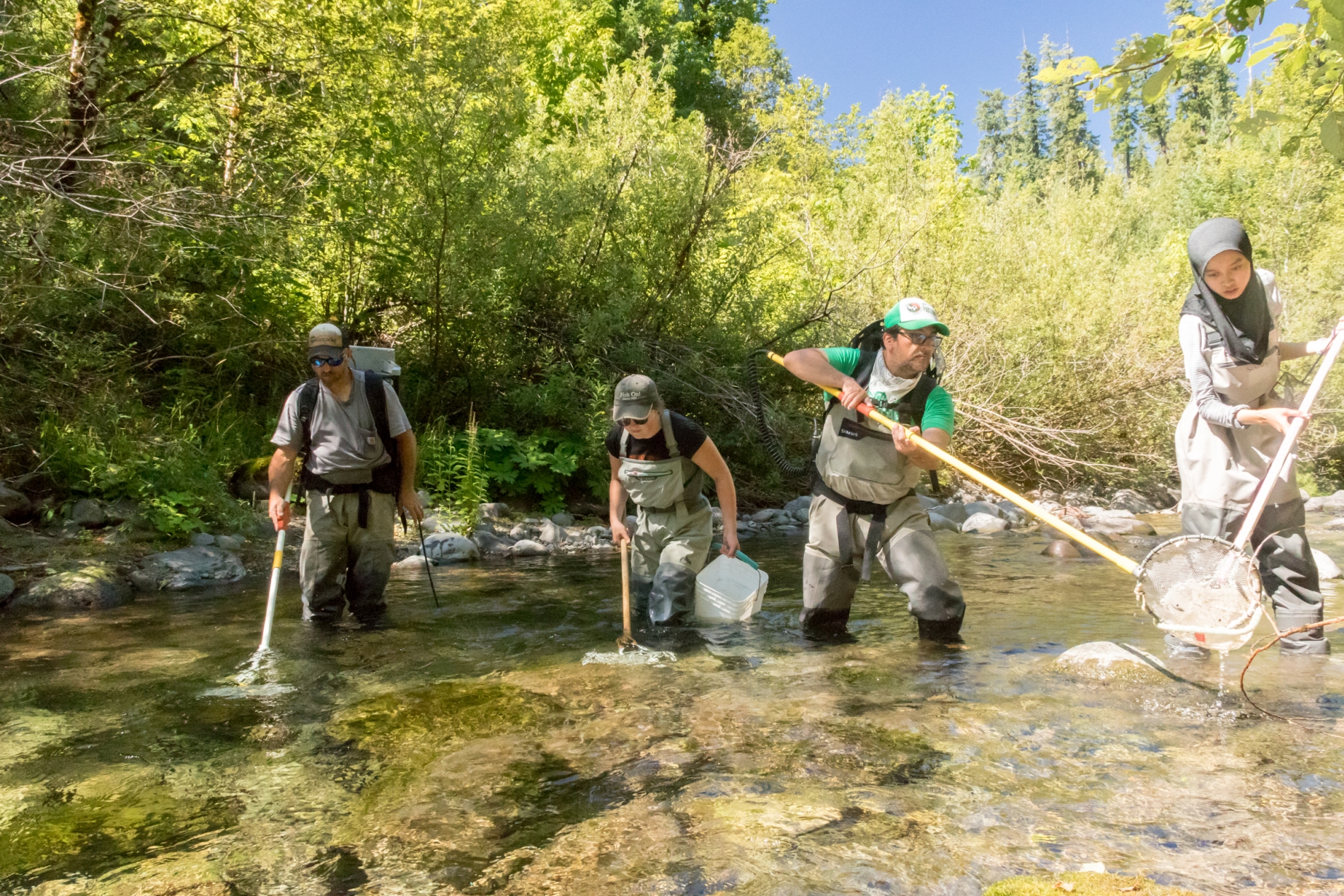
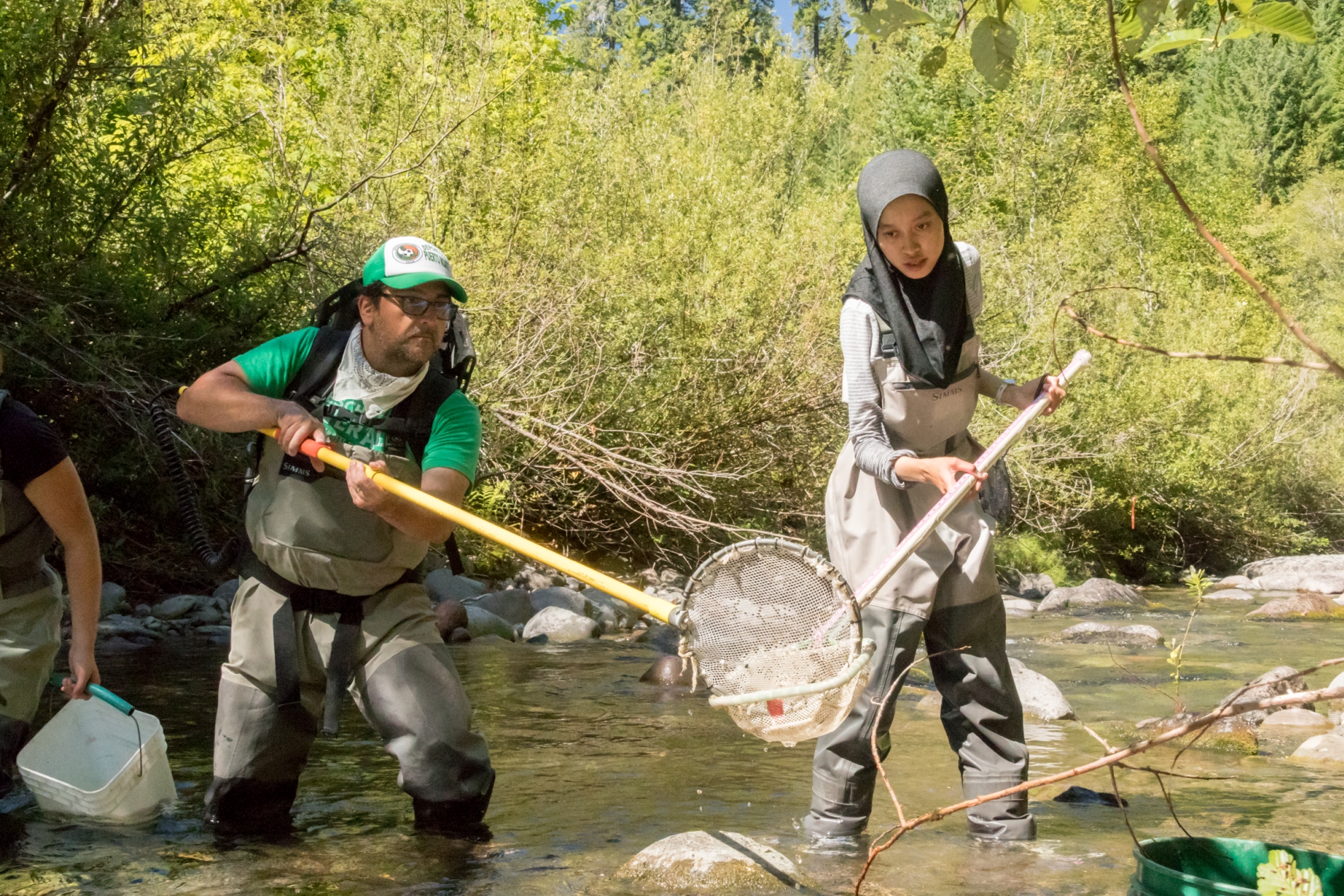
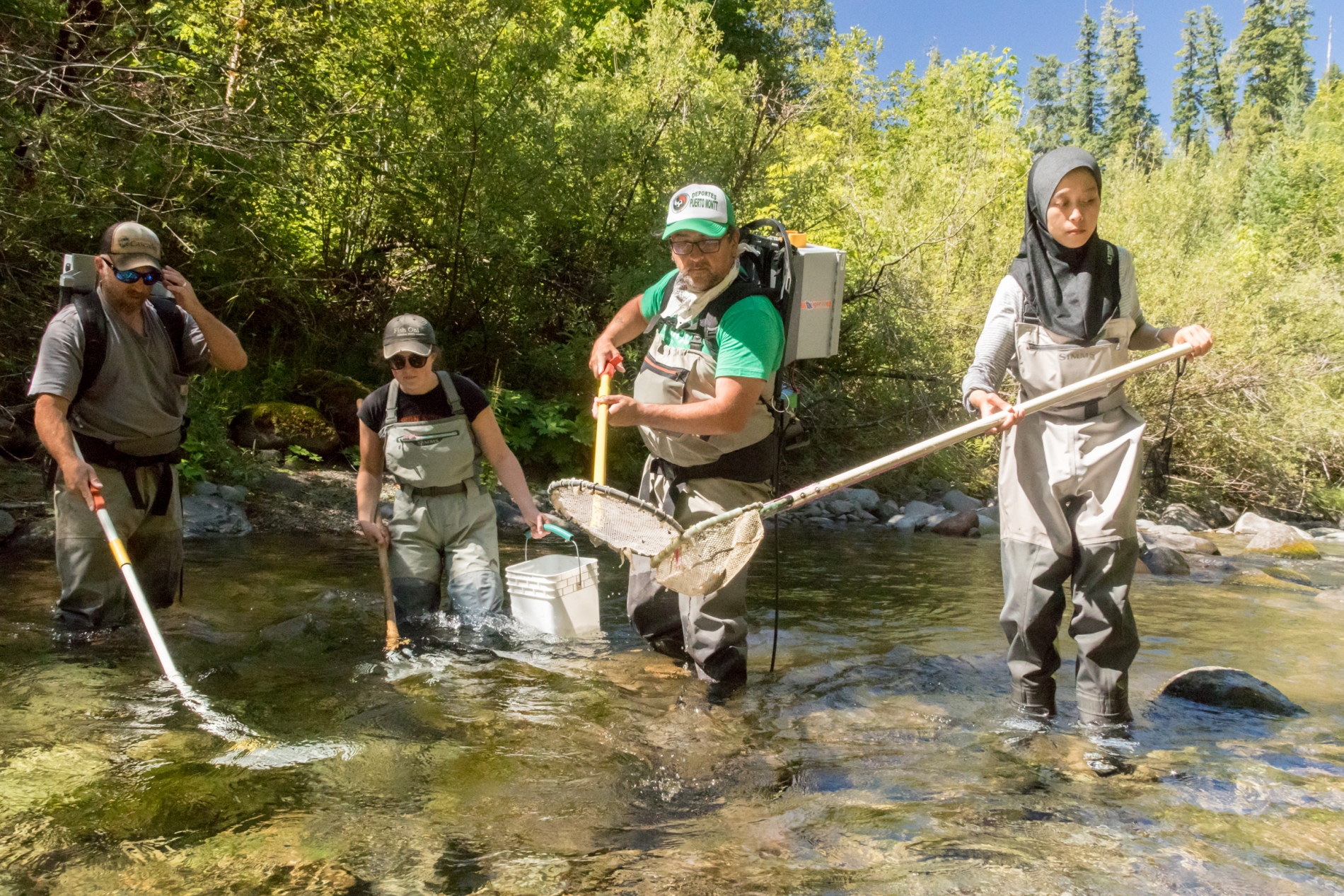
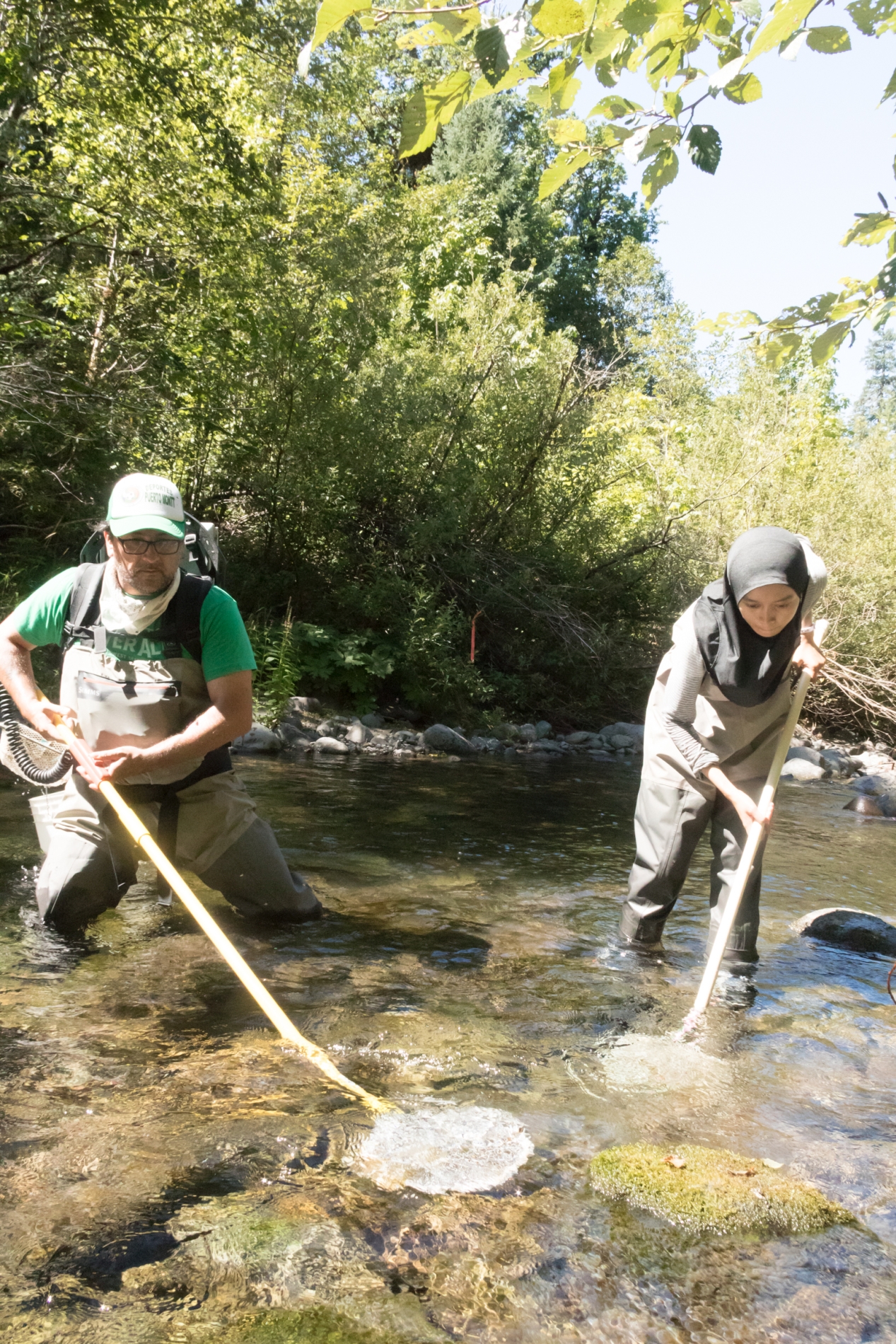
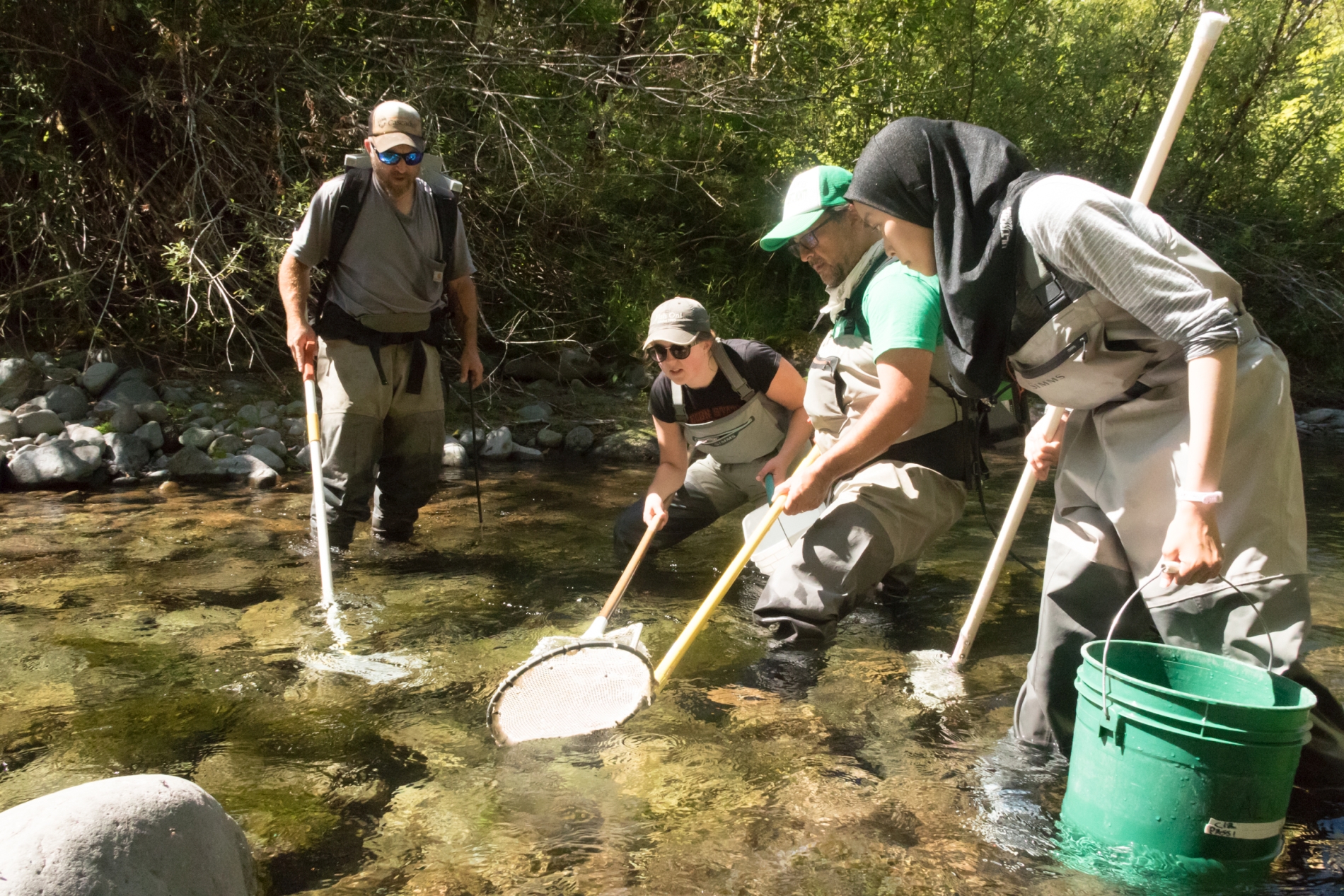
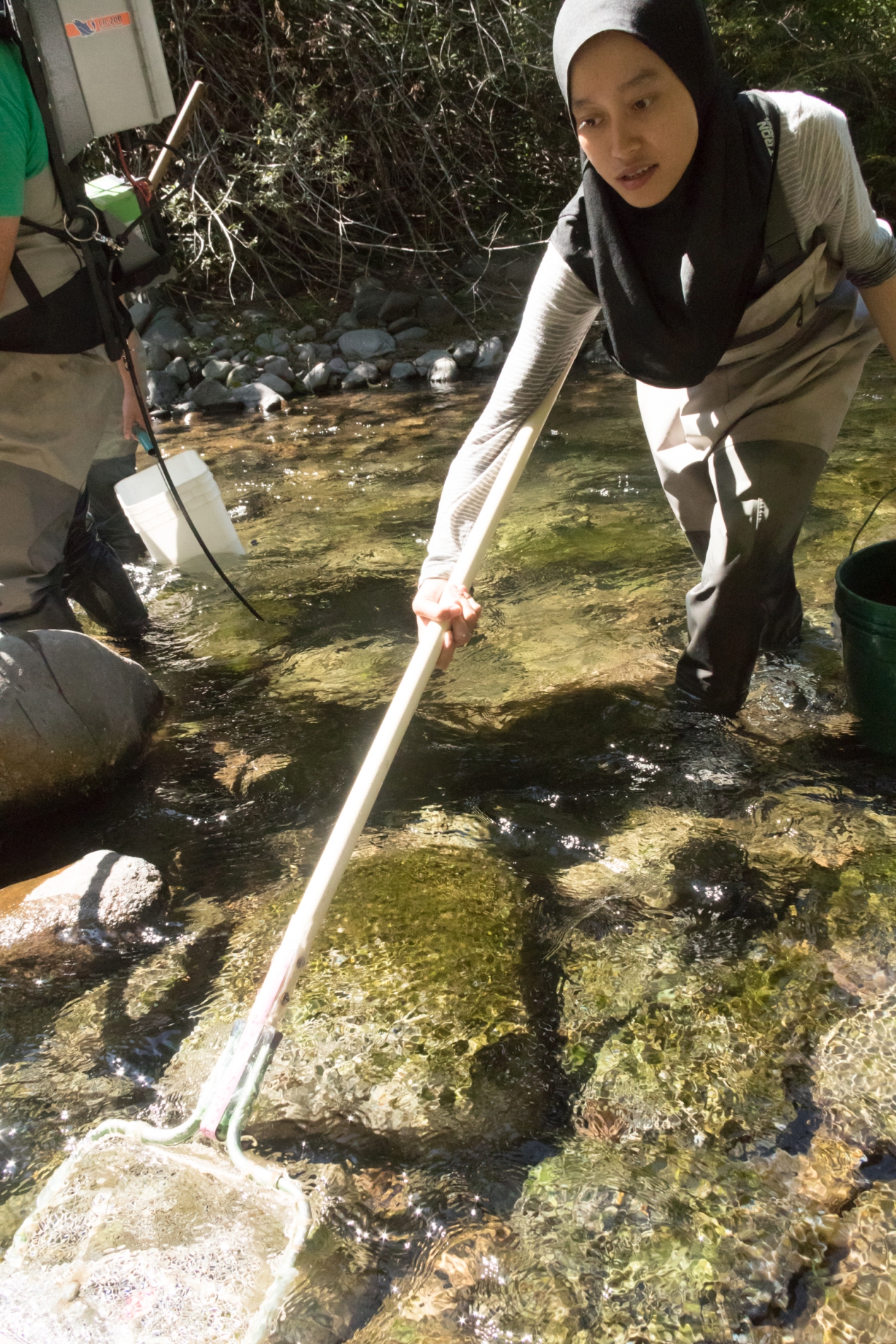
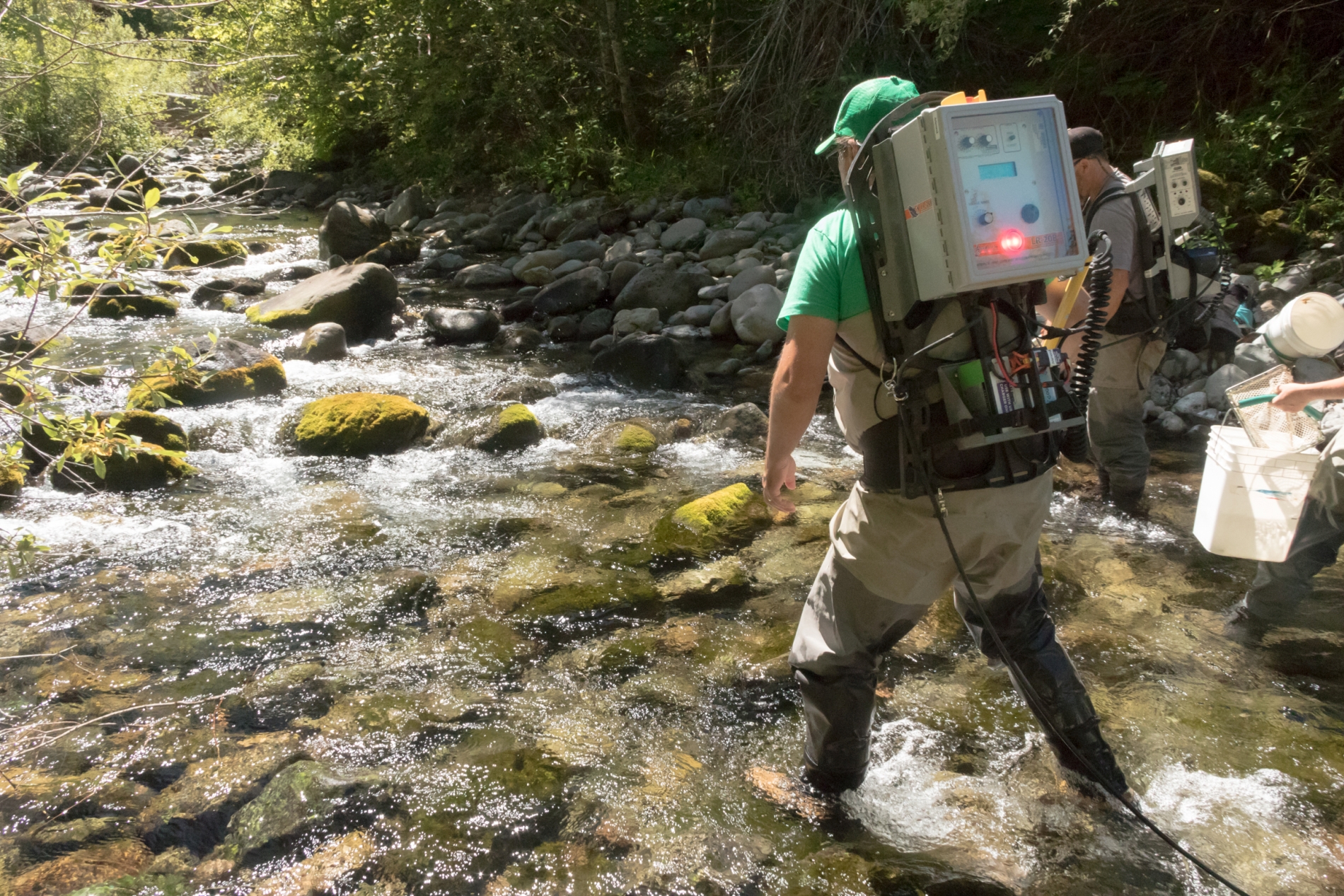
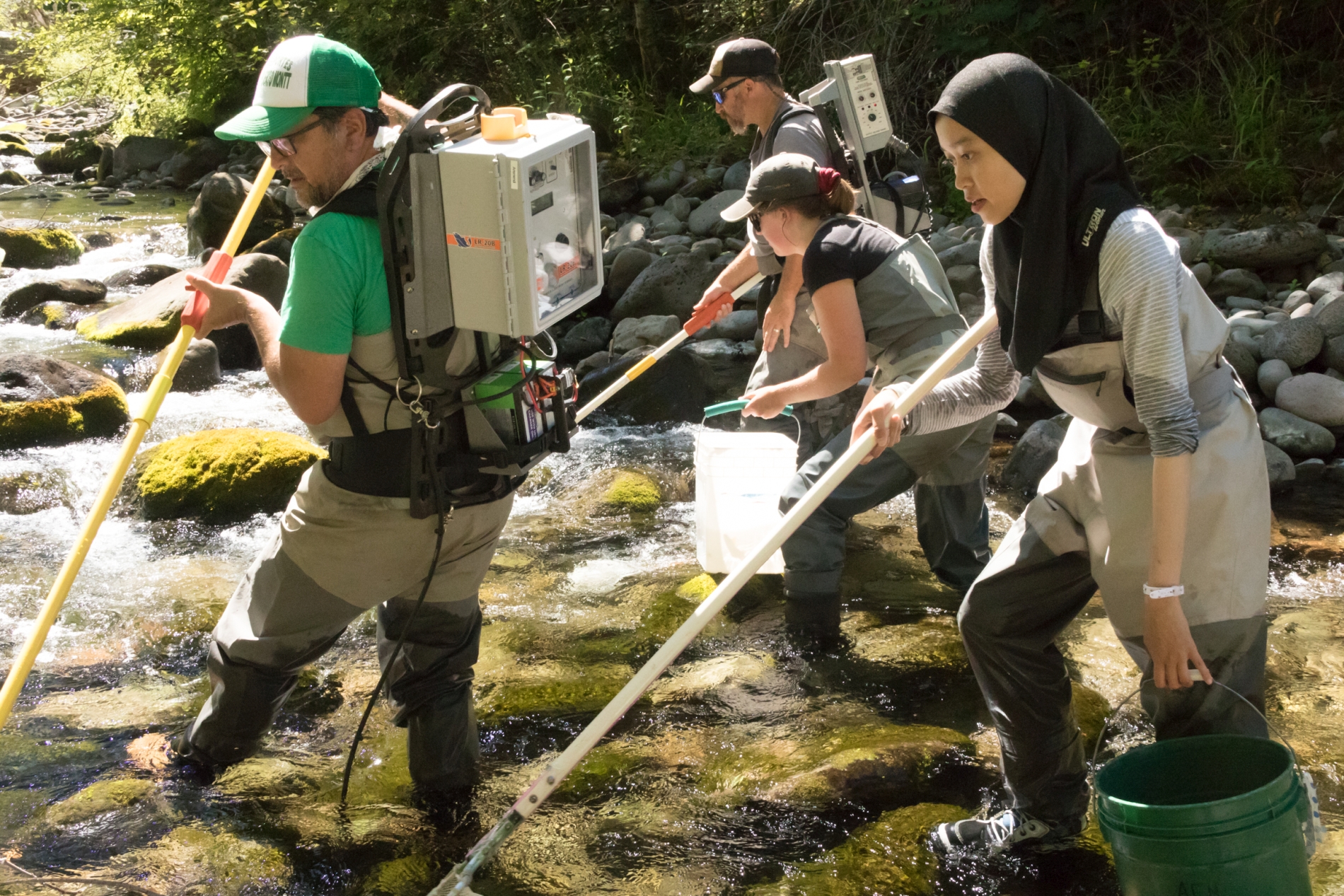
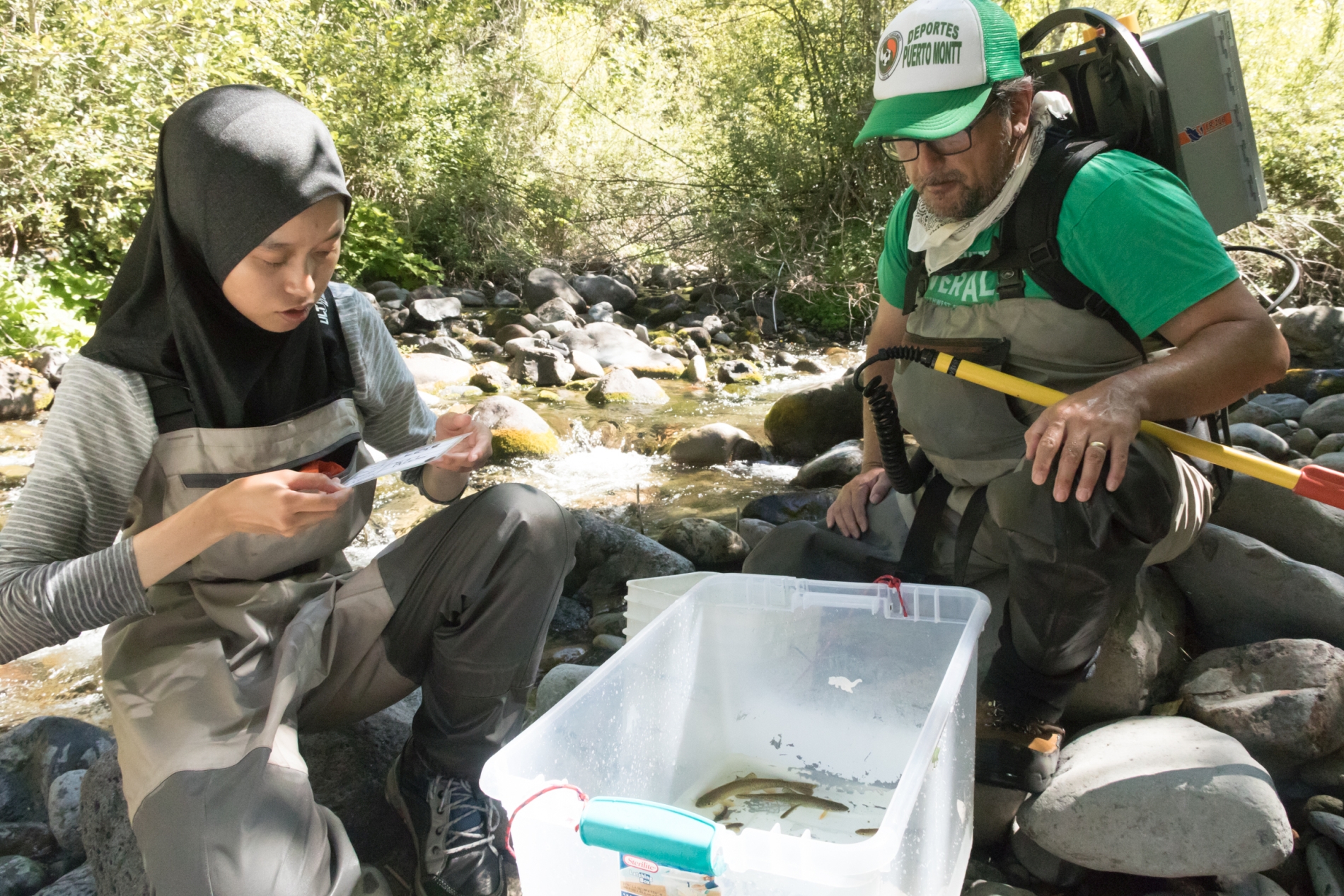
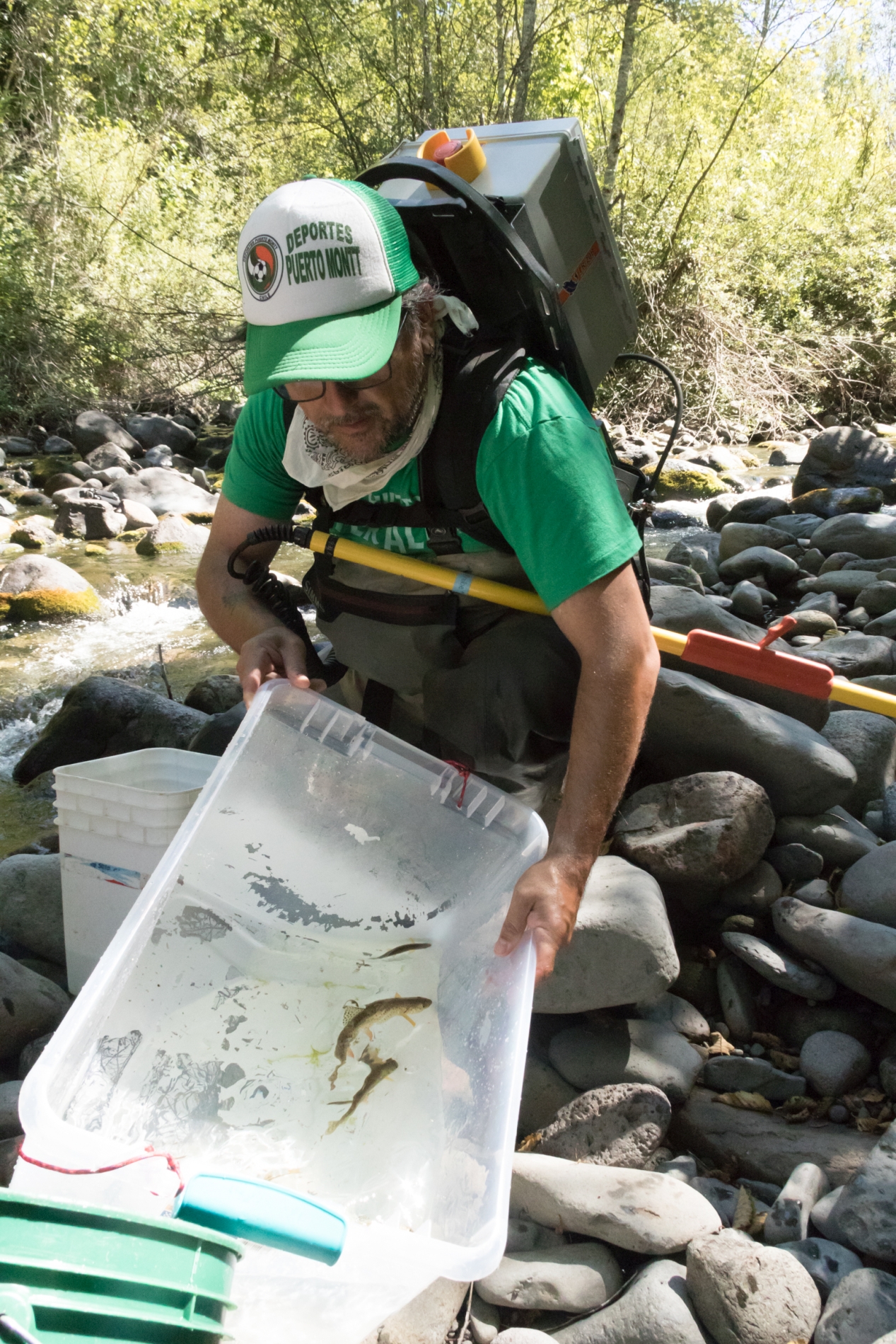
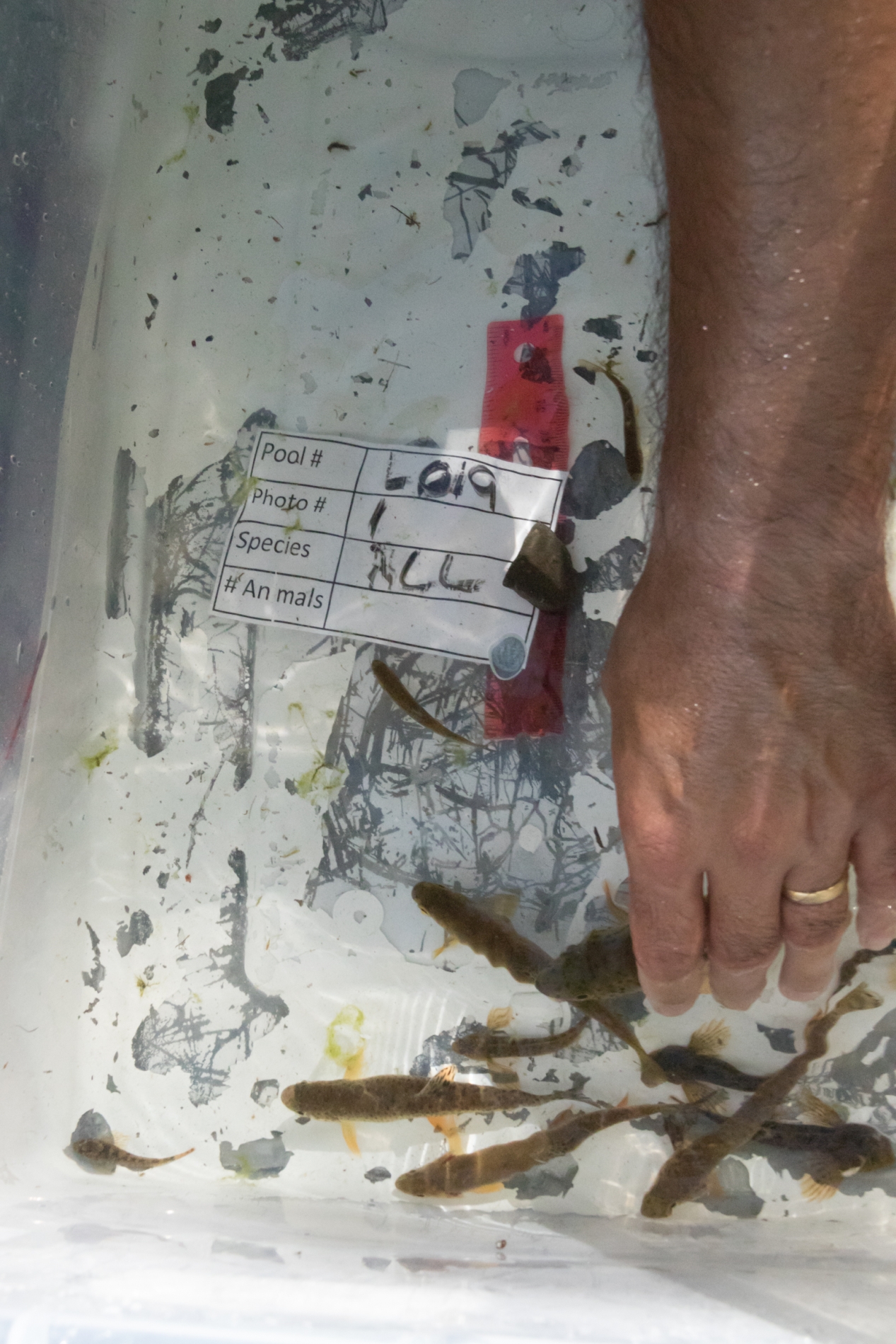
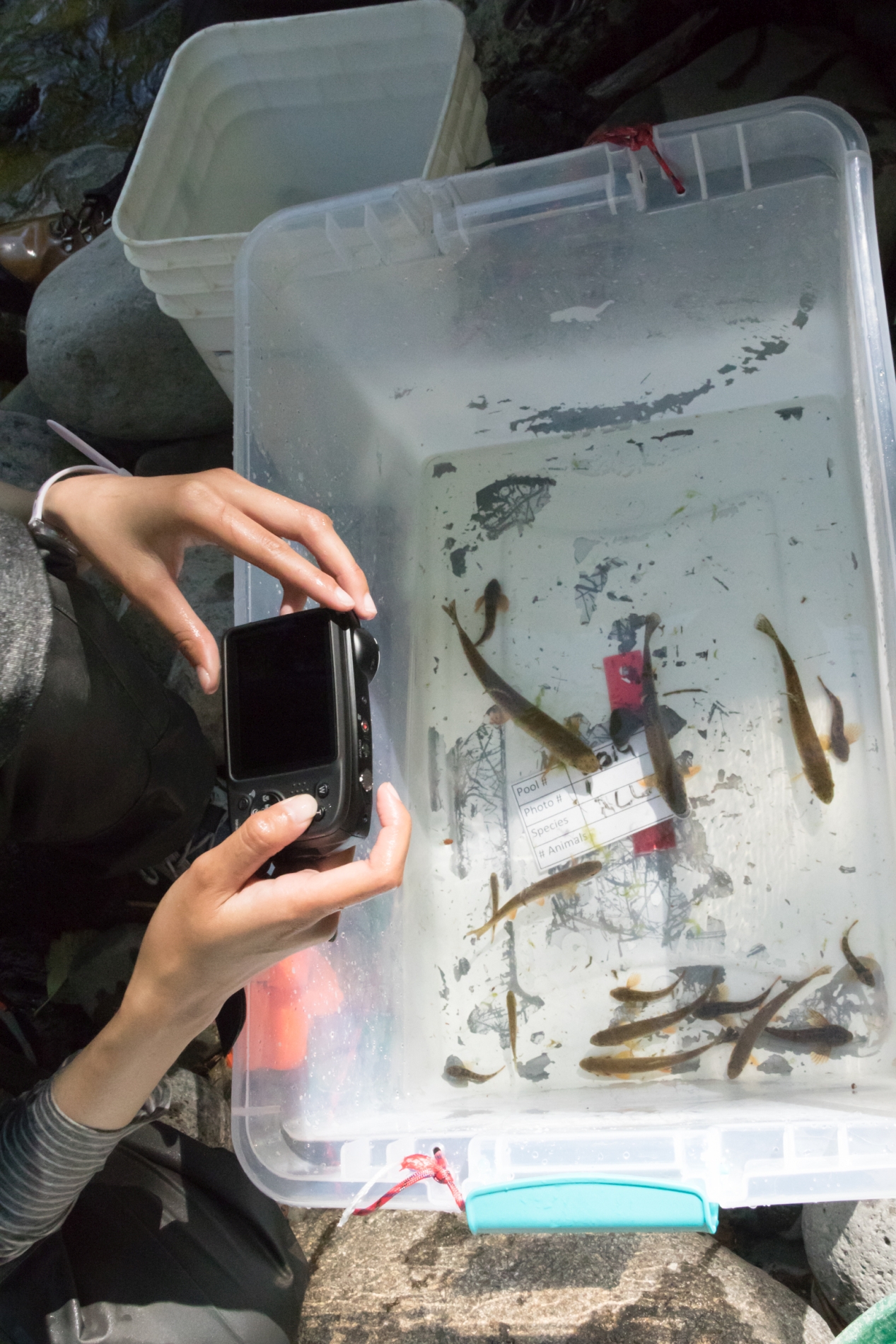
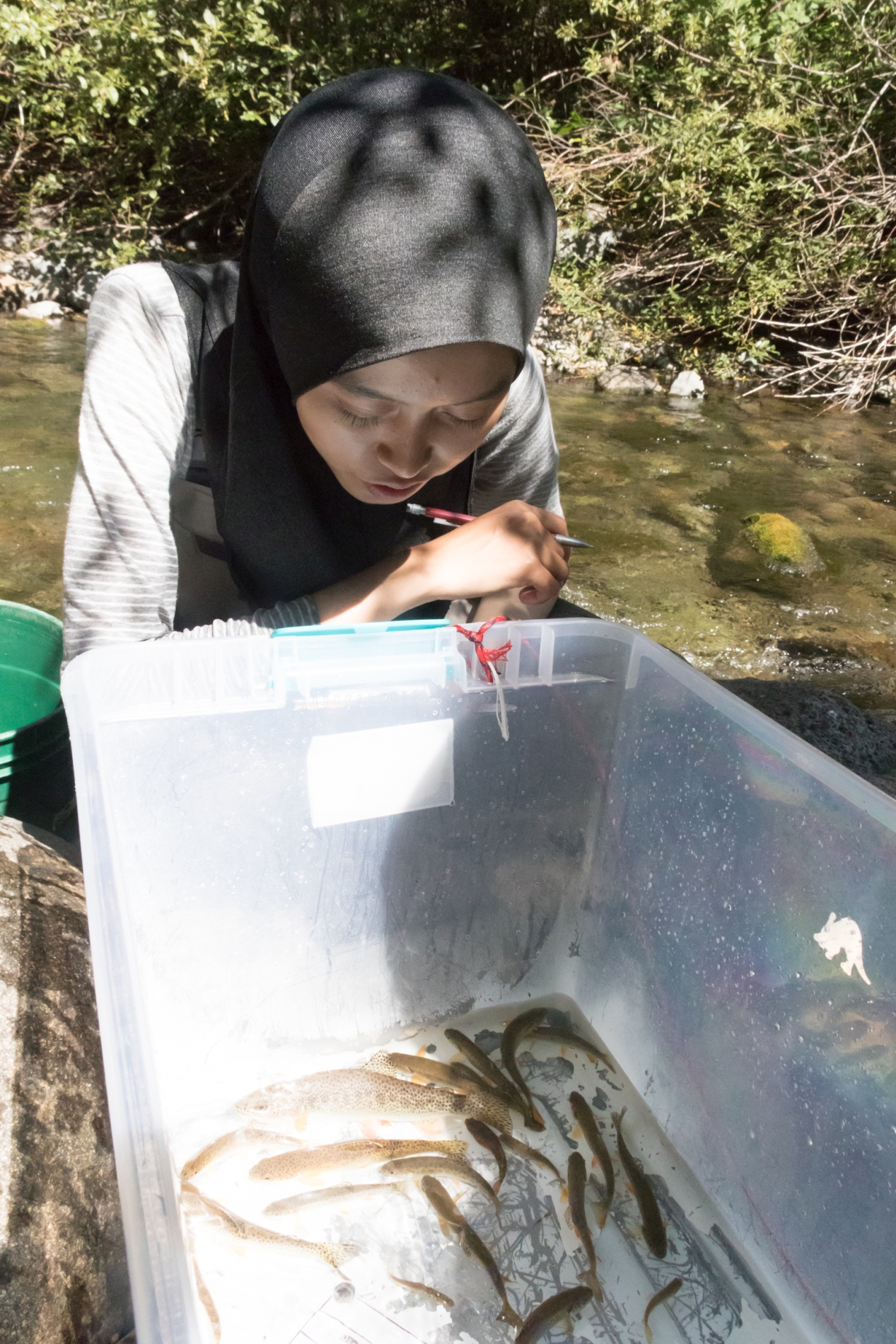
Coastal giant salamander (Dicamptodon tenebrosus) and trout (Oncorhynchus spp.) make up the majority of vertebrate biomass in Lookout Creek and its tributaries within the HJ Andrews Experimental Forest. While these animals play a vital ecological role in stream processes, little is understood about their distribution, movement, and seasonal population dynamics. The goal of the "Lookout Creek Synoptic Sampling" effort is to understand how these aquatic vertebrates use their habitat in low-flow conditions during the summer. Ivan Arismendi (Oregon State University) leads groups of graduate and undergraduate students in electrofishing and gastric lavage exercises to investigate population densities and diets of coastal giant salamanders and trout along the Lookout Creek continuum.