
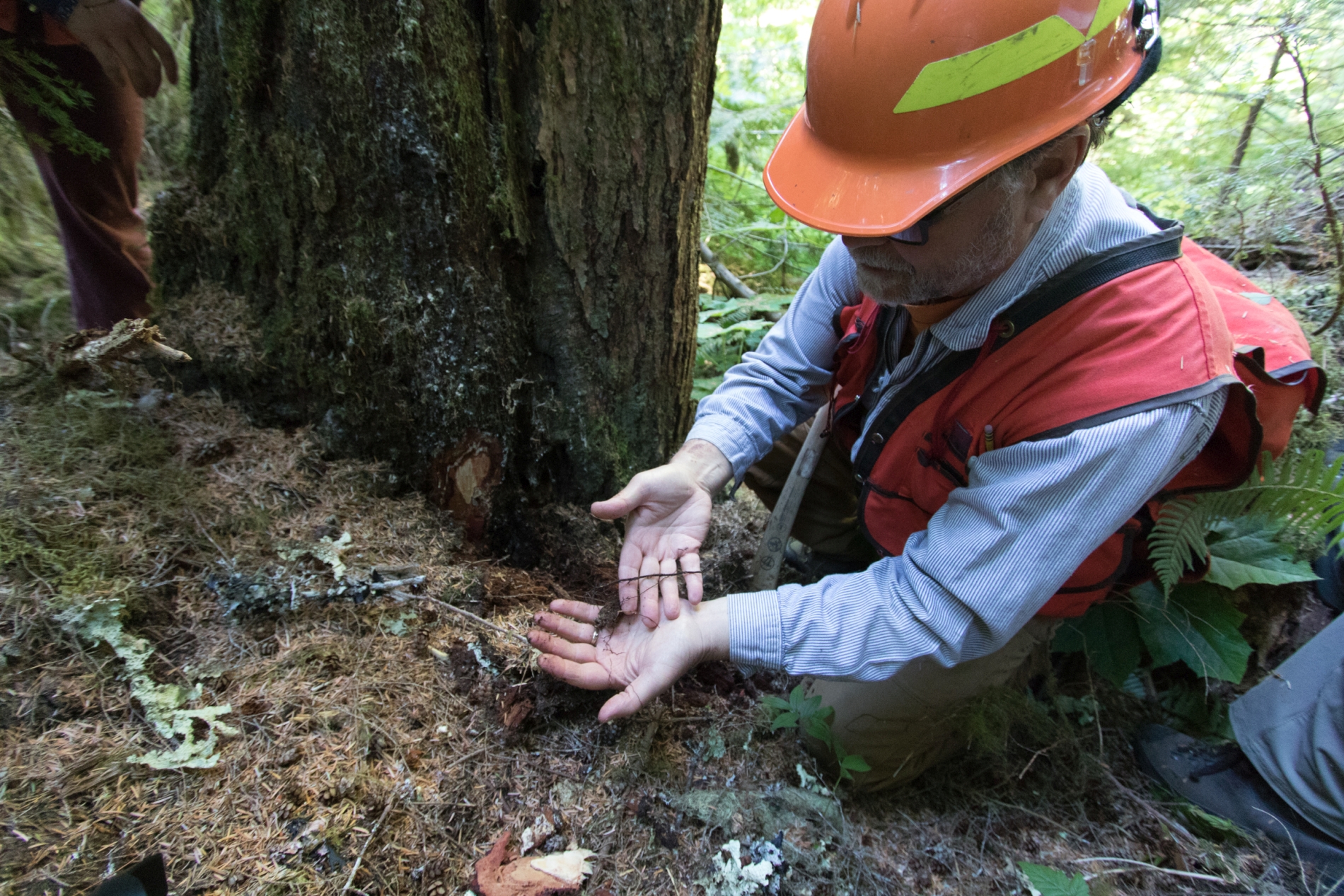
Forest succession theory predicts long-term dynamics of tree species and ecosystem biomass through time, with shifts from early- to late seral species and cessation of live biomass accumulation being governed by tree mortality. However, the degree to which specific mortality agents may alter forest succession trajectories is poorly understood. Using long-term forest dynamics plots and recent assessment of laminated root rot (LRR; caused by the fungus Coniferiporia sulphurascens) in dead trees, this study examined how changes in tree density, biomass, productivity, and tree species composition during 75-105 years of forest development differed as a function of the LRR incidence (% of dead trees with LRR). Elevated LRR was associated with both decreased net primary productivity and a greater shift in tree species from the early-seral Douglas-fir to late-seral western hemlock and western red cedar. However, LRR did not explain differences in live aboveground biomass change during the study, implying no negative impacts from LRR on live tree biomass accumulation. This research implies that some tree pathogens may accelerate tree species turnover during forest succession, but may not alter overall live tree biomass dynamics from 50- to 150-year-old stands.