
Teachers: What are you looking for?
- Classroom resources: see our Children’s book, data in your classroom section, and downloadable lesson plans
- Class Trips: find out more about a field trip to the H.J. Andrews Experimental Forest.
- Teacher opportunities: learn hands-on by attending a workshop through our Teachers as Researchers program or spend a summer as a Research Experience for Teachers participant.
Students: What are you looking for?
- I’m interested in cool facts about the forest: see Fast Facts and or Forest Description
- I'm looking for data to use in my school project: see data in classroom
- I’d like to read a book: see our children’s book, "Ellie's Log"
- I want to see the forest on my computer: go on our virtual tour
- I want to visit! We hope you do: see our Visit the Forest page for a map and descriptions of hiking trails.
Andrews Forest LTER Children’s Book
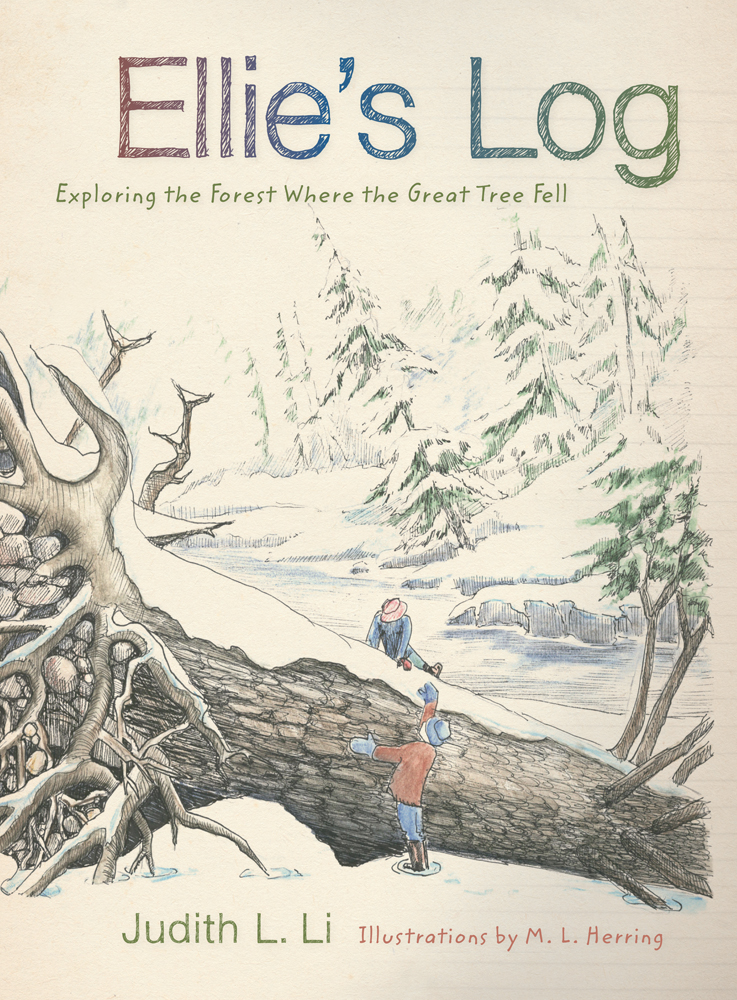
"Ellie's Log, Exploring the Forest Where the Great Tree Fell" by Judith L. Li. Illustrations by M. L. Herring. See the Ellie's Log Trailer.
After a huge tree crashes to the ground during a winter storm, ten-year-old Ellie and her new friend, Ricky, explore the forest where Ellie lives. Together, they learn how trees provide habitat for plants and animals high in the forest canopy, down among mossy old logs, and deep in the pools of a stream. The forest and animals described in Ellie's Log are based on those found at the H. J. Andrews Experimental Forest.
Visit the Ellie's Log website (ellieslog.org) for great activities for kids, and for a free downloadable teacher's guide.
Ages 9-12 (Grades 4-6). Companion Teacher's Guide. Color Illustrations. 112 pages. 2013. ISBN 978-0-87071-696-6. Paperback. Available through bookstores, online retailers, and through OSU Press.
Andrews Forest data in your classroom
Looking for data to use in a class project? The Andrews Forest has some of the longest-running ecological datasets in the region. We've collected data on the changes in temperature and rainfall; the location of floods and landslides; how fast trees grow and die; the number of fish in streams; and many other topics. You are welcome to use any of our online data in your class projects. Check out our research pages to see what we are doing and the data pages to see what data are available.
Opportunities for Teachers
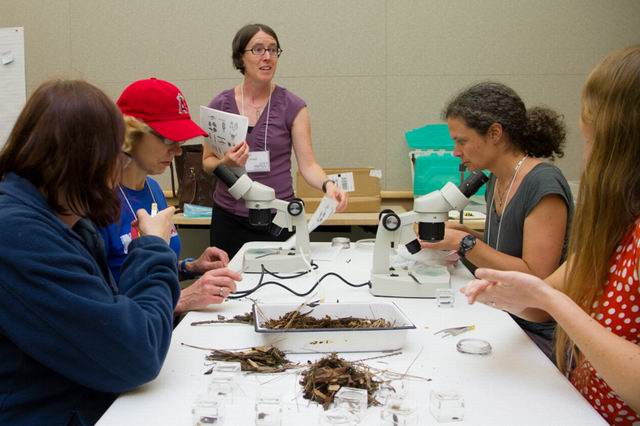 The Andrews Forest LTER K-12 teacher professional development program offers opportunities forK-12 teachers to build their understanding of the scientific process and to expand their capacity to engage their students in field-based science inquiry based on Andrews LTER research. Through funding from the Schoolyard LTER program, the NSF Research Experience for Teachers program, and other grants, the Andrews Forest partners with the Center for Research on Lifelong STEM Learning and the Oregon Natural Resources Education Program (ONREP) for projects that involve teachers in experiential investigations and problem solving, data collection and analysis, teacher collaborations, and development of research-based projects for their schoolyards.
Teachers interested in connecting with the Andrews Forest K12 programming should contact the Forest Director.
Downloadable Lesson Plans
The following downloadable lesson plans and other instructional materials are based on Andrews Forest long-term ecological research. These plans, and others, may also be found in the LTER Education Digital Library, a collection of resources that incorporate Long Term Ecological research and facilitate the training, teaching and learning about long-term ecological science
Lessons onmailto:/contacts#director Ecology: H.J. Andrews Experimental Forest Tea Party
Created in 2011 (updated 2013) by Molly Charnes, high school biology and environmental systems teacher at Academy of International Studies, Woodburn, Oregon, and a Research Experiences for Teachers (RET) participant at the Andrews Forest in 2013. The lesson plan adapts the “tea party” literacy strategy to help teachers introduce the biotic components of an old growth forest. Download the Lessons on Ecology Tea Party lesson plan (PDF) and download the "Stream pack – Additional organism role cards for the HJ Andrews Experimental Forest Tea Party Activity"(PDF).
Guidelines to Consider when Creating Field Research Lessons for grades 6-12
Created in 2012 by Alexandria Luftig, science teacher, 9th Grade, Corvallis High School, and a Research Experiences for Teachers (RET) participant at the Andrews Forest in 2012. Download the Things to Consider when Creating Field Research Lessons plan (PDF).
Old-growth forests and creative writing for 6th - 12th graders
Lesson Plans created by the University of Oregon Environmental Leadership Program Forest Team (2007). Lesson plan topics include forest structure, tree anatomy, decomposition, woody debris, creative expression, disturbance, and non-timber forest products. Lessons may be used in the classroom or forest setting. Link to the Old-growth forests and creative writing for 6th - 12th graders website.
Virtual Old-Growth Tour
Undergraduate students from the University of Oregon have developed activities for self-guided trips to the Andrews Forest Lookout Creek Old-Growth Trail as part of their capstone projects in the Environmental Leadership Program (ELP). View the Virtual Old-Growth Tour online. Download lesson plans and hear podcasts http://pages.uoregon.edu/ecostudy/elp/ee_forest_07/Project_Description.html of Andrews Forest scientists talk about their research.
Class Trips
Some opportunities are available for middle school and high school teachers willing to coordinate their own classroom trips to the Andrews Forest. Contact the Forest Director for more information.