
The images in our galleries reflect the history, place, people, and research of the HJ Andrews Experimental Forest Long-Term Ecological Research Program. Images may be downloaded for use in papers, posters, presentations, etc. Please use the suggested acknowledgements. In some cases, higher resolution images may be available from the information manager.
Our archived image library has several older images that don't appear in our image galleries, below.
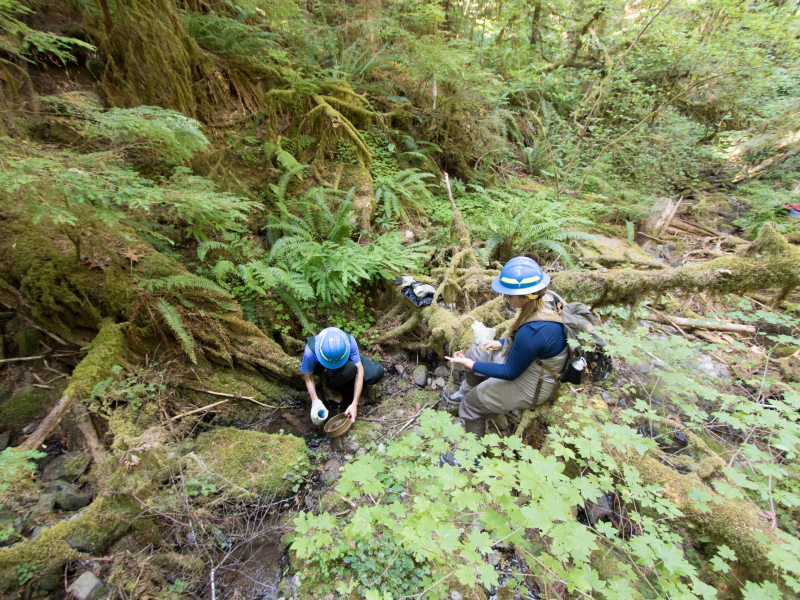
Aquatic insects are strong indicators of water quality and stream characteristics. The streams at HJ Andrews Experimental Forest have high diversity of aquatic insects, many of which are only found in cold streams with pristine water quality. Studies of aquatic insects frequently examine the density...
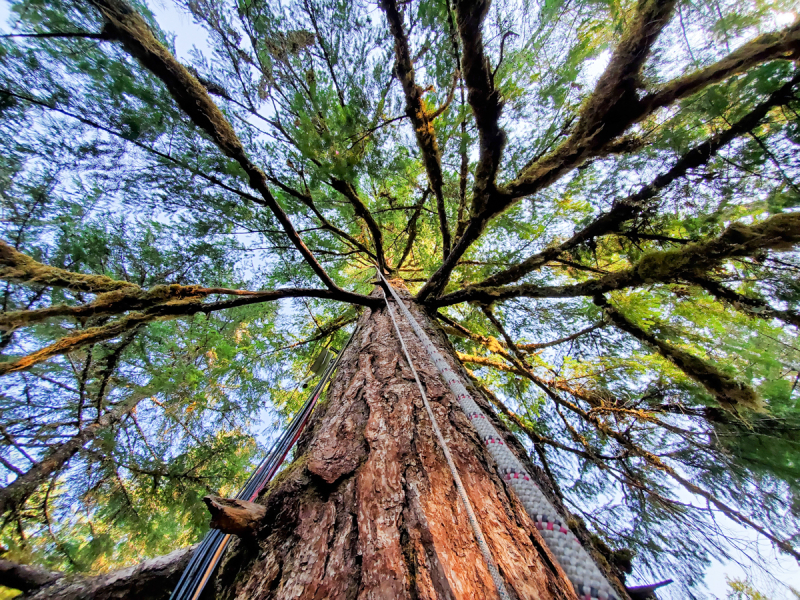
Researchers with the Long-Term Ecological Research program at the HJ Andrews Experimental Forest use climbing gear to ascend more than 50 meters (160 ft) into the tree canopy to learn more about the forest and the microclimate of the canopy. The highly-instrumented "Discovery Tree" is fitted with...
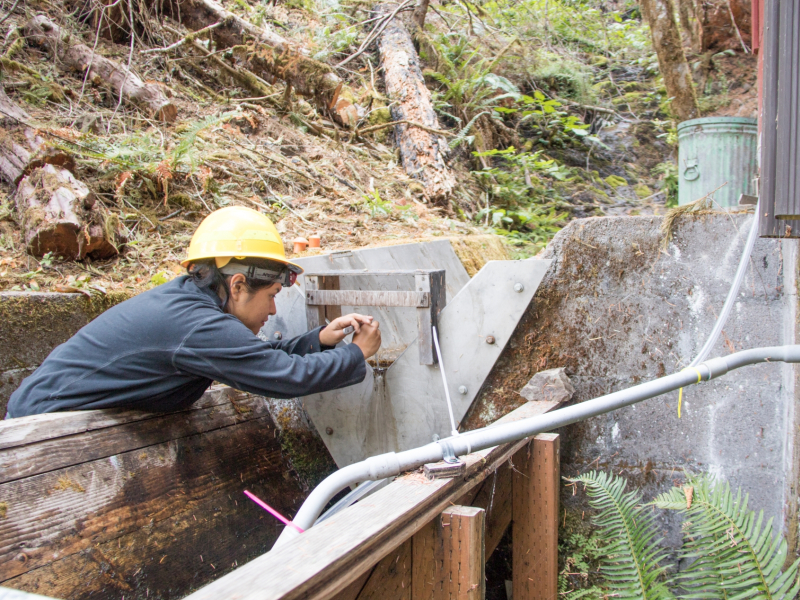
Stream guages were set up in the HJ Andrews Experimental Forest as early as 1949 (see more at dataset HF004) as part of a larger paired, gaged watershed study to detect changes in streamflow due to watershed treatments. Data continue to be collected on streamflow and stream chemistry from the gage...
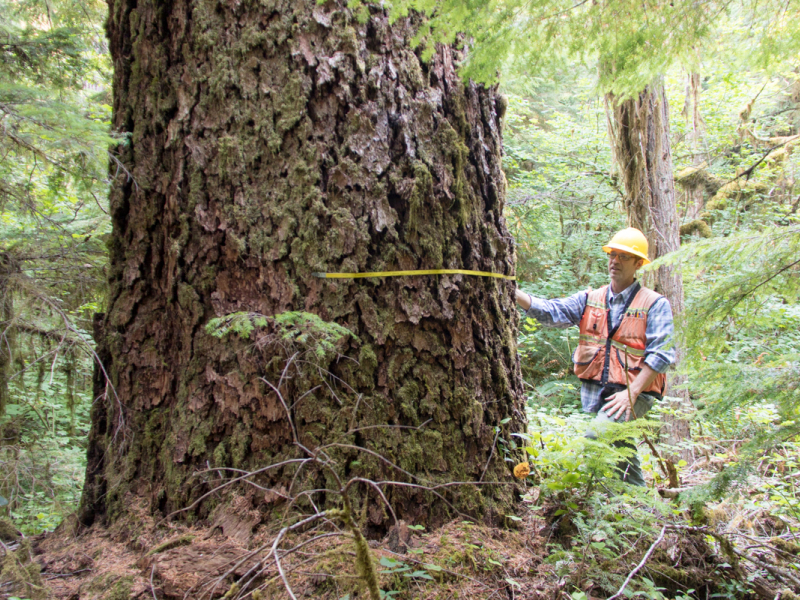
The Pacific Northwest Permanent Sample Plot Program is a long-term study of forest vegetation across the Pacific Northwest. The program samples 135 plots across a diversity of forest types in Oregon and Washington. Many of the plots are within the HJ Andrews Experimental Forest. Long-term...
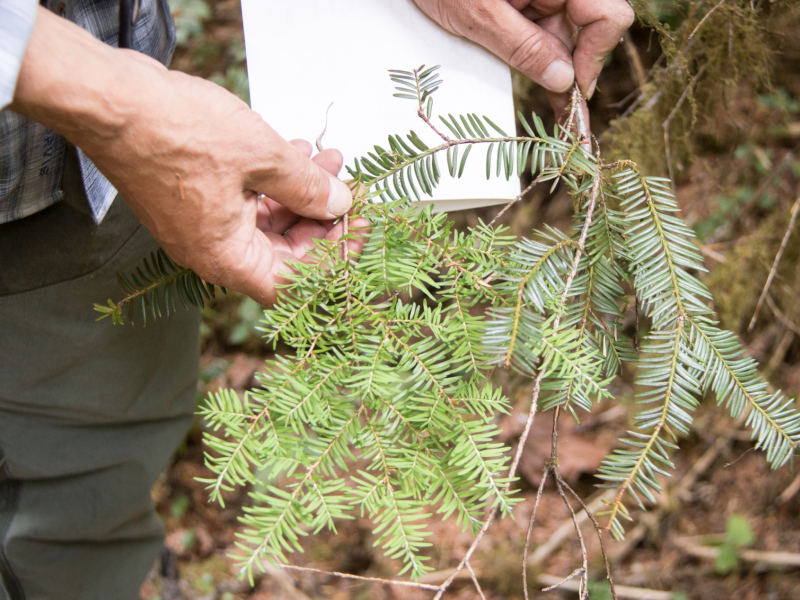
The NSF-funded Research Experience for Teachers (RET) program matches K-12 teachers with scientists for 8-10 weeks of field data collection and independent research. The goal of the RET program is to enhance the professional development of K-12 science educators through research experience at the...
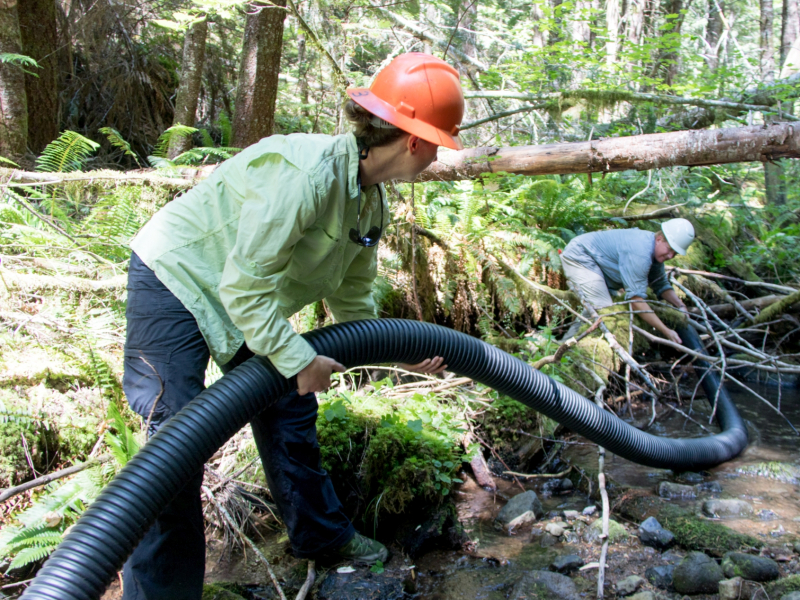
Dr. Dana Warren, Dr. Catalina Segura, and graduate student Allison Swartz are exploring how drought conditions affect streams and the animals that live in streams. Under low-flow conditions, trout and salamanders aggregate in pools or cooler water, increasing competition for macroinvertebrate prey...
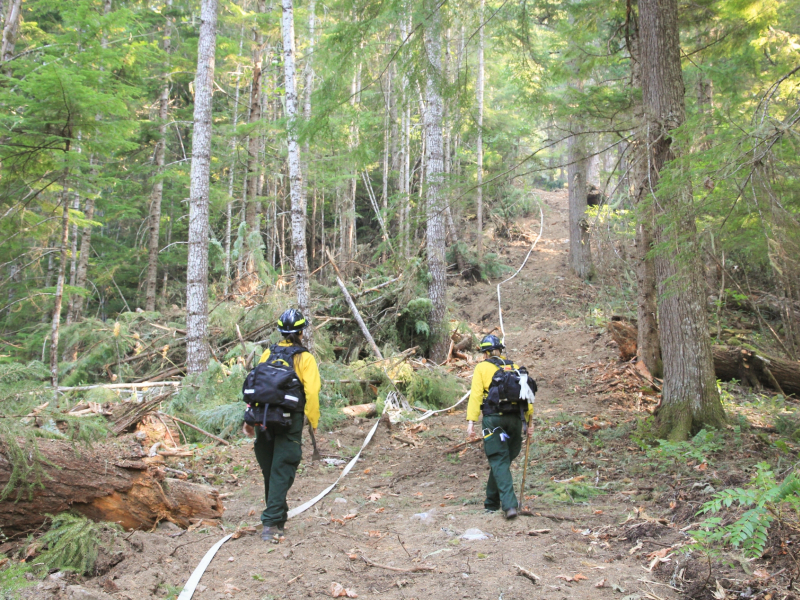
The Holiday Farm Fire ignited the night of September 7, 2020, south of the Andrews Forest. The fire spread quickly, fueled by strong east winds and very dry conditions. The fire eventually entered Watershed 9, then Watershed 1, and finally Watershed 2. The fire burned about 400 acres within the...
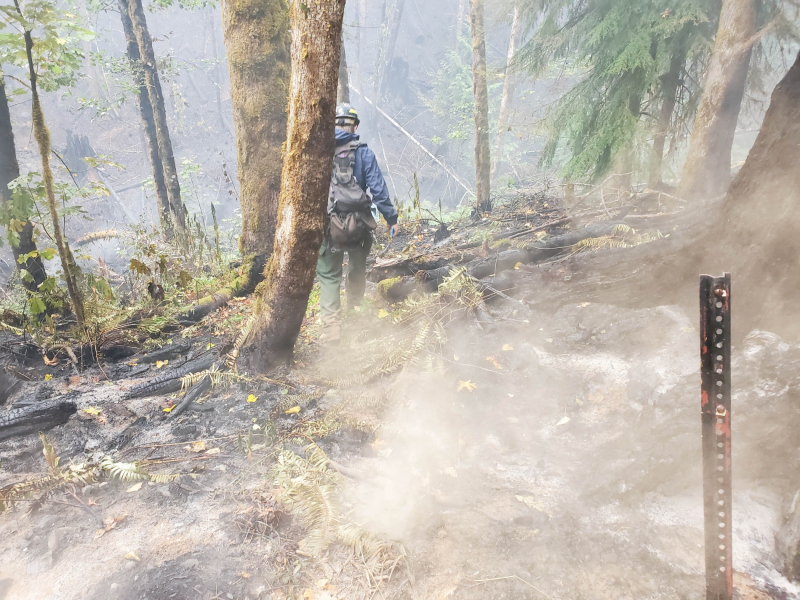
The Holiday Farm Fire began about 8:30 PM on the night of September 7, 2020, in the town of Rainbow, Oregon, along HWY 126, directly south of the Andrews Forest. The fire spread quickly, fueled by strong east winds and very dry conditions. Andrews Forest personnel evacuated from headquarters, north...
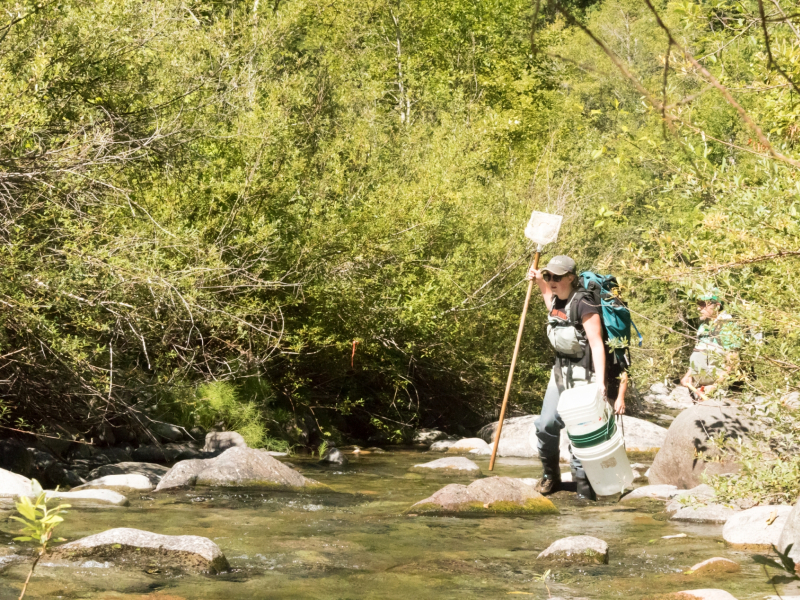
Stream networks expand and contract seasonally and changes in network connectivity affect transfer of matter and energy across trophic levels. Although many aquatic organisms in headwaters are well adapted to seasonal low flows others may experience stress from reduced summer habitat and instream...
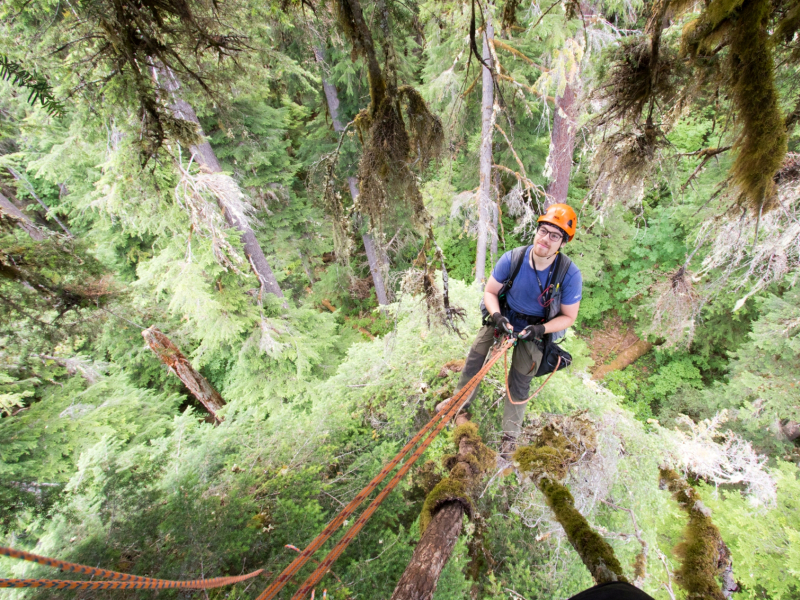
Western hemlock dwarf mistletoe ( Arceuthobium tsugense subsp. tsugense) is a small, parasitic plant that infects the leaves and branches of its host plant, the western hemlock ( Tsuga heterophylla) tree. Within a forest, like the HJ Andrews Experimental Forest, areas of mistletoe infection are...
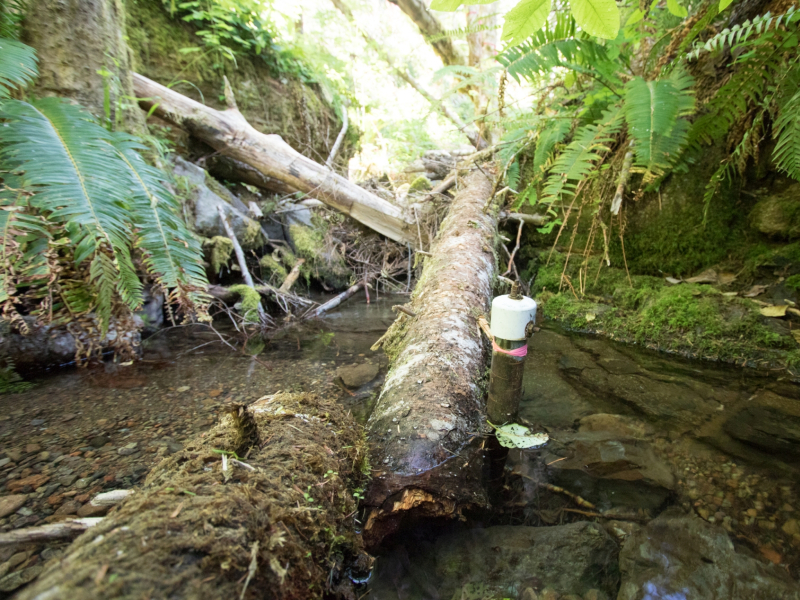
The stream cross-section profiles in the Andrews Experimental Forest study (see more at dataset GS002) was established to monitor long-term changes in channel cross-sectional geometry (width, depth) in response to storms and change in the disposition of large organic debris in a range of stream...
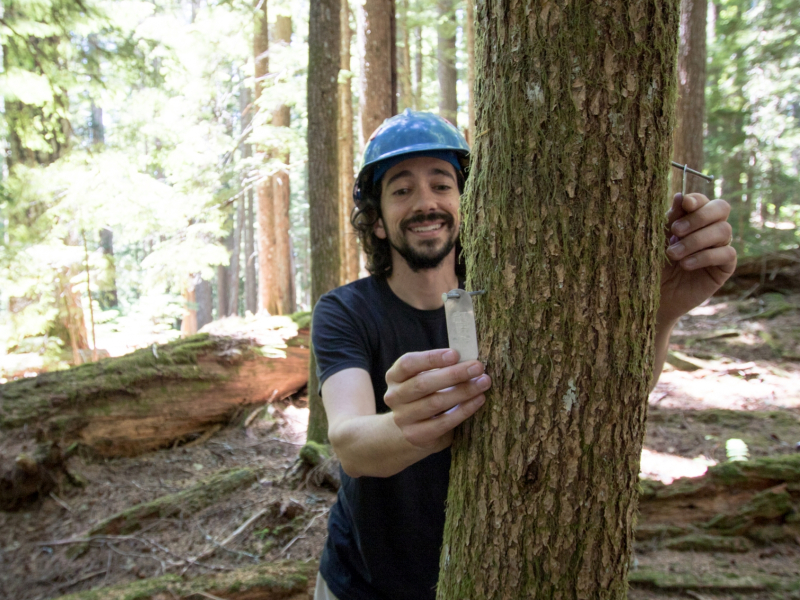
The Forests of Oregon Elevation Gradient (FOREG) is a network of large sample plots, established in 2019, within the HJ Andrews Experimental Forest. The FOREG project was designed to dovetail and connect with the long-running Reference Stand study at the Andrews Forest. FOREG is also a part of the...
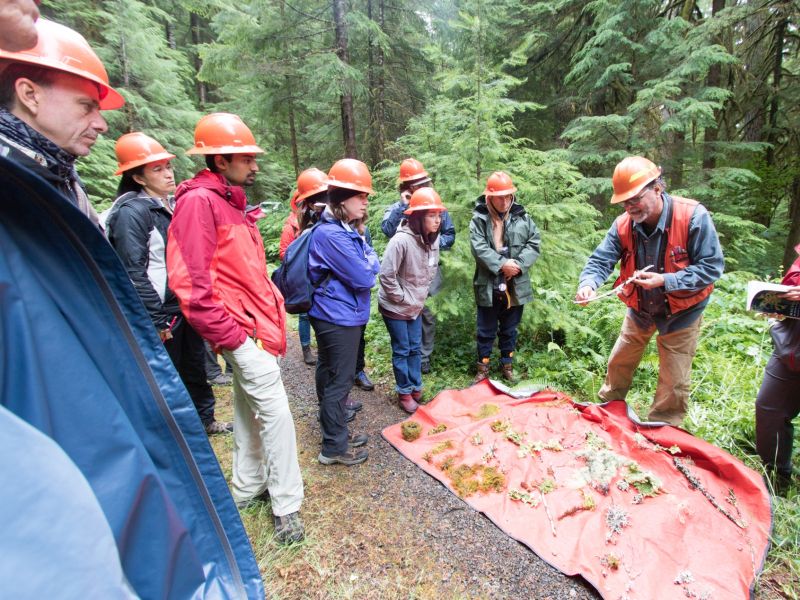
HJA Day is the annual field tour of the HJ Andrews Experimental Forest Long-Term Ecological Research site. Field trips and presentations highlight the research, education, and arts and humanities work of the Andrews Forest program.
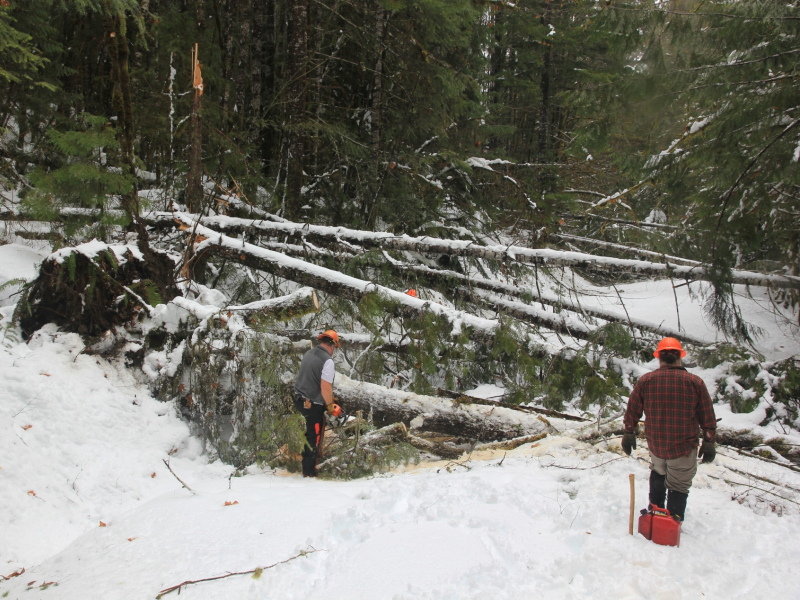
Heavy snow fell across the H.J. Andrews Experimental Forest on the night of February 24, 2019. The snow, dense and wet, fell fast and accumulated quickly in the crowns of the trees. The weight of the snow toppled trees or snapped out their crowns. The entire region, including the research forest...
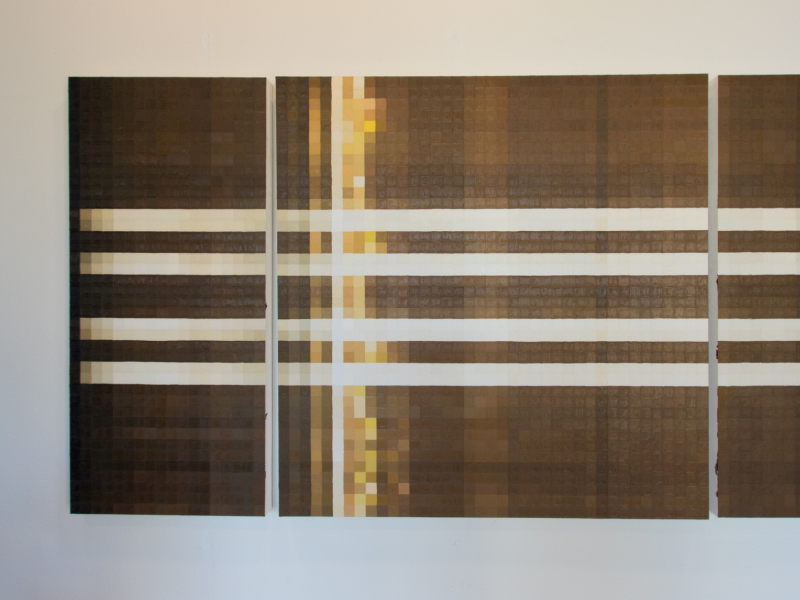
The Long-term Ecological Reflections program creates ongoing occasions for reflection and creative expression, and to collect a record of the resulting works that extends over two hundred years, 2003 – 2203. Artists, photographers, and writers live at the Andrews Forest for one to two weeks...

The terrestrial food web dynamics research project focuses on how mammalian carnivores of the Pacific Northwest forest interact with other components of the ecosystem. Specifically, the project aims to understand the ecology of the western spotted skunk: what it eats, where it lives, and how it is...
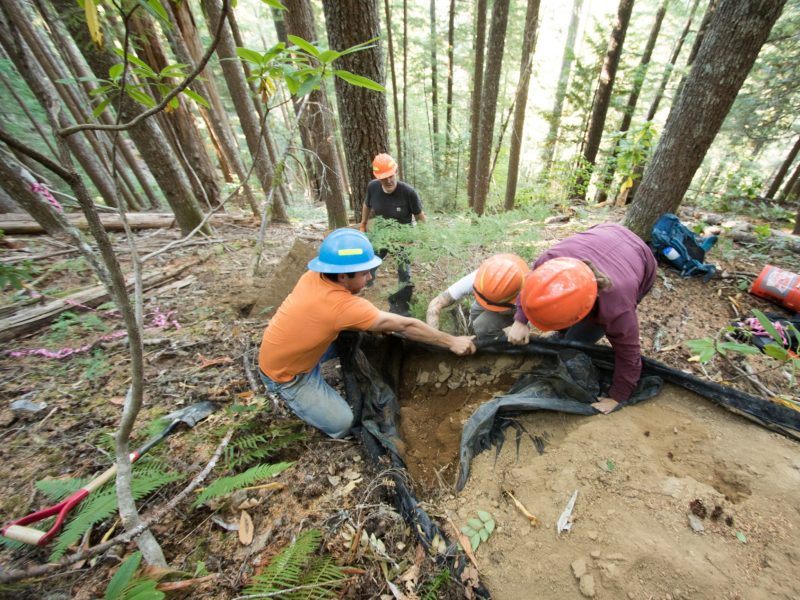
The Andrews Forest Long-Term Ecological Research program includes a long-term soil study. Researchers dig soil pits to measure, weigh, sample, and describe the soil, across multiple locations in the forest and over many years. This photo gallery is a snapshot of the soil sampling field work in...
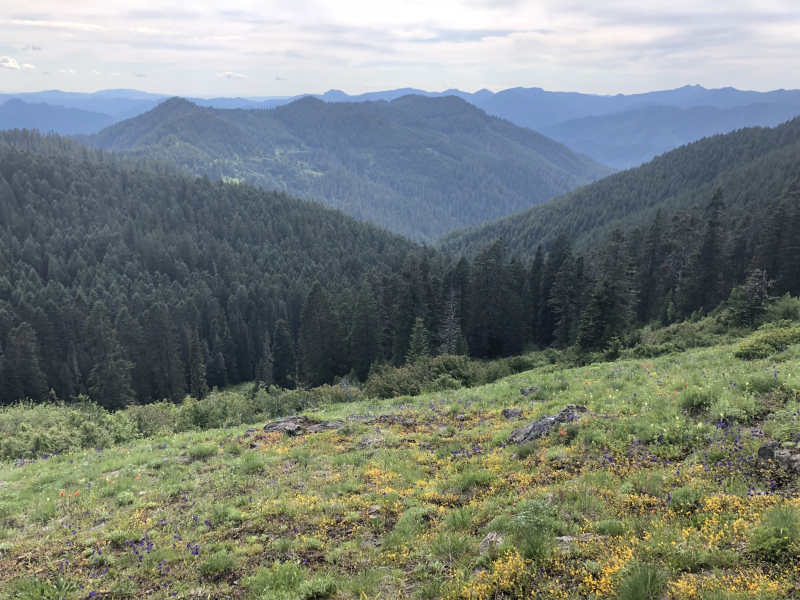
Photographs of plants and their pollinators. Images were taken in the high meadows of the Andrews Forest in summer 2018 during the Research Experience for Undergraduates pollinator research project field work. This gallery is a subset of the full set of photos. For a series of photographs of...
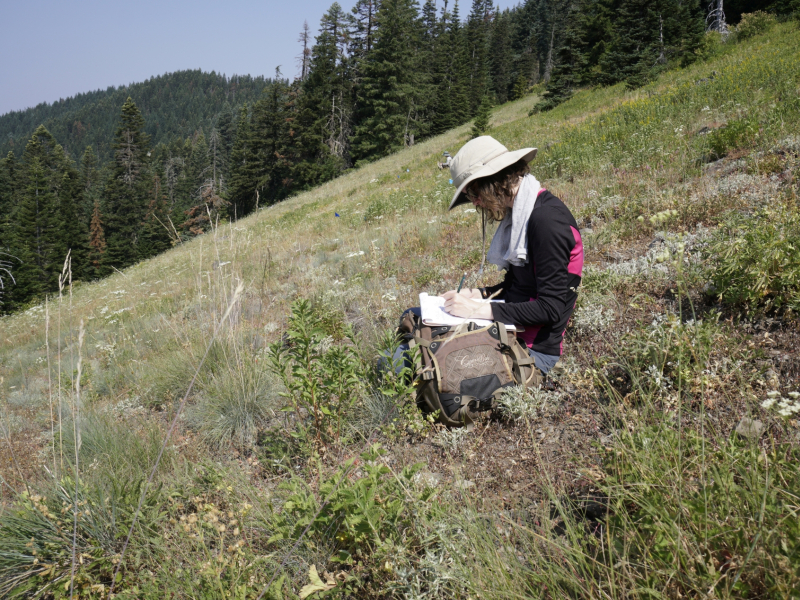
Oregon State University hosted an NSF-funded program for undergraduate students to conduct research in pollination biology in natural and manipulated ecosystems, beginning summer 2009. Students conducted individual research projects comparing native bee pollinator diversity and dynamic mutualistic...
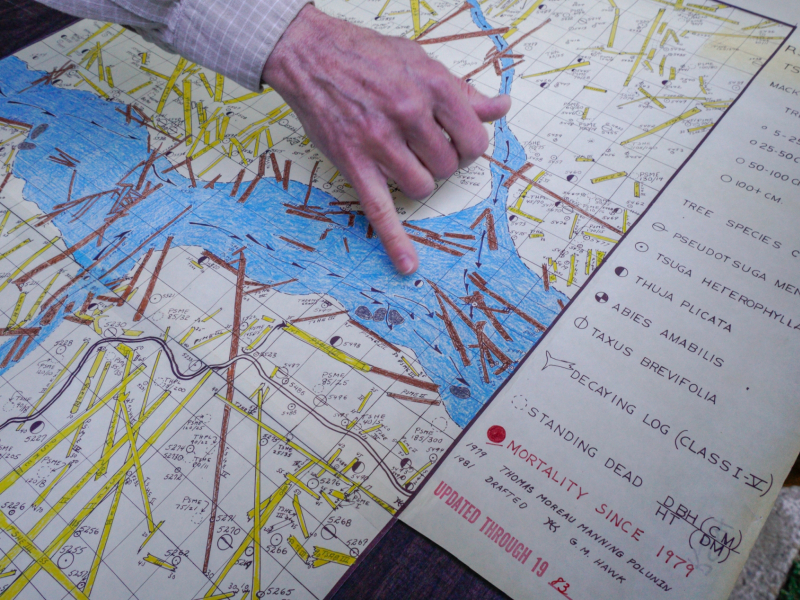
The Pacific Northwest Permanent Sample Plot Program is a long-term study of forest vegetation across the Pacific Northwest. The program samples 135 plots across a diversity of forest types in Oregon and Washington. Many of the plots are within the HJ Andrews Experimental Forest. Long-term...